
Ptosis Correction — Levator Muscle Repair
Ptosis correction is a surgical procedure that adjusts the levator muscle or its stretched aponeurosis to restore the upper eyelid margin to its proper position. It is indicated for ptosis caused by muscular weakness (myasthenia) or the disinsertion/dehiscence of the levator aponeurosis from the tarsal plate due to aging or prior surgery.
Compiled from BonBoz Clinic clinical documentation — currently in medical review
What Is Ptosis and How Does It Differ from Hooded Eyelids?
Normally, the upper eyelid margin covers about 1–2 mm of the top of the pupil. When the eyelid margin itself (not just excess skin) droops and covers more of the pupil, this condition is called ptosis. Patients often raise their eyebrows or tilt their heads back to see, and the eyes may appear tired and smaller. This is distinct from excess eyelid skin hooding over the crease (which is treated with blepharoplasty) — excising skin alone will not elevate the eyelid margin.
Common Causes
Age-related aponeurotic ptosis (most common in adults): The levator aponeurosis stretches or disinserts from the tarsal plate, while muscle function remains good. Congenital: Poor development of the levator muscle from birth, resulting in weak muscle function. Long-term contact lens wear or prior eye surgery: Causes stretching of the aponeurosis. Underlying medical conditions (such as myasthenia gravis, third nerve palsy, etc.): These must be ruled out by an ophthalmologist or neurologist prior to cosmetic surgery. Therefore, sudden-onset ptosis, ptosis that fluctuates throughout the day, or ptosis accompanied by double vision or other muscle weakness requires a thorough medical evaluation first.
Technique Selection Based on Levator Muscle Function
The surgeon measures levator muscle function (the excursion of the eyelid margin from downgaze to upgaze). Good muscle function: Levator aponeurosis plication or advancement via the eyelid crease approach — the most commonly used technique, which can be combined with double eyelid creation and skin excision. Moderate muscle function: Greater muscle resection or shortening. Poor muscle function: Frontalis suspension (sling procedure) using autologous fascia or synthetic materials — an advanced procedure requiring careful consideration. Outcomes depend heavily on baseline muscle function; weak muscle function carries a higher risk of recurrence or the need for revision.
Risks to Consider
Under-correction or over-correction (incomplete eyelid closure during sleep, dry eyes), asymmetry — occasionally, the unoperated side may appear ptotic once the surgical side is elevated (Hering's law), irregular eyelid contour, scarring within the crease, swelling and bruising, recurrence in cases with poor muscle function, hematoma, and infection (rare). For these reasons, secondary touch-ups or adjustments may be required.
At BonBoz
Our plastic surgeons carefully measure levator muscle function, margin reflex distance (MRD) on both sides, evaluate for Hering's law, and rule out medical conditions that require specialized evaluation. The surgical technique is customized based on muscle function and is often combined with eyelid crease design for optimal symmetry. The consulting surgeon personally performs the surgery; the possibility of revision, the risk of recurrence, and the limitations associated with poor muscle function are clearly explained beforehand — with no unrealistic promises made.
Technique variants
1
Levator resection
Indicated when the levator muscle retains fair function.
2
Levator aponeurosis plication
Indicated when the aponeurosis is stretched but the muscle retains force.
3
Frontalis suspension
Indicated when levator muscle function is severely impaired.
When should you see a doctor?
- Sudden-onset ptosis, ptosis that worsens throughout the day, or ptosis accompanied by double vision requires immediate specialist evaluation to rule out neuromuscular conditions, which takes priority over cosmetic concerns.
- Ptosis following trauma or recent ocular surgery.
- Ptosis associated with unstable thyroid eye disease.
- You might think you only need cosmetic double eyelid surgery—however, true ptosis is a functional issue, which is fundamentally different.
How is it performed?
Local anesthesia is administered so the patient can open their eyes and cooperate during intraoperative measurements. The surgeon makes an incision along the eyelid crease, exposes the levator aponeurosis, plicates or resects the aponeurosis, and reattaches it to the tarsal plate at the pre-calculated level. The patient is then asked to open their eyes to assess the height and contour of both eyelid margins, followed by necessary adjustments, eyelid crease formation, excess skin excision (if any), and skin closure. The procedure takes 60–120 minutes; for cases with very poor levator function, frontalis sling surgery is utilized.
Before the procedure
Evaluate levator muscle function, bilateral margin reflex distance (MRD), Hering's test, and dry eye testing; rule out systemic myasthenia gravis or neurological disorders when suspected; take standardized clinical photographs; discontinue anticoagulants as instructed.
After the procedure
**Post-Operative Care Instructions:** * **Compress Therapy:** Apply cold compresses during the first 48–72 hours (days 1–2: 10–15 minutes per session, every 1 hour) to reduce swelling, then switch to warm compresses from day 3 onward. * **Medication & Eye Care:** Take all prescribed medications as directed. Cleanse the eye area with sterile saline. If your eyelids do not close completely, use artificial tears during the day and ophthalmic ointment at night. * **Suture Removal & Follow-ups:** Suture removal is scheduled for day 7 at the clinic. Follow-up examinations will take place on day 7, and at months 1, 3, and 6 to evaluate symmetry and determine if any touch-ups are needed. The eyelid crease height will gradually stabilize over 1–3 months. * **Precautions (Avoid for 1 month):** Refrain from eating seafood, beef, glutinous rice, and water spinach. Avoid alcohol and stimulants. Do not wear eye makeup, do not wear contact lenses, and do not rub your eyes. * **When to Contact the Doctor:** Seek immediate medical attention if you experience severe abnormal swelling, purulent discharge, heavy bleeding, a fever above 38.5°C, spreading erythema, or an inability to close your eyes completely after 1 week.
Possible risks — your doctor explains them before treatment
- Under-correction or over-correction (lagophthalmos, dry eyes)
- Asymmetry, contralateral ptosis (Hering's law)
- Irregular eyelid contour
- Scarring within the eyelid crease
- Recurrence in cases of poor levator muscle function
- Need for secondary revision
- Hematoma, infection (rare)
Who should NOT have this?
- Ptosis caused by undiagnosed/untreated medical conditions (generalized myasthenia gravis, third nerve palsy)
- Sudden-onset or fluctuating ptosis throughout the day without an excluded underlying cause
- Severe dry eye, poor Bell's phenomenon
- Uncontrolled systemic medical conditions
- Expectation of absolute bilateral symmetry after a single surgery
How BonBoz uses it
Lower Eyelid Skin Excision
Lower eyelid skin excision addresses loose, wrinkled under-eye skin caused by aging through an incision made right along the lower lash line, which may be combined with orbital fat management. It is designed for individuals whose primary concern is excess skin, typically aged 45 to 70.
Learn about this method →Full Incision Double Eyelid Surgery with Excess Skin and Fat Removal
Full incision double eyelid surgery utilizes an incision along the full length of the eyelid crease to remove excess skin, manage fat, and create a stable fold. It serves as the foundational technique for aging upper eyelids and puffy eyes—it is not a 'big eye' enlarging procedure.
Learn about this method →Short Incision Double Eyelid Surgery (Mini Line)
Mini Line double eyelid surgery uses an incision approximately two-thirds the length of the eyelid to remove a moderate amount of sagging skin and secure the crease. Positioned between the suture technique and full incision surgery, it offers greater durability than non-incisional methods while being less invasive than full incision surgery.
Learn about this method →Eye Services: Reborn Eyes Ptosis and Blepharoptosis Repair
Services Page: Specialist physicians provide consultations, determine the appropriate treatment approach, and inform you of the costs before you make a decision.
Want a cost range for your own case?
Estimate the cost →Cost guidance
The cost depends on the severity of ptosis, the remaining levator muscle function, whether the procedure is unilateral or bilateral, and whether additional skin removal is required.
The final price follows the doctor’s recommendation after an in-person exam. A confirmed quote has no hidden extras.
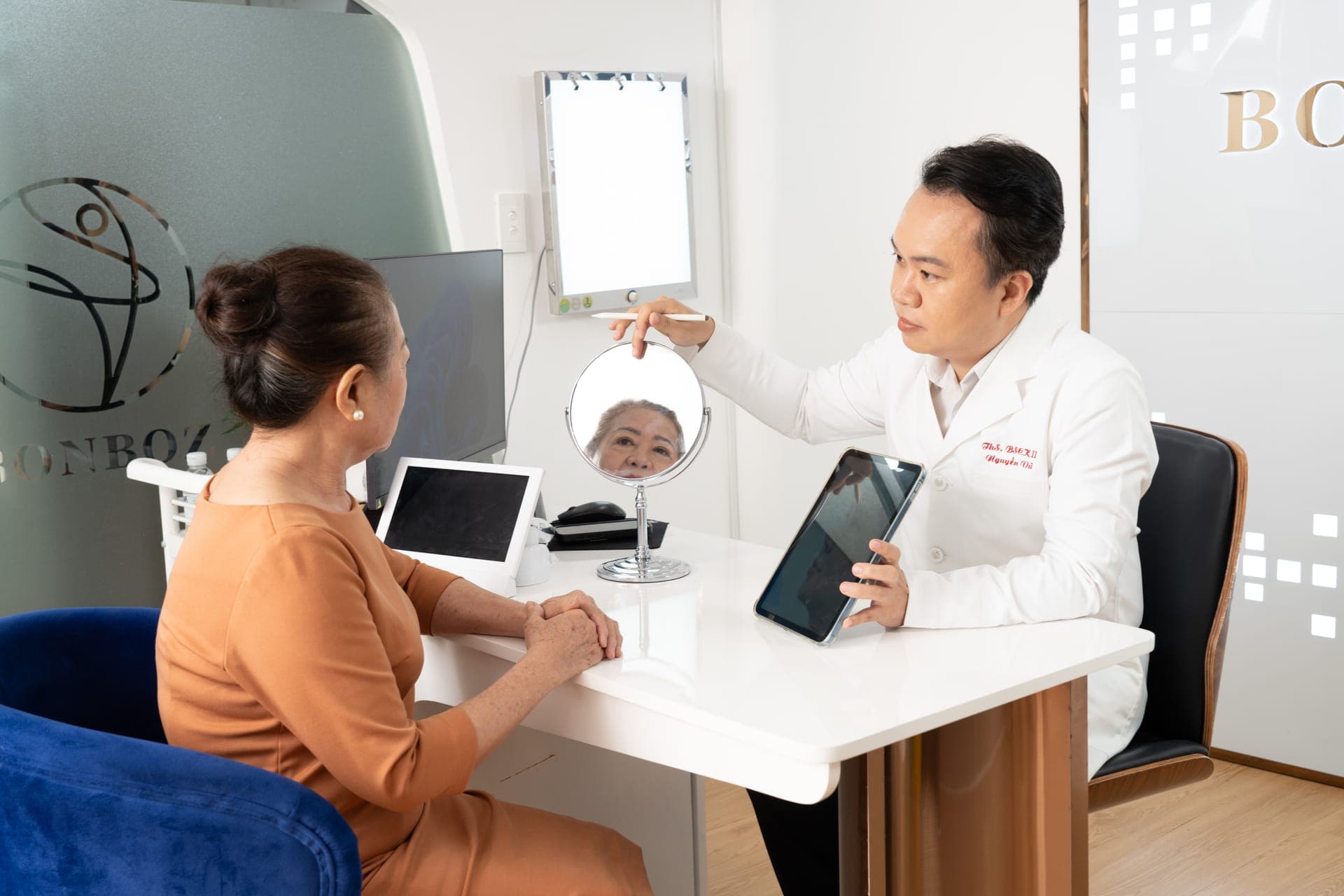
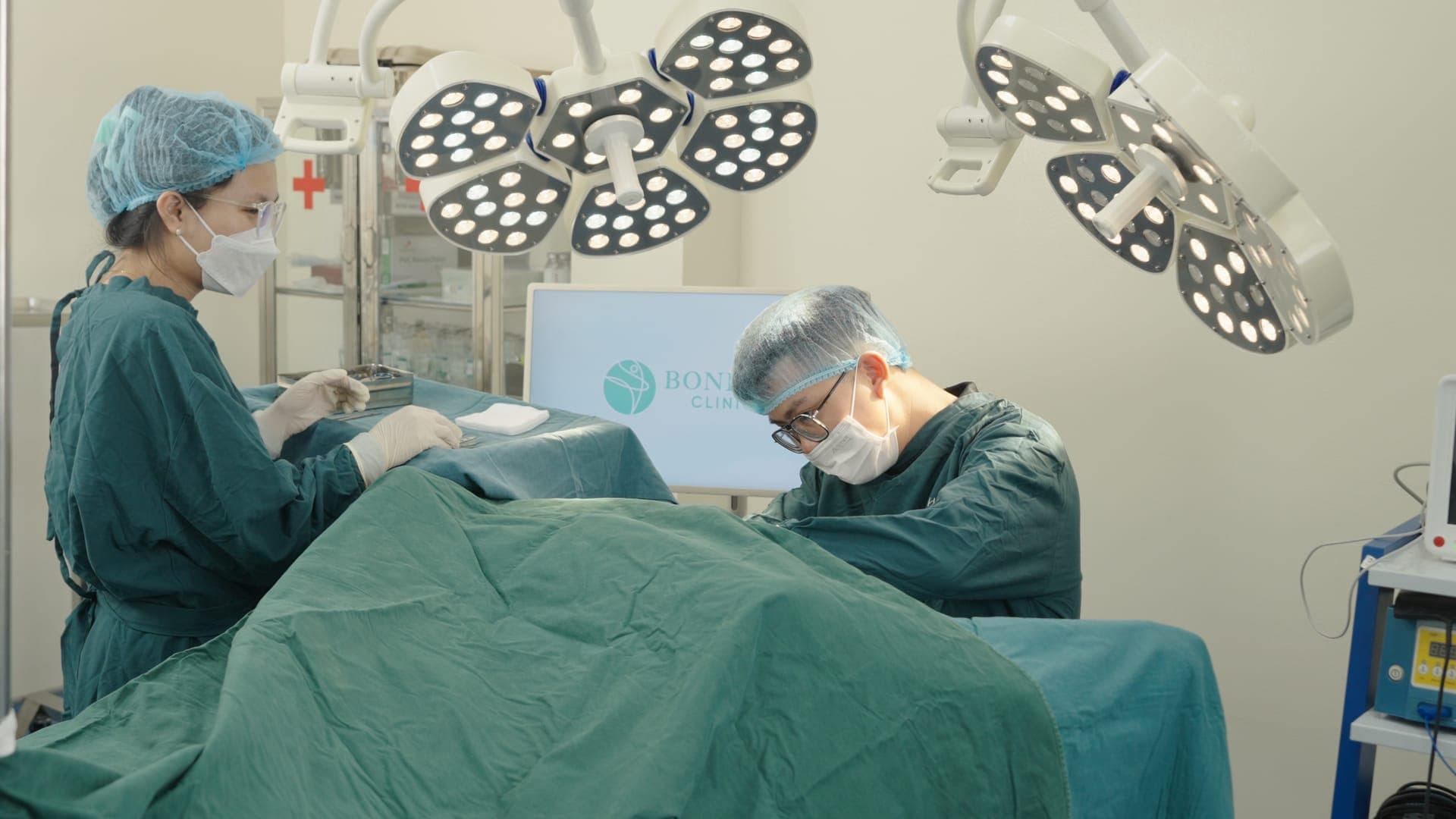
Inside the BonBoz clinic

Book a consultation with a doctor
Choose a date, time slot and doctor — the clinic calls to confirm within 5 minutes during opening hours. Free consultation, no commitment.
Frequently asked questions
How does true ptosis differ from pseudoptosis (hooding)?
Why is levator muscle function measured beforehand?
Will vision improve after surgery?
Can it cause incomplete eyelid closure (lagophthalmos)?
Why does the other eyelid droop after single-eyelid surgery?
Is a secondary adjustment necessary?
Can congenital ptosis in children be treated with surgery?
What should be done if ptosis occurs suddenly?
Related topics
- Full-Incision Blepharoplasty for Excess Skin and Fat Removal: Procedure, Indications for Aging Eyelids, and Essential Risks to Know
- Asymmetrical Eyelids: Congenital Causes, Post-Blepharoplasty Issues, and How to Correct Them
- Sagging Eyebrows, Tired Eyes, and Heavy Upper Eyelid Skin: How to Distinguish Them from Ptosis, and Brow Lift Options
- Ptosis: How It Differs from Cosmetic Blepharoplasty and When Treatment Is Needed
More from our doctors
Ptosis Caused by Myasthenia Gravis: Causes, Symptoms, and Treatment Options
Ptosis (drooping eyelid) occurs when a weakened or stretched levator muscle causes the upper eyelid to sag, partially covering the pupil. This condition must be differentiated from generalized myasthenia gravis, which requires medical management by a neurologist; surgical ptosis correction is only considered when the underlying cause involves the levator muscle or excess skin, and any preexisting conditions (if present) are well-controlled.
What is Ptosis? How Does It Differ from Cosmetic Double Eyelid Surgery, and When is Treatment Needed?
Ptosis vs. Aesthetic Blepharoplasty: Key Differences in the Levator Muscle, Warning Signs, and Treatment Options.
Ptosis Correction vs. Aesthetic Double Eyelid Surgery: What Are the Differences?
Ptosis correction surgery is a medical procedure to treat drooping eyelids, whereas cosmetic double eyelid surgery is performed to create aesthetically pleasing eyelid creases. The purpose, technique, and outcome of each procedure are entirely distinct.
Signs of Ptosis (Drooping Eyelids) – When Should You Consider Double Eyelid Surgery (Upper Blepharoplasty)?
Drooping eyelids (ptosis) make the eyes look tired and can even affect your vision. Recognizing the signs indicating a need for double eyelid surgery (upper blepharoplasty) helps you make the right decision at the right time.