
Ptosis (Drooping Eyelids)
Ptosis refers to the drooping of the upper eyelid below its normal position, partially covering the pupil/cornea. This occurs when the levator muscle is weak or incorrectly attached—which can be congenital or acquired due to aging, trauma, or underlying medical conditions. Unlike cosmetic blepharoplasty (which focuses on removing excess skin and fat and creating an eyelid crease), ptosis correction requires surgical intervention on the levator muscle, which must be preceded by a physician's evaluation of the muscle function.
Compiled from BonBoz Clinic clinical documentation — currently in medical review
What Is Ptosis (Droopy Eyelid)?
The upper eyelid is elevated by the levator muscle. When this muscle is weak, disinserted, or has compromised nerve innervation, the eyelid margin drops, covering more of the cornea than the normal 1–2 mm. People with ptosis often raise their eyebrows or tilt their chins upward to see clearly, giving the eyes a tired, sad, or asymmetrical appearance. Ptosis can be unilateral or bilateral, and either congenital (usually noticeable from childhood) or acquired (due to aging, long-term contact lens wear, trauma, previous eye surgery, or certain neuromuscular conditions).
The Core Difference Between Ptosis Correction and Cosmetic Blepharoplasty
Cosmetic blepharoplasty addresses excess skin and fat while creating a double eyelid crease for eyes with normal levator function. In contrast, ptosis is a functional issue of the levator muscle—requiring specialized surgical techniques to address the muscle (such as advancement, resection, or suspension) to restore the eyelid margin to its proper anatomical position. If true ptosis is present but only a standard cosmetic blepharoplasty is performed, the eyelid margin will remain droopy, the eyes will still look tired, and subsequent revision surgery becomes significantly more complex.
Dermatochalasis (Lax Eyelid Skin), Ptosis, and Brow Ptosis
These three conditions may look similar, but their underlying causes are fundamentally different: skin laxity (dermatochalasis) involves excess skin hooding over the eyelid crease (while the eyelid margin remains in its correct position); true ptosis involves the drooping of the eyelid margin itself; and brow ptosis occurs when a sagging eyebrow pushes the upper eyelid skin downward. Many middle-aged individuals present with a combination of two or all three conditions. The doctor measures the Margin Reflex Distance (MRD), levator muscle function, and eyebrow position to differentiate them accurately before proposing a treatment plan.
Why Precise Measurements Are Crucial Rather Than Visual Estimation
The degree of ptosis (mild, moderate, severe) and levator muscle function (good, fair, poor) dictate the appropriate surgical technique: preserved muscle function calls for levator advancement/resection, whereas poor muscle function necessitates a frontalis sling suspension. Without precise measurements, selecting the correct technique is impossible—and the success of eyelid surgery depends on the right technique more than any other factor.
The Approach at BonBoz Clinic
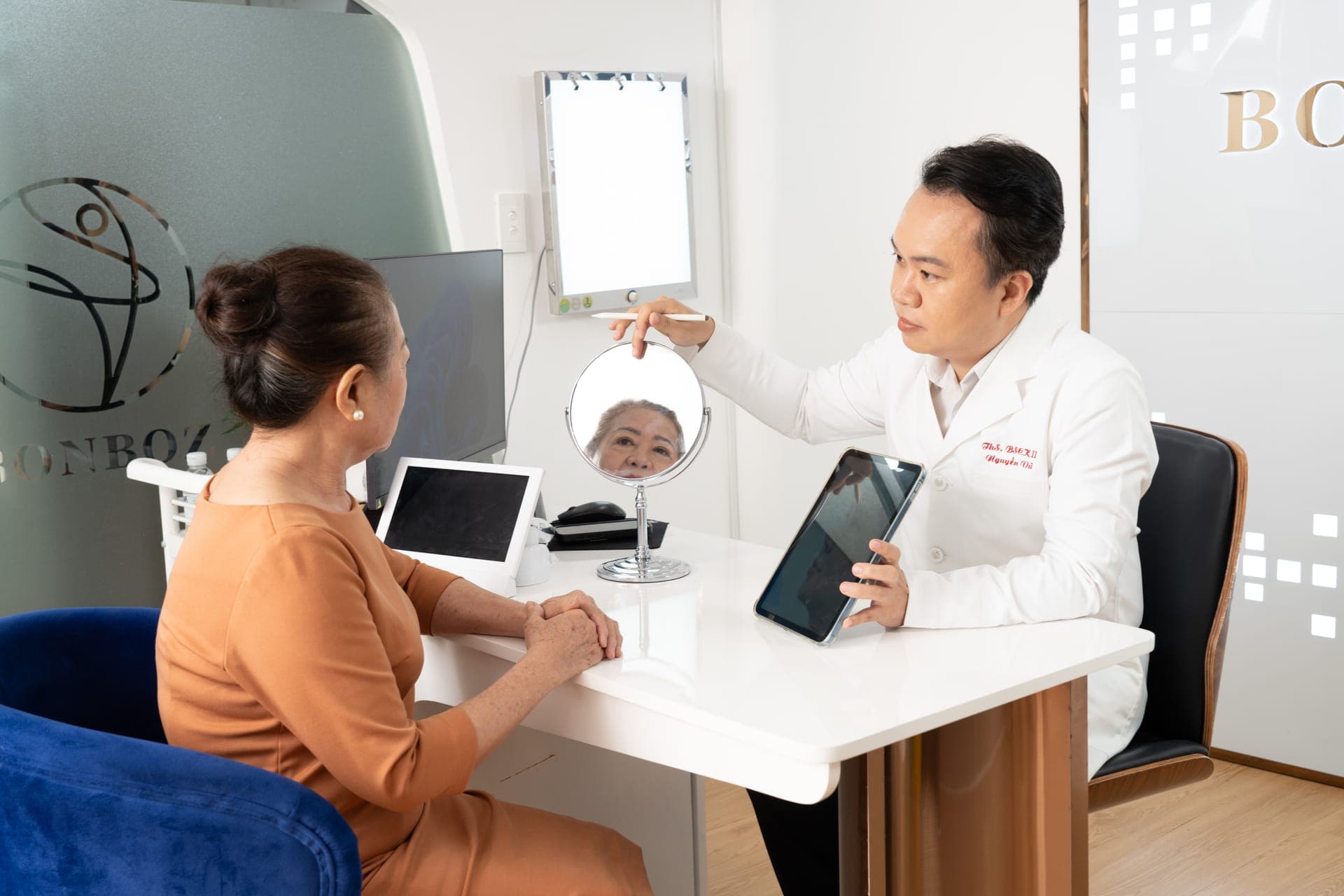
A Plastic and Aesthetic Surgery Specialist conducts an in-person clinical examination, precisely measures eyelid parameters, and differentiates ptosis from skin laxity and brow ptosis. The doctor will then discuss the most suitable approach—whether that involves ptosis correction, a combined blepharoplasty, or no surgical intervention at that time. If a neuromuscular condition is suspected, the doctor will refer the patient for a specialized neurological evaluation first.
Severity levels
1
Mild — Upper eyelid covers 1–2 mm of the cornea
Eyes appear slightly tired, with no impact on vision. Can be monitored or corrected concurrently with blepharoplasty if desired.
2
Moderate — Covers 3–4 mm
Noticeable asymmetry between both eyes, frequent forehead raising. Levator muscle function assessment is required to select the appropriate technique.
3
Severe — Covers more than 4 mm, impairs vision
Obstructs the visual field, causes a chin-up head posture to see; risk of amblyopia in children. Requires medical treatment, not purely cosmetic intervention.
When should you see a doctor?
- The eyelid margins noticeably cover the pupils, the eyes are asymmetrical, and there is a long-standing habit of raising the eyebrows/forehead.
- Ptosis appears suddenly within days to weeks, accompanied by double vision or muscle weakness — immediate specialist consultation is required.
- Ptosis fluctuates throughout the day (milder in the morning, worsening in the afternoon/evening) — suggestive of a neuromuscular disorder.
- Previous blepharoplasty performed elsewhere, but the eyes still look tired and the eyelid margins remain low.
How BonBoz treats it
Pre-operative Eyelid Assessment & Classification
Measuring the margin reflex distance (MRD), levator muscle function, and eyebrow position to differentiate between ptosis, dermatochalasis (excess skin), and brow ptosis.
Ptosis Correction (Levator Muscle Intervention)
Levator advancement/resection or frontalis sling surgery, tailored to muscle function—a technique distinct from standard double eyelid blepharoplasty.
Combined Blepharoplasty
When excess skin and herniated fat are also present, they are addressed simultaneously in a single surgical procedure.
Specialist Referral for Suspected Pathologies
In cases of acute-onset ptosis, diurnal fluctuation, or associated diplopia (double vision)—neuromuscular causes must be ruled out first.
Learn about this method →Want a cost range for your own case?
Estimate the cost →Cost guidance
Ptosis correction is a surgical procedure, with costs varying based on the specific technique (levator resection or frontalis sling) and whether it is combined with blepharoplasty. The doctor will provide an exact quote after an in-person examination and measurement; reference price ranges for eye surgeries are available in our cost estimator tool.
The final price follows the doctor’s recommendation after an in-person exam. A confirmed quote has no hidden extras.
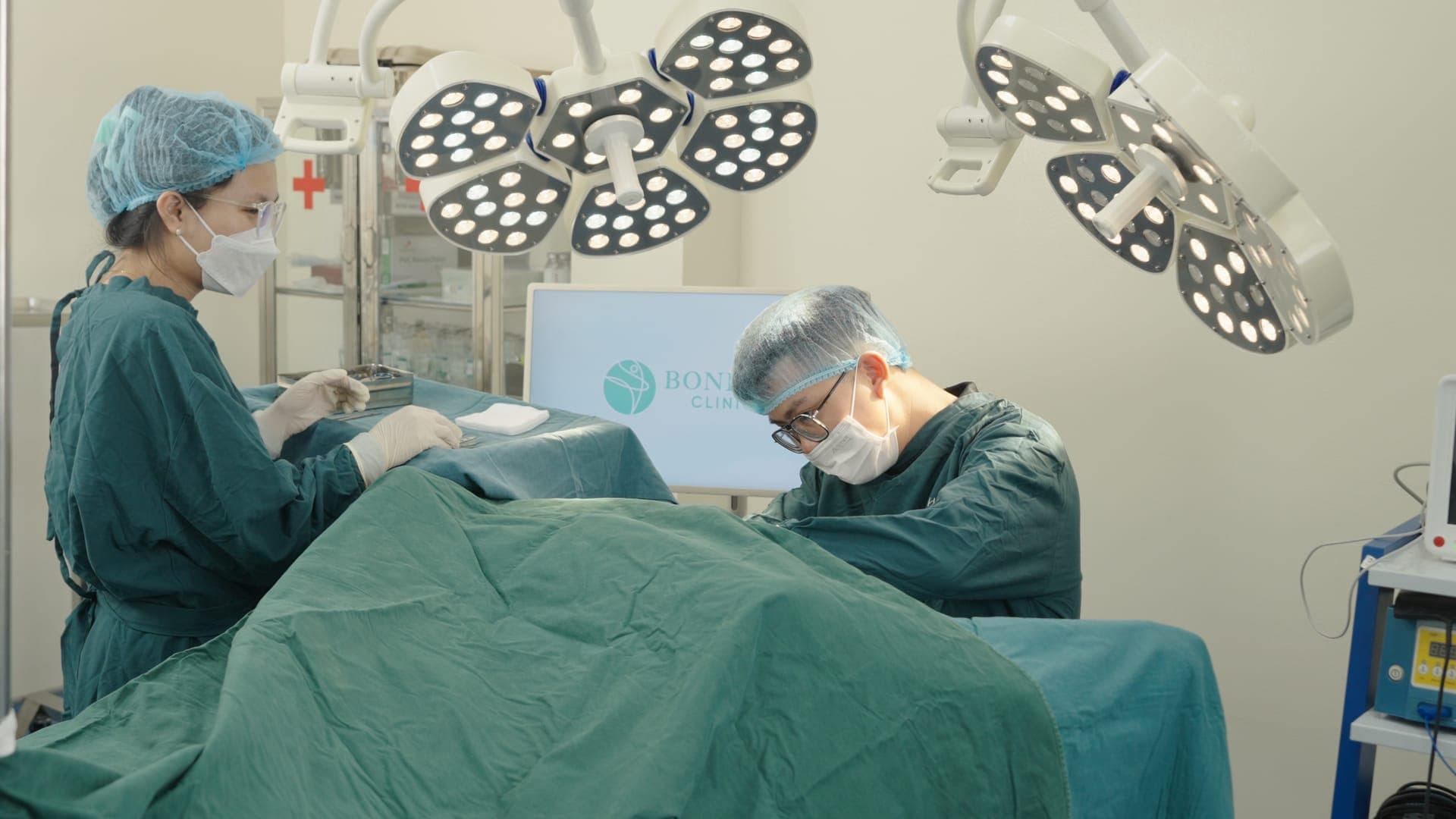
Inside the BonBoz clinic

Book a consultation with a doctor
Choose a date, time slot and doctor — the clinic calls to confirm within 5 minutes during opening hours. Free consultation, no commitment.
Frequently asked questions
Can ptosis go away on its own?
Does double eyelid surgery fix ptosis?
Can I have ptosis correction on just one eye?
What are the risks of ptosis surgery?
How long is the recovery time?
Do children with congenital ptosis need early surgery?
Can wearing contact lenses long-term cause ptosis?
What if I develop ptosis after having double eyelid surgery elsewhere?
Can Botox cause ptosis?
Who performs the surgery at BonBoz?
Related topics
- Mini-Incision Blepharoplasty (Mini Line): Technique, Ideal Candidates, and How It Differs from Full-Incision Blepharoplasty
- Monolids vs. Hidden Double Eyelids: What’s the Difference, and Who Should Choose Non-Incisional vs. Incisional Double Eyelid Surgery?
- Age-Related Upper Eyelid Laxity: Should You Get Blepharoplasty, and How to Distinguish It from Ptosis and Brow Ptosis?
- Eye Bags vs. Dark Circles: Different Causes, Different Treatments
More from our doctors
What is Ptosis? How Does It Differ from Cosmetic Double Eyelid Surgery, and When is Treatment Needed?
Ptosis vs. Aesthetic Blepharoplasty: Key Differences in the Levator Muscle, Warning Signs, and Treatment Options.
Ptosis Correction vs. Aesthetic Double Eyelid Surgery: What Are the Differences?
Ptosis correction surgery is a medical procedure to treat drooping eyelids, whereas cosmetic double eyelid surgery is performed to create aesthetically pleasing eyelid creases. The purpose, technique, and outcome of each procedure are entirely distinct.
Ptosis Caused by Myasthenia Gravis: Causes, Symptoms, and Treatment Options
Ptosis (drooping eyelid) occurs when a weakened or stretched levator muscle causes the upper eyelid to sag, partially covering the pupil. This condition must be differentiated from generalized myasthenia gravis, which requires medical management by a neurologist; surgical ptosis correction is only considered when the underlying cause involves the levator muscle or excess skin, and any preexisting conditions (if present) are well-controlled.
Should You Get Blepharoplasty for Age-Related Sagging Eyelids? Distinguishing It from Ptosis
Why eyelid skin sags with age, how much blepharoplasty can improve it, how to distinguish it from ptosis, and setting realistic expectations.