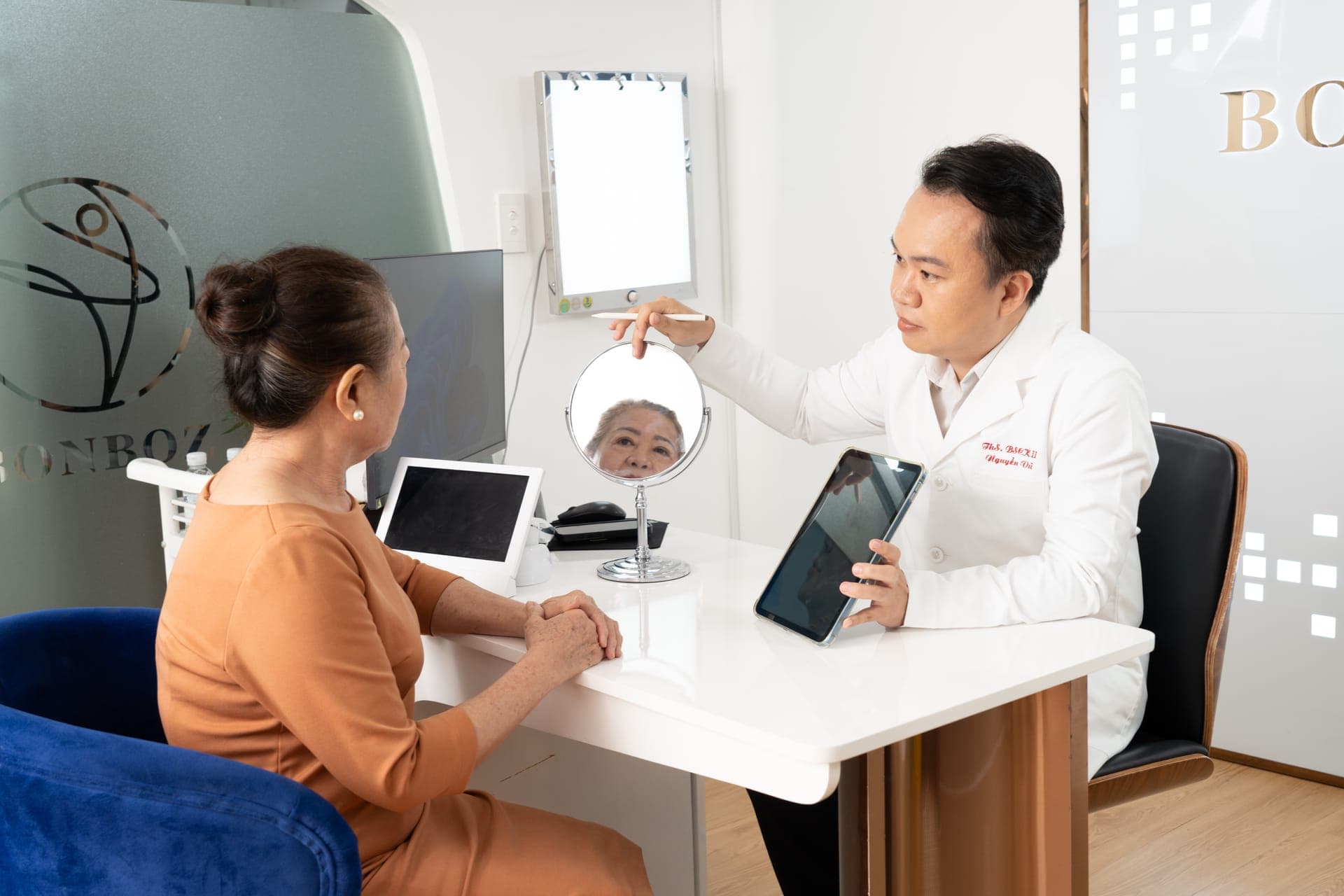
Thread Lift & Mini Facelift
Lifting sagging areas just enough so you still look like yourself.
Xem chi tiết →
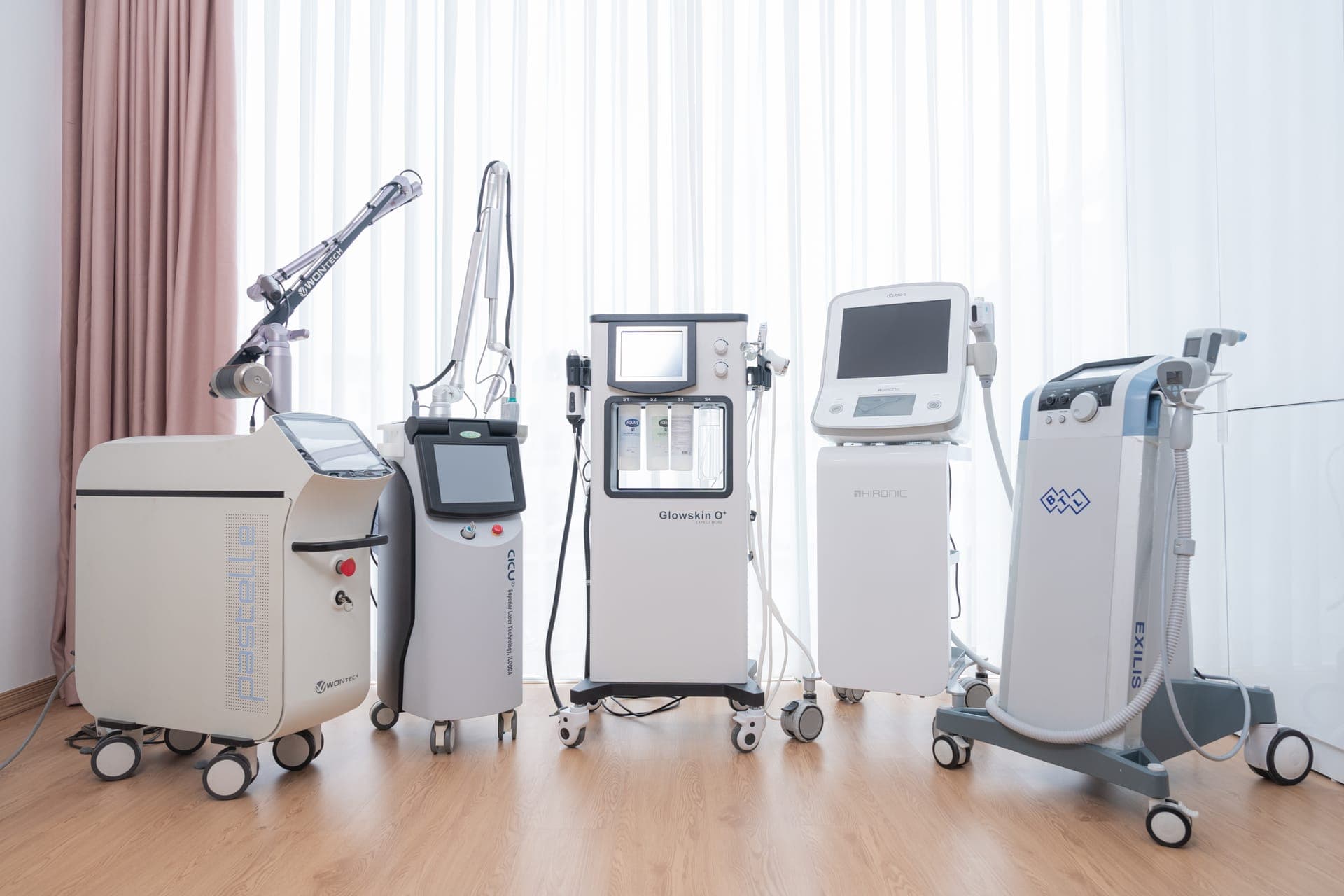
Technology-based rejuvenation uses energy (focused ultrasound, radiofrequency, laser) or biological factors (PRP) to stimulate collagen, firm and even out the skin. Each technology works at a different depth; no single device replaces the others.
BonBoz combines dermatology (Dr. Kim Kha) and plastic surgery (Dr. Nguyen Xuan Vu) to advise when technology is enough and when threads or surgery are needed. Improvement depends on sagging, skin thickness and age.
This page is for you if
Real photos at 66–68 Vo Van Tan, Ho Chi Minh City.

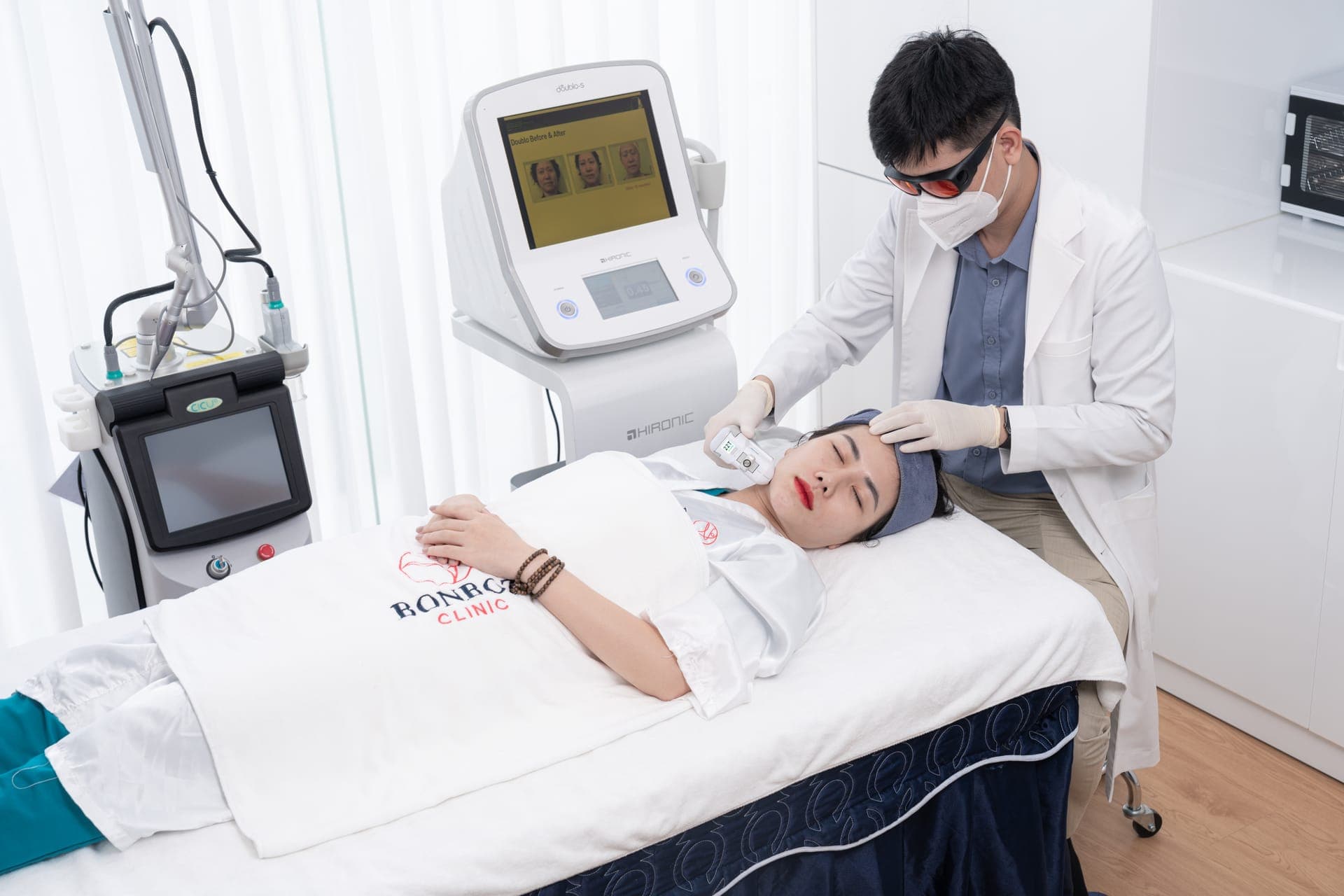
Lifting sagging areas just enough so you still look like yourself.
Xem chi tiết →
Minimally invasive, yet it still involves introducing substances into the body — which is why a doctor is still required.
Xem chi tiết →Each page answers directly: severity, when to see a doctor, how BonBoz treats it.
Deep nasolabial folds, sagging cheeks, a double chin, and an undefined jawline are signs of skin and supporting tissues sagging with age. From HIFU and thread lifts to facelifts — each degree of laxity requires the right solution, and choosing the wrong level is simply a waste of money.
After 40, upper eyelid skin loses elasticity and creates excess folds that hood over the eyelid crease, making the eyes look heavy and tired. Upper blepharoplasty to remove excess skin is commonly considered—yet it must be clearly distinguished from ptosis and brow ptosis, as each condition requires a different approach.
Freckles are small spots that typically appear in childhood and darken with sun exposure, whereas age spots develop in middle age due to aging. Both respond significantly better to laser treatments than melasma, but accurate identification is essential to avoid using incorrect treatment parameters.
Melasma presents as symmetrical dark patches on the cheeks, forehead, and upper lip, triggered by sun exposure, hormonal changes, and genetic predisposition. There is no one-time "cure" for melasma; effective management requires strict sun protection, prescription topical treatments, and clinical procedures tailored to the specific type of melasma.
Mechanism, procedure, risks and who should not have it — to understand before you decide.
HIFU delivers focused ultrasound energy into the SMAS and deep dermis, creating thermal coagulation points that stimulate collagen contraction and regeneration—improving firmness for mild-to-moderate skin laxity with no downtime; results are moderate and require maintenance treatments.
The Q-switched Nd:YAG laser delivers ultra-short pulses to break down pigment particles in the skin. In low-energy, multi-session toning mode, it lightens melasma and deep hyperpigmentation; at higher energy settings, it clears freckles and brown spots after a few sessions.
PRP is derived from your own blood and contains growth factors that support wound healing. In atrophic scar treatment, PRP serves as an add-on step following microneedling, laser, or subcision—not a stand-alone scar-filling procedure.
RF microneedling delivers radiofrequency energy through micro-needles deep into the dermal layer, stimulating collagen production with minimal surface disruption—making it ideal for deep pitted scars, thick skin, hyperpigmentation-prone skin, and enlarged pores.
Fractional CO2 laser creates thousands of controlled micro-injuries to stimulate the skin's natural collagen regeneration, elevating the base of pitted scars. It is effective for shallow to moderate boxcar and rolling scars; multiple sessions and strict sun protection are required.

Chuyên khoa Da liễu Thẩm mỹ

Chuyên khoa Ngoại — Tạo hình thẩm mỹ
Choose a date, time slot and doctor — the clinic calls to confirm within 5 minutes during opening hours. Free, no commitment.
Karisma is labeled as a bio-restitutive soft filler. Do not evaluate this injectable product using the volumetric filling standards of traditional dermal fillers.
Masseter Botox only targets hypertrophic masseter muscles and does not alter bone structure or fat tissue. Explore the anatomical factors that influence aesthetic outcomes in the jawline area.
If you cannot recall the exact type of dermal filler injected previously, it is essential to review your treatment history and undergo an in-person consultation to determine the appropriate approach before proceeding with any new injections.
Karisma is classified by its manufacturer as a Class III injectable medical device, marketed as a bio-restitutive soft filler with three disclosed ingredients. Patients should carefully consider these aspects before opting for the treatment.
Understanding the Difference Between Dynamic and Static Wrinkles, Why Botox Only Targets Muscle-Induced Lines, and Essential Post-Treatment Care and Monitoring.
Not every hollow area should be treated with dermal filler; doctors must assess facial anatomy, take a thorough medical history, and exercise careful judgment to avoid overfilling.
We use cookies to understand how you use our website and to improve your experience. You can decline and still use all features. Personal Data Protection Policy