
Laser Toning — Pastelle Q-Switched Nd:YAG
The Pastelle laser is a dual-wavelength 1064 and 532 nm Q-switched Nd:YAG laser that delivers nanosecond pulses absorbed by melanin particles, shattering them for natural elimination by the body. The low-fluence, multi-session toning mode is indicated for melasma and deep hyperpigmentation, while the 532 nm mode targets freckles and brown spots. As a non-ablative treatment, it offers rapid recovery; however, improper parameters may worsen melasma.
Compiled from BonBoz Clinic clinical documentation — currently in medical review
Mechanism
Ultra-short laser pulses are selectively absorbed by melanin, shattering pigment particles via a photoacoustic effect without overheating surrounding tissue; the immune system then clears the fragments over several weeks. The 1064 nm wavelength penetrates deeply into the dermis with minimal interference from hemoglobin and superficial melanin, making it suitable for deep pigmentation and darker skin tones. The 532 nm wavelength targets more superficial layers with high absorption, making it ideal for epidermal brown spots and freckles.
How does Toning differ from Spot Treatment?
Laser toning sweeps across the entire treatment area using low fluence, a large spot size, and multiple sessions (typically 6–10 sessions spaced 2–4 weeks apart) to lighten diffuse pigmentation such as melasma and dark marks—aiming for gradual skin tone evening without scabbing. Spot treatment delivers high enough energy directly to individual freckles or brown spots, causing them to darken, form micro-crusts, and peel off within 5–10 days, usually over 1–3 sessions. Mistakenly using the spot treatment mode on melasma is a primary cause of severe melasma rebound.
Indications
Epidermal and mixed melasma (combined with topicals and sun protection), persistent deep post-acne marks, freckles, sun spots, uneven skin tone, support for enlarged pores and oily skin, and mild erythema reduction. Not all pigmentary conditions respond: congenital nevi, tattoos, and certain severe post-inflammatory hyperpigmentations require a separate clinical evaluation.
Potential Risks
Guttate hypopigmentation (white spots) from overly frequent sessions or excessive fluence—often difficult to reverse; melasma rebound or worsening due to incorrect laser parameters; transient post-inflammatory hyperpigmentation; and mild, transient urticaria lasting a few hours. This is why laser toning must be performed by a dermatologist who examines the skin, classifies the condition, adjusts the parameters accordingly, and monitors progress using standardized clinical photography at every session.
At BonBoz
Dermatologists examine the skin using a Wood's lamp to differentiate between epidermal and dermal melasma and distinguish freckles from sun spots. They prescribe accompanying topicals and sun protection, customize parameters for each facial zone, and monitor progress via standardized photos. The procedure is performed directly by the dermatologist; the treatment plan will be paused or adjusted if the skin does not respond as expected.
Technique variants
1
Low-fluence toning over multiple sessions
Safer for hyperpigmentation-prone skin.
2
Toning combined with topical treatments
Integrated home care protocols to maintain long-term results.
3
Adjusting strategy for poor response
Certain types of melasma respond poorly to toning—physicians re-evaluate rather than performing additional sessions.
When should you see a doctor?
- Your melasma may belong to a type that responds poorly to laser toning—a professional skin analysis and classification are essential before treatment to avoid ineffective sessions.
- The skin is currently inflamed, has open wounds, or is recently sunburned.
- You are unable to strictly avoid sun exposure—a mandatory requirement, otherwise melasma is likely to darken again.
- You are pregnant, or your melasma appeared alongside unassessed hormonal changes.
How is it performed?
Cleansing the face and applying protective eye shields. Laser Toning: the physician delivers low-energy laser passes evenly across the treatment area — lasting 15–20 minutes, with a mild warming and tingling sensation, typically without requiring topical anesthesia. Spot Treatment: targeting individual spots, with a sensation similar to a snapping rubber band; topical anesthesia can be applied. Following this, the skin is cooled, soothed, and protected with sunscreen.
Before the procedure
Avoid sun exposure and tanning for 2 weeks prior; discontinue topical retinoids 3–5 days before; inform the clinic of any photosensitizing medications, history of herpes, or current pregnancy; thoroughly remove all makeup.
After the procedure
Laser Toning: Mild erythema may last for a few hours. Normal activities can be resumed immediately. Apply broad-spectrum SPF 50 sunscreen. The next session is scheduled in 2–4 weeks. Spot Treatment: Treated spots will darken and form scabs for 5–10 days — do not pick or scratch, apply strict sun protection, and use prescribed topical medications. Avoid physical exfoliants and chemical peels for 1 week.
Possible risks — your doctor explains them before treatment
- Punctate hypopigmentation (white spots) due to excessive sessions or energy levels — difficult to reverse
- Melasma rebound or spreading if inappropriate settings are used
- Temporary post-inflammatory hyperpigmentation (PIH), especially following spot treatment on darker skin tones without sun protection
- Mild redness and transient urticaria lasting a few hours
- Melasma treatment aims for control and management, not complete eradication
Who should NOT have this?
- Recent sunburn or recent tanning
- Currently taking photosensitizing medications (certain antibiotics, isotretinoin) without completing the required washout period
- Currently pregnant (postpone treatment)
- Active herpes infection or active dermatitis in the treatment area
- Pigmented lesions suspected of malignancy that have not been medically evaluated and ruled out
- Expectations of complete melasma clearance after only a few sessions, or inability to adhere to strict sun protection
How BonBoz uses it
BAP Technique (Bio Aesthetic Points) with Skin-Restructuring HA
The BAP technique involves injecting high-concentration, thermally cross-linked (chemical-free) HA into 5 anatomical points on each side of the face. This allows the product to diffuse widely, stimulating collagen and elastin production to improve skin firmness, elasticity, and overall quality without altering facial contours.
Learn about this method →Botulinum Toxin (Botox)
Botulinum toxin provides controlled relaxation of muscles responsible for dynamic wrinkles (forehead, glabellar lines, crow's feet) or overactive muscles (masseter, mentalis). Results appear within 5–14 days and last 3–4 months.
Learn about this method →HA Dermal Fillers (Filler)
HA fillers consist of cross-linked hyaluronic acid gel injected intradermally or supraperiosteally to restore lost volume, contour features (chin, nose, cheeks, lips), and fill static lines. They gradually biodegrade over 6–18 months and can be dissolved with hyaluronidase if needed.
Learn about this method →Non-Surgical Aesthetic Procedures
Services page: Our specialist physicians evaluate your condition, recommend tailored treatment plans, and provide transparent pricing before you make any decisions.
Learn about this method →Want a cost range for your own case?
Estimate the cost →Cost guidance
The cost depends on the treatment area, the number of sessions required, and whether it is combined with topical medications or other treatment modalities.
The final price follows the doctor’s recommendation after an in-person exam. A confirmed quote has no hidden extras.
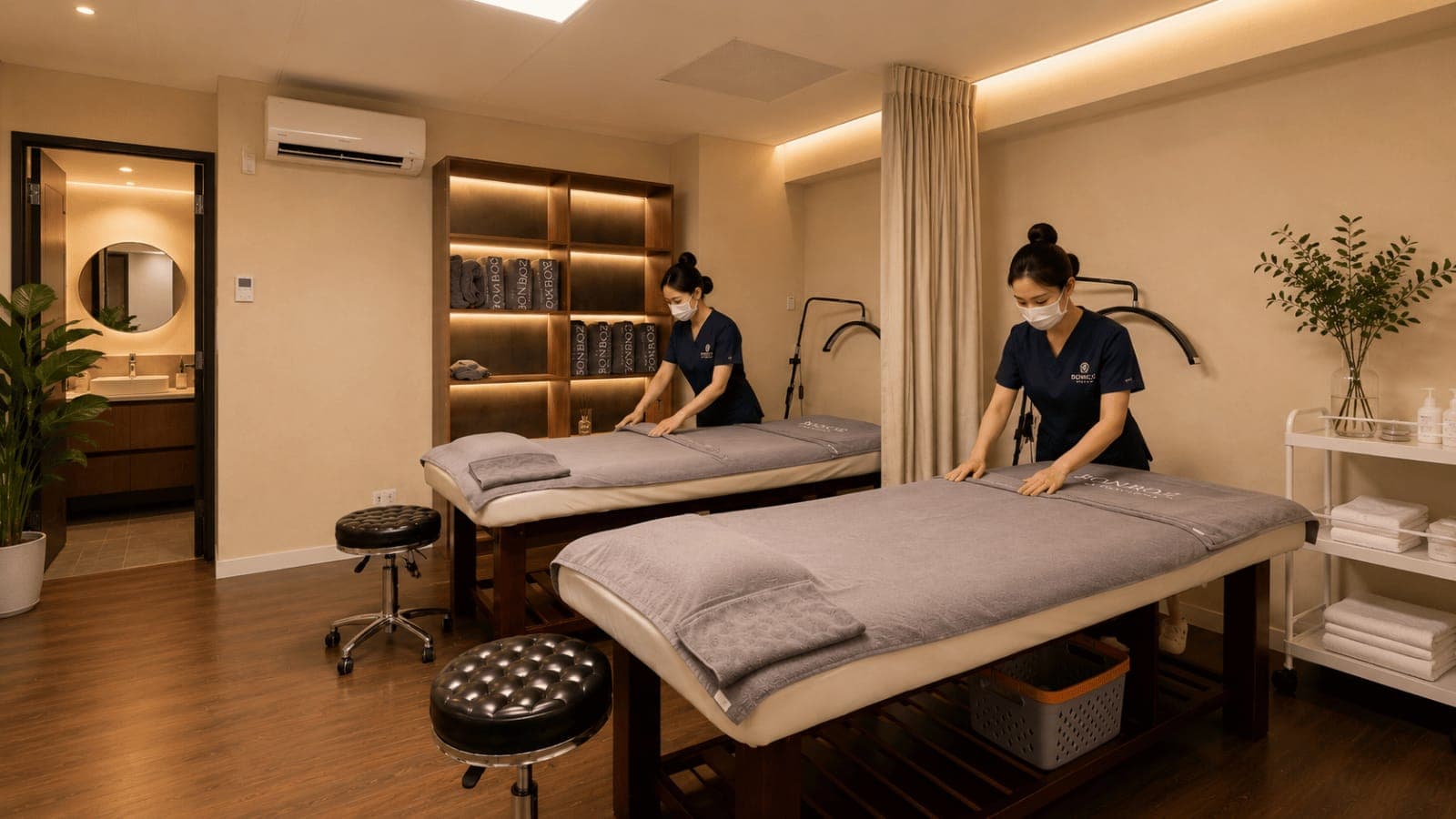
Inside the BonBoz clinic


Book a consultation with a doctor
Choose a date, time slot and doctor — the clinic calls to confirm within 5 minutes during opening hours. Free consultation, no commitment.
Frequently asked questions
Is laser toning painful?
How many sessions are needed for melasma?
How many sessions are needed for freckles and brown spots?
Does laser toning thin or weaken the skin?
Is sun avoidance necessary?
Does laser toning treat post-acne dark spots?
Are topical medications needed after laser treatment?
Can it be performed on active acne?
How long do the results last?
Who performs the procedure at BonBoz?
Related topics
- PRP (Platelet-Rich Plasma) Cost: Price Range Reference
- Mesotherapy and Skin Booster Costs: Price per Session and Treatment
- Dermal Filler Cost by Treatment Area: Price per cc and Key Factors
- Botox Cost by Area: Reference Price Range
- BAP (Bio Aesthetic Points) Technique with Skin-Restructuring HA: 5 Points per Side of the Face, Mechanism of Action, and Ideal Candidates
- Mesotherapy (Micro-injections of Active Ingredients): Mechanism of Action, Common Ingredients, Treatment Protocol, and Limitations
More from our doctors
Melasma, Freckles, and Brown Spots: Understanding the Causes and How to Tell Them Apart
Melasma, freckles, and brown spots are often confused despite having distinct characteristics. Understanding their causes and key differences helps you identify your skin condition and communicate effectively with your doctor.
Post-Acne Hyperpigmentation (PIH) vs. Atrophic Acne Scars: How to Tell the Difference and Treatment Approaches for Each Type
Post-inflammatory hyperpigmentation (PIH) is a flat pigmentary disorder on the skin, while atrophic acne scars are areas of collagen loss—their differentiation and treatment approaches are entirely different.
Steroid-Induced Acne from Prolonged Corticosteroid Use: Identifying Signs and Treatment Approaches
Prolonged use of topical corticosteroids, especially on the face, can cause adverse skin reactions such as perioral dermatitis, steroid acne, or rebound flares upon discontinuation. Safe management: DO NOT discontinue use abruptly on your own — consult your prescribing physician for a controlled tapering schedule, combined with targeted specialized treatment.