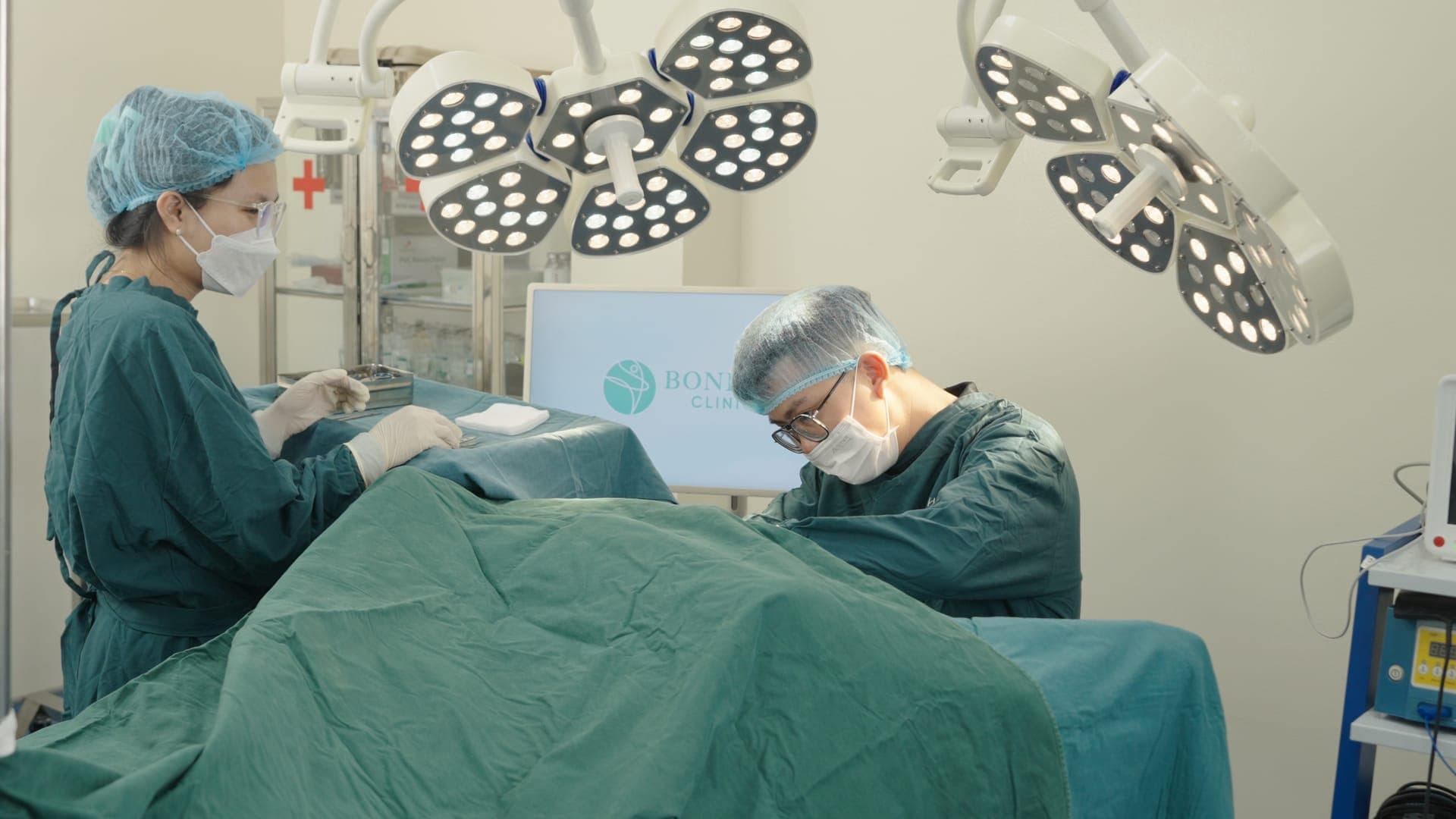
Rhinoplasty
Nose reshaping tailored to your face, performed directly by our specialist doctors.
Xem chi tiết →
Surgery at BonBoz is led by Dr. Nguyen Xuan Vu (MSc, Specialist Level II): the doctor who examines you is the one who operates. Plans follow your facial structure, not a template.
This page gathers the whole cluster in reading order: services → your concern → the right method → articles by the doctors. Every surgery carries risks and recovery time; results vary by individual.
This page is for you if
Real photos at 66–68 Vo Van Tan, Ho Chi Minh City.
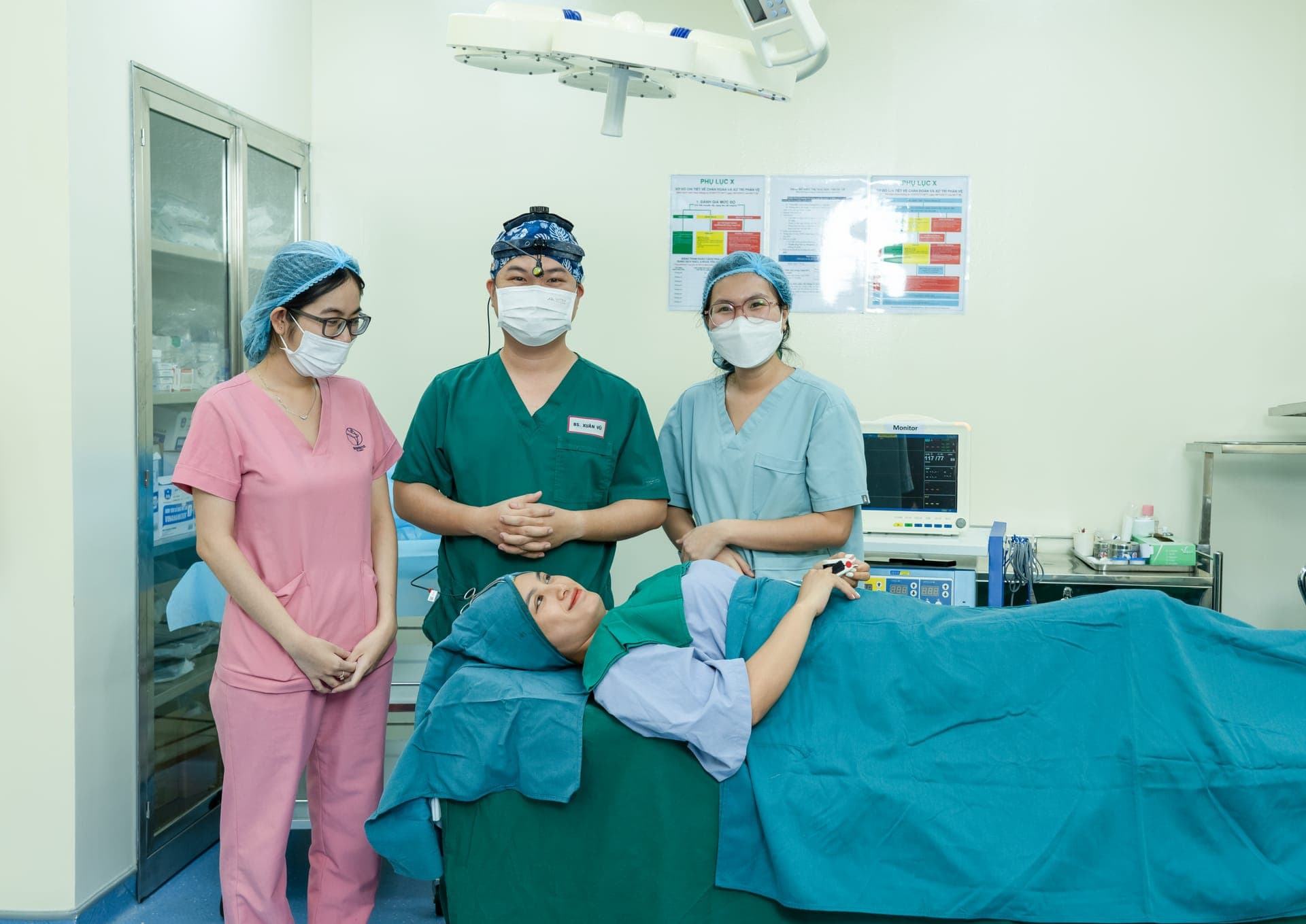

Nose reshaping tailored to your face, performed directly by our specialist doctors.
Xem chi tiết →
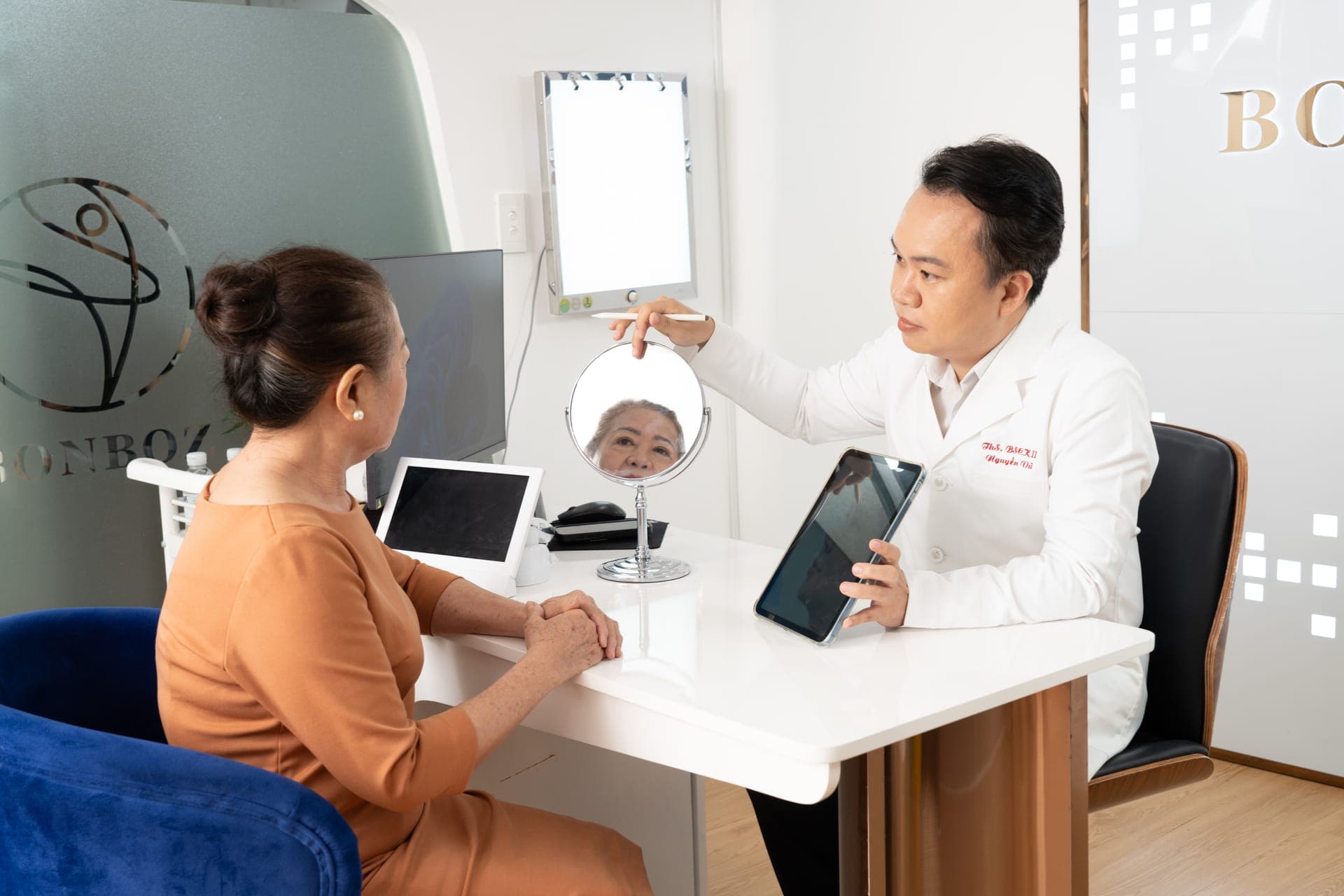
Lifting sagging areas just enough so you still look like yourself.
Xem chi tiết →16 techniques for eyelid creases, blepharoplasty, lower-lid fat and brow lift — chosen for your eye structure.
Xem chi tiết →Each page answers directly: severity, when to see a doctor, how BonBoz treats it.
Uneven eyelids occur when the two eyelid creases differ in height or definition, or when a crease is present on only one side; this can sometimes be caused by mild unilateral ptosis. Eyes are rarely completely symmetrical to begin with—correction is only recommended when the asymmetry is noticeable and bothersome.
Eyebrow ptosis occurs when the brows descend below the orbital rim with age, weighing down the upper eyelid skin and creating a heavy, tired appearance. Many people assume they need an upper blepharoplasty, but the root cause actually lies in the brow.
An epicanthal fold is a skin fold at the inner corner of the eye that partially covers the palpebral fissure, making the eyes appear shorter and spaced further apart. This is a common feature among East Asians; intervention is only considered when the fold covers a significant portion and you desire longer, more defined eyes.
Sunken eye sockets and deep tear troughs are caused by periorbital volume loss—leading to hollow upper eyelids and dark under-eye shadows despite adequate sleep. The primary causes include the atrophy or displacement of periorbital fat due to aging, or innate anatomical structure.
Monolids lack a crease on the upper eyelid, while hidden double eyelids have a crease that is obscured by skin when the eyes are open. Both are completely normal anatomical variations—intervention is only considered if you desire a more defined crease or if the skin coverage makes your eyes appear heavy.
A shiny, red nasal tip or bridge with visible implant contours beneath the skin after rhinoplasty is a sign of progressive skin thinning caused by implant pressure. This is not a condition that will "resolve on its own"—the longer it is left untreated, the harder it is to preserve the skin.
Flared nasal alae occur when the width of the alar base exceeds the intercanthal distance, often accompanied by enlarged nostrils or thick alar bases. Not every case requires alar base reduction—elevating the nasal tip alone can sometimes naturally slim down the alar width.
A short, upturned nose occurs when the nasal tip is excessively rotated upward, resulting in excessive nostril show on frontal view and an obtuse nasolabial angle. This is typically caused by an underdeveloped columella and caudal septum, or by capsular contracture following previous rhinoplasty.
A dorsal hump is a bony-cartilaginous protrusion along the nasal bridge that rises above the straight line connecting the radix to the nasal tip, most noticeable from the profile view. This is a structural feature that does not resolve on its own with age.
Deep nasolabial folds, sagging cheeks, a double chin, and an undefined jawline are signs of skin and supporting tissues sagging with age. From HIFU and thread lifts to facelifts — each degree of laxity requires the right solution, and choosing the wrong level is simply a waste of money.
Vietnamese nasal anatomy often features a low bridge, a bulbous nasal tip, wide alar bases, and thick skin. Each characteristic requires a distinct technique—dorsal augmentation alone will not refine the tip, and alar reduction is a separate procedure.
During the first few weeks after rhinoplasty, the nose may appear asymmetrical due to uneven swelling—this usually resolves on its own. True deviation caused by implant displacement, cartilage warping, or improper splinting requires an early evaluation by a surgeon and can sometimes be corrected non-surgically.
A deviated nose, redness, visible implant contour, capsular contracture, or breathing difficulties after a rhinoplasty are common reasons for revision. Revision surgery is inherently more complex than the primary procedure due to preexisting scar tissue—requiring sufficient healing time, the right surgeon, and realistic expectations.
After 40, upper eyelid skin loses elasticity and creates excess folds that hood over the eyelid crease, making the eyes look heavy and tired. Upper blepharoplasty to remove excess skin is commonly considered—yet it must be clearly distinguished from ptosis and brow ptosis, as each condition requires a different approach.
Eye bags are caused by protruding orbital fat or sagging lower eyelid skin, while dark circles refer to darkened skin caused by pigmentation, vascular congestion, or structural shadowing. Though appearing in the same area, their underlying causes are entirely different, meaning their treatments—ranging from skincare to surgery—are distinct as well.
Ptosis occurs when the upper eyelid margin droops, covering the pupil due to a weakened levator muscle—this is a functional issue, not a matter of the eyelid crease. Conventional double eyelid surgery cannot resolve this condition; a prior assessment of the levator muscle is required.
Mechanism, procedure, risks and who should not have it — to understand before you decide.
Thread lifting involves inserting barbed or smooth self-dissolving threads into the subcutaneous tissue to lift sagging areas and stimulate collagen production. It is effective for mild to moderate sagging; for significant sagging, surgical facelift is required.
Costal cartilage provides sufficient volume and structural rigidity to reconstruct the nasal framework in complex cases: revision rhinoplasty, contracted/short noses, and cases requiring significant nasal lengthening. It is not the default choice for simple, primary rhinoplasty.
Nasal wing reduction involves removing excess skin and soft tissue at the base of the nostrils or the nasal floor to create a slimmer appearance and balanced nostrils. This is a minor procedure, but it can be challenging to correct if too much is removed — the principle is to cut just enough.
Revision rhinoplasty addresses complications from previous nose surgeries, such as deviation, visible implants, redness, contracture, infection, or unsatisfactory aesthetic results. The procedure is more complex than primary surgery due to scar tissue, thinned soft tissue, and previously used autologous cartilage.
Ptosis caused by a weak levator muscle or aponeurotic laxity requires muscle adjustment surgery to properly elevate the eyelid margin—fundamentally different from cosmetic blepharoplasty, which only removes excess skin. This is a functional procedure that requires a thorough diagnostic evaluation.
A short-incision brow lift elevates and secures sagging eyebrows through a fine incision placed along the upper border of the eyebrow, effectively addressing excess skin at the outer corners of the eyes. This is an essential procedure performed either prior to or alongside blepharoplasty when brow ptosis is present.
Medial epicanthoplasty is a minor surgical procedure that rearranges the skin fold at the inner corner of the eye (epicanthic fold) to reveal more of the lacrimal caruncle, lengthen the palpebral fissure by a few millimeters, and create the appearance of closer-set eyes. The results are inherently limited by individual anatomical structure.
Fat repositioning shifts protruding lower eyelid fat pads to fill the hollow tear troughs beneath, rather than removing them. This simultaneously addresses both excess and deficiency around the eyes using your own tissue.
Transconjunctival lower eyelid fat removal accesses the fat pads from the inner surface of the eyelid, leaving no external skin incisions. It is ideal for under-eye bags in individuals with good skin elasticity; it does not address excess skin.
Lower eyelid skin excision addresses sagging, wrinkled under-eye skin caused by aging through an incision placed right along the lower lash line, which may also be combined with fat pad management. It is indicated for individuals whose primary concern is excess skin, typically aged 45–70.
Full-incision upper blepharoplasty uses an incision along the length of the eyelid crease to remove excess skin, address fat, and create a stable crease. It is the foundational technique for aging and puffy upper eyelids—not a procedure for 'eye enlargement.'
Mini Line blepharoplasty uses an incision measuring approximately two-thirds the length of the eyelid to remove a moderate amount of excess skin and secure the eyelid crease. Positioned between non-incisional double eyelid surgery and full-incision blepharoplasty, it offers longer-lasting results than the suture technique while being less invasive than the full-incision approach.
Non-incisional double eyelid surgery creates a double eyelid crease by using several sutures to connect the eyelid skin to the levator muscle, without skin excision. It is suitable for younger individuals with minimal excess skin and fat; the crease may gradually fade over time in individuals with thicker eyelid fat.
Total structural rhinoplasty reconstructs the osteocartilaginous framework using autologous cartilage (septal, auricular, or rib cartilage): lengthening short noses, projecting bulbous tips, and correcting failed previous surgeries. The procedure takes longer and requires an extended recovery period along with an experienced surgeon—in return, it successfully resolves complex cases that other techniques cannot achieve.
Semi-structural rhinoplasty elevates the nasal bridge with synthetic implants, reconstructs the columella, and reshapes the nasal tip using autologous cartilage while preserving the native nasal framework—bridging the gap between cartilage-grafted and full structural rhinoplasty in terms of invasiveness, recovery time, and cost.
Dorsal augmentation using synthetic implants combined with tip graft coverage using ear cartilage (or Megaderm) prevents excessive tension on the nasal tip skin—a popular technique for low nasal bridges with a relatively well-defined tip and moderate skin thickness. This method cannot correct a bulbous or severely short, upturned tip.

Chuyên khoa Ngoại — Tạo hình thẩm mỹ
Choose a date, time slot and doctor — the clinic calls to confirm within 5 minutes during opening hours. Free, no commitment.
You can apply light makeup after 2–3 weeks, but you should avoid wearing glasses for the entire first month as instructed by the clinic. However, you must strictly follow your doctor's instructions to avoid compromising the surgical outcome.
It is advisable to avoid getting a rhinoplasty during the summer, in hot and humid weather, or during busy months when post-operative care is difficult. October to November is the ideal time.
Eyelid asymmetry after double eyelid surgery may partially self-correct, but relying on this is not an ideal approach. You should schedule a follow-up examination so the doctor can evaluate the condition and provide timely intervention.
Watery eyes after double eyelid surgery are a normal reaction during the recovery phase. However, it is important to recognize when you need to notify your doctor.
Nose surgery is a personal decision, but if you are looking to enhance your nasal shape to boost your confidence and have thoroughly researched the procedure, this could be a choice well worth considering.
After double eyelid surgery (upper blepharoplasty), you should avoid eye makeup for at least 2-3 weeks to allow the incision to heal properly. Following suture removal on day 7, you may gradually resume light makeup on the rest of your face.
We use cookies to understand how you use our website and to improve your experience. You can decline and still use all features. Personal Data Protection Policy