
Dorsal hump — Hump nose
A dorsal hump occurs when the bone and cartilage along the bridge of the nose project higher than the line connecting the radix to the tip, creating a visible bump in profile. This is either a congenital structural trait or the result of trauma, and it does not flatten on its own with age. Correction involves controlled hump reduction, often combined with augmenting the radix or nasal tip to achieve a smooth, continuous dorsal line.
Compiled from BonBoz Clinic clinical documentation — currently in medical review
Why is a dorsal hump more noticeable from the profile than from the front?
The nasal bridge is formed by the nasal bones in the upper section and the upper lateral cartilages in the lower section. When these areas project above the ideal line connecting the radix to the nasal tip, light creates a shadow beneath the hump. This makes it almost unnoticeable from the front, yet immediately apparent from the profile. Many people only realize it when looking at profile photos.
Bony hump or cartilaginous hump?
A hump positioned high that feels hard to the touch is a bony hump; a hump located lower, closer to the tip, and softer to the touch is a cartilaginous hump. Most commonly, it is a mixed hump situated at the junction where bone meets cartilage (the keystone area). Differentiating between these types determines the surgical technique: a bony hump requires controlled rasping or osteotomy, a cartilaginous hump requires cartilage resection, and a mixed hump involves both, with careful preservation of the junction's stability to prevent bridge collapse.
Why is reducing the hump alone not always enough?
Solely reducing the hump flattens the nasal bridge but can lead to an "open roof" deformity—where the separated bony edges leave a widened bridge—or make the radix appear relatively lower. Therefore, surgeons typically combine techniques: reducing the hump, narrowing the nasal bones if necessary, and slightly augmenting the radix or nasal tip to create a seamless dorsal aesthetic line. For patients with thin skin, any minor irregularities after rasping can become visible, requiring camouflage with cartilage or soft tissue grafts.
What determines the degree of improvement?
The height of the hump, skin thickness, structural integrity of the keystone area, the presence of a deviated septum, and whether the nose has undergone prior procedures. A small hump with thick skin generally achieves a smooth dorsal line with moderate intervention; a prominent hump with thin skin demands more meticulous surgical techniques and realistic expectations.
How does BonBoz approach dorsal hump reduction?
Our plastic surgeons conduct a direct clinical examination, capture standardized multi-angle photographs, and thoroughly assess the bony-cartilaginous hump, skin thickness, breathing function, and nasal septum. The surgical plan is tailored to each individual's anatomical structure: isolated hump reduction, hump reduction combined with radix augmentation, or structural rhinoplasty when comprehensive correction of the nasal tip and columella is needed. The examining physician is also the operating surgeon; all potential risks and recovery timelines are clearly communicated before you make your decision.
Severity levels
1
Mild — hump under 2 mm
Low hump, visible only on close profile inspection. May only require gentle rasping or augmenting the radix to create a seamless dorsal line.
2
Moderate — hump 2–4 mm
Clearly visible from profile and three-quarter views. Typically requires bony-cartilaginous hump reduction combined with osteotomy (nasal bone narrowing) and dorsal grafting with cartilage.
3
Severe — hump over 4 mm or with deviation
Prominent hump, potentially accompanied by a deviated septum and a drooping nasal tip. Requires structural rhinoplasty to comprehensively address the dorsum, tip, and columella.
When should you see a doctor?
- A dorsal hump appeared or enlarged following nasal trauma — an examination of the nasal bones and septum is required.
- You experience one-sided nasal congestion and difficulty breathing when lying down — a deviated septum may accompany the dorsal hump.
- You are considering "dermal fillers to camouflage the hump" — a physician evaluation is essential, as nasal bridge fillers carry vascular risks and provide only temporary camouflage.
- You have had previous rhinoplasty, but the nasal bridge still has a hump or visible step-off deformity — a revision evaluation is needed.
How BonBoz treats it
Controlled Hump Reduction
Rasping or shaving the osteocartilaginous hump layer by layer, preserving the osteocartilaginous junction to prevent dorsal collapse.
Learn about this method →Semi-structural Rhinoplasty
For moderate humps requiring mild tip elevation: hump reduction, dorsal augmentation with a synthetic implant, and nasal tip grafting using autologous cartilage.
Learn about this method →Structural Rhinoplasty
For prominent humps accompanied by deviation, a drooping nasal tip, or revision cases: columellar reconstruction, septal correction, and complete nasal reshaping.
Learn about this method →Want a cost range for your own case?
Estimate the cost →Cost guidance
The cost depends on the extent of the dorsal hump and any accompanying surgical techniques (hump reduction alone, semi-structural, or structural rhinoplasty). Our doctor will provide a specific quote following an in-person examination and standardized photography; you can also check our price range using the cost estimator tool.
The final price follows the doctor’s recommendation after an in-person exam. A confirmed quote has no hidden extras.
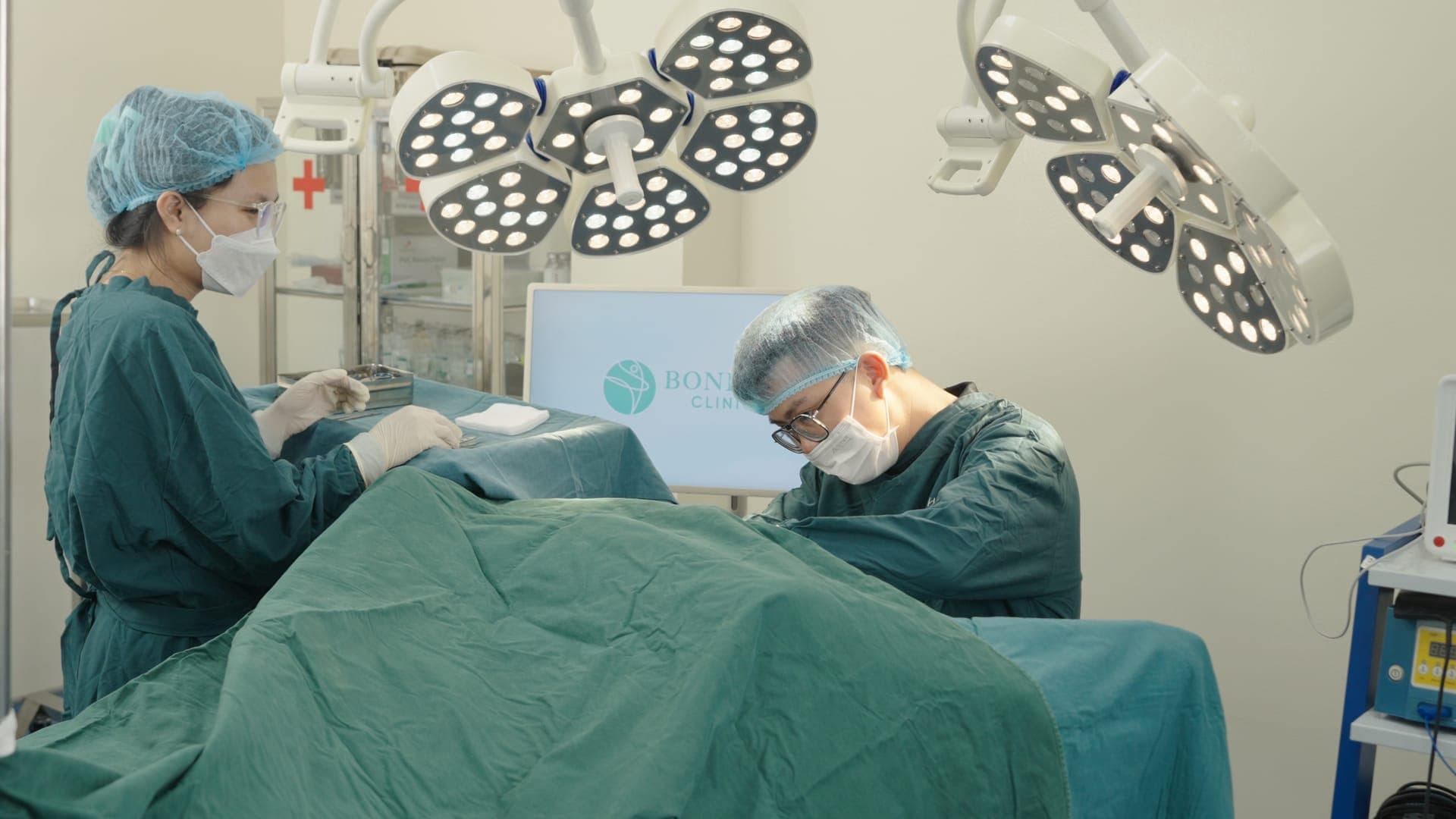
Inside the BonBoz clinic


Book a consultation with a doctor
Choose a date, time slot and doctor — the clinic calls to confirm within 5 minutes during opening hours. Free consultation, no commitment.
Frequently asked questions
Will a dorsal hump go away on its own with age?
Can filler be used to camouflage a nasal hump?
Does hump reduction make the nose look flatter or lower?
Can hump reduction cause an "open roof" deformity?
Can patients with thin skin undergo hump reduction?
How long does swelling and bruising last after hump reduction?
Does hump correction affect breathing?
How is a nasal hump with a drooping tip treated?
How long does it take to see the final results?
Can a persistent hump be corrected after a previous rhinoplasty elsewhere?
Related topics
- Cost of Full Structural Rhinoplasty: Reference Price Range
- Semi-Structural Rhinoplasty Cost: Price Range and Cost-Affecting Factors
- Cost of Rhinoplasty with Cartilage-Wrapped Tip: Price Range and Key Factors
- Autologous Costal Cartilage Rhinoplasty: Indications, Pros, Cons, and the Cartilage Harvesting Procedure
- Nasal Wing Reduction (Alar Plasty): Techniques, Who Needs It, Incision Locations, and Risks of Asymmetrical Nostrils
- Revision Rhinoplasty (Secondary Rhinoplasty): When It Is Needed, Why It Is More Challenging, and the Procedure at BonBoz
More from our doctors
Structural Rhinoplasty vs. Semi-Structural Rhinoplasty: Which Method Is Right for You?
Structural rhinoplasty completely reconstructs the nasal framework, whereas semi-structural rhinoplasty only modifies specific areas. The right approach depends on your aesthetic goals and individual nasal anatomy.
What Examinations and Preparations Are Required Before Rhinoplasty? Pre-Operative Tests and Dietary/Lifestyle Restrictions
Prior to rhinoplasty, you will undergo an examination, complete routine preoperative tests, and follow specific preoperative instructions. Be sure to consult closely with your doctor throughout the process to avoid any scheduling delays.
How Long Does Swelling Last After Rhinoplasty? Key Recovery Milestones You Need to Know
Following rhinoplasty, swelling typically lasts from several days to a few weeks depending on the extent of the procedure. The first ten days are the period of peak swelling, after which it gradually subsides.
Should You Get a Rhinoplasty? A Detailed Guide from BonBoz Clinic
Nose surgery is a personal decision, but if you are looking to enhance your nasal shape to boost your confidence and have thoroughly researched the procedure, this could be a choice well worth considering.