
Drooping eyebrows, tired-looking eyes
Eyebrow ptosis occurs when the eyebrows drop below the orbital rim due to aging, pushing upper eyelid skin downward and resulting in a heavy, tired appearance with excess skin at the outer corners of the eyes. This is easily confused with blepharoptosis (eyelid ptosis) or redundant eyelid skin. The appropriate solution is a brow lift performed through a short incision just along the brow margin; undergoing blepharoplasty alone while the eyebrows are sagging will pull the brows down even further.
Compiled from BonBoz Clinic clinical documentation — currently in medical review
Why Do Drooping Eyebrows Make the Eyes Look Sad?
Normally, the eyebrows sit at or slightly above the superior orbital rim. With age, the soft tissues of the forehead and temples lax, causing the eyebrows—particularly the tail—to descend. This pulls down the upper eyelid skin, creating excess skin folds that hood over the lashes and obscure the outer corner of the eye. As a result, the eyes take on a "downward-slanting," tired, and sad appearance, even when you are not fatigued. Many people subconsciously raise their forehead to compensate, leading to deep horizontal forehead wrinkles.
Eyebrow Ptosis, Excess Eyelid Skin, or True Ptosis — How to Self-Check
Stand in front of a mirror and use your fingers to gently support your eyebrows back to their natural position above the orbital rim: if the upper eyelid skin hooding significantly improves and your eyes feel lighter to open, the primary issue is eyebrow ptosis. If the eyebrows are in the correct position but the eyelid skin remains loose, it is excess eyelid skin (dermatochalasis)—an upper blepharoplasty is appropriate. If the eyelid margin (not the excess skin) covers the pupil and you must raise your brows to see clearly, it is ptosis caused by the levator muscle—requiring levator muscle correction, not just skin excision. These three conditions often coexist in individuals over 45, which is why a doctor must evaluate each component separately.
Why Does Blepharoplasty Alone Backfire When Eyebrows Are Drooping?
Excising upper eyelid skin while the eyebrows are descending pulls eyebrow skin downward to close the incision. This drags the eyebrows even lower, shortens the brow-to-lid distance, and makes the eyes look heavier once the swelling subsides. Therefore, the correct approach is to lift the eyebrows first or simultaneously, and only then excise the truly redundant eyelid skin.
What Determines the Degree of Improvement?
The degree of brow ptosis (tail only or the entire brow), forehead skin elasticity, the presence of true excess eyelid skin, age, and bilateral symmetry. Because the eyebrows can descend again as part of the natural aging process, the outcome "winds back the clock" for the eye area rather than stopping aging entirely.
How BonBoz Approaches Eyebrow Ptosis
A plastic surgery specialist directly conducts the examination, measuring the eyebrow position relative to the orbital rim, performing the brow-elevation test to differentiate between brow descent and excess skin, and evaluating the levator muscle function. Treatment options include a short-incision brow lift placed directly along the brow margin (for mild to moderate cases), or a combined approach of a brow lift and upper blepharoplasty when both issues are present. The examining physician is the one who performs the surgery; the incision location, expected degree of lift, and the potential for age-related re-sagging are clearly discussed beforehand.
Severity levels
1
Mild — Drooping brow tail, minimal excess eyelid skin
Only the tail of the brow is lowered, giving the eyes a slightly downturned look. A short-incision brow lift is usually sufficient.
2
Moderate — Full brow ptosis, noticeable excess eyelid skin
Excess skin folds over the eyelid, making the eyes look heavy. Brow lift combined with the removal of true excess upper eyelid skin.
3
Severe — Brow ptosis with eyelid fat herniation, occasionally true ptosis
Comprehensive periorbital aging. Brow lift combined with blepharoplasty to address excess skin and fat; levator muscle repair if true ptosis is present.
When should you see a doctor?
- You were advised to get blepharoplasty, but when you manually lift your brow, the excess eyelid skin significantly decreases — this means your brows need to be evaluated before undergoing eyelid surgery.
- You constantly have to raise your forehead to keep your eyes open, causing horizontal forehead wrinkles to become increasingly deep.
- The eyelid margin droops over the pupil, making it difficult to look upward — a sign of true ptosis, which is distinct from brow ptosis.
- There is a noticeable asymmetry in height between your two eyebrows.
How BonBoz treats it
Limited-Incision Brow Lift
Lifts and secures the brow via a short incision along the upper brow border, addressing sagging skin at the outer eye corners — ideal for mild to moderate cases.
Learn about this method →Full Incisional Blepharoplasty
Removes true excess upper eyelid skin and fat after the brow is repositioned; often performed concurrently with a brow lift.
Learn about this method →Ptosis Repair (Levator Advancement)
For true ptosis: adjusts the levator muscle to achieve proper eyelid margin opening, rather than merely excising skin.
Learn about this method →Want a cost range for your own case?
Estimate the cost →Cost guidance
Brow lift surgery has its own separate pricing; when combined with blepharoplasty, the doctor will provide a comprehensive bundled package. The exact price is determined after an in-person examination and measurement; our cost estimator provides a reference range for eye procedures.
The final price follows the doctor’s recommendation after an in-person exam. A confirmed quote has no hidden extras.
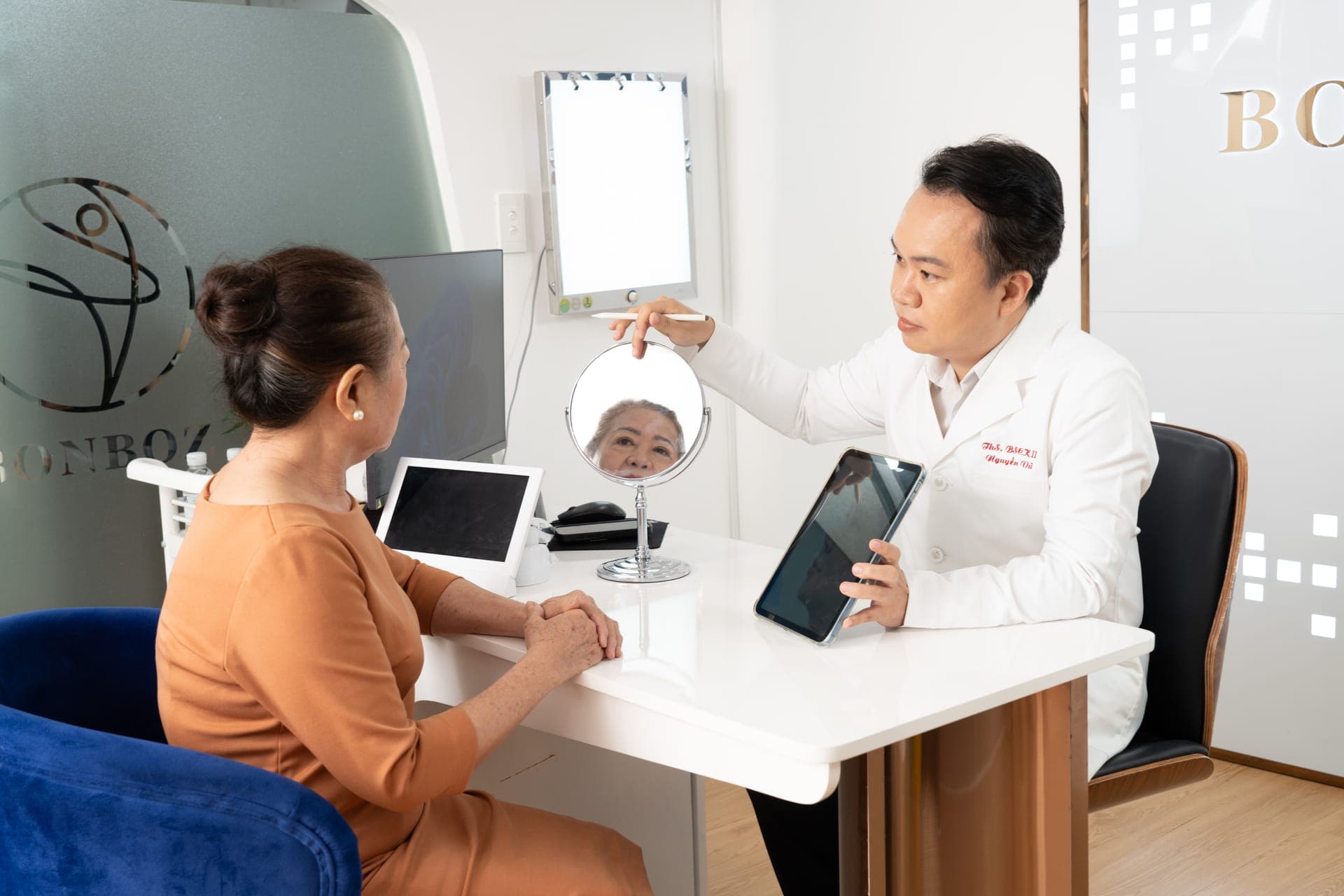
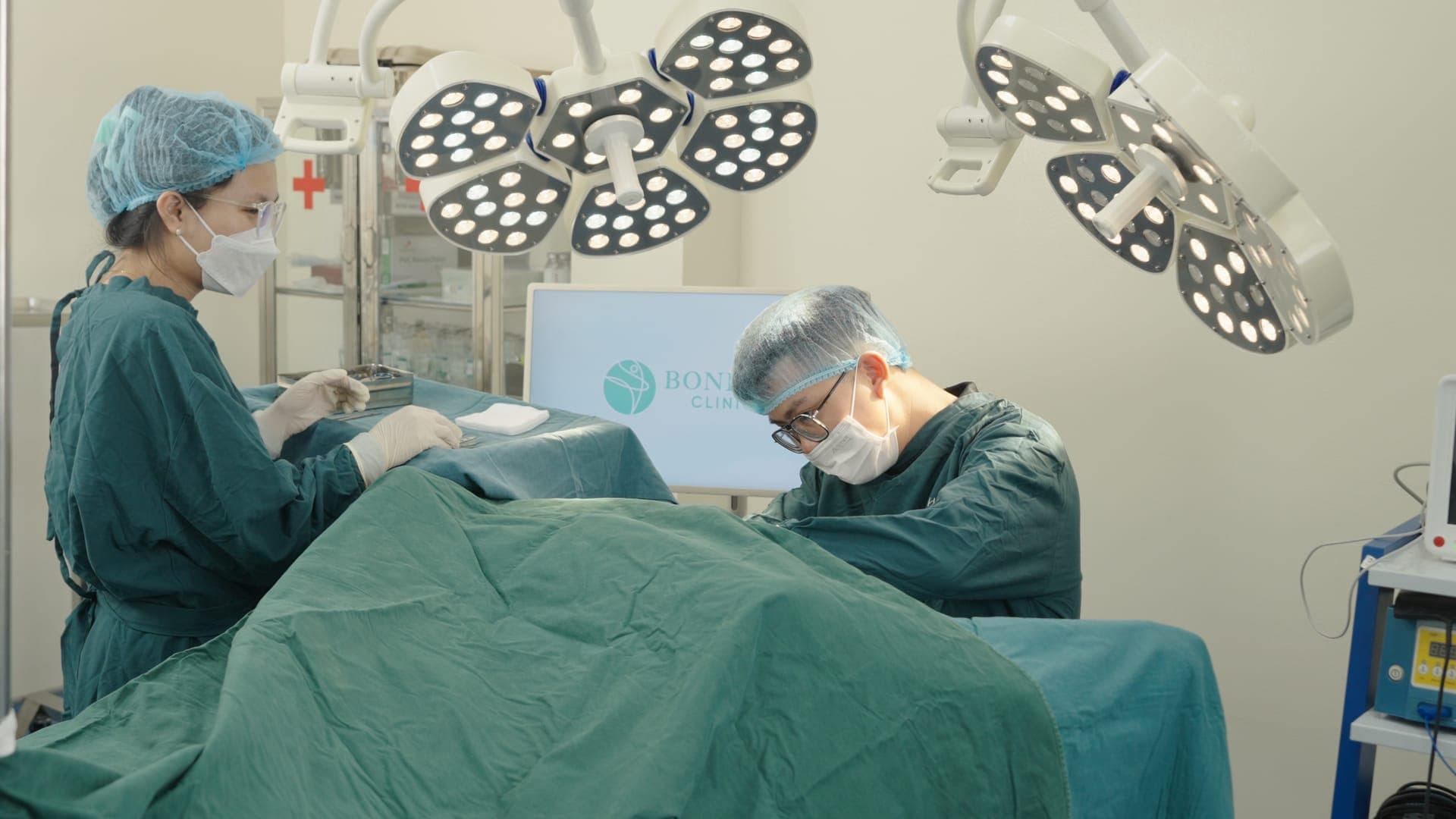
Inside the BonBoz clinic

Book a consultation with a doctor
Choose a date, time slot and doctor — the clinic calls to confirm within 5 minutes during opening hours. Free consultation, no commitment.
Frequently asked questions
Does a brow lift leave visible scars?
How long do brow lift results last?
Can a thread lift or Botox replace a surgical brow lift?
Will my eyes look startled after a brow lift?
Is a concurrent blepharoplasty (eyelid surgery) necessary?
Is numbness or itching in the forehead area normal after surgery?
How long is the recovery time?
Can asymmetric brows (one higher than the other) be corrected?
Related topics
- Ptosis Correction for Levator Muscle Weakness and Laxity (Reborn Eyes): How It Differs from Cosmetic Blepharoplasty, Candidates, and Risks
- Short-Incision Brow Lift (Mini 5D, BonBoz Brow): Lifting Drooping Brows and Correcting Lateral Eyelid Skin Laxity — Procedure and Risks
- Full-Incision Blepharoplasty for Excess Skin and Fat Removal: Procedure, Indications for Aging Eyelids, and Essential Risks to Know
- Sunken eyes, hollow eye sockets, and deep tear troughs: why your eyes look tired and how fat repositioning differs from dermal fillers
- Age-Related Upper Eyelid Laxity: Should You Get Blepharoplasty, and How to Distinguish It from Ptosis and Brow Ptosis?
- Ptosis: How It Differs from Cosmetic Blepharoplasty and When Treatment Is Needed
More from our doctors
Sagging Eyebrows, Tired-Looking Eyes — How Much Can a Brow Lift Help?
Why sagging eyebrows make the eyes look tired, what a brow lift can achieve, when combination procedures are needed, and whether the results look natural.
What is a brow lift? Who is it suitable for, and how does it differ from a thread lift for eyebrows?
What a brow lift is, who is an ideal candidate, how it differs from a thread lift for the brows, and whether the results look natural — helping you gain a clear understanding before making a decision.
How long does a brow lift last? When should a revision be performed?
The longevity of a brow lift depends on various factors and how your brow shape changes over time before requiring a revision.
What is Ptosis? How Does It Differ from Cosmetic Double Eyelid Surgery, and When is Treatment Needed?
Ptosis vs. Aesthetic Blepharoplasty: Key Differences in the Levator Muscle, Warning Signs, and Treatment Options.