
Sunken eyes, hollow eye sockets
Sunken eyes and hollow eye sockets are caused by volume loss around the periorbital area: hollow upper eyelids and deep tear troughs create shadows, making the face look tired despite getting enough sleep. The causes include periorbital fat atrophy or descent due to aging, or congenital deep-set eyes. Treatments include lower eyelid fat repositioning, autologous fat grafting, or dermal filler injections for mild volume deficiency.
Compiled from BonBoz Clinic clinical documentation — currently in medical review
Why Sunken Eyes Make You Look Tired
The periocular area is where light and shadow dictate whether you look refreshed or exhausted. When periorbital fat atrophies or descends, the upper eyelids become hollow, creating a deep groove beneath the brow bone; on the lower eyelids, the lid-cheek junction becomes prominent as a tear trough, where light cannot reach, creating a dark shadow. This shadow is often mistaken for hyperpigmentation, but concealer cannot fully hide it because the underlying issue is structural contour, not skin color.
Three Common Patterns of Volume Loss
Congenitally deep-set eyes: Deep orbital bones with hollow upper eyelids from a young age, often accompanied by prominent double eyelids. Age-related fat atrophy: Gradual upper lid hollowing after age 35–40, combined with brow ptosis that deepens the crease. Under-eye bags with tear troughs: Lower eyelid fat prolapses forward to form bags, directly above a hollow tear trough—a concurrent excess and deficit in the same anatomical zone. This third pattern explains why solely 'removing bags' or solely 'filling the trough' yields incomplete results.
How Fat Repositioning Differs from Dermal Fillers
Dermal filler injections provide temporary volume restoration, suitable for mild hollows without under-eye bags; however, because lower eyelid skin is thin, improper placement depth can easily cause surface irregularities or a bluish hue (Tyndall effect). Fat repositioning is a surgical procedure that releases and moves the protruding lower orbital fat downward to fill the tear trough, addressing both bags and hollows in a single procedure with long-lasting results using your own tissue. Autologous fat grafting harvested from another donor site is used for deep-set hollows without fat prolapse; because a portion of grafted fat naturally resorbs over time, the surgeon may slightly overcorrect.
What Determines the Degree of Improvement?
The extent of volume loss, the presence of concurrent under-eye bags, lower eyelid skin thickness, eyelid tone, and age. Thin skin shows significant improvement in shadowing once a supportive fat layer is placed beneath it; significant skin laxity requires concurrent skin excision.
How BonBoz Approaches Sunken Eyes
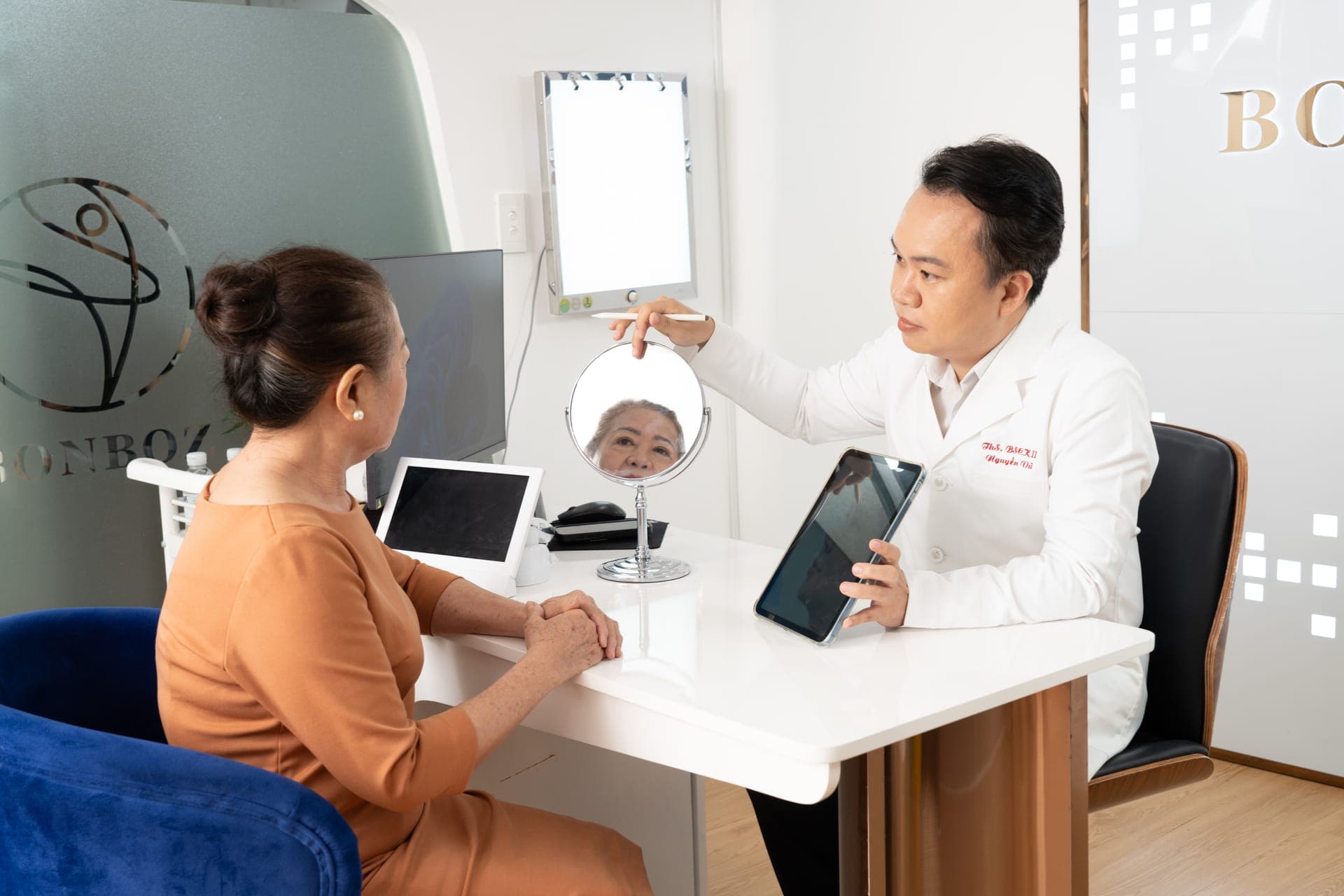
A plastic surgeon conducts a direct examination under standardized clinical lighting to distinguish structural shadows from pigmentary dark circles, palpates to evaluate fat prolapse and tear trough depth, and tests lower eyelid tone. The treatment plan is tailored to the specific pattern of deficit: fat repositioning when under-eye bags coexist with hollow troughs; autologous fat grafting for deep hollows; or dermal fillers for mild deficits when surgery is not preferred. The examining surgeon performs the procedure; recovery timelines and expected fat resorption rates are thoroughly explained in advance.
When Should You NOT Fill the Tear Trough Area?
When orbital fat prolapse is the primary concern (filling will make the area puffier), when residual or unidentifiable previous filler is present, when there is excessive lower eyelid skin laxity (requiring skin excision), or when the under-eye darkness is caused by true pigmentation rather than a structural groove (fillers cannot alter skin color). The surgeon identifies these conditions prior to recommending any intervention.
References
- American Society of Plastic Surgeons — Eyelid surgery: https://www.plasticsurgery.org/cosmetic-procedures/eyelid-surgery
- Goldberg RA. Transconjunctival orbital fat repositioning. Plast Reconstr Surg. 2000 — https://pubmed.ncbi.nlm.nih.gov/10697171/
Severity levels
1
Mild — faint tear trough, no under-eye bags
Subtle under-eye shadowing under overhead lighting. A low-dose dermal filler or ongoing observation can be considered.
2
Moderate — pronounced tear trough with small under-eye bags
Coexisting protrusion and hollowing within the same lower eyelid area. Lower eyelid fat repositioning is the primary approach.
3
Severe — deep eye sockets, hollow upper eyelids, lax skin
Volume depletion in both upper and lower eyelids, often accompanied by brow ptosis. A combined approach involving autologous fat grafting, excess skin management, and consideration of a brow lift.
When should you see a doctor?
- Darkness under the eyes that persists despite sufficient sleep and eye creams is likely due to tear troughs, not hyperpigmentation.
- When the under-eye area presents with both under-eye bags and hollow troughs, removing the fat bags alone will only accentuate the depth of the troughs.
- You previously had under-eye filler injections that resulted in lumping, a bluish hue, or asymmetry.
- Deeply hollow upper eyelids accompanied by a heavy sensation when opening the eyes may be associated with ptosis or brow ptosis.
How BonBoz treats it
Lower blepharoplasty fat repositioning
Repositioning prolapsed lower eyelid fat into the tear trough — addressing both under-eye bags and hollows in a single procedure using your own tissue.
Learn about this method →Transconjunctival lower blepharoplasty
When under-eye bags are the primary concern with shallow hollows: orbital fat is removed via a transconjunctival approach, leaving no external skin incision.
Learn about this method →Tear trough dermal filler
Temporarily restores volume for mild hollows without under-eye bags; injected into the correct anatomical plane using a cannula to minimize lumpiness and the Tyndall effect.
Learn about this method →Want a cost range for your own case?
Estimate the cost →Cost guidance
Dermal filler injections are priced based on the volume used, whereas fat repositioning and fat grafting are surgical procedures with higher costs but longer-lasting results. The doctor will provide an exact quote based on the treatment plan following your consultation; the cost estimation tool provides a reference range only.
The final price follows the doctor’s recommendation after an in-person exam. A confirmed quote has no hidden extras.
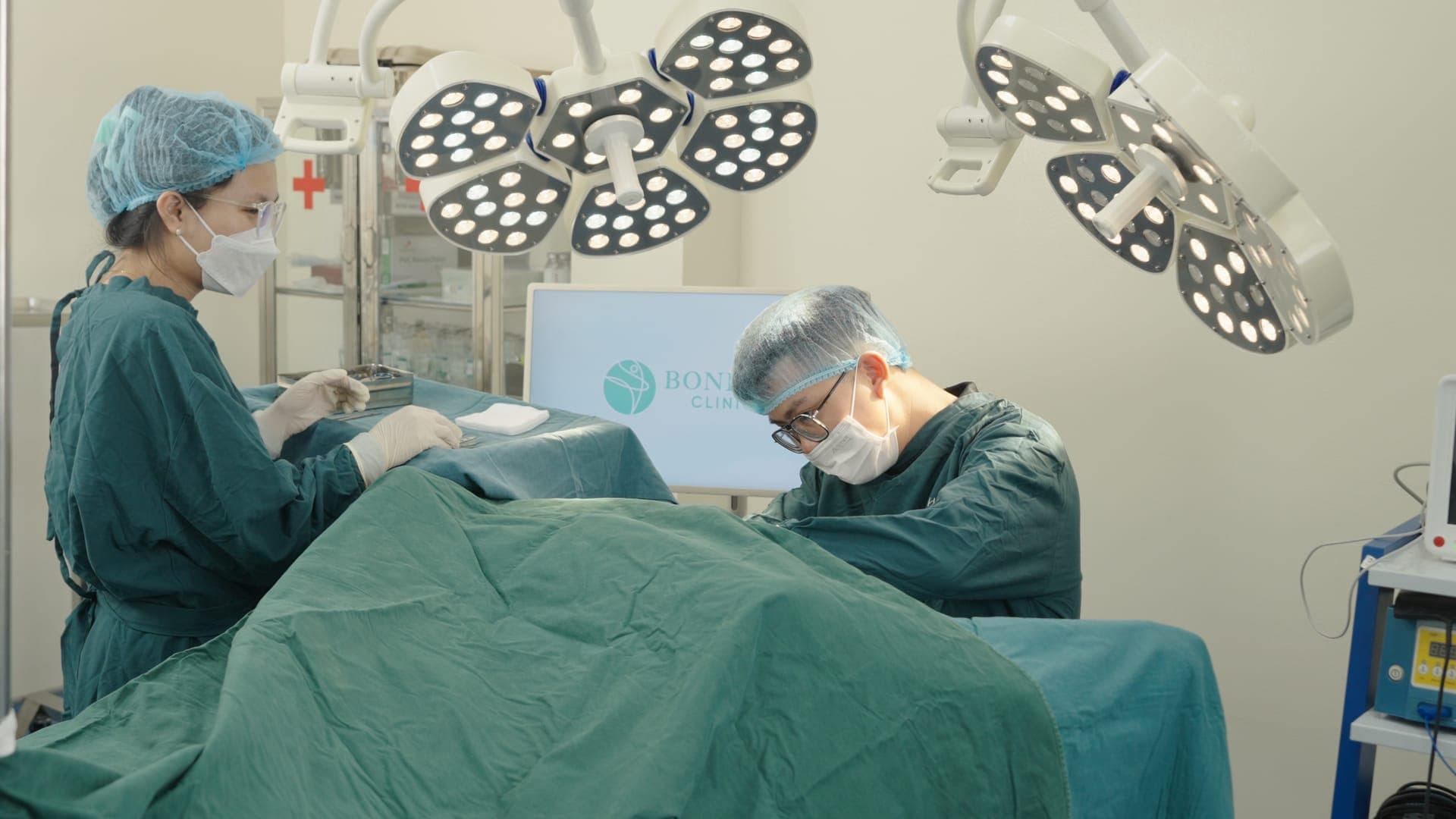
Inside the BonBoz clinic

Book a consultation with a doctor
Choose a date, time slot and doctor — the clinic calls to confirm within 5 minutes during opening hours. Free consultation, no commitment.
Frequently asked questions
How do I know if I have under-eye dark circles or a tear trough?
Is under-eye dermal filler safe?
How long does under-eye dermal filler last?
Does fat repositioning leave a scar?
Does repositioned fat get reabsorbed?
How much autologous fat graft gets reabsorbed?
Can upper eyelid hollows be filled?
How long after surgery will the swelling and bruising subside?
What should young individuals with congenitally deep eye sockets do?
Related topics
- HA Dermal Fillers: Mechanism of Action, Treatment Areas, G-Prime Selection, Vascular Safety, and Hyaluronidase
- Lower Eyelid Fat Repositioning: Addressing Eye Bags and Tear Troughs in a Single Procedure — Mechanism, Indications, and Risks
- Transconjunctival Lower Blepharoplasty (Mini-Endoscopic): Removing Eye Bags Without External Incisions — Who Is It For?
- Sagging Eyebrows, Tired Eyes, and Heavy Upper Eyelid Skin: How to Distinguish Them from Ptosis, and Brow Lift Options
- Age-Related Upper Eyelid Laxity: Should You Get Blepharoplasty, and How to Distinguish It from Ptosis and Brow Ptosis?
- Eye Bags vs. Dark Circles: Different Causes, Different Treatments
More from our doctors
Sunken Eyes and Age-Related Hollow Eyes — What is Eyelid Fat Repositioning?
Why eyes become hollow and sunken with age, what eyelid fat repositioning is, how it differs from fat removal/fillers, and who makes an ideal candidate.
Under-Eye Bags and Dark Circles: When Is Aesthetic Intervention Needed?
You should only consider aesthetic interventions once the underlying causes of your under-eye bags and dark circles have been accurately identified.
What is Endoscopic Eye Bag Removal? Who is a suitable candidate?
Under-eye bags caused by bulging lower eyelid fat can make the face look tired. Endoscopic eye bag fat removal is a commonly mentioned approach, but it is not suitable for everyone with under-eye bags—a doctor's evaluation is required.
Skin Boosters vs. Dermal Fillers: Key Differences and How to Choose the Right Treatment
While both skin boosters and dermal fillers enhance the skin's appearance, they work through different mechanisms: skin boosters improve overall skin quality, whereas fillers fill in wrinkles and restore volume.