
Age-related upper eyelid sagging
Age-related upper eyelid laxity is characterized by excess skin, and sometimes fat, in the upper eyelid due to a loss of elasticity, which obscures the eyelid crease and makes the eyes appear heavy and smaller. Unlike eyelid ptosis (where the eyelid margin droops due to muscular impairment) and brow ptosis (descent of the eyebrow), upper eyelid laxity is treated by excising the excess skin. Because these three conditions often coexist, the surgeon must perform thorough preoperative measurements before surgery.
Compiled from BonBoz Clinic clinical documentation — currently in medical review
Why does eyelid skin sag?
Collagen and elastin deplete with age, the orbicularis oculi muscle thins, and orbital fat shifts. Because the eyelid has the thinnest skin on the body, it sags early and noticeably. Sun exposure, smoking, eye rubbing, and genetics accelerate this process. The result: the eyelid crease becomes hidden, the lash line is weighed down, the eyes look tired and smaller, and some people experience heavy eyelids toward the evening.
Three easily confused conditions
Dermatochalasis (excess skin): surplus skin hoods the crease, but the eyelid margin remains in its correct position; lifting the skin restores normal eye opening. Ptosis (drooping eyelid): the eyelid margin drops and covers the pupil, caused by the levator muscle. Brow ptosis (sagging brows): the eyebrow drops below the orbital rim, pushing skin down onto the eyelid; lifting the brow resolves the excess eyelid skin. If you only perform blepharoplasty on someone with brow ptosis, the brow will drop even further; if you only remove skin on someone with ptosis, the eyes will still look tired.
How blepharoplasty for middle-aged patients differs from younger patients
The goal is not to create a large eyelid crease, but to excise the precise amount of excess skin, preserve a natural crease, remove just enough herniated fat to avoid a hollowed appearance, and assess the levator muscle function. Removing too much skin or fat leads to sunken, hollow eyes that look older—a common mistake. The doctor measures excess skin on each side individually, as asymmetry is very common.
When is surgery not yet necessary?
Mild skin laxity that has not hooded the crease and does not affect vision can be monitored or addressed with non-surgical skin-tightening treatments (periorbital RF or HIFU). These offer moderate results and are suitable for those not yet ready for surgery.
What does BonBoz do?
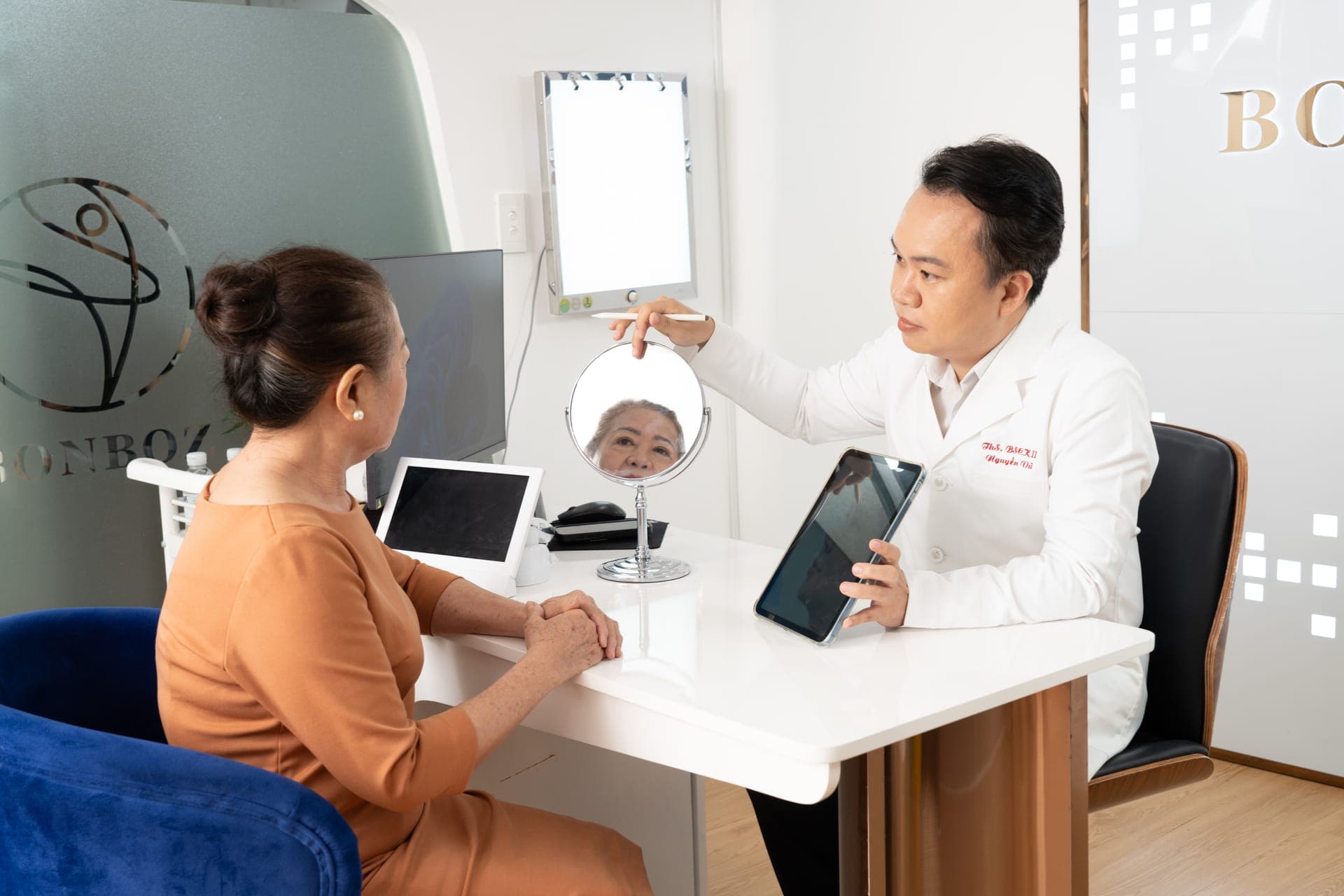
A plastic surgeon will examine you, measure the eyelid margin, assess levator muscle function, check eyebrow position, and evaluate the amount of excess skin on each side. After taking standardized clinical photos, the doctor will discuss your options: blepharoplasty for skin removal, combined with ptosis correction or a brow lift if necessary, or non-surgical monitoring. You will be clearly informed about what can be achieved, what cannot, and what to expect during recovery.
Severity levels
1
Mild — slight skin laxity over the crease
Eyes remain open, with heaviness felt only when fatigued. Recommended approach: monitoring, skincare, or non-surgical skin tightening.
2
Moderate — skin covers the crease and rests on the eyelashes
Eyes appear smaller and tired. Blepharoplasty with moderate excess skin removal is commonly considered.
3
Severe — skin obstructs lateral vision
Skin droops past the lash line, impairing superior-lateral vision. Blepharoplasty should be combined with an evaluation of the brow position and levator muscle.
When should you see a doctor?
- Eyelid skin covers the lash line, causing a heavy sensation and difficulty looking upward.
- Noticeably asymmetrical eyes—potentially accompanied by unilateral ptosis.
- You frequently raise your forehead to open your eyes—suggesting ptosis or brow ptosis, not just excess skin.
- Previous blepharoplasty done elsewhere resulting in sunken, hollow, or persistently heavy eyelids.
How BonBoz treats it
Upper Blepharoplasty with Skin Excision (Middle-Aged Patients)
Precisely removes excess skin and fat, preserving a natural eyelid crease without causing a sunken appearance.
Combined Ptosis Correction
Indicated when levator muscle weakness is detected—muscle repair is performed during the same surgery.
Brow Lift
Recommended when brow sagging is the primary cause of upper eyelid skin laxity.
Non-Surgical Skin Tightening
Peri-orbital RF/HIFU for mild skin laxity or for those not ready for surgery—delivers moderate results.
Learn about this method →Want a cost range for your own case?
Estimate the cost →Cost guidance
The cost depends on whether the procedure is combined with ptosis correction or a brow lift. The doctor will provide a quote following your consultation and measurement; a reference price range for eyelid surgery is available in our cost estimation tool.
The final price follows the doctor’s recommendation after an in-person exam. A confirmed quote has no hidden extras.
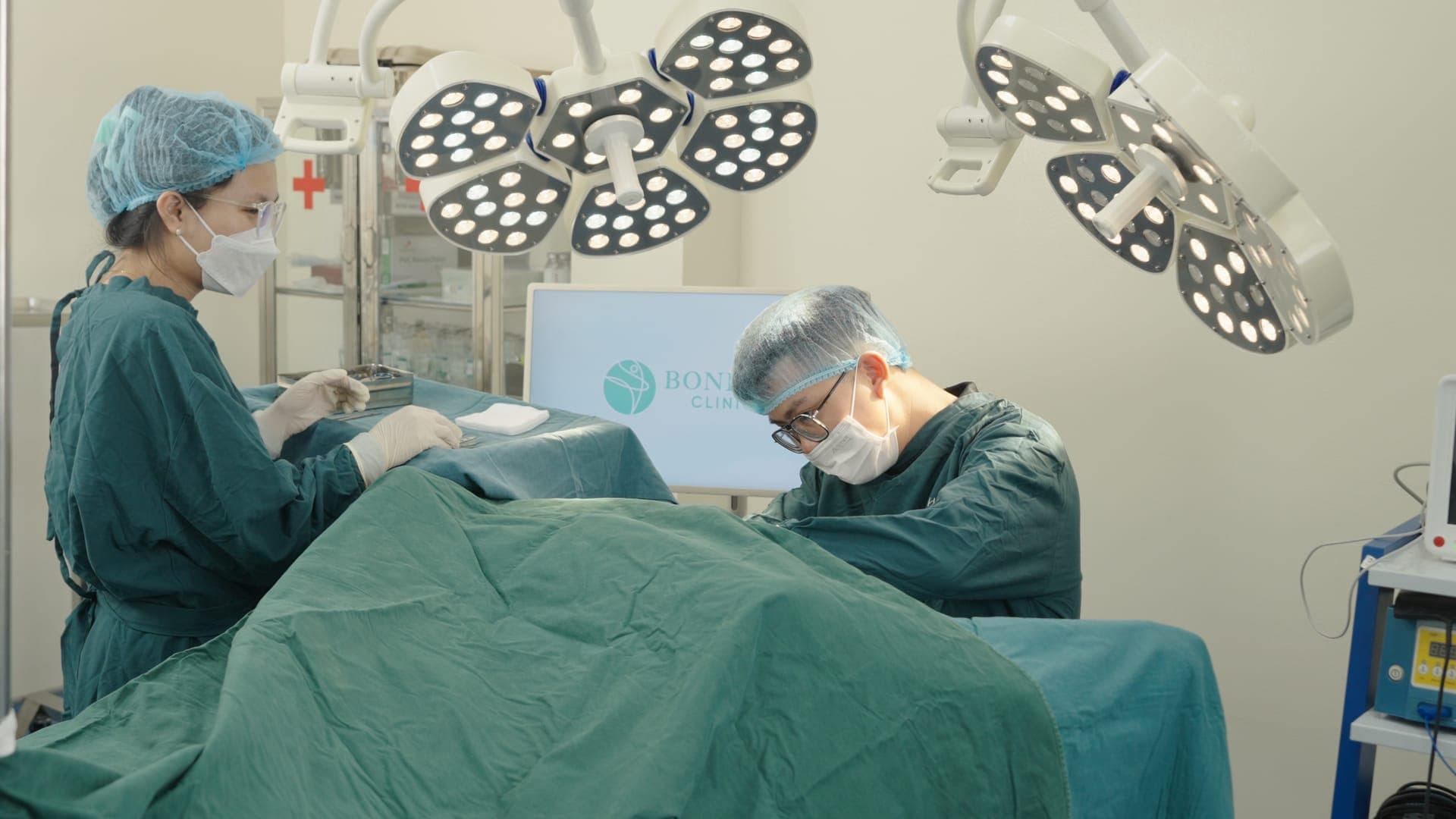
Inside the BonBoz clinic

Book a consultation with a doctor
Choose a date, time slot and doctor — the clinic calls to confirm within 5 minutes during opening hours. Free consultation, no commitment.
Frequently asked questions
At what age should I get upper blepharoplasty for sagging skin?
Is blepharoplasty dangerous for older adults?
Will my eyes look hollow after blepharoplasty?
Will the surgical scar be visible?
How long does swelling last?
Is it necessary to have a brow lift at the same time?
Can RF or HIFU replace blepharoplasty?
How long do the results last?
Can I undergo surgery if I am taking blood thinners?
Who performs the surgery at BonBoz?
Related topics
- Mini-Incision Blepharoplasty (Mini Line): Technique, Ideal Candidates, and How It Differs from Full-Incision Blepharoplasty
- Monolids vs. Hidden Double Eyelids: What’s the Difference, and Who Should Choose Non-Incisional vs. Incisional Double Eyelid Surgery?
- Non-invasive HIFU skin lifting: mechanism, actual efficacy, and suitable candidates
- Eye Bags vs. Dark Circles: Different Causes, Different Treatments
- Ptosis: How It Differs from Cosmetic Blepharoplasty and When Treatment Is Needed
More from our doctors
Should You Get Blepharoplasty for Age-Related Sagging Eyelids? Distinguishing It from Ptosis
Why eyelid skin sags with age, how much blepharoplasty can improve it, how to distinguish it from ptosis, and setting realistic expectations.
What is Ptosis? How Does It Differ from Cosmetic Double Eyelid Surgery, and When is Treatment Needed?
Ptosis vs. Aesthetic Blepharoplasty: Key Differences in the Levator Muscle, Warning Signs, and Treatment Options.
Upper eyelid fat pads make eyes feel heavy: Can blepharoplasty remove them?
How upper eyelid fat pads cause heavy eyes, how blepharoplasty addresses them, distinguishing them from sagging skin/ptosis, and setting realistic expectations.
How does the upper blepharoplasty incision fade over time? Does it leave visible scars?
Why double eyelid surgery (upper blepharoplasty) leaves minimal visible scarring, how the incision fades through different stages, and post-operative care for optimal scar fading.
What is the best sleeping position after double eyelid surgery? Do you need to elevate your head?
What is the best sleeping position after double eyelid surgery? Why should you elevate your head, is sleeping on your side or stomach safe, and how long does it take to return to your normal sleeping habits?