
HIFU — High-Intensity Focused Ultrasound Skin Lifting
HIFU delivers focused ultrasound energy to precise depths of 1.5–4.5 mm, targeting the deep dermis and the SMAS layer to create thermal coagulation points that contract existing collagen and stimulate neocollagenesis over 2–3 months. It is ideal for mild-to-moderate skin laxity in the cheeks, jawline, and neck; it cannot replace a thread lift or facelift in cases of severe skin excess; results typically last 6–12 months.
Compiled from BonBoz Clinic clinical documentation — currently in medical review
Mechanism of Action
The ultrasound transducer focuses energy into precise micro-thermal points at predetermined depths, instantly raising the temperature at the focal point to 60–70°C. This is sufficient to denature and contract collagen proteins while triggering the synthesis of new collagen. The skin surface remains undamaged as the energy is concentrated solely at the focal depth. Cartridges of 1.5 mm (superficial dermis), 3 mm (deep dermis), and 4.5 mm (SMAS) are utilized according to specific anatomical zones.
What Are the Realistic Results?
HIFU delivers noticeable improvements in skin firmness and jawline definition for individuals with mild to moderate skin laxity, with results progressing over 2–3 months and lasting 6–12 months. For cases with severe excess skin, prominent jowls, or substantial submental fullness, HIFU cannot excise or pull excess skin—a thread lift or surgical intervention is required instead. To be precise: HIFU provides 'tightening and firming', not 'surgical lifting'. Setting realistic expectations prevents disappointment.
Who Is a Suitable Candidate?
Individuals aged 30–50 experiencing early loss of firmness, a mildly blurred jawline, or fine lines around the eyes and neck, who seek a non-invasive approach and are committed to maintenance treatments. Lean individuals with minimal facial fat require careful assessment, as HIFU can cause further volume loss if delivered at inappropriate depths.
Why Must a Physician Perform the Procedure?
Incorrect depth and energy settings can lead to burns, subcutaneous fat atrophy (sunken cheeks), and temporary facial nerve damage. The jawline and periorbital areas feature critical anatomical landmarks that must be meticulously avoided. HIFU efficacy is not merely about using advanced equipment—the practitioner operating the handpiece determines both clinical outcomes and safety.
The BonBoz Approach
Our physicians thoroughly evaluate your degree of laxity, skin thickness, and subcutaneous fat distribution to determine whether HIFU is sufficient or if a thread lift or surgical procedure is indicated. Cartridge depths and shot counts are customized for each treatment zone, with strict protocols to protect high-risk anatomical areas. If your degree of skin laxity exceeds what HIFU can achieve, our physicians will provide an honest assessment rather than recommending an unsuitable treatment.
Technique variants
1
Facial HIFU
Focuses on the cheeks and jawline.
2
Neck HIFU
Specifically treats the neck area using parameters distinct from facial settings.
3
Combined HIFU
Paired with other modalities when skin laxity exceeds what HIFU alone can address.
When should you see a doctor?
- Severe skin laxity with significant tissue sagging — HIFU cannot replace surgical intervention, and its limitations should be clearly understood.
- Active facial or oral/dental infections.
- Presence of implanted electronic devices.
- Recent dermal filler injections in the treatment area — requires a specific waiting period determined by the physician.
How is it performed?
The treatment area is mapped with a grid, and ultrasound gel is applied. The doctor moves the transducer along each marked line, delivering passes at 4.5 mm, 3.0 mm, and 1.5 mm depths. A full-face treatment typically takes 45–90 minutes. During the procedure, you may feel rhythmic, deep prickling heat sensations, particularly around the jawline and forehead. Topical anesthesia or oral pain relief can be administered to ensure comfort. The session concludes with a soothing skin-cooling step.
Before the procedure
Remove all makeup thoroughly; disclose any implanted electronic devices, metal implants in the treatment area, recent dermal filler injections (within 4 weeks), pregnancy, or active dermatitis; no pre-treatment downtime is required.
After the procedure
Mild redness and slight swelling for a few hours up to 1–2 days; possible mild tenderness to the touch for a few days; normal daily activities and makeup can be resumed after 24 hours; sun protection is required. Results progressively improve over 2–3 months; follow-up evaluation at 3 months; repeat treatment after 6–12 months if appropriate.
Possible risks — your doctor explains them before treatment
- Redness, mild swelling, and tenderness for a few days
- Transient numbness around the jawline and cheeks for several days to weeks
- Pinpoint or minor linear bruising
- Cheek hollowing and fat loss if treated at an improper depth in lean individuals
- Burns or temporary facial muscle weakness if incorrect energy levels or placements are used — the key reason why a qualified doctor is essential
- Suboptimal results in cases of severe skin laxity
Who should NOT have this?
- Excess skin, severe midface sagging, significant double chin (HIFU cannot lift effectively — thread lift or surgical intervention required)
- Extremely thin individuals with minimal facial fat (risk of facial hollowing)
- Presence of pacemakers, implanted electronic devices, or metal implants in the treatment area
- Recent dermal filler injections within the past 4 weeks in the treatment area
- Pregnancy; active dermatitis, severe inflammatory acne, or herpes infection in the treatment area
- Facial neuropathy or uncontrolled bleeding disorders
How BonBoz uses it
BAP (Bio Aesthetic Points) Technique with Skin-Restructuring HA
The BAP technique involves injecting high-concentration, thermally cross-linked (chemical-free) HA into 5 anatomical points on each side of the face to diffuse and stimulate collagen and elastin over a broad area. It improves skin firmness, elasticity, and overall skin quality without altering facial contours.
Learn about this method →Botulinum Toxin (Botox)
Botulinum toxin provides controlled relaxation of muscles responsible for dynamic wrinkles (forehead, glabellar lines, crow's feet) or hyperactive muscles (masseter, mentalis). Results appear within 5–14 days and last for 3–4 months.
Learn about this method →HA Dermal Filler
HA filler is a cross-linked hyaluronic acid gel injected intradermally or supraperiosteally to restore lost volume, contour facial features (chin, nose, cheeks, lips), and fill static lines. It gradually dissolves over 6–18 months and can be reversed with hyaluronidase if needed.
Learn about this method →Non-Surgical Aesthetics
Service Page: Our medical specialists perform direct consultations, tailor the most suitable treatment plan, and provide transparent pricing before you make a decision.
Learn about this method →Want a cost range for your own case?
Estimate the cost →Cost guidance
The cost depends on the treatment area, the number of lines, and the energy level selected by the doctor for your skin.
The final price follows the doctor’s recommendation after an in-person exam. A confirmed quote has no hidden extras.
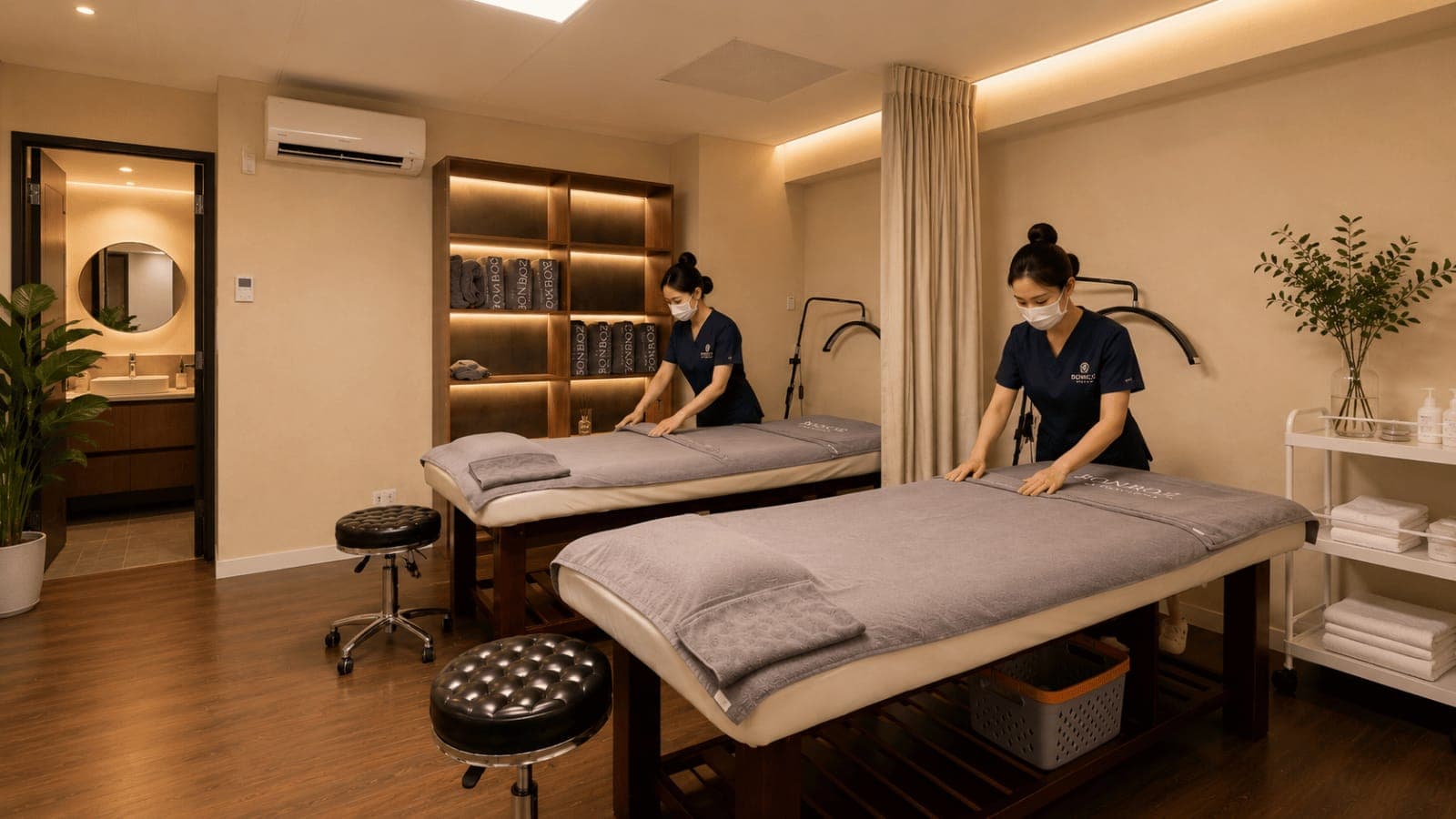
Inside the BonBoz clinic


Book a consultation with a doctor
Choose a date, time slot and doctor — the clinic calls to confirm within 5 minutes during opening hours. Free consultation, no commitment.
Frequently asked questions
Is HIFU painful?
How soon will results be visible?
How long do results last?
Can HIFU replace a thread lift?
Can HIFU cause sunken cheeks?
Can I get dermal fillers after HIFU?
How many sessions are needed?
Is there any downtime?
What is the difference between HIFU at a spa versus a clinic?
Who performs the procedure at BonBoz?
Related topics
- PRP (Platelet-Rich Plasma) Cost: Price Range Reference
- Mesotherapy and Skin Booster Costs: Price per Session and Treatment
- Dermal Filler Cost by Treatment Area: Price per cc and Key Factors
- Botox Cost by Area: Reference Price Range
- BAP (Bio Aesthetic Points) Technique with Skin-Restructuring HA: 5 Points per Side of the Face, Mechanism of Action, and Ideal Candidates
- Mesotherapy (Micro-injections of Active Ingredients): Mechanism of Action, Common Ingredients, Treatment Protocol, and Limitations
More from our doctors
What Is Non-Invasive HIFU Skin Tightening? How Does It Differ from a Thread Lift and Who Is an Ideal Candidate?
HIFU is a non-invasive lifting option often mentioned alongside thread lifts. Understanding what HIFU is, how it differs from a thread lift, and who is an ideal candidate will help you consult effectively with your doctor to choose the most suitable approach.
At what stage of sagging is a thread lift no longer enough, requiring a surgical facelift?
Thread lifts are suitable for a certain degree of sagging; when there is significant skin laxity, a thread lift alone may not be sufficient. Understanding when to consider a surgical facelift helps you set realistic expectations and discuss your options with your doctor.
Which areas of the face benefit most from a thread lift for skin sagging?
A thread lift does not improve every area equally; results vary depending on the treatment area and the degree of skin laxity. Understanding which areas are best suited for a thread lift helps you set realistic expectations and consult more effectively with your doctor.
How Do Botox and Thread Lifts Differ in Mechanism? When Should They Be Combined?
Botox relaxes muscles to smooth dynamic wrinkles, while a thread lift provides facial lifting and skin rejuvenation. These two methods work differently and can be combined to achieve optimal results.