
Eye Bags and Dark Circles
Under-eye bags occur when the lower eyelids puff out as orbital fat protrudes due to an age-weakened orbital septum, or sagging eyelid skin and muscle. Dark circles are the darkening of the under-eye area caused by hyperpigmentation, visible blood vessels beneath thin skin, or shadowing from the tear trough. These two conditions require distinct treatment approaches: eye bags require fat removal, while shadowing can be improved with tear trough filler.
Compiled from BonBoz Clinic clinical documentation — currently in medical review
What Causes Eye Bags?
Orbital fat is naturally held in place by the orbital septum; with age, this septum weakens, allowing fat to herniate and form bags. Some young individuals develop eye bags due to genetics. Age-related laxity of the skin and orbicularis oculi muscle makes bags more prominent; fluid retention, lack of sleep, and allergies cause temporary puffiness that resembles eye bags but fluctuates from day to day.
What Causes Dark Circles?
Three mechanisms: Pigmentation (darkened periorbital skin due to genetics, eye rubbing, or atopic dermatitis); Vascular (the skin of the lower eyelid is extremely thin, revealing bluish-purple blood vessels that become more pronounced with sleep deprivation); Structural shadowing (deep tear troughs or protruding fat bags cast a shadow underneath, creating the appearance of dark circles even with normal skin pigmentation). Many individuals present with 2–3 overlapping mechanisms simultaneously.
Why Are Eye Creams Often 'Ineffective'?
Because most dark circles in Vietnamese individuals are caused by structural shadowing or vascular issues, not hyperpigmentation—and brightening creams only target pigmentation. When viewed under light from an angle, if the darkness disappears upon gently stretching the skin downward or tilting the head back, it is a structural shadow.
Cause-Specific Treatment Approaches
True fat bags: Lower blepharoplasty (transconjunctival approach leaving no external scar for patients without significant skin laxity, or a subciliary approach combined with excess skin excision when laxity is present). Deep tear troughs: Volumization with HA fillers or autologous fat grafting. Pigmented circles: Gentle topical brightening agents, sun protection, and stopping eye rubbing. Vascular circles: Improving sleep, using mild vasoconstrictive ingredients, or vascular lasers in selected cases. Temporary puffiness: Managing allergies, reducing dietary sodium, and sleeping with the head elevated.
How BonBoz Approaches Your Treatment
A physician conducts an in-person assessment to distinguish true fat bags from temporary puffiness, determine the underlying mechanism of dark circles, and evaluate lower eyelid skin laxity. Based on these findings, we recommend an appropriate treatment plan—which may range from targeted skincare and tear trough rejuvenation to lower blepharoplasty—while clearly explaining the realistic capabilities and limitations of each option.
Severity levels
1
Temporary puffiness
Fluctuates daily, more noticeable in the morning, linked to sleep, salt intake, or allergies. Non-surgical; managed with proper care and addressing the root cause.
2
Mild eye bags, firm skin
Mild fat herniation in younger to middle-aged individuals, with no skin laxity. Can be treated via transconjunctival blepharoplasty with no external incisions.
3
Eye bags + skin laxity
Pronounced fat protrusion with wrinkled, sagging lower eyelid skin. Requires fat removal combined with excess skin excision via an infraciliary (subciliary) incision.
4
Deep tear troughs, shadow effect
Appears dark due to shadowing, not hyperpigmentation. Treated with tear trough fillers or fat grafting; can be combined with eye bag surgery.
When should you see a doctor?
- Under-eye bags that remain unchanged day-to-day and persist for months are likely fat deposits, not temporary swelling.
- Dark circles that have not improved despite using various eye creams require identifying the true underlying mechanism.
- Unilateral eyelid swelling accompanied by pain, redness, or blurred vision requires a medical examination to rule out underlying pathologies.
- If you are considering tear trough filler injections at a non-physician facility—this area is highly vascular and demands advanced technique as well as complication management expertise.
How BonBoz treats it
Lower Blepharoplasty
Transconjunctival (no external incision) or subciliary approach with skin excision for laxity — performed by plastic surgeons.
Tear Trough Augmentation
HA filler or autologous fat grafting for structural dark circles caused by shadowing; periorbital techniques require a physician.
Learn about this method →Care for Pigmentary / Vascular Dark Circles
Gentle topicals, sun protection, sleep optimization, and allergy management.
Learn about this method →Management of Transient Puffiness
Non-interventional; address underlying causes (allergies, high sodium intake, sleep posture).
Learn about this method →Want a cost range for your own case?
Estimate the cost →Cost guidance
Costs vary significantly between skincare treatments, tear trough filler (charged per cc), and lower blepharoplasty. The doctor will provide an exact quote after your consultation; estimated price ranges for eye surgery and fillers are available in the cost estimator tool.
The final price follows the doctor’s recommendation after an in-person exam. A confirmed quote has no hidden extras.
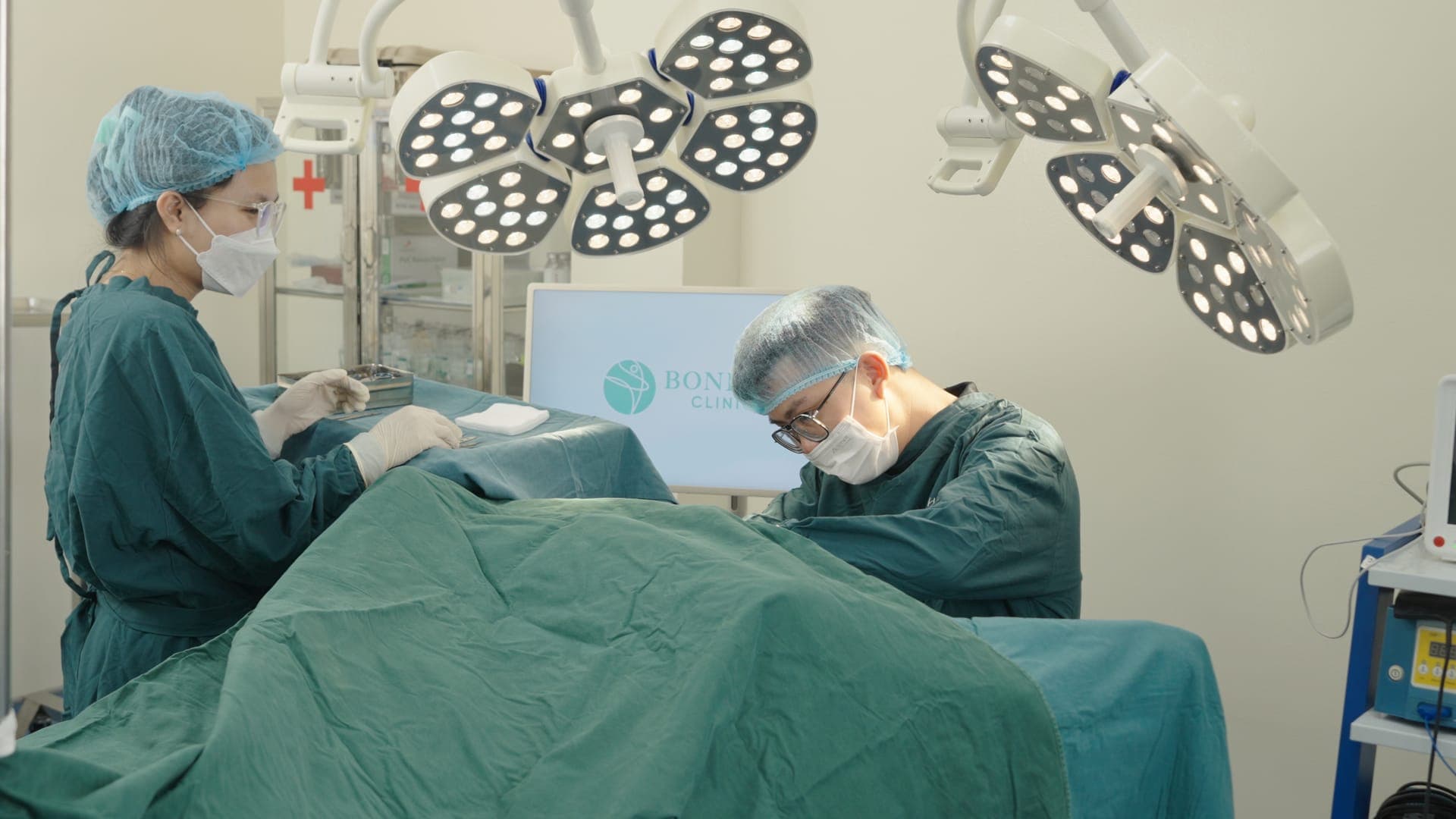
Inside the BonBoz clinic


Book a consultation with a doctor
Choose a date, time slot and doctor — the clinic calls to confirm within 5 minutes during opening hours. Free consultation, no commitment.
Frequently asked questions
Can eye bags be eliminated with eye creams or massage?
Does lower blepharoplasty leave visible scars?
Can fat removal cause a hollowed eye appearance?
Is tear trough filler injection safe?
How long do tear trough fillers last?
Do dark circles caused by lack of sleep disappear with adequate rest?
What is the recovery time for eye bag surgery?
Are eye bags in young people a sign of a medical condition?
Does upper blepharoplasty make lower eye bags more noticeable?
Who performs these procedures at BonBoz?
Related topics
- Transconjunctival Lower Blepharoplasty (Mini-Endoscopic): Removing Eye Bags Without External Incisions — Who Is It For?
- Sunken eyes, hollow eye sockets, and deep tear troughs: why your eyes look tired and how fat repositioning differs from dermal fillers
- Age-Related Upper Eyelid Laxity: Should You Get Blepharoplasty, and How to Distinguish It from Ptosis and Brow Ptosis?
- Ptosis: How It Differs from Cosmetic Blepharoplasty and When Treatment Is Needed
More from our doctors
Under-Eye Bags and Dark Circles: When Is Aesthetic Intervention Needed?
You should only consider aesthetic interventions once the underlying causes of your under-eye bags and dark circles have been accurately identified.
What is Endoscopic Eye Bag Removal? Who is a suitable candidate?
Under-eye bags caused by bulging lower eyelid fat can make the face look tired. Endoscopic eye bag fat removal is a commonly mentioned approach, but it is not suitable for everyone with under-eye bags—a doctor's evaluation is required.
Upper eyelid fat pads make eyes feel heavy: Can blepharoplasty remove them?
How upper eyelid fat pads cause heavy eyes, how blepharoplasty addresses them, distinguishing them from sagging skin/ptosis, and setting realistic expectations.
Should You Get Blepharoplasty for Age-Related Sagging Eyelids? Distinguishing It from Ptosis
Why eyelid skin sags with age, how much blepharoplasty can improve it, how to distinguish it from ptosis, and setting realistic expectations.