
Transconjunctival Lower Blepharoplasty (Lower Eyelid Fat Removal)
Transconjunctival lower blepharoplasty is a surgical procedure designed to correct under-eye bags by accessing the fat pads through the inner surface of the lower eyelid, leaving no external skin incisions and without disrupting the orbicularis oculi muscle. It is ideal for individuals with prominent fat bags who still have good lower eyelid skin elasticity, typically those under 45 years of age.
Compiled from BonBoz Clinic clinical documentation — currently in medical review
Mechanism
Eye bags occur when orbital fat herniates forward through a weakened orbital septum. The transconjunctival approach utilizes a small incision on the inner surface of the lower eyelid, providing direct access to the three fat pads (medial, central, and lateral) without cutting through the skin or the orbicularis oculi muscle. The surgeon either removes the excess protruding fat or transposes it downward to fill the tear trough (fat repositioning). Because the skin-muscle flap remains untouched, the risk of lower eyelid retraction or ectropion is significantly lower than with a transcutaneous approach, leaving no visible external scars.
Who is a good candidate — and who is not?
Good candidates: individuals with pronounced eye bags, good lower eyelid skin elasticity, and minimal wrinkling—typically aged 25–45; those with eye bags accompanied by tear troughs (ideal for fat repositioning); and patients seeking to avoid external scarring. Poor candidates: individuals with excessive skin laxity and pronounced wrinkling. In such cases, removing fat alone eliminates underlying structural support, making wrinkles more prominent; these patients require skin excision (which can be combined via a transconjunctival approach for fat management and a conservative skin-pinch excision).
Fat removal or fat repositioning?
For patients with isolated eye bags and no tear trough deformity: a conservative fat reduction is performed (over-resection leads to a hollowed, aged appearance). For patients with eye bags combined with a deep tear trough: the orbital fat is transposed into the hollow—simultaneously eliminating the bag and smoothing the groove in a single procedure. The surgical strategy is determined during the clinical examination by palpating each fat compartment and assessing the depth of the tear trough.
Potential risks to consider
Swelling and bruising for 1–2 weeks, subconjunctival hemorrhage (redness in the sclera) lasting a few weeks, temporary dry eyes, asymmetry or residual fullness in the lateral fat pad, over-resection causing a hollowed appearance, retrobulbar hematoma (extremely rare, medical emergency), and infection (rare). Because this technique does not address excess skin, patients with loose skin may notice more apparent fine lines post-operatively.
At BonBoz
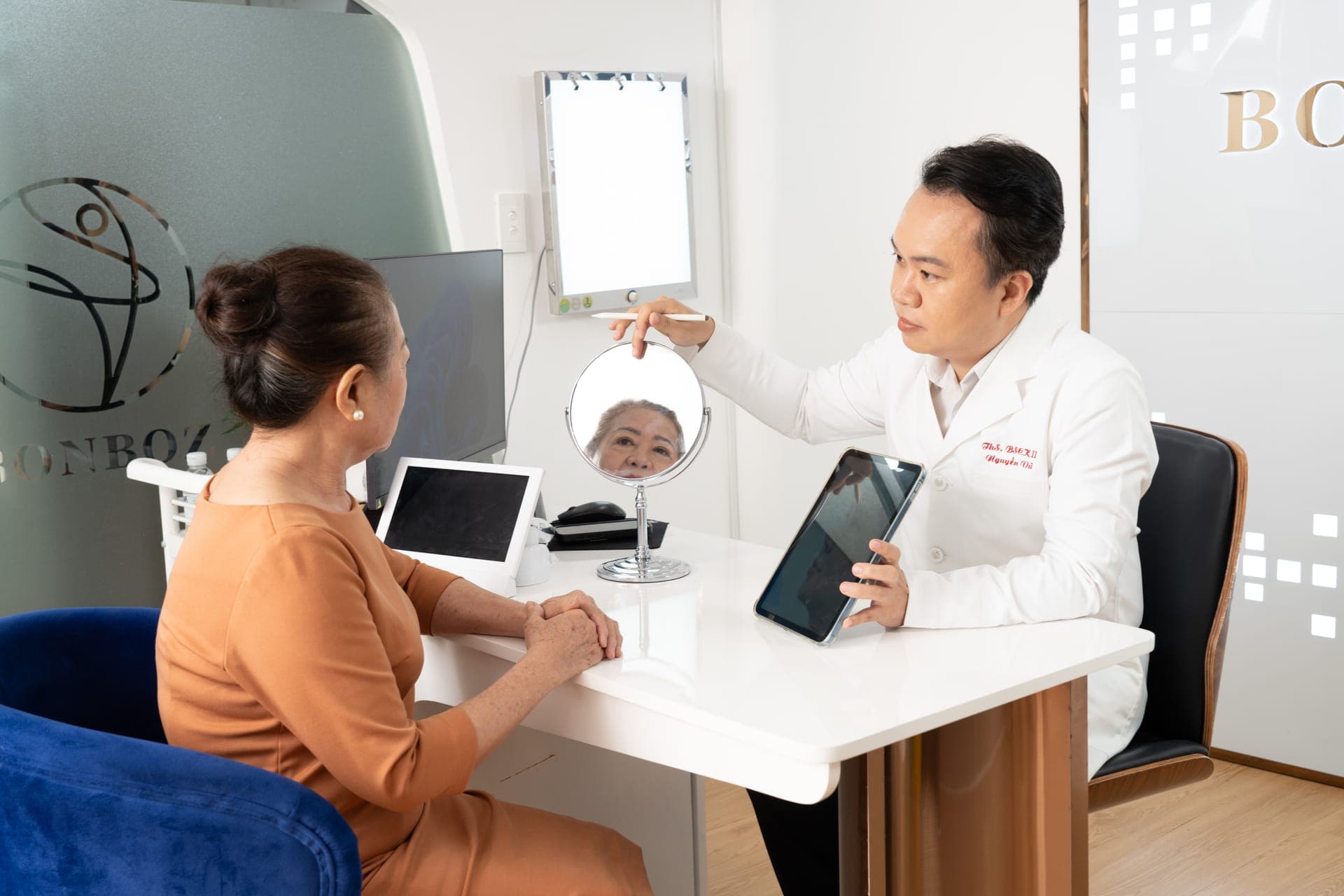
Our plastic surgery specialists personally conduct thorough evaluations, assessing the exact position and volume of each fat pad, skin elasticity, tear trough depth, and lower lid tone. For patients with good skin tone, the surgeon will select the transconjunctival approach and determine whether conservative excision or fat repositioning is optimal. For patients with excess skin, the necessity of skin excision and available surgical options will be clearly explained. The consulting specialist is the operating surgeon; expected swelling duration, scleral redness, and follow-up schedules are thoroughly detailed in advance.
Technique variants
1
Simple fat removal
Suitable when bags are caused by excess fat and skin elasticity is still good.
2
Conservative fat removal
Retains a portion of fat to prevent future hollowness.
3
Switch to fat repositioning
When a deep tear trough is present, repositioning fat downward is preferable to removal.
When should you see a doctor?
- Excessive, sagging lower eyelid skin — simple fat removal alone may create a hollowed appearance.
- Deep tear troughs require fat repositioning rather than excision.
- Severe dry eyes, lagophthalmos (incomplete eyelid closure), or recent surgery for ocular conditions.
- Under-eye bags that fluctuate daily and worsen in the morning — systemic causes of edema must be ruled out first.
How is it performed?
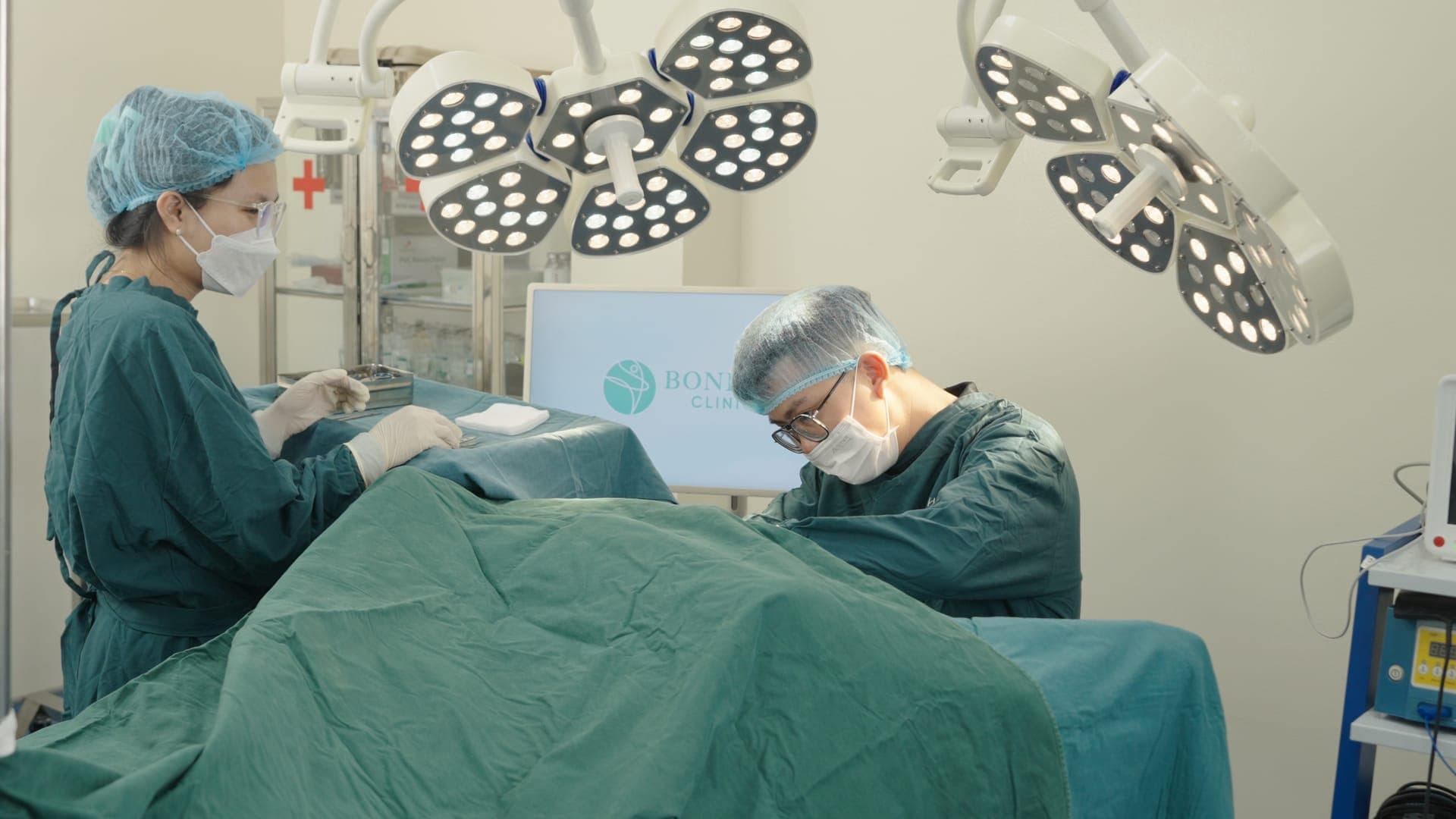
Local anesthesia combined with topical anesthetic eye drops is administered (mild sedation may be used). The surgeon places a corneal shield, everts the lower eyelid, and makes a small transconjunctival incision. The three lower eyelid fat pads are exposed, then carefully resected to remove excess bulge or transposed and secured to fill the tear trough deformity. After confirming bilateral symmetry, the incision is typically left to heal naturally or closed with a few absorbable sutures. The procedure takes 45–75 minutes, and the patient is discharged on the same day.
Before the procedure
Assessment of fat pads, skin, tear troughs, and eyelid tone; standardized clinical photography; discontinuation of anticoagulants, alcohol, and smoking as instructed; avoidance of contact lenses on the day of surgery.
After the procedure
Apply cold compresses for the first 48 hours, sleep with your head elevated, and use prescribed eye drops; redness in the sclera (white of the eye) will resolve on its own within a few weeks; swelling and bruising typically subside in 1–2 weeks; do not rub your eyes and avoid wearing contact lenses for 2 weeks; attend follow-up visits on day 7 and month 1.
Possible risks — your doctor explains them before treatment
- Swelling and bruising for 1–2 weeks, conjunctival redness for several weeks
- Temporary dry eyes
- Asymmetry or residual lateral fat pads
- Hollowness due to over-resection
- Skin wrinkles become more noticeable in patients with excess skin
- Retrobulbar hematoma (extremely rare, medical emergency)
- Infection (rare)
Who should NOT have this?
- Excess lower eyelid skin, severe wrinkles (skin excision required)
- Puffiness caused by edema, allergies, or uncontrolled thyroid eye disease
- Severe dry eye syndrome
- Uncontrolled systemic diseases or bleeding disorders
- Unrealistic expectations of resolving skin wrinkles with fat removal alone
How BonBoz uses it
Lower Eyelid Skin Excision
Lower eyelid skin excision addresses loose, wrinkled under-eye skin caused by aging through an incision made right along the lower lash line, with the option to treat orbital fat pads if needed. Ideal for individuals whose primary concern is excess skin, typically aged 45–70.
Learn about this method →Full Incision Double Eyelid Surgery with Skin and Fat Removal
Full incision double eyelid surgery utilizes an incision along the full length of the eyelid crease to remove excess skin, manage fat, and create a stable, permanent crease. It is the foundational technique for aging upper eyelids and puffy eyes—not a 'big eye' enlarging procedure.
Learn about this method →Partial Incision Double Eyelid Surgery (Mini Line)
Mini Line double eyelid surgery uses an incision roughly two-thirds the length of the eyelid to remove a moderate amount of sagging skin and secure the crease. Positioned between suture techniques and full incision surgery, it offers greater durability than suture methods while being less invasive than a full incision.
Learn about this method →Eye Services: Endoscopic Lower Eyelid Fat Removal - BonBoz Magic Eyes
Service page: Specialist doctors will examine you, recommend the appropriate approach, and provide transparent pricing before you make your decision.
Want a cost range for your own case?
Estimate the cost →Cost guidance
The cost depends on the amount of fat to be removed, whether it is performed unilaterally or bilaterally, and whether it needs to be combined with skin excision or tear trough correction.
The final price follows the doctor’s recommendation after an in-person exam. A confirmed quote has no hidden extras.
Inside the BonBoz clinic

Book a consultation with a doctor
Choose a date, time slot and doctor — the clinic calls to confirm within 5 minutes during opening hours. Free consultation, no commitment.
Frequently asked questions
Does transconjunctival fat removal leave scars?
How long does it take for swelling and eye redness to subside?
Will under-eye bags return?
Can fat removal cause a hollowed-out eye appearance?
Can young individuals with congenital under-eye bags undergo this procedure?
How does the transconjunctival approach differ from the transcutaneous approach?
Is the procedure painful?
How soon can I wear contact lenses and apply makeup?
Related topics
- Lower Eyelid Fat Repositioning: Addressing Eye Bags and Tear Troughs in a Single Procedure — Mechanism, Indications, and Risks
- Lower Blepharoplasty for Excess Skin Removal: When Is It Needed Instead of Fat Removal Alone, Procedure Details, and the Risk of Ectropion / Lower Eyelid Malposition
- Sunken eyes, hollow eye sockets, and deep tear troughs: why your eyes look tired and how fat repositioning differs from dermal fillers
- Eye Bags vs. Dark Circles: Different Causes, Different Treatments
More from our doctors
What is Endoscopic Eye Bag Removal? Who is a suitable candidate?
Under-eye bags caused by bulging lower eyelid fat can make the face look tired. Endoscopic eye bag fat removal is a commonly mentioned approach, but it is not suitable for everyone with under-eye bags—a doctor's evaluation is required.
Under-Eye Bags and Dark Circles: When Is Aesthetic Intervention Needed?
You should only consider aesthetic interventions once the underlying causes of your under-eye bags and dark circles have been accurately identified.
What is lower eyelid skin removal? When is it needed instead of just fat removal?
When the lower eyelids present with both fat bags and excess, sagging skin, fat removal alone may not be sufficient. Understanding what lower blepharoplasty skin excision involves and when it is indicated over standalone fat removal can help you have a more focused and effective consultation with your doctor.
Sunken Eyes and Age-Related Hollow Eyes — What is Eyelid Fat Repositioning?
Why eyes become hollow and sunken with age, what eyelid fat repositioning is, how it differs from fat removal/fillers, and who makes an ideal candidate.