
Full Incision Blepharoplasty — Excess Skin and Fat Removal
Full-incision blepharoplasty is an upper eyelid surgery performed through an incision along the eyelid crease to remove excess skin, address orbital fat, and anchor the crease to the levator aponeurosis. It is the foundational technique for upper eyelids with excess skin, thick fat pads, or age-related heaviness.
Compiled from BonBoz Clinic clinical documentation — currently in medical review
How It Works
With age, the upper eyelid skin loses elasticity, orbital fat herniates forward, and the orbicularis oculi muscle becomes lax. As a result, the eyelids feel heavy, partially hooding the palpebral fissure and giving the eyes a tired, sad appearance. Full-incision blepharoplasty addresses all three issues: excising a pre-measured strip of excess skin, removing or repositioning herniated fat (avoiding over-resection to prevent a hollowed look), and creating a defined crease by anchoring the skin-muscle flap to the levator aponeurosis at an optimal height.
When Is a Full Incision Needed Instead of a Mini-Incision or Non-Incisional Double Eyelid Procedure?
A full-incision approach is indicated when skin laxity extends across both the inner and outer corners of the eyes, when eyelid fat is prominent, or for individuals aged 35–40 and older presenting with marked periorbital aging. Suture methods and mini-incisions cannot adequately remove substantial excess skin and fat, often leading to suboptimal or short-lived results. Conversely, younger patients with thin eyelid skin do not require a full-incision technique.
Full-Incision Blepharoplasty Is Not 'Eye Enlargement'
The primary goal is to achieve lighter eyelids, a defined and symmetrical crease, and naturally opened eyes; the anatomical size of the palpebral fissure remains unchanged. Creating an excessively high crease or over-excising skin leads to an unnatural, operated appearance that is difficult to revise. Therefore, our surgeons prioritize conservative excision while preserving the natural eyelid-to-eyebrow proportion. Prior to surgery, the surgeon must rule out brow ptosis (which requires a brow lift first) and true blepharoptosis (which requires levator muscle repair)—performing blepharoplasty alone in these cases will only make the eyes appear heavier.
Potential Risks to Consider
The incision line within the crease remains pink for 1–3 months; asymmetry; creases placed too high or too low; over-resection of skin or fat leading to a hollowed appearance or lagophthalmos (difficulty fully closing the eyes during sleep); prolonged swelling and bruising; temporary dry eye symptoms; and rarely, hematoma or infection. Most minor asymmetries resolve spontaneously once swelling fully subsides after 3–6 months.
The BonBoz Approach
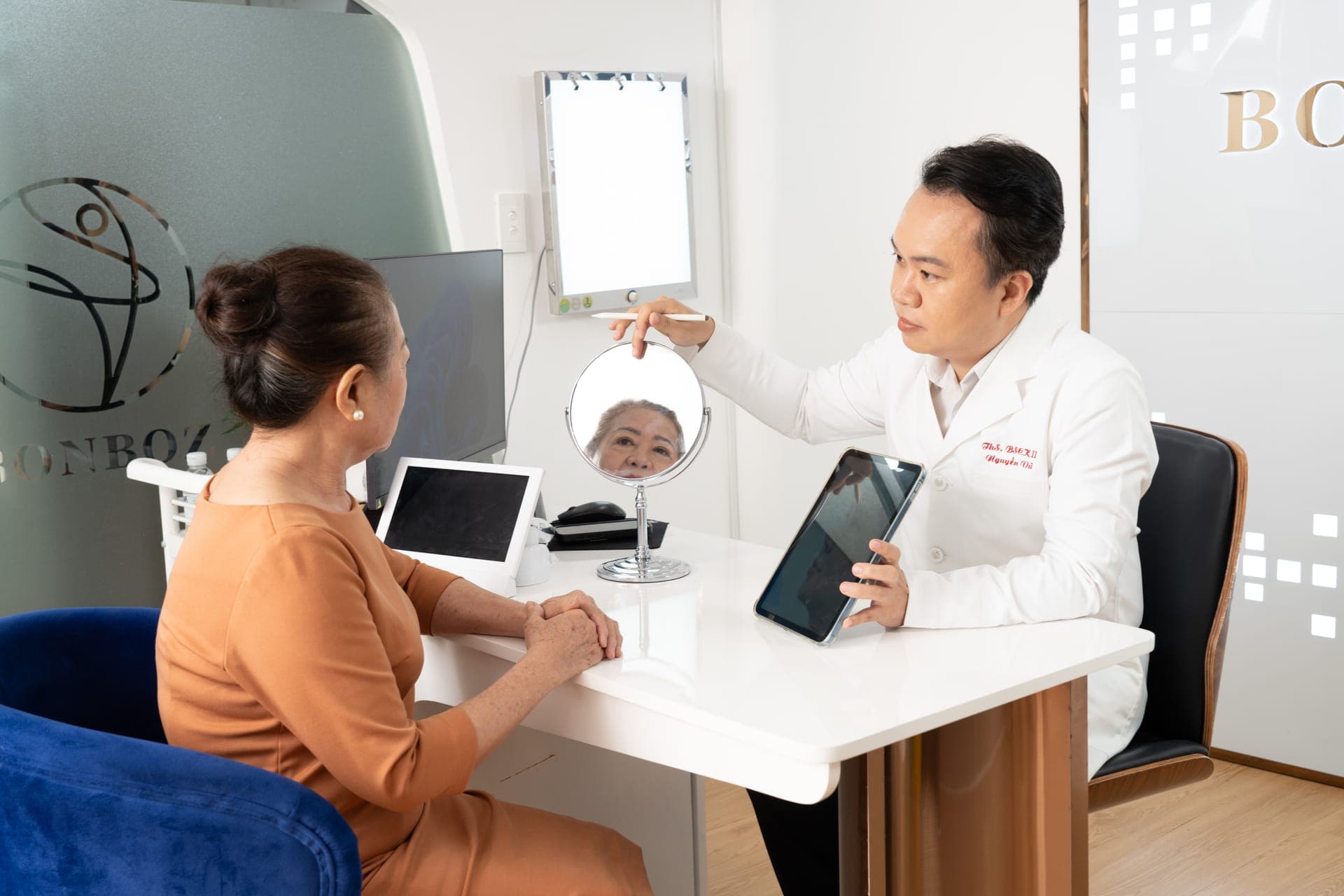
Our plastic surgeons conduct thorough in-person consultations, measuring excess skin with pinch tests, evaluating fat distribution, performing brow and levator function assessments, and simulating the desired eyelid crease. We employ a tissue-preserving surgical philosophy: removing only the necessary amount of skin, repositioning fat rather than aggressive excision, and using intradermal suturing for fine, minimal scarring. The consulting surgeon is the operating surgeon; incision lines, skin excision margins, expected downtime, and potential risks are thoroughly explained before you make your decision.
Technique variants
1
Natural Blepharoplasty (BonBoz Natural)
Incision along the natural crease with precise skin and fat removal — a fundamental solution for upper eyelid aging.
2
Comprehensive Custom Blepharoplasty (Majestic Eyes)
Tailored to facial bone structure and proportions, combining skin–fat removal with intradermal suturing; may include levator muscle correction as indicated.
When should you see a doctor?
- True ptosis is caused by a weak levator muscle; it requires muscle correction, as skin excision alone will not fix the issue.
- The eyebrow has already descended; if you only undergo double eyelid surgery, the eyelid crease may still be obscured.
- Severe dry eyes, lagophthalmos (incomplete eyelid closure), or unstable thyroid eye disease.
- You desire a prominent, wide crease when your skin and tissue are insufficient to support it—it is best to hear the honest truth from your doctor first.
How is it performed?
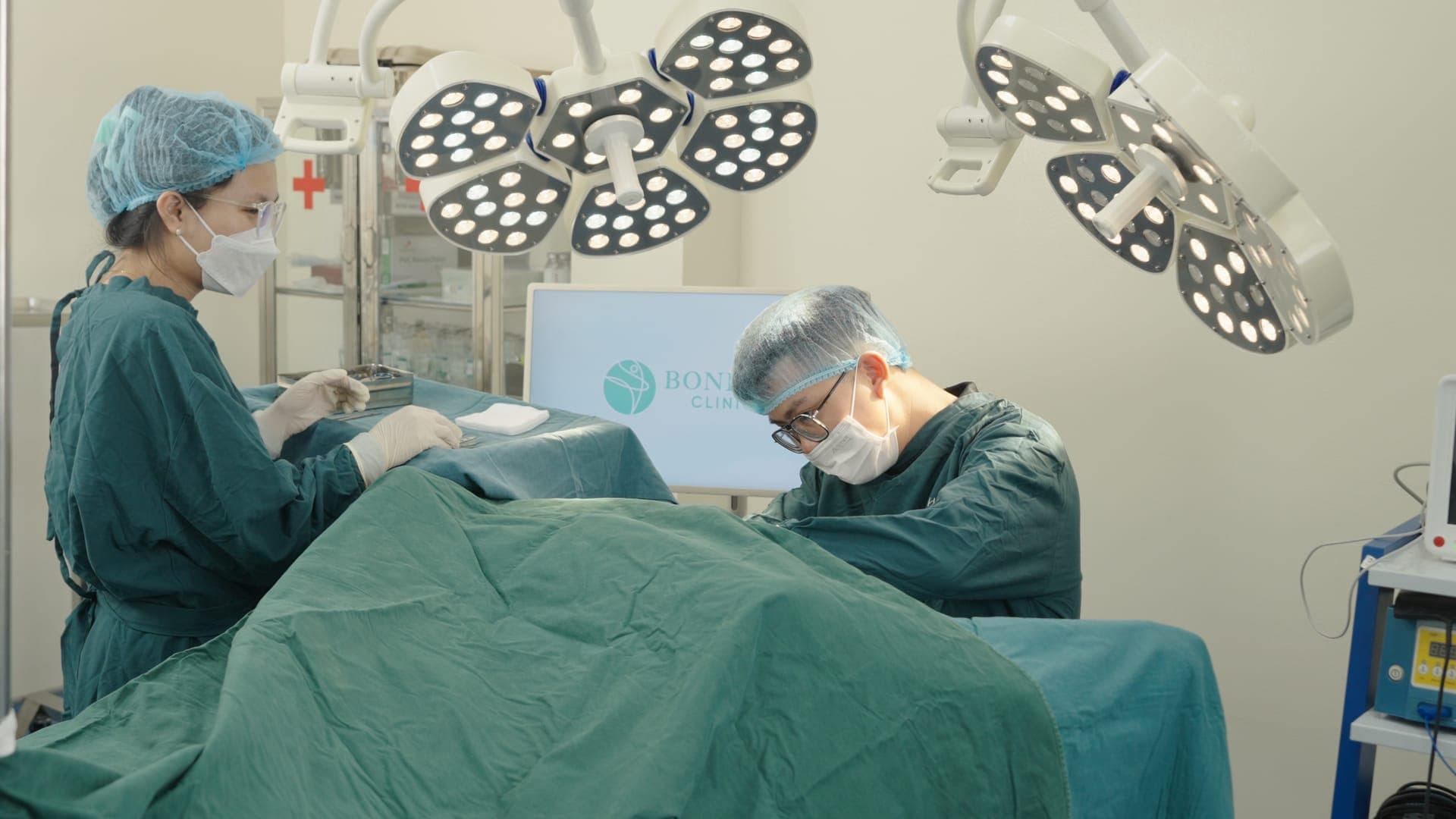
Local anesthesia (with optional mild sedation). The surgeon precisely marks the eyelid crease and the measured strip of excess skin to be excised, makes the incision along the marked lines, removes the skin strip along with a portion of the orbicularis oculi muscle if indicated, opens the orbital septum to resect or reposition protruding fat, anchors the skin to the levator aponeurosis at multiple fixation points to form the crease, and closes the incision with fine sutures or intradermal technique. Duration: 60–90 minutes for both eyes; same-day discharge.
Before the procedure
Evaluation and measurement of excess skin and fat, assessment of brow position and levator muscle function, standardized photography, and basic lab tests as needed; discontinue anticoagulants, alcohol, and smoking as instructed; do not wear makeup on the day of surgery.
After the procedure
Apply cold compresses for the first 48 hours (10–15 minutes per session, spaced 1 hour apart) before switching to warm compresses on day 3. Keep your head elevated, ensure the surgical site remains dry, and take all prescribed medications as directed. Suture removal is scheduled on day 7 at the clinic, followed by periodic check-ups at 1, 3, and 6 months. Swelling and bruising are typically noticeable for the first 1–2 weeks; the eyelid crease will gradually soften over 1–3 months and fully settle within 3–6 months. For 1 month post-op, avoid seafood, beef, glutinous rice, water spinach, alcohol, and stimulants. In addition, do not apply eye makeup, wear contact lenses, or rub your eyes, and clean the surgical area using normal saline. Contact your doctor immediately if you experience severe abnormal swelling, heavy bleeding, pus discharge, spreading redness, a fever above 38.5°C, or an inability to close your eyes completely after 1 week.
Possible risks — your doctor explains them before treatment
- Pink scar within the crease for 1–3 months
- Temporary or prolonged asymmetry
- Crease positioned too high/too low
- Sunken eyes or difficulty closing the eyes (lagophthalmos) if over-resected
- Temporary dry eyes
- Prolonged swelling and bruising, hematoma, infection (rare)
Who should NOT have this?
- Untreated brow ptosis (requires a brow lift prior to or concurrently with the procedure)
- Undiagnosed ptosis caused by weak levator muscles
- Severe dry eyes or active eye conditions undergoing treatment
- Uncontrolled underlying medical conditions (hypertension, diabetes, coagulopathy)
- Expectations of altering the palpebral fissure size
How BonBoz uses it
Lower Eyelid Blepharoplasty
Lower eyelid blepharoplasty addresses loose, wrinkled skin under the eyes caused by aging through an incision made just below the lower lash line, with optional removal or repositioning of fat pads. Ideal for individuals whose primary concern is excess skin, typically aged 45–70.
Learn about this method →Mini Line Double Eyelid Surgery
Mini Line double eyelid surgery utilizes an incision approximately 2/3 the length of the eyelid to remove a moderate amount of sagging skin and anchor the new crease. Positioned between non-incisional and full-incisional techniques, it offers greater durability than suture methods while being less invasive than full incision surgery.
Learn about this method →Lower Eyelid Fat Repositioning
Lower eyelid fat repositioning transfers protruding under-eye fat pads into the adjacent sunken tear trough rather than removing them completely. This dual-action approach simultaneously addresses both excess puffiness and hollows around the eyes using your own natural tissue.
Learn about this method →Eye Procedures: BonBoz Natural Double Eyelid Surgery
Services Page: A specialist doctor conducts a thorough examination, recommends the most suitable treatment plan, and provides a clear cost estimate prior to your final decision.
Want a cost range for your own case?
Estimate the cost →Cost guidance
The cost varies depending on the amount of excess skin and fat to be removed, whether the procedure is unilateral or bilateral, whether levator muscle correction is required, and whether it is a primary or revision surgery.
The final price follows the doctor’s recommendation after an in-person exam. A confirmed quote has no hidden extras.
Inside the BonBoz clinic

Book a consultation with a doctor
Choose a date, time slot and doctor — the clinic calls to confirm within 5 minutes during opening hours. Free consultation, no commitment.
Frequently asked questions
How long does swelling last after full-incision blepharoplasty?
Will the blepharoplasty scar be visible?
Is all the eyelid fat removed?
Does double eyelid surgery make the eyes bigger?
How soon can I wear makeup and contact lenses?
Will I need revision surgery in the future?
Can older adults undergo blepharoplasty?
Can blepharoplasty correct ptosis (drooping eyelids)?
Why is it necessary to evaluate the brow position first?
Related topics
- Short-Incision Brow Lift (Mini 5D, BonBoz Brow): Lifting Drooping Brows and Correcting Lateral Eyelid Skin Laxity — Procedure and Risks
- Mini-Incision Blepharoplasty (Mini Line): Technique, Ideal Candidates, and How It Differs from Full-Incision Blepharoplasty
- Asymmetrical Eyelids: Congenital Causes, Post-Blepharoplasty Issues, and How to Correct Them
- Sagging Eyebrows, Tired Eyes, and Heavy Upper Eyelid Skin: How to Distinguish Them from Ptosis, and Brow Lift Options
- Age-Related Upper Eyelid Laxity: Should You Get Blepharoplasty, and How to Distinguish It from Ptosis and Brow Ptosis?
- Ptosis: How It Differs from Cosmetic Blepharoplasty and When Treatment Is Needed
More from our doctors
Types of Blepharoplasty: A Detailed Guide to Understanding Your Options
There are three main types of blepharoplasty: upper blepharoplasty, lower blepharoplasty, and combined upper and lower blepharoplasty. Each type serves a different purpose and addresses specific eye conditions.
What to Avoid After Double Eyelid Surgery and For How Long? Care Instructions from BonBoz
After eyelid surgery, avoid certain foods and refrain from wearing makeup for the entire first month — not just 2 weeks. Additionally, follow the cold/warm compress schedule, suture removal on day 7, and the follow-up appointment calendar as instructed by BonBoz Clinic.
How does the upper blepharoplasty incision fade over time? Does it leave visible scars?
Why double eyelid surgery (upper blepharoplasty) leaves minimal visible scarring, how the incision fades through different stages, and post-operative care for optimal scar fading.
Ptosis Correction vs. Aesthetic Double Eyelid Surgery: What Are the Differences?
Ptosis correction surgery is a medical procedure to treat drooping eyelids, whereas cosmetic double eyelid surgery is performed to create aesthetically pleasing eyelid creases. The purpose, technique, and outcome of each procedure are entirely distinct.