
Uneven eyelids / Asymmetrical eyelids
Asymmetrical eyelids occur when the two eyelid creases differ in height or definition, or when a crease is present on one side but absent on the other. Causes include congenital factors, mild unilateral ptosis, uneven excess skin, or complications from previous non-incisional or incisional double eyelid surgery. Symmetry can be restored by re-creating the crease on the affected side, adjusting the levator muscle if ptosis is present, or redesigning both eyelids.
Compiled from BonBoz Clinic clinical documentation — currently in medical review
How Much Eyelid Asymmetry Is Normal?
Almost no one has completely symmetrical eyes: the orbital bone structure, brow arches, fat distribution, and even habitual facial muscle movements differ between the two sides. An eyelid crease asymmetry of less than approximately 1 mm is generally unnoticeable in daily communication. Discrepancies of 1.5–2 mm or more, or having a double eyelid on one side and a hidden or tapered crease on the other, become noticeably visible in mirrors and photographs.
Four Common Causes
Congenital: The insertion of the levator aponeurosis fibers into the skin differs on each side, creating creases at different heights or a single eyelid on one side. Mild unilateral ptosis: The levator muscle on one side is weak, causing the eyelid margin to droop, which paradoxically makes that crease appear higher and deeper—many people attempt to correct only the "crease" while overlooking the muscle, leaving the asymmetry unresolved. Asymmetrical skin laxity: Often age-related, the side with more excess skin conceals the crease, making it appear lower. Post-procedural: Loosened suture on one side after non-incisional blepharoplasty, uneven design in double eyelid surgery, scar contracture, or asymmetrical swelling during the first 3 months (asymmetry should not be definitively diagnosed during this period).
Why Must the Root Cause Be Identified Before Correction?
If the asymmetry is caused by unilateral ptosis, simply lowering the higher crease will still leave the eyelid margin drooping and the eye looking smaller. If it is caused by excess skin, placing additional sutures will still result in the crease being hooded over by skin. If it is due to scar contracture after blepharoplasty, scar release is required rather than excising more skin. The corrective approach depends entirely on the underlying cause, not simply on "which side is higher."
What Determines the Achievable Degree of Symmetry?
The root cause, the degree of discrepancy, the skin thickness and fat volume on both sides, the number of prior interventions, and the time elapsed since the previous surgery. The realistic goal is visual harmony in daily interactions, not absolute, sub-millimeter mathematical symmetry.
How Does BonBoz Approach Asymmetrical Eyelids?
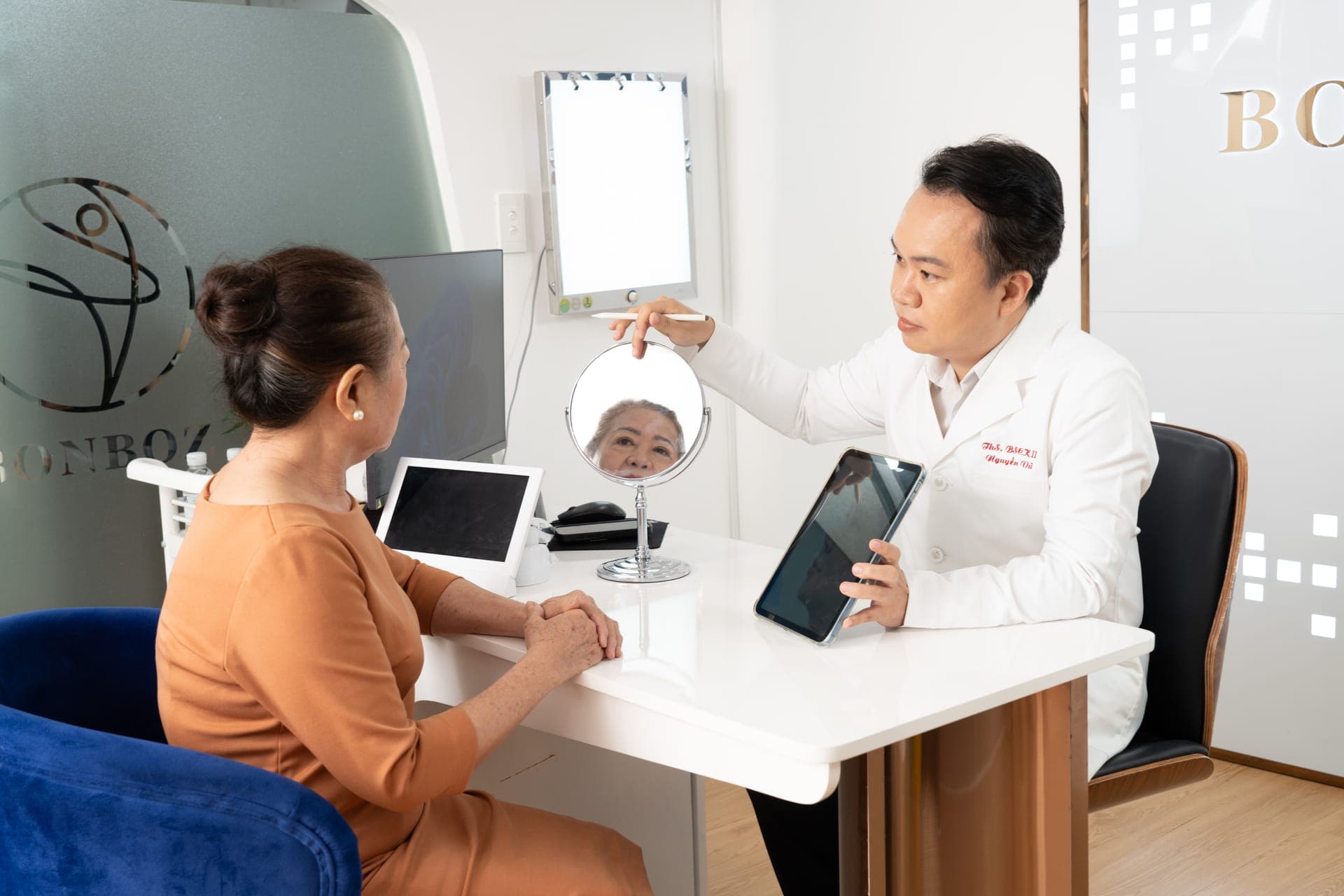
A plastic surgeon conducts an in-person examination: measuring crease height and margin reflex distance on both sides, testing levator muscle function, evaluating skin and fat tissue for each eye, and reviewing previous photos if prior procedures were performed. The tailored treatment plan addresses the root cause: recreating the crease on the asymmetrical side, correcting the levator muscle on the ptotic side, excising excess skin on the affected side, or redesigning both eyelids in complex cases. The examining surgeon performs the procedure directly and clearly explains the achievable degree of symmetry and the appropriate timing (typically at least 6 months after the previous surgery).
Severity levels
1
Mild — asymmetry of less than 1.5 mm, with the same crease type
Hardly noticeable during normal social interaction. Typically kept under observation; minor correction may be considered if it is noticeable to you in photos.
2
Moderate — asymmetry of 1.5–3 mm or a hidden eyelid crease on one side
Clearly visible in the mirror. Recreating the crease on the asymmetrical side or trimming excess skin; levator muscle evaluation required.
3
Severe — accompanied by unilateral ptosis or following multiple previous interventions
Requires levator muscle correction, scar tissue release, and bilateral crease redesign; the goal is natural harmony rather than absolute symmetry.
When should you see a doctor?
- One eye looks noticeably smaller and "droopier," with the eyelid margin covering more of the pupil — suspected unilateral ptosis.
- Noticeable asymmetry persists more than 3 months after double eyelid stitching or blepharoplasty.
- Asymmetry progressively worsens over time in older adults — uneven excess skin or gradual weakening of the levator muscle.
- You are considering "adding another stitch to the lower side" without a proper medical evaluation of the underlying cause.
How BonBoz treats it
Full-Incision Blepharoplasty with Bilateral Redesign
Re-measuring and mapping creases on both sides, with customized skin and fat removal for each eyelid to restore symmetry — indicated for moderate to severe asymmetry.
Learn about this method →Ptosis Correction
For asymmetry caused by unilateral levator muscle weakness: adjusting the muscle so both eyelid margins open at an equal height.
Learn about this method →Suture Blepharoplasty on the Creaseless Side
Indicated only when the asymmetric eye is a monolid with thin skin and minimal fat, while the other eye has a stable, natural crease.
Learn about this method →Want a cost range for your own case?
Estimate the cost →Cost guidance
The cost depends on whether the procedure involves a unilateral adjustment or a bilateral redesign, and whether it includes levator muscle correction. The doctor will provide a precise quote after an examination and measurement; the cost estimation tool provides a reference price range for eye procedures.
The final price follows the doctor’s recommendation after an in-person exam. A confirmed quote has no hidden extras.
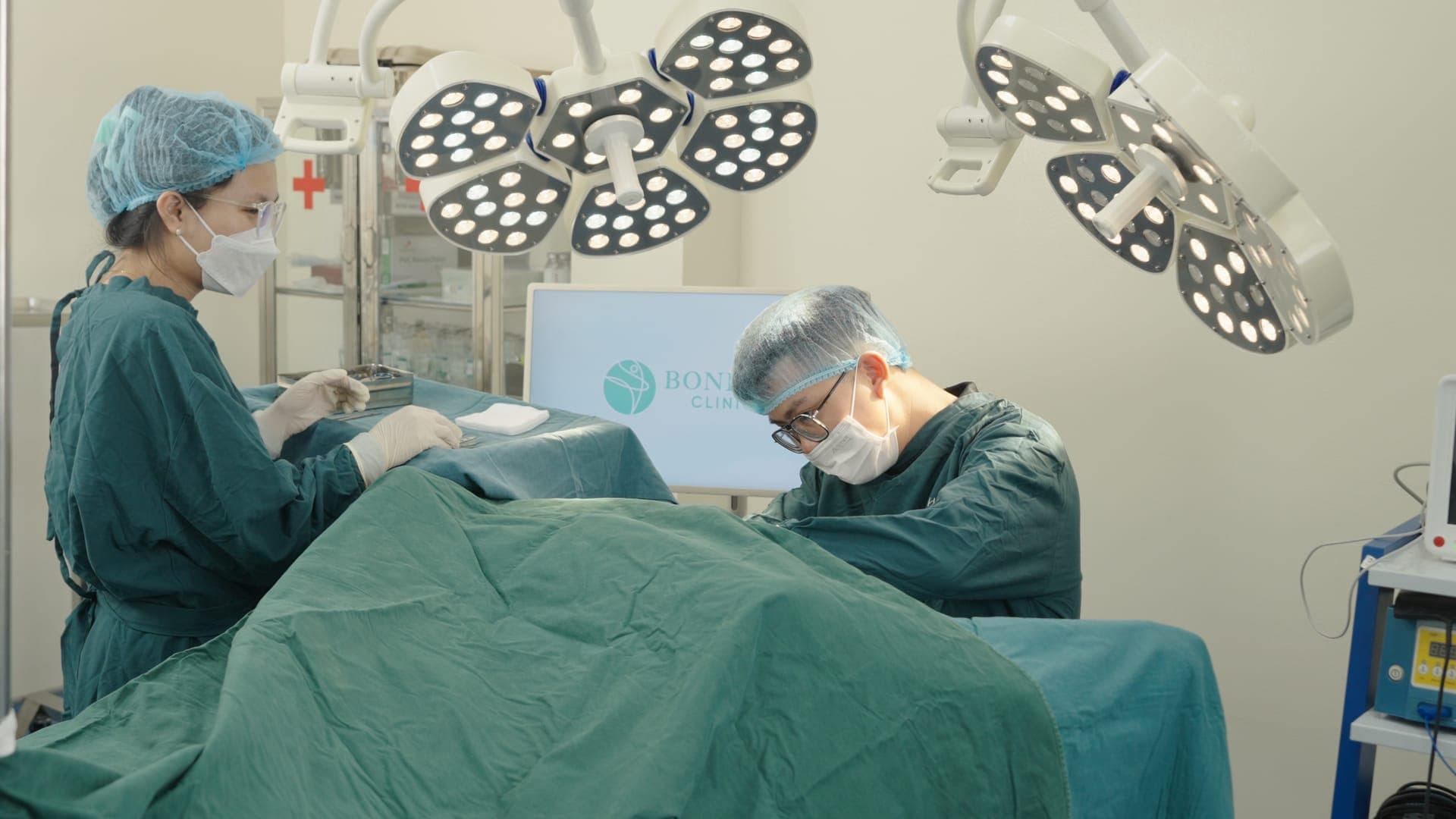
Inside the BonBoz clinic

Book a consultation with a doctor
Choose a date, time slot and doctor — the clinic calls to confirm within 5 minutes during opening hours. Free consultation, no commitment.
Frequently asked questions
How long after double eyelid surgery can asymmetry be confirmed?
Can only one side be revised?
Can asymmetry caused by unilateral ptosis be detected with the naked eye?
What should be done if a non-incisional eyelid crease comes undone on one side?
Is eyelid asymmetry revision more complex than primary double eyelid surgery?
My eyes have been naturally asymmetrical since childhood, should I get them corrected?
How long after revision surgery will both sides look symmetrical?
Can Botox fix asymmetrical eyelids?
Related topics
- Ptosis Correction for Levator Muscle Weakness and Laxity (Reborn Eyes): How It Differs from Cosmetic Blepharoplasty, Candidates, and Risks
- Full-Incision Blepharoplasty for Excess Skin and Fat Removal: Procedure, Indications for Aging Eyelids, and Essential Risks to Know
- Non-Incisional Double Eyelid Surgery (Suture Method): Procedure, Ideal Candidates, Longevity, and When to Choose Incisional Blepharoplasty Instead
- Monolids vs. Hidden Double Eyelids: What’s the Difference, and Who Should Choose Non-Incisional vs. Incisional Double Eyelid Surgery?
- Age-Related Upper Eyelid Laxity: Should You Get Blepharoplasty, and How to Distinguish It from Ptosis and Brow Ptosis?
- Ptosis: How It Differs from Cosmetic Blepharoplasty and When Treatment Is Needed
More from our doctors
Can Asymmetric Eyelids After Double Eyelid Surgery Correct Themselves? Detailed Insights
Eyelid asymmetry after double eyelid surgery may partially self-correct, but relying on this is not an ideal approach. You should schedule a follow-up examination so the doctor can evaluate the condition and provide timely intervention.
Ptosis Correction vs. Aesthetic Double Eyelid Surgery: What Are the Differences?
Ptosis correction surgery is a medical procedure to treat drooping eyelids, whereas cosmetic double eyelid surgery is performed to create aesthetically pleasing eyelid creases. The purpose, technique, and outcome of each procedure are entirely distinct.
How Long Does It Take for Double Eyelid Surgery to Look Natural? Timeline for Perfect Eyelids
Eyelid Surgery Recovery Timeline: When swelling subsides, when the crease softens, and when to expect final results.
Ptosis Caused by Myasthenia Gravis: Causes, Symptoms, and Treatment Options
Ptosis (drooping eyelid) occurs when a weakened or stretched levator muscle causes the upper eyelid to sag, partially covering the pupil. This condition must be differentiated from generalized myasthenia gravis, which requires medical management by a neurologist; surgical ptosis correction is only considered when the underlying cause involves the levator muscle or excess skin, and any preexisting conditions (if present) are well-controlled.