
Non-Surgical Double Eyelid Suturing
Non-incisional double eyelid surgery (suture method) is a procedure that creates a double eyelid crease by passing sutures through tiny points to anchor the upper eyelid skin to the levator muscle, without removing any skin. The procedure takes approximately 30–45 minutes, with mild swelling lasting 3–5 days. It is ideal for younger individuals with thin eyelid skin, minimal fat, and no excess skin; it is not suitable for severe hidden double eyelids or sagging skin.
Compiled from BonBoz Clinic clinical documentation — currently in medical review
How It Works
A natural double eyelid crease is formed when fibers from the levator muscle attach to the overlying skin. Non-incisional double eyelid surgery (suture blepharoplasty) recreates this connection using specialized sutures: through 2–3 tiny micro-punctures along the pre-designed crease line, the surgeon threads sutures to secure the skin to the levator muscle or tarsal plate. When the eyes open, the muscle pulls the skin inward to form a clean crease. Because this technique removes neither skin nor fat, the outcome relies heavily on whether excess skin or fat weighs down and obscures the fold.
Non-Incisional vs. Incisional Blepharoplasty
Non-incisional (suture technique): No long incision, fast recovery, and fully reversible if unsatisfied. However, the crease may fade or loosen over time, and it cannot address excess skin or orbital fat. Incisional blepharoplasty: Uses an incision along the crease line to excise redundant skin and fat, delivering a longer-lasting fold; however, it requires a longer recovery period and leaves a fine scar hidden within the natural crease. The choice should be based on anatomical suitability rather than a mere preference for a "minimally invasive" procedure.
Indications
Young individuals with monolids or faint double eyelids who have thin eyelid skin, minimal orbital fat, and no skin laxity; patients with asymmetric eyelids where the targeted side meets the aforementioned criteria; or those who want to preview a double eyelid crease before committing to an incisional procedure. The surgeon thoroughly evaluates skin laxity, fat volume, levator muscle function, and facial symmetry prior to confirming eligibility.
Potential Risks
Fading or loosening of the crease (especially with thicker eyelid fat), asymmetry, visible or palpable suture knots, creases that sit higher or lower than planned, prolonged swelling and bruising, and suture point infection (rare). Early suture removal can generally restore the eyelid to its near-original state.
At BonBoz
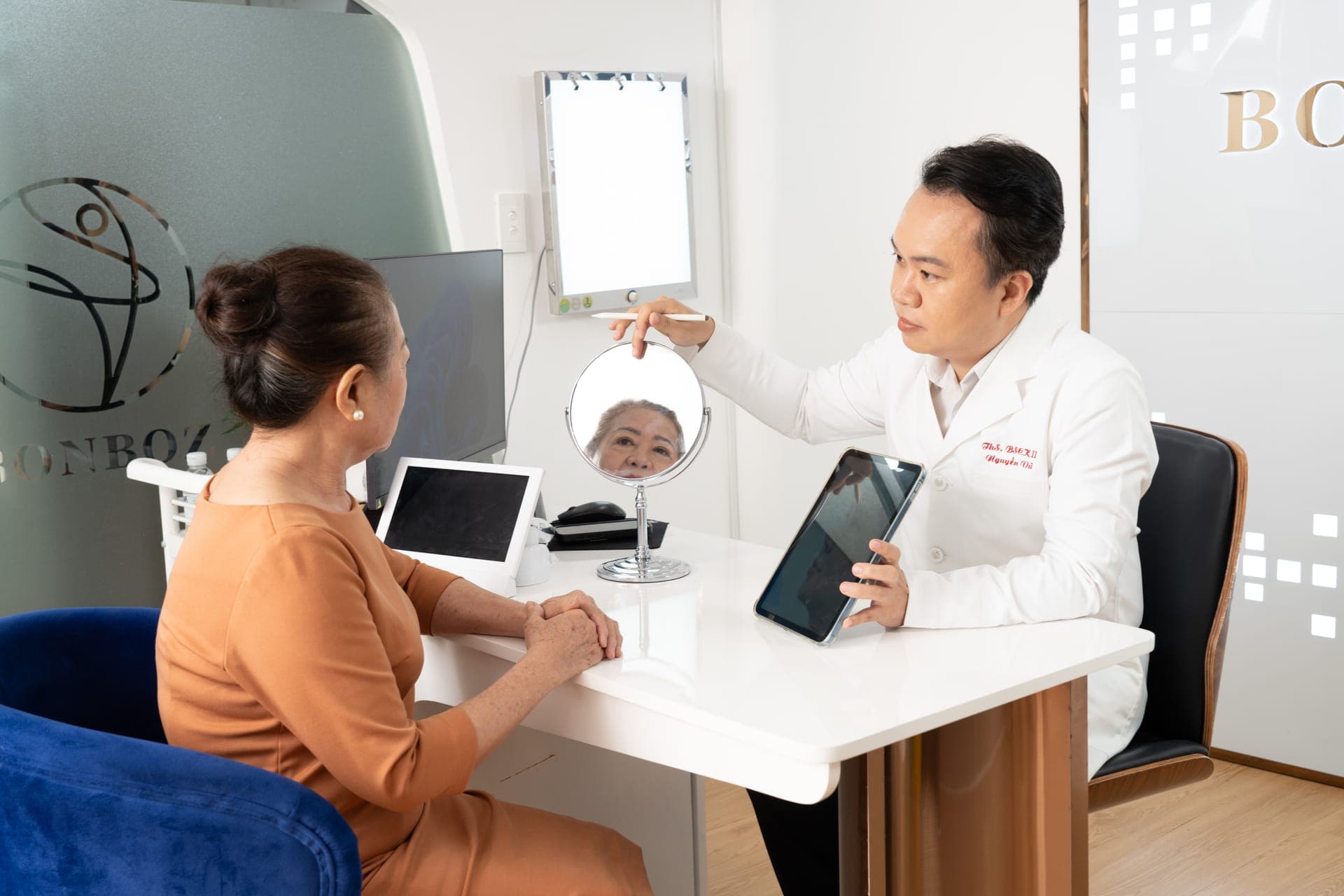
You will receive an in-depth consultation directly from a plastic surgery specialist who evaluates your eyelid skin and fat volume and simulates the proposed crease using a specialized probe for a clear visual preview. If significant skin laxity or thick fat is present, the surgeon will recommend incisional blepharoplasty over the suture method to prevent crease loss. The examining doctor directly performs the procedure, utilizing specialized sutures and multi-point fixation techniques for long-lasting results. You will receive comprehensive aftercare instructions and scheduled follow-up visits on Day 7 and at Month 1.
Technique variants
1
Single-point/Few-point non-incisional double eyelid surgery
Fewer fixation points, quick procedure, ideal for trying out a crease; shorter longevity.
2
Multi-point non-incisional double eyelid surgery
Multiple fixation points along the crease line, creating a more defined and longer-lasting fold; takes slightly longer.
When should you see a doctor?
- Excess eyelid skin or thick fat layer — suture technique struggles to maintain the fold, causing it to fade easily.
- Asymmetrical eyelids caused by true ptosis.
- Multiple previous suture techniques, with residual marks from old folds.
- Desire for long-lasting eyelid folds — non-incisional suture techniques have a limited lifespan, requiring clear understanding before choosing.
How is it performed?
Local anesthesia is administered. The doctor marks the designated crease line, creates 2–3 tiny access points along this line, passes sutures through to connect the skin to the levator muscle or tarsal plate, and securely knots them to form the eyelid crease; eyelid symmetry is evaluated with the eyes open before concluding the procedure. The procedure takes approximately 30–45 minutes with no hospitalization required.
Before the procedure
Undergo an eyelid examination, measurement, and crease simulation with a testing probe; discontinue anticoagulants, alcohol, and tobacco several days prior as instructed; avoid applying eye makeup on the day of the procedure.
After the procedure
Apply cold compresses for the first 48 hours, keep the area clean, and avoid rubbing your eyes; swelling will subside after 3–5 days, and the eyelid crease will look natural after 2–4 weeks. Follow-up visits are scheduled on day 7 and at 1 month.
Possible risks — your doctor explains them before treatment
- Crease fading or loosening over time, especially with thick eyelid fat
- Asymmetry between both sides
- Visible or palpable suture knots
- Crease higher or lower than intended
- Suture site infection (rare)
Who should NOT have this?
- Excess, sagging eyelid skin due to aging
- Thick eyelid fat, puffy eyelids
- Ptosis caused by weak levator muscles
- Active eye area infection
- Expecting a wide, deep crease similar to incisional blepharoplasty
How BonBoz uses it
Lower Eyelid Skin Excision
Lower eyelid skin excision addresses loose, wrinkled under-eye skin caused by aging via an incision placed right along the lower lash line, which may be combined with orbital fat management. Recommended for individuals whose primary concern is excess skin, typically aged 45–70.
Learn about this method →Full Incision Double Eyelid Surgery with Excess Skin and Fat Removal
Full incision double eyelid surgery utilizes an incision along the full length of the eyelid crease to excise excess skin, manage fat, and create a stable crease. It serves as the foundational technique for aging upper eyelids and puffy eyelids—not a 'large eye creation' procedure.
Learn about this method →Mini Incision Double Eyelid Surgery (Mini Line)
Mini Line double eyelid surgery uses an incision approximately two-thirds the length of the eyelid to remove moderate skin laxity and secure the crease. Positioned between suture techniques and full incision surgery, it offers greater durability than suture methods while being less invasive than full incision surgery.
Learn about this method →Eye Care Services: BonBoz Eyes Double Eyelid Creation
Services page: A specialist physician conducts an examination, recommends the most suitable option, and provides a clear cost estimate prior to your decision.
Want a cost range for your own case?
Estimate the cost →Cost guidance
The cost depends on the specific suture technique, the number of fixation points, whether the procedure is performed on one or both eyes, and if previous crease correction is required.
The final price follows the doctor’s recommendation after an in-person exam. A confirmed quote has no hidden extras.
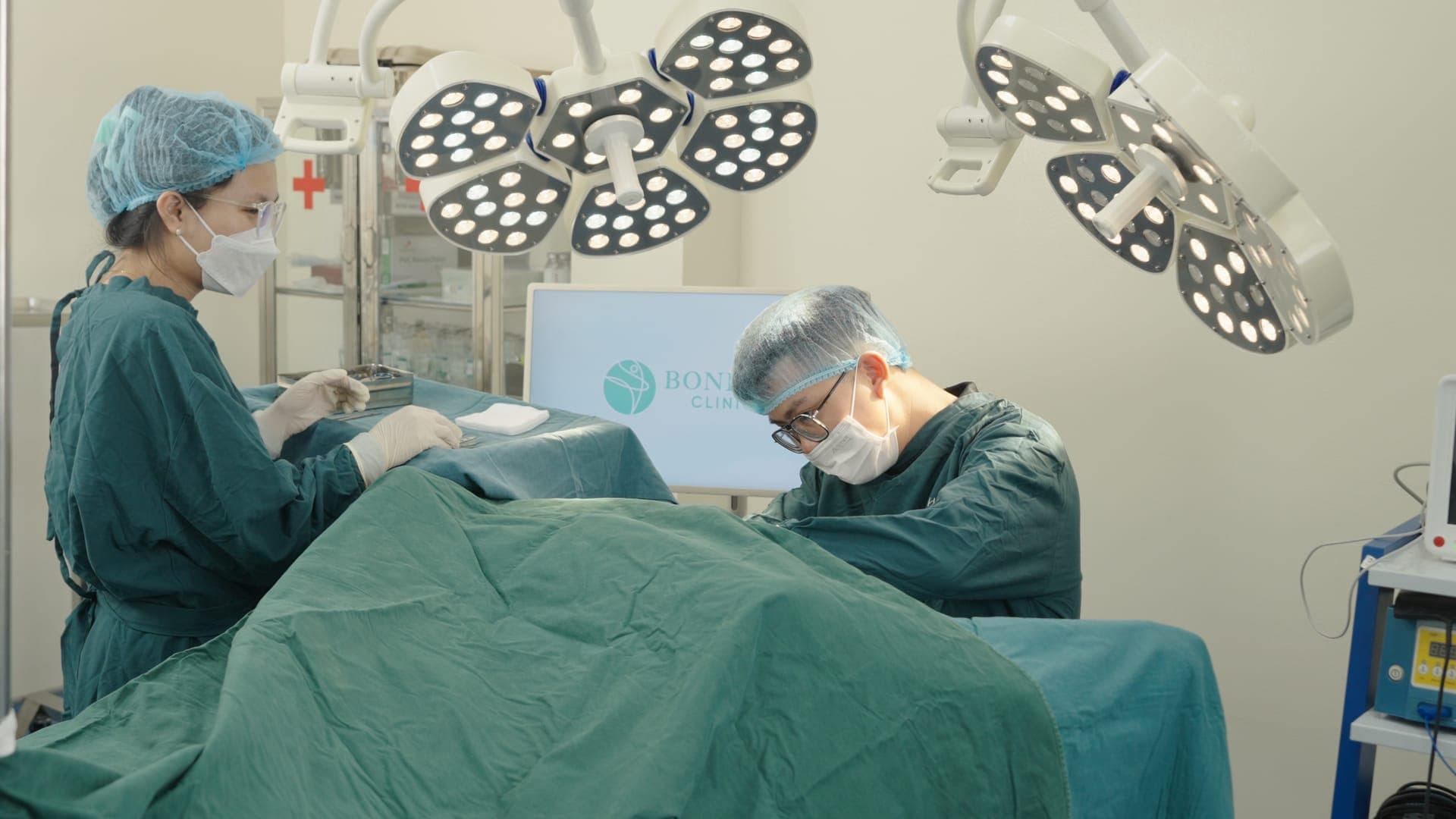
Inside the BonBoz clinic

Book a consultation with a doctor
Choose a date, time slot and doctor — the clinic calls to confirm within 5 minutes during opening hours. Free consultation, no commitment.
Frequently asked questions
How long does non-incisional double eyelid surgery last?
Is non-incisional double eyelid surgery painful?
How long does it take for the eyelid crease to look natural?
Can non-incisional double eyelids be undone/reversed?
Does non-incisional double eyelid surgery leave visible marks?
Can individuals with monolids and thick eyelid fat undergo non-incisional double eyelid surgery?
Does non-incisional double eyelid surgery make the eyes bigger?
How long after non-incisional double eyelid surgery can I wear makeup?
Does having non-incisional double eyelid surgery affect future blepharoplasty?
Related topics
- Full-Incision Blepharoplasty for Excess Skin and Fat Removal: Procedure, Indications for Aging Eyelids, and Essential Risks to Know
- Mini-Incision Blepharoplasty (Mini Line): Technique, Ideal Candidates, and How It Differs from Full-Incision Blepharoplasty
- Asymmetrical Eyelids: Congenital Causes, Post-Blepharoplasty Issues, and How to Correct Them
- Monolids vs. Hidden Double Eyelids: What’s the Difference, and Who Should Choose Non-Incisional vs. Incisional Double Eyelid Surgery?
More from our doctors
Double eyelid surgery vs eyelid stitching: who suits each method?
Distinguishing Between Double Eyelid Blepharoplasty and Suture Blepharoplasty: Who is the Right Candidate, Recovery Time, and Longevity of Each Method.
Types of Blepharoplasty: A Detailed Guide to Understanding Your Options
There are three main types of blepharoplasty: upper blepharoplasty, lower blepharoplasty, and combined upper and lower blepharoplasty. Each type serves a different purpose and addresses specific eye conditions.
How Long Does It Take for Double Eyelid Surgery to Look Natural? Timeline for Perfect Eyelids
Eyelid Surgery Recovery Timeline: When swelling subsides, when the crease softens, and when to expect final results.