
Monolids, hidden double eyelids
A monolid (single eyelid) lacks an upper eyelid crease, while a hidden double eyelid has a crease that is obscured by overlying skin and fat when the eyes are open, making it appear like a monolid. This is a completely normal anatomical characteristic. Younger individuals with minimal excess skin can opt for non-incisional (suture) double eyelid surgery, whereas those with excess skin, significant fat, or drooping eyelids are better suited for incisional blepharoplasty to effectively remove both excess skin and fat.
Compiled from BonBoz Clinic clinical documentation — currently in medical review
What is the difference between single eyelids and hidden double eyelids?
A double eyelid crease is formed when fibrous attachments connect the levator muscle to the overlying upper eyelid skin; when the eyes open, this muscle pulls the skin inward to create a fold. In single eyelids (monolids), these attachments are either absent or very weak, leaving the eyelid skin smooth and flat. In hidden double eyelids, a crease is present, but it sits low or is hooded by excess skin and fat from above when the eyes are open, making the fold visible only when closing the eyes or looking down. Many single eyelids are also accompanied by thick eyelid fat, making the lids appear heavy and the eyes smaller than they actually are.
Why is this distinction important before choosing a procedure?
Non-surgical double eyelid creation (suture blepharoplasty) creates a crease by anchoring the skin to the levator muscle using a few sutures; it does not remove excess skin or fat. Therefore, for hidden double eyelids caused by excess skin and thick fat, suture blepharoplasty often yields an indistinct fold or loosens over time as the overlying skin continues to press down on the crease. Conversely, for young individuals with thin skin and minimal fat, a full incisional blepharoplasty would be a more invasive intervention than necessary.
What determines an aesthetic and long-lasting eyelid crease?
The amount of excess skin, the thickness of upper eyelid fat, the strength of the levator muscle, the distance from the eyelid margin to the eyebrow, and bilateral symmetry. The doctor also evaluates whether there is mild concomitant ptosis (drooping eyelids) — if present, creating a crease without correcting the levator muscle will make the eyes appear tired and sad.
Realistic expectations
The goal is to achieve an eyelid crease that harmonizes with your eye shape and facial features, maintains bilateral balance, and allows for easier eye-opening — rather than creating an overly wide crease like a photo model. Creases created via suture blepharoplasty may gradually fade over the years in individuals with thicker fat; creases from incisional blepharoplasty are more permanent, but they leave a scar hidden within the fold and require a longer recovery period.
How does BonBoz approach single and hidden double eyelids?
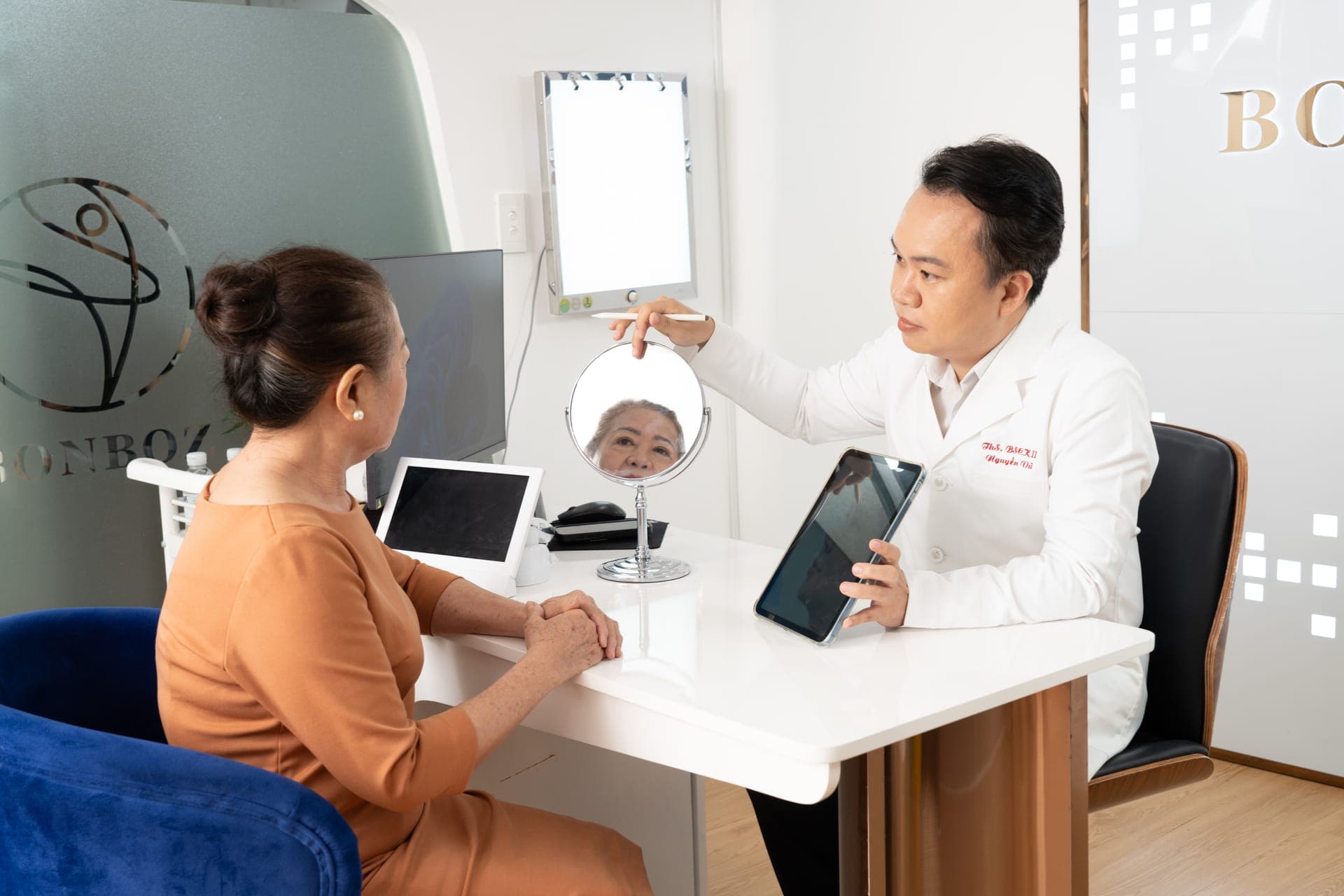
A plastic surgery specialist directly conducts your consultation: measuring excess skin, assessing fat thickness through palpation, checking levator muscle function, and simulating the crease position with a specialized probe so you can preview the result. Based on these findings, the doctor recommends suture blepharoplasty (for minimal excess skin and fat) or a mini/full incisional blepharoplasty (for excess skin, thick fat, and hooded eyelids). The examining doctor is the one who performs the procedure; the incision technique, recovery timeline, and potential risks are thoroughly explained in advance.
Severity levels
1
Single eyelid, thin skin, minimal fat
Common in young individuals. Suture-based double eyelid surgery (non-incisional) is sufficient to create a crease; offers quick recovery, but the crease may fade over the years.
2
Hidden double eyelid, moderate skin, moderate fat
The crease is partially obscured. Mini-incisional double eyelid surgery removes excess skin and secures the crease; more stable than the suture method.
3
Heavy hidden eyelid, excess skin, thick fat, eyelid hooding
Eyes look heavy and small. Full-incisional double eyelid surgery removes excess skin and fat, creating a defined crease; requires evaluation for concomitant ptosis.
When should you see a doctor?
- The eyelid covers part of the pupil, forcing you to raise your eyebrows to open your eyes — this may indicate ptosis, requiring an evaluation of the levator muscle.
- Noticeable eye asymmetry: one eye has a crease, while the other does not.
- You previously had non-incisional double eyelid surgery, but the crease has loosened or faded — an assessment of eyelid skin and fat is needed before a revision.
- You plan on using eyelid tape or glue long-term — the delicate eyelid skin is prone to irritation and further sagging.
How BonBoz treats it
Non-Incisional Double Eyelid Surgery (Suture Technique)
Creates a crease by placing sutures connecting the skin to the levator muscle without skin excision — ideal for individuals with minimal excess skin and fat.
Learn about this method →Mini-Incision Double Eyelid Surgery (Mini Line)
Features an incision along approximately 2/3 of the eyelid length, removing a moderate amount of skin before securing the crease — ideal for hidden double eyelids with moderate skin laxity.
Learn about this method →Full-Incision Double Eyelid Surgery
Involves an incision along the natural eyelid crease, addressing excess skin and fat to create a well-defined fold — ideal for severely hooded or drooping eyelids.
Learn about this method →Want a cost range for your own case?
Estimate the cost →Cost guidance
Non-incisional double eyelid surgery is more affordable than incisional surgery, and a mini-incision procedure costs less than a full incision. The doctor will provide an exact quote based on the tailored plan following your consultation; you can also check the estimated price range using our cost estimation tool.
The final price follows the doctor’s recommendation after an in-person exam. A confirmed quote has no hidden extras.
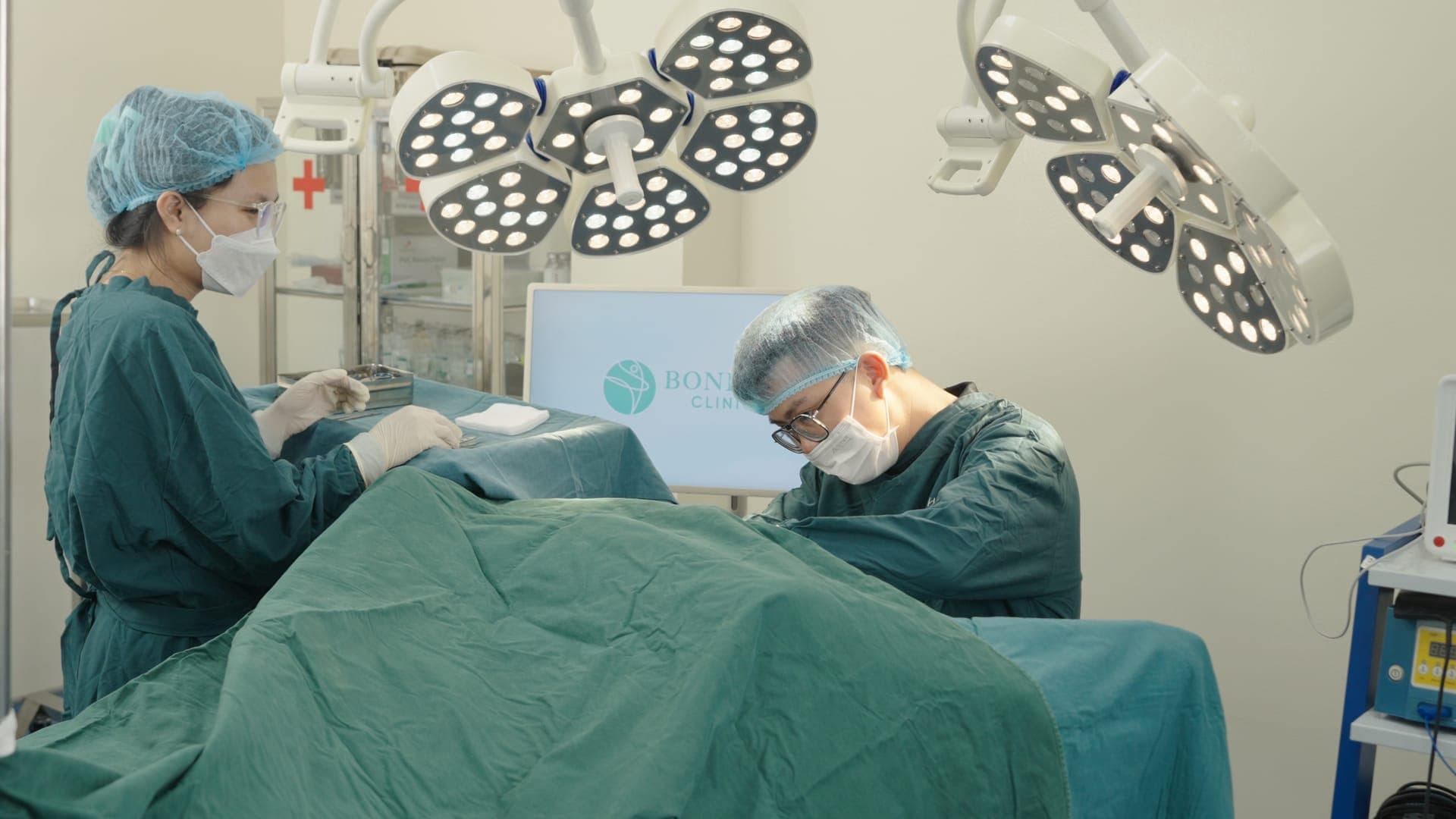
Inside the BonBoz clinic

Book a consultation with a doctor
Choose a date, time slot and doctor — the clinic calls to confirm within 5 minutes during opening hours. Free consultation, no commitment.
Frequently asked questions
How long do non-incisional double eyelid results last?
Can I get incisional double eyelid surgery after having non-incisional double eyelid surgery?
Does incisional double eyelid surgery leave a scar?
Can I get a wide double eyelid crease?
Can I get non-incisional double eyelid surgery if I have monolids with thick eyelid fat?
How long does it take for the eyelid crease to look natural?
What can be done if I have a double eyelid on only one side?
Are hooded eyelids the same as ptosis (drooping eyelids)?
What is the eligible age for this procedure?
Related topics
- Full-Incision Blepharoplasty for Excess Skin and Fat Removal: Procedure, Indications for Aging Eyelids, and Essential Risks to Know
- Mini-Incision Blepharoplasty (Mini Line): Technique, Ideal Candidates, and How It Differs from Full-Incision Blepharoplasty
- Non-Incisional Double Eyelid Surgery (Suture Method): Procedure, Ideal Candidates, Longevity, and When to Choose Incisional Blepharoplasty Instead
- Asymmetrical Eyelids: Congenital Causes, Post-Blepharoplasty Issues, and How to Correct Them
- Age-Related Upper Eyelid Laxity: Should You Get Blepharoplasty, and How to Distinguish It from Ptosis and Brow Ptosis?
- Ptosis: How It Differs from Cosmetic Blepharoplasty and When Treatment Is Needed
More from our doctors
Double eyelid surgery vs eyelid stitching: who suits each method?
Distinguishing Between Double Eyelid Blepharoplasty and Suture Blepharoplasty: Who is the Right Candidate, Recovery Time, and Longevity of Each Method.
Types of Blepharoplasty: A Detailed Guide to Understanding Your Options
There are three main types of blepharoplasty: upper blepharoplasty, lower blepharoplasty, and combined upper and lower blepharoplasty. Each type serves a different purpose and addresses specific eye conditions.
How Long Does It Take for Double Eyelid Surgery to Look Natural? Timeline for Perfect Eyelids
Eyelid Surgery Recovery Timeline: When swelling subsides, when the crease softens, and when to expect final results.
Signs of Ptosis (Drooping Eyelids) – When Should You Consider Double Eyelid Surgery (Upper Blepharoplasty)?
Drooping eyelids (ptosis) make the eyes look tired and can even affect your vision. Recognizing the signs indicating a need for double eyelid surgery (upper blepharoplasty) helps you make the right decision at the right time.