
Lower Eyelid Excess Skin Removal
Lower blepharoplasty (skin excision) is a surgical procedure that removes loose, wrinkled skin from the lower eyelid through an incision made just beneath the lash line, which may be combined with fat removal or fat repositioning when appropriate. It is indicated when excess skin is the primary concern, typically in individuals aged 45–70. This differs from transconjunctival fat removal, which only addresses under-eye bags.
Compiled from BonBoz Clinic clinical documentation — currently in medical review
Mechanism
Lower eyelid aging typically progresses in two ways: orbital fat herniation forming eye bags, and laxity of the skin and orbicularis oculi muscle causing wrinkles and sagging skin. Lower blepharoplasty addresses the latter: through a subciliary incision placed just beneath the lower lash line, the surgeon elevates a skin (or skin-muscle) flap, manages the fat pads if necessary, redrapes the flap superolaterally to measure the true excess skin, trims the precise amount, and sutures the incision. Placed within the natural subciliary crease, the incision heals with minimal visibility.
When Is Skin Excision Needed Instead of Transconjunctival Fat Removal Alone?
A simple assessment can be performed: look up at the ceiling and open your mouth—if the fat bags protrude prominently while the skin remains taut and smooth, fat is the primary issue, making transconjunctival fat removal (without external skin incisions) the ideal approach. If the skin shows wrinkles, folds, and laxity when looking straight ahead, excess skin is the main concern, requiring skin excision; many individuals over 50 present with both.
Why Is Ectropion/Eyelid Retraction a Critical Risk to Discuss in Advance?
The lower eyelid is supported by the canthal tendons and orbicularis muscle tone; in older adults, both structures become weaker. If more skin is removed than the eyelid can support, the lid margin may be pulled downward (eyelid retraction, scleral show), resulting in epiphora (excessive tearing), dry eyes, and an aesthetic outcome worse than before. Surgeons minimize this risk by measuring skin redundancy while the patient looks up with an open mouth (the position of maximum tension), performing conservative skin excision, and reinforcing the lateral canthus when lid laxity is present.
Risks to Be Aware Of
Ectropion or scleral show, an incision scar near the lash line that remains pink for several months, prolonged swelling and bruising, temporary dry eyes, asymmetry, hematoma, infection (rare), and temporary eyelid skin numbness. Over-resection of fat can result in a hollowed appearance and deeper tear troughs.
At BonBoz
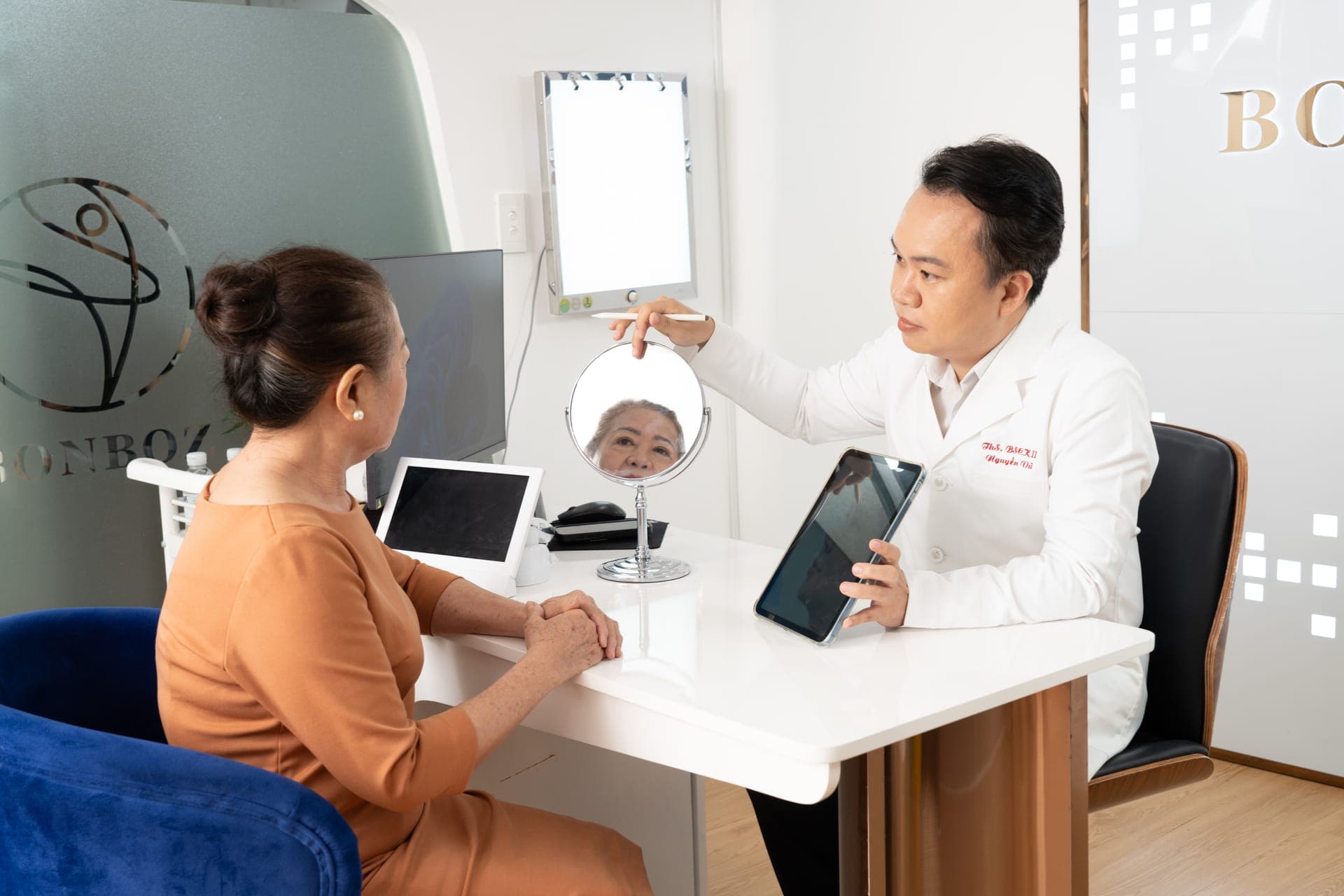
Board-certified plastic surgeons conduct in-person consultations: performing a snap-back test to assess eyelid tone, an upward gaze–open mouth test to evaluate true skin redundancy, as well as assessing eye bags and tear troughs. Treatment plans may include skin excision alone, skin excision with fat management, or a combination with fat repositioning for pronounced tear troughs, along with canthal reinforcement for lax eyelids. The examining surgeon directly performs the procedure, prioritizing conservative skin excision to prevent lower eyelid retraction.
Technique variants
1
Skin excision only
Removes excess skin when fat accumulation is minimal.
2
Skin excision with fat management
Removes excess skin while addressing herniated fat pockets.
3
Skin excision with orbicularis oculi muscle suspension
Includes muscle fixation for cases with severe lower eyelid laxity.
When should you see a doctor?
- If the eye bags are primarily caused by fat prolapse without excess skin, transconjunctival fat removal may be sufficient without needing skin excision.
- Severe dry eyes, lagophthalmos, or a history of previous lower eyelid surgery.
- The lower eyelid skin retains good elasticity, but you wish to undergo excision due to dark circles—hyperpigmentation and excess skin are two distinct issues.
- Currently experiencing active blepharitis or unresolved conjunctivitis.
How is it performed?
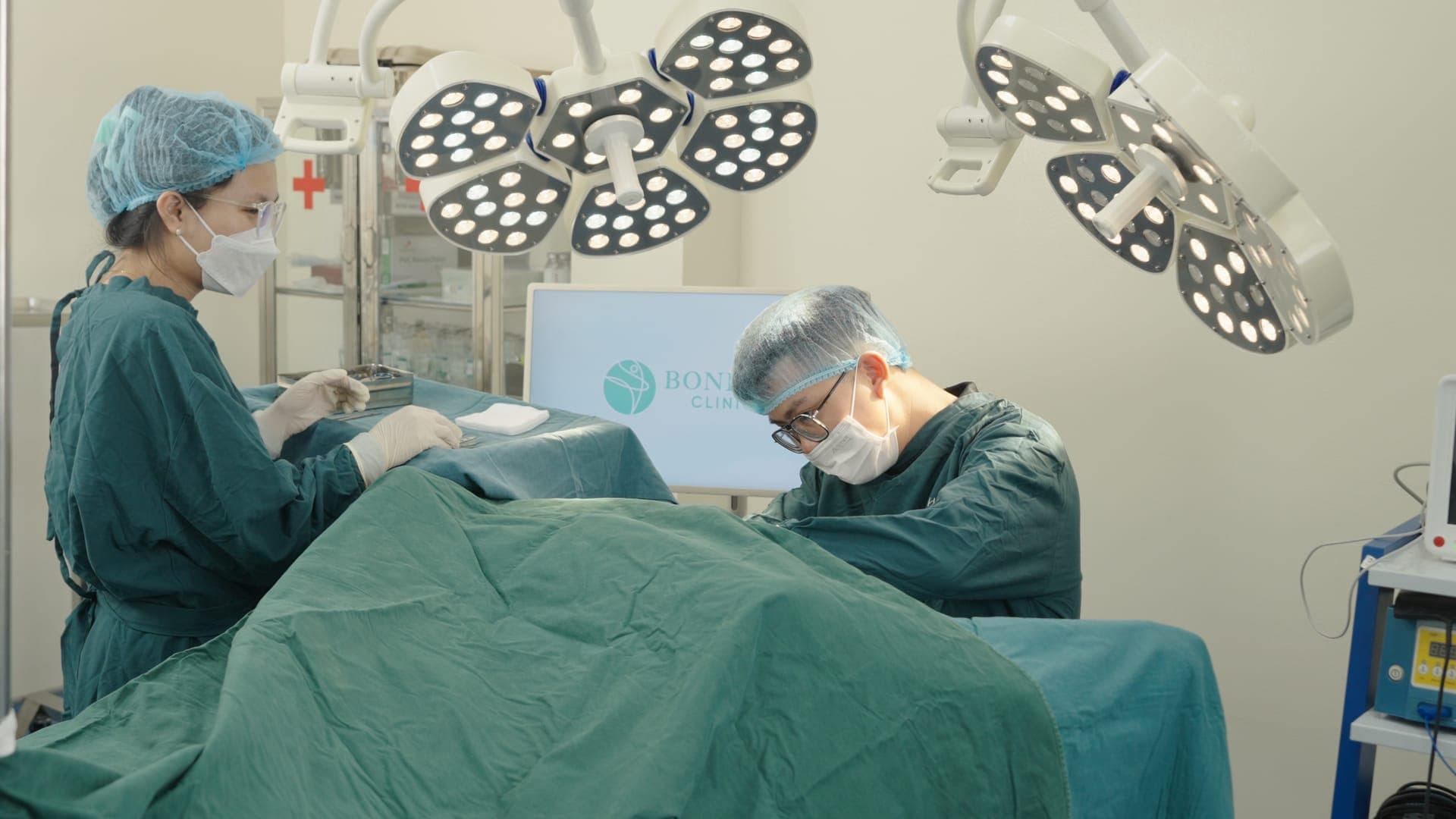
Local anesthesia (with optional sedation). The doctor makes an incision just beneath the lower lash line, extending slightly into the natural crease at the outer corner of the eye. A skin or skin-muscle flap is then elevated, and fat bags are addressed or repositioned if needed. The flap is redraped in an upward and outward direction under maximum tension to measure and excise the true excess skin. The lateral canthus is reinforced if eyelid tone is lax, and the incision is closed with fine sutures. The procedure takes 60–90 minutes, with same-day discharge.
Before the procedure
Lower eyelid tone evaluation (snap test), excess skin measurement in the upward gaze and open-mouth position, assessment of eye bags and tear troughs, standardized clinical photography; discontinuation of anticoagulants, alcohol, and tobacco as instructed.
After the procedure
**Post-Operative Care Instructions:** * **Cold & Warm Compresses:** Apply cold compresses for the first 48–72 hours (days 1–3) for 10–15 minutes per session, once every hour, then switch to warm compresses from day 3 onward. * **Daily Care & Recovery:** Keep your head elevated while resting, use artificial tears if experiencing dry eyes, and cleanse the eye area gently with normal saline. * **Suture Removal & Follow-Up:** Suture removal is scheduled for day 7 at the clinic. Follow-up appointments are on day 7, at 1 month, 3 months, and 6 months. * **Expected Symptoms:** Noticeable swelling and bruising typically last for 1–2 weeks, and the incision line may remain pink for 1–3 months. * **Activities & Restrictions (2 Weeks):** Avoid bending forward, strenuous exercise, rubbing your eyes, wearing eye makeup, and wearing contact lenses. * **Dietary Restrictions (1 Month):** Avoid seafood, beef, glutinous rice, water spinach, alcohol, and stimulants. **Emergency Warning Signs:** Contact your doctor immediately if you experience any of the following: * Abnormal severe swelling, purulent discharge, or excessive bleeding * Fever above 38.5°C * Spreading redness and inflammation * Inability to close your eyes completely after 1 week
Possible risks — your doctor explains them before treatment
- Lower eyelid retraction and scleral show if excessive skin is removed
- Incision line scar near the lash line remaining pink for a few months
- Temporary dry eyes and tearing
- Asymmetry
- Hollow eyes if too much fat is removed
- Hematoma and infection (rare)
Who should NOT have this?
- Fat herniation/pseudoherniation is the primary issue, with good skin elasticity (transconjunctival blepharoplasty recommended)
- Severe lower eyelid laxity without a plan for canthal reinforcement
- Severe dry eye, active thyroid eye disease
- Uncontrolled medical conditions
- Expectation of completely eliminating fine under-eye wrinkles (requires combination with skin resurfacing)
How BonBoz uses it
Full Incisional Double Eyelid Surgery with Skin and Fat Removal
Full incisional double eyelid surgery utilizes an incision along the full length of the eyelid crease to excise excess skin, address fat, and create a stable crease. It serves as a foundational technique for aging upper eyelids and puffy eyelids—not a 'broadening/enlarging eye' technique.
Learn about this method →Short Incisional Double Eyelid Surgery (Mini Line)
Mini Line double eyelid surgery uses an incision roughly 2/3 the length of the eyelid to remove moderate sagging skin and anchor the crease. It bridges the gap between suture techniques and full incisional surgery: offering greater longevity than suture techniques while remaining less invasive than full incisional surgery.
Learn about this method →Lower Eyelid Fat Repositioning
Lower eyelid fat repositioning shifts bulging under-eye bags downward to fill the adjacent depressed tear trough, rather than excising them. It addresses both excess and deficiency around the eyes simultaneously using your own tissue.
Learn about this method →Eye Care Services: Lower Eyelid Skin Excision (Magic Eyes)
Services page: A specialist physician will perform an examination, recommend the most suitable plan, and provide a cost estimate prior to your decision.
Want a cost range for your own case?
Estimate the cost →Cost guidance
The cost depends on the amount of excess skin, whether fat removal/repositioning is included, whether it is a unilateral or bilateral procedure, and whether it is a primary or revision surgery.
The final price follows the doctor’s recommendation after an in-person exam. A confirmed quote has no hidden extras.
Inside the BonBoz clinic

Book a consultation with a doctor
Choose a date, time slot and doctor — the clinic calls to confirm within 5 minutes during opening hours. Free consultation, no commitment.
Frequently asked questions
Will lower blepharoplasty leave a scar?
What is ectropion/eyelid retraction and can it be prevented?
Does lower blepharoplasty eliminate fine lines?
How long does it take for swelling and bruising to subside?
Can it be combined with fat removal?
What age is suitable for this procedure?
How long do the results last?
Will I experience dry eyes after surgery?
Related topics
- Lower Eyelid Fat Repositioning: Addressing Eye Bags and Tear Troughs in a Single Procedure — Mechanism, Indications, and Risks
- Transconjunctival Lower Blepharoplasty (Mini-Endoscopic): Removing Eye Bags Without External Incisions — Who Is It For?
- Sunken eyes, hollow eye sockets, and deep tear troughs: why your eyes look tired and how fat repositioning differs from dermal fillers
- Age-Related Upper Eyelid Laxity: Should You Get Blepharoplasty, and How to Distinguish It from Ptosis and Brow Ptosis?
- Eye Bags vs. Dark Circles: Different Causes, Different Treatments
More from our doctors
What is lower eyelid skin removal? When is it needed instead of just fat removal?
When the lower eyelids present with both fat bags and excess, sagging skin, fat removal alone may not be sufficient. Understanding what lower blepharoplasty skin excision involves and when it is indicated over standalone fat removal can help you have a more focused and effective consultation with your doctor.
Under-Eye Bags and Dark Circles: When Is Aesthetic Intervention Needed?
You should only consider aesthetic interventions once the underlying causes of your under-eye bags and dark circles have been accurately identified.
What is Endoscopic Eye Bag Removal? Who is a suitable candidate?
Under-eye bags caused by bulging lower eyelid fat can make the face look tired. Endoscopic eye bag fat removal is a commonly mentioned approach, but it is not suitable for everyone with under-eye bags—a doctor's evaluation is required.
Sunken Eyes and Age-Related Hollow Eyes — What is Eyelid Fat Repositioning?
Why eyes become hollow and sunken with age, what eyelid fat repositioning is, how it differs from fat removal/fillers, and who makes an ideal candidate.