
Lower Blepharoplasty with Fat Repositioning
Lower blepharoplasty with fat repositioning is a surgical procedure that shifts the bulging fat pads causing eye bags into the hollow tear troughs beneath and secures them in place, rather than removing them. In a single procedure, it addresses both eye bags (excess) and tear troughs (deficiency). Because it utilizes your own natural tissue, it provides long-lasting, stable results.
Compiled from BonBoz Clinic clinical documentation — currently in medical review
Mechanism
In aging or structurally predisposed lower eyelids, orbital fat herniates forward to create eye bags, while directly below lies a hollow tear trough caused by soft tissue atrophy and a retaining ligament firmly anchored to the bone. Traditional fat excision alone removes the bags but can deepen the hollow, resulting in a sunken, aged appearance. Fat repositioning involves releasing the tear trough ligament along the infraorbital rim, mobilizing the pedicled fat (with its intact blood supply) downward to fill the hollow, and securing it in place—effectively turning excess into volume replacement. Because the fat retains its vascular pedicle, it does not reabsorb like free fat grafts.
Difference from Fat Excision and Tear Trough Fillers
Compared to traditional fat excision: it preserves volume by transposing fat rather than discarding it, preventing a hollowed-out look; however, the technique is more complex, with slightly longer swelling. Compared to tear trough fillers: it delivers long-lasting results without the risks of lumpiness, the Tyndall effect (bluish discoloration), or vascular occlusion associated with dermal fillers; nevertheless, it is a surgical procedure with downtime. It is best suited for individuals who have both under-eye bags and prominent tear troughs.
Indications
Under-eye bags combined with distinct tear troughs in individuals aged 25–55; hollowed eye sockets due to volume imbalance; and patients who have had repeated tear trough filler injections and desire a permanent solution. Surgical approach: transconjunctival (when skin elasticity is good) or transcutaneous subciliary (under the lash line when excess skin needs to be excised).
Risks to Know
Swelling and bruising for 2–3 weeks (longer than simple fat excision), temporary contour irregularities or firmness in the repositioned area during the initial weeks, minor fat reabsorption, residual lateral bags, temporary eyelid numbness, transient dry eyes, eyelid retraction/ectropion (with a transcutaneous approach), hematoma, and infection (rare). Most minor irregularities soften naturally within 1–3 months.
At BonBoz
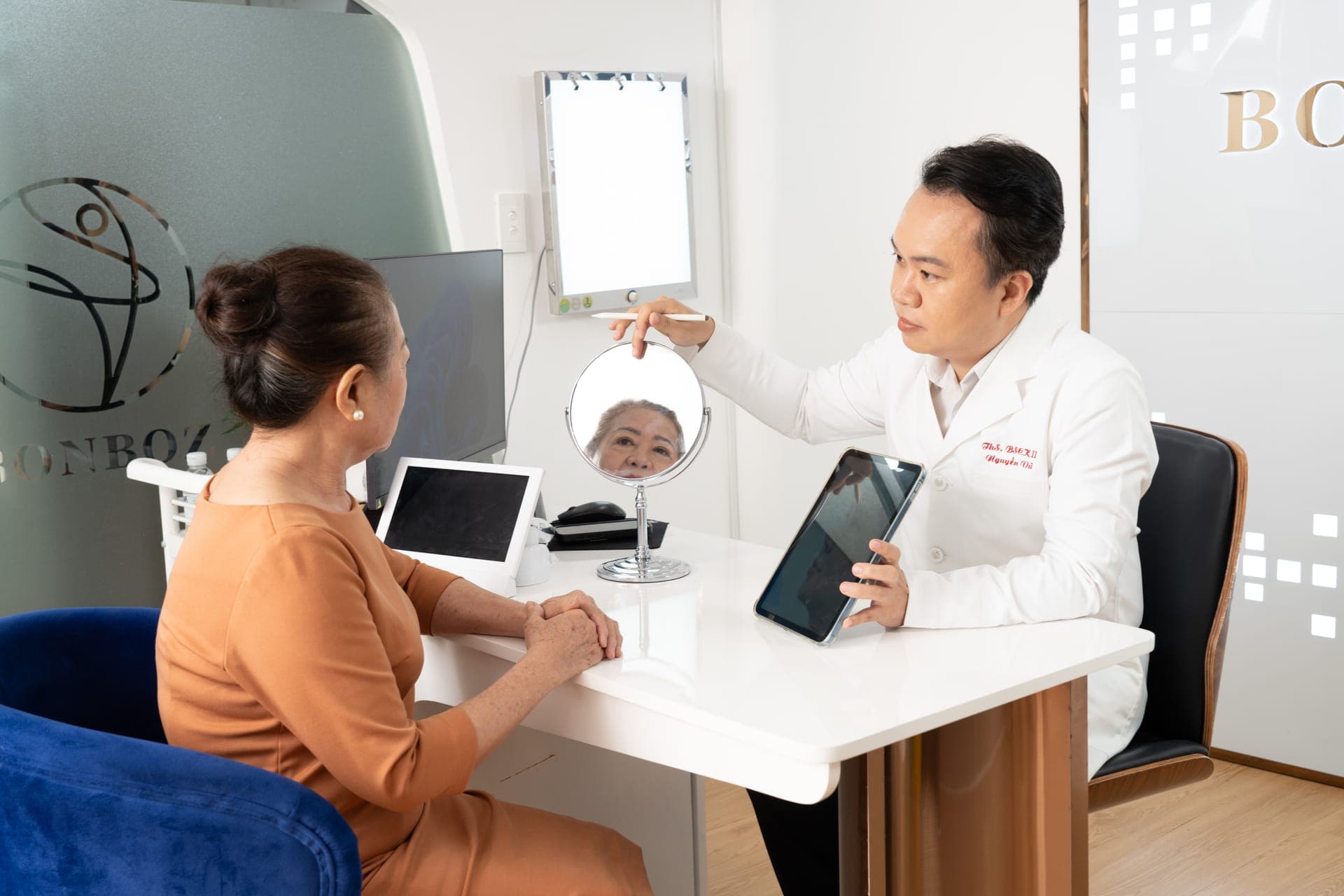
A board-certified plastic surgeon conducts a direct clinical examination, palpating each fat compartment, measuring the depth of the tear trough, and assessing skin laxity and eyelid tone to select the optimal surgical approach. The surgeon prioritizes preserving and transposing fat into the hollow, excising only the true excess, and combining skin excision when necessary. The consulting surgeon is the operating surgeon; the extended recovery timeline compared to standard fat removal and the follow-up schedule are thoroughly discussed in advance.
Technique variants
1
Transconjunctival fat repositioning
Repositioning fat to fill the tear trough with no visible external scarring.
2
Fat repositioning with skin excision
Indicated when there is excess lower eyelid skin, requiring an external incision.
3
Fat repositioning with muscle suspension
Indicated when lower eyelid tissue is lax, requiring additional fixation.
When should you see a doctor?
- Under-eye bags caused primarily by skin laxity rather than fat prolapse — fat repositioning will not yield improvement.
- Deep tear troughs accompanied by thin skin and hyperpigmentation-induced dark circles — differential diagnosis is required prior to intervention.
- Severe dry eye syndrome or a history of lower blepharoplasty.
- Uncontrolled thyroid eye disease.
How is it performed?
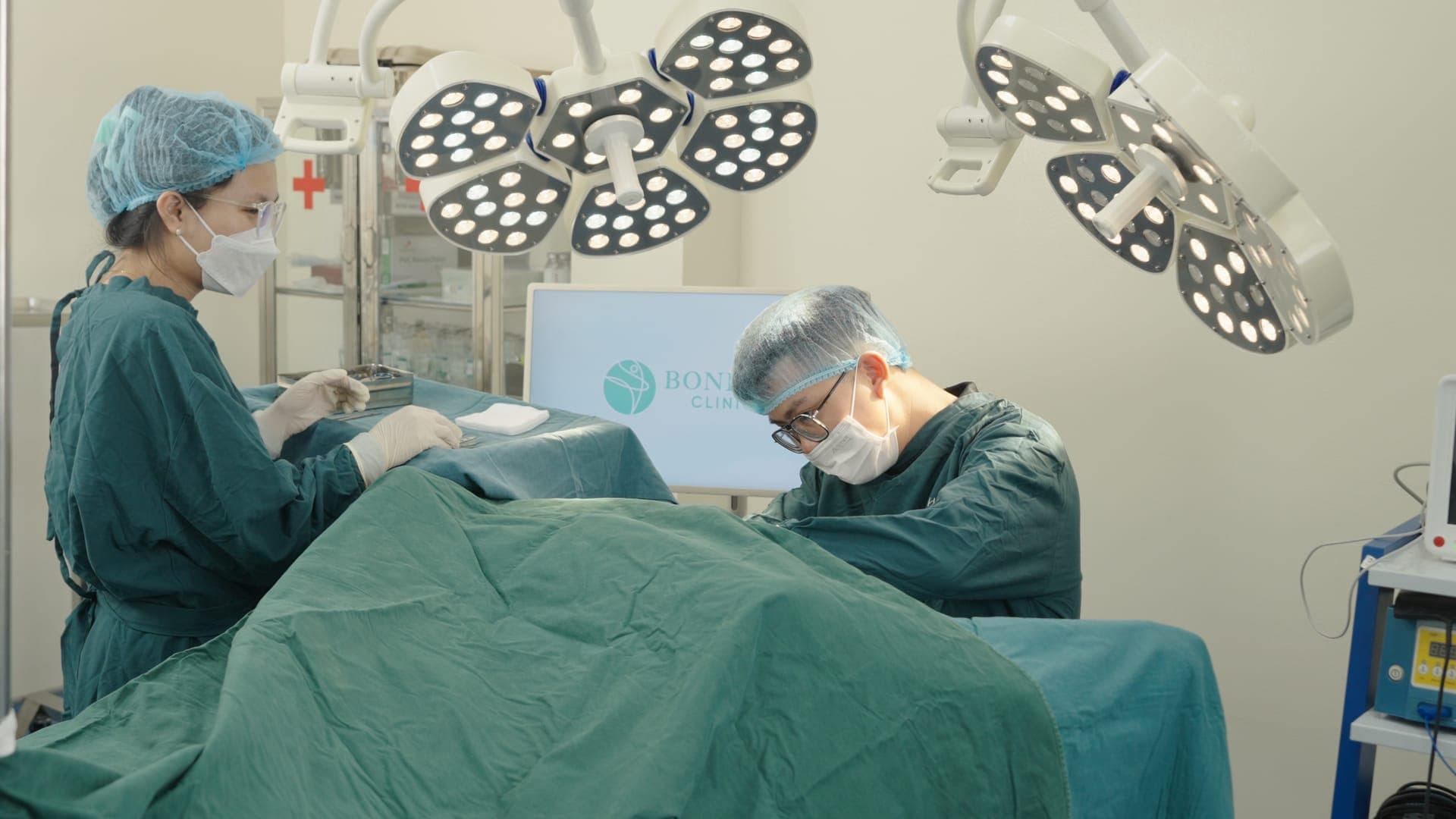
Local anesthesia (sedation optional). The surgeon accesses the area via a transconjunctival or subciliary incision, exposes the fat pads, releases the orbital retaining ligament, and transposes the vascularized fat pedicle to fill the tear trough, anchoring it with sutures to the periosteum or subcutaneous tissue. Any genuine excess fat is conservatively excised, excess skin is trimmed if an external approach is used, and the incisions are closed. Procedure duration: 60–120 minutes, same-day discharge.
Before the procedure
Clinical assessment of orbital fat pads, tear troughs, skin elasticity, and eyelid tone; standardized photography; discontinuation of anticoagulants, alcohol, and smoking as instructed; avoidance of contact lenses on the day of surgery.
After the procedure
Apply cold compresses during the initial recovery period (10–15 minutes per session, 1 hour apart, for up to 72 hours), then switch to warm compresses from day 3. Keep your head elevated while resting, take all prescribed medications, and gently clean the eye area with sterile saline. Swelling and bruising are expected to be noticeable for 2–3 weeks. Do not massage or manipulate the fat grafting area, avoid rubbing your eyes, and refrain from wearing makeup or contact lenses. For 1 month, strictly avoid alcohol, stimulants, seafood, beef, sticky rice, and water spinach. Suture removal for external incisions takes place on day 7 at the clinic, with follow-up appointments scheduled on day 7 and at 1, 3, and 6 months post-procedure. Contact your doctor immediately if you experience severe abnormal swelling, purulent discharge, excessive bleeding, a fever above 38.5°C, spreading erythema and inflammation, or an inability to close your eyes completely after 1 week.
Possible risks — your doctor explains them before treatment
- Swelling and bruising lasting 2–3 weeks
- Rippling or contour irregularities in the fat-grafted area during the first few weeks
- Minor fat resorption
- Residual lateral eye bags
- Temporary eyelid numbness and dry eyes
- Lower eyelid retraction with an external incision approach
- Hematoma, infection (rare)
Who should NOT have this?
- Mild under-eye bags only, no tear troughs (isolated fat removal is sufficient)
- Tear troughs only, no under-eye bags (fat grafting or filler is required)
- Unstable thyroid eye disease, severe dry eye
- Uncontrolled medical conditions or bleeding disorders
- Expecting all swelling to resolve within one week
How BonBoz uses it
Lower Blepharoplasty for Excess Skin Removal
Lower blepharoplasty addresses sagging, wrinkled under-eye skin caused by aging through an incision made just below the lower lash line, with optional orbital fat correction. This procedure is ideal for individuals where excess skin is the primary concern, typically aged 45–70.
Learn about this method →Full Upper Blepharoplasty with Skin and Fat Removal
Full upper blepharoplasty utilizes a full-length incision along the eyelid crease to remove excess skin, manage fat deposits, and create a stable double eyelid fold. It serves as the foundational technique for aging upper eyelids and puffy eyelids—not a 'bright-eyed/eye-enlarging' procedure.
Learn about this method →Partial Incision Double Eyelid Surgery (Mini Line)
Mini Line double eyelid surgery utilizes an incision approximately two-thirds the length of the eyelid crease to remove a moderate amount of loose skin and secure the fold. It sits between the suture technique and full blepharoplasty: more durable than non-incisional methods, yet less invasive than a full incision.
Learn about this method →Eye Services: Orbital Fat Repositioning
Services page: Our specialist physicians evaluate your condition, recommend the appropriate procedure, and provide a clear cost estimate before you make a decision.
Want a cost range for your own case?
Estimate the cost →Cost guidance
The cost depends on the volume of fat that needs to be redistributed, whether skin excision is required, and the severity of the tear troughs on both sides.
The final price follows the doctor’s recommendation after an in-person exam. A confirmed quote has no hidden extras.
Inside the BonBoz clinic

Book a consultation with a doctor
Choose a date, time slot and doctor — the clinic calls to confirm within 5 minutes during opening hours. Free consultation, no commitment.
Frequently asked questions
Does the repositioned fat get absorbed over time?
How long does the swelling last?
Will there be visible scars?
Is it normal to feel lumps or irregularities under the eyes after surgery?
How does this differ from tear trough filler injections?
What is the ideal age for this procedure?
How long do the results last?
How soon can I return to work after surgery?
Related topics
- HA Dermal Fillers: Mechanism of Action, Treatment Areas, G-Prime Selection, Vascular Safety, and Hyaluronidase
- Transconjunctival Lower Blepharoplasty (Mini-Endoscopic): Removing Eye Bags Without External Incisions — Who Is It For?
- Lower Blepharoplasty for Excess Skin Removal: When Is It Needed Instead of Fat Removal Alone, Procedure Details, and the Risk of Ectropion / Lower Eyelid Malposition
- Sunken eyes, hollow eye sockets, and deep tear troughs: why your eyes look tired and how fat repositioning differs from dermal fillers
- Eye Bags vs. Dark Circles: Different Causes, Different Treatments
More from our doctors
Sunken Eyes and Age-Related Hollow Eyes — What is Eyelid Fat Repositioning?
Why eyes become hollow and sunken with age, what eyelid fat repositioning is, how it differs from fat removal/fillers, and who makes an ideal candidate.
What is Endoscopic Eye Bag Removal? Who is a suitable candidate?
Under-eye bags caused by bulging lower eyelid fat can make the face look tired. Endoscopic eye bag fat removal is a commonly mentioned approach, but it is not suitable for everyone with under-eye bags—a doctor's evaluation is required.
Under-Eye Bags and Dark Circles: When Is Aesthetic Intervention Needed?
You should only consider aesthetic interventions once the underlying causes of your under-eye bags and dark circles have been accurately identified.