
Short-Incision Brow Lift
A short-incision brow lift is a surgical procedure that restores a sagging brow to its position above the orbital rim through a minimal incision along the upper border of the eyebrow, excising excess skin and securing the underlying tissue to the periosteum. The result is a lighter feel around the eyes, elimination of excess skin at the outer corners, and a refreshed, less tired facial appearance.
Compiled from BonBoz Clinic clinical documentation — currently in medical review
Mechanism
Brow ptosis occurs when age-related laxity in the frontotemporal soft tissues causes the eyebrows to drop below the supraorbital rim, crowding the upper eyelid skin. A short-incision brow lift approaches directly at the brow line: an incision is made along the upper border of the eyebrow to excise a precisely measured strip of excess skin and tissue. The underlying soft tissue is then elevated and anchored to the frontal periosteum in its new position. The incision is largely concealed by the brow hairs. Certain techniques may also utilize collagen threads to support fixation and tissue healing.
Why perform this before or alongside upper blepharoplasty?
If upper eyelid skin is excised while the brow is still ptotic, closing the incision pulls the brow down even further. This shortens the lid-to-brow distance, resulting in a heavier, more crowded appearance once swelling subsides. The correct sequence is to restore the brow to its proper anatomical position first, and only then excise the truly redundant eyelid skin—which is often less than initially anticipated.
Indications
Mild-to-moderate brow ptosis (especially lateral hooding); skin laxity at the outer corners of the eyes; compensatory brow elevation causing deep horizontal forehead wrinkles; or heavy upper eyelids where a manual brow elevation test significantly reduces apparent excess lid skin. Severe, full-brow ptosis accompanied by pronounced forehead laxity may require a trichophytic or endoscopic brow lift, which will be evaluated during your consultation.
Potential Risks
A pinkish scar along the brow margin for 1–3 months (more visible in individuals with sparse eyebrows), temporary numbness or itching of the forehead skin, overcorrected brow height in the initial weeks, asymmetry, recurrent brow descent due to ongoing natural aging, hematoma, infection (rare), and very rarely, injury to the temporal branch of the facial nerve.
At BonBoz
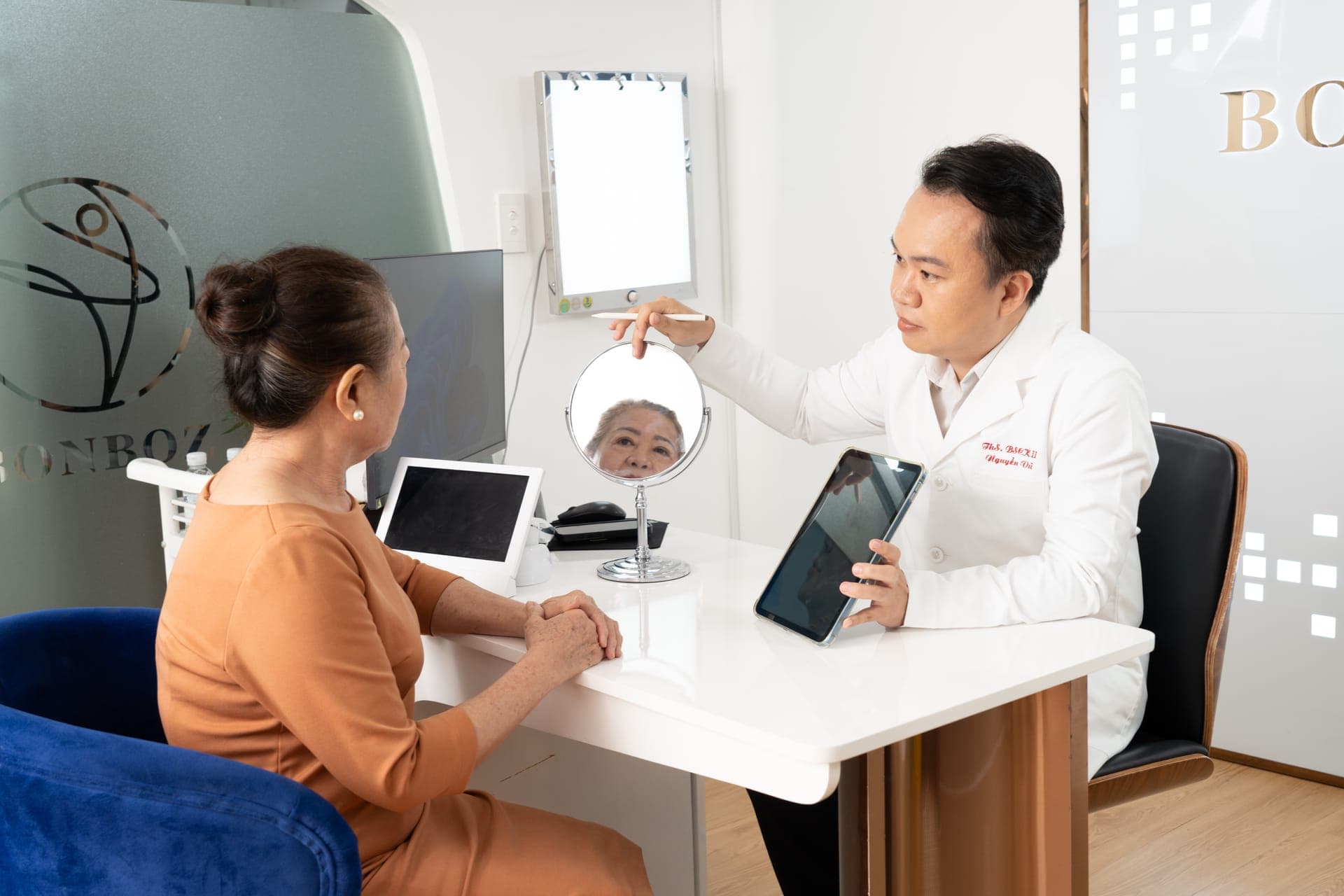
Our plastic surgeons measure the brow position relative to the orbital rim, perform a manual brow elevation test to distinguish brow-related hooding from true eyelid skin excess, and evaluate levator muscle function. Treatment plans include an isolated short-incision brow lift or a combined procedure with upper blepharoplasty in a single session. Your consulting physician is your operating surgeon; the incision placement is customized based on your brow hair density, the degree of elevation is designed to look natural and avoid a "surprised" appearance, and our doctors clearly advise on potential long-term tissue relaxation over time.
Technique variants
1
Mini 5D Brow Lift
Features a short incision along the tail of the eyebrow to address mild-to-moderate skin laxity and brow ptosis.
2
BonBoz Brow Lift
Features a short incision along the brow margin, using collagen sutures to support fixation and wound healing; suitable for mild skin laxity.
3
Perfect Brow
Combines a brow lift, fat removal/repositioning, and intradermal suturing; designed for more comprehensive brow aging.
When should you see a doctor?
- The issue stems from the eyelid skin rather than eyebrow ptosis — a clear distinction must be made beforehand to avoid treating the wrong area.
- Deep wrinkles are already present on the forehead, accompanied by thin forehead skin.
- You have recently received dermal filler or botox injections in the forehead area.
- Your expectations for eyebrow elevation exceed the limits achievable with a short incision.
How is it performed?
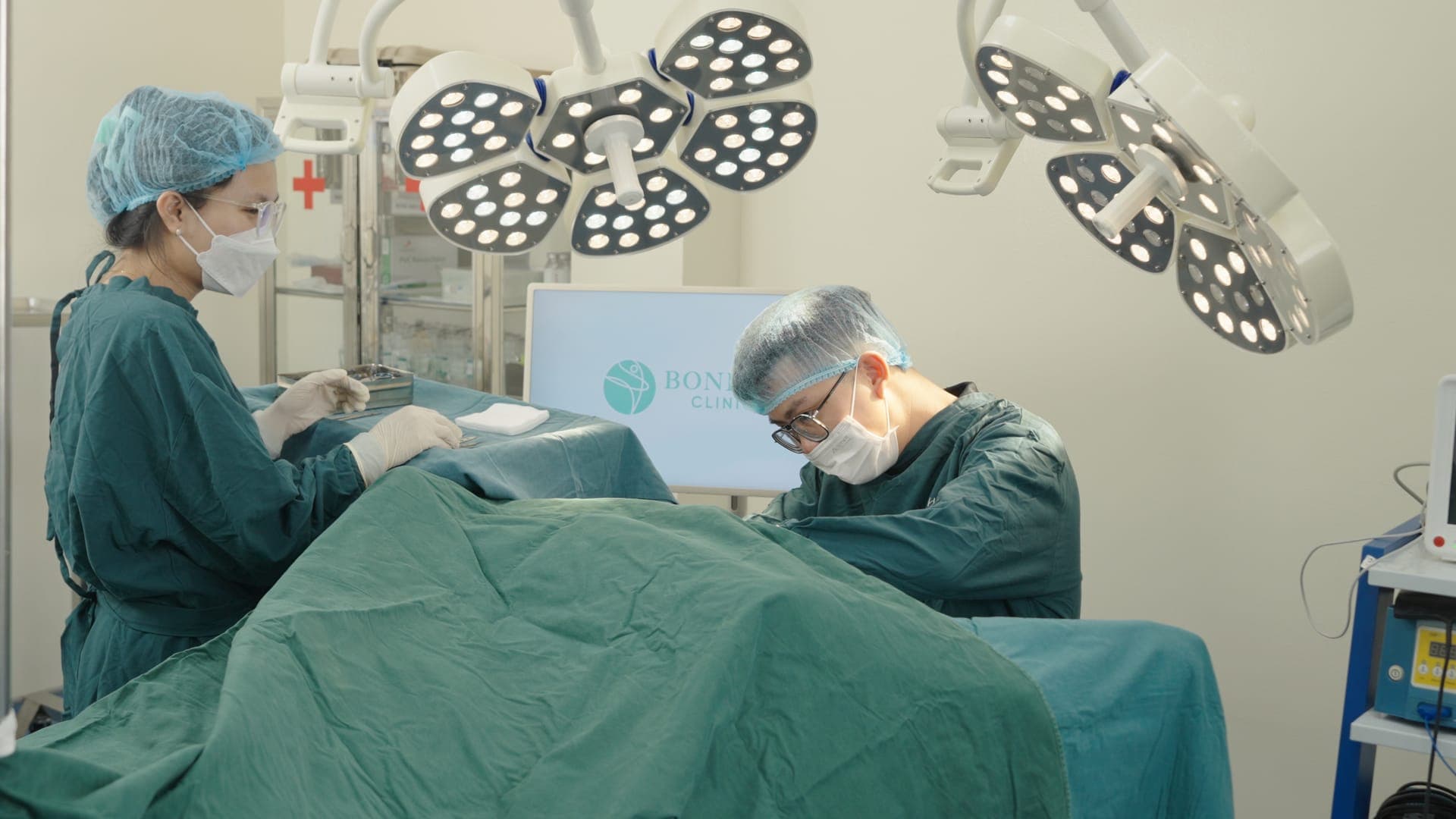
Local anesthesia (with optional mild sedation). The surgeon marks the incision line along the upper border of the eyebrow and the strip of excess skin to be excised based on the measured lift level, makes the incision, dissects the soft tissue of the brow superiorly, lifts and anchors the tissue to the frontal periosteum at the new position (collagen threads may be used for additional support), removes the excess skin strip, performs intradermal suturing, and closes the skin with fine sutures. The procedure takes 60–90 minutes for both sides; it can be combined with blepharoplasty during the same session if indicated.
Before the procedure
Measure eyebrow position, perform the brow stabilization test, evaluate levator muscle function, and take standardized clinical photographs; discontinue anticoagulants, alcohol, and smoking as instructed; do not trim or pluck eyebrows prior to surgery to allow the surgeon to accurately align the incision line.
After the procedure
**Post-Operative Care Instructions:** * **Cold & Warm Compresses:** Apply a cold compress for the first 48–72 hours (days 1–2: 10–15 minutes per session, every hour), then switch to a warm compress starting on day 3. * **Daily Care & Recovery:** Keep your head elevated while resting, and take all medications exactly as prescribed. Cleanse the eye area with sterile saline. Use proper sun protection and apply scar gel as directed. * **Expected Symptoms:** Mild swelling and bruising may persist for 1–2 weeks. The eyebrow arch may appear slightly elevated for the first few weeks before settling into its natural shape. * **Activities & Dietary Restrictions (1 Month):** Avoid rubbing your eyes, wearing eye makeup, and using contact lenses. Abstain from alcohol, stimulants, seafood, beef, sticky rice, and morning glory for 1 month. * **Follow-Up Schedule:** Suture removal at the clinic on day 7. Routine follow-up visits are scheduled at day 7, 1 month, 3 months, and 6 months. * **Warning Signs:** Contact your doctor immediately if you experience severe abnormal swelling, purulent discharge, heavy bleeding, a fever over 38.5°C, spreading redness/inflammation, or an inability to close your eyes completely after 1 week.
Possible risks — your doctor explains them before treatment
- Incision scar along the brow margin remains pink for 1–3 months, more visible with sparse eyebrows
- Temporary numbness and itching of the forehead skin
- Brow arch positioned higher than expected in the first few weeks
- Asymmetry
- Recurrent sagging due to natural aging
- Hematoma, infection (rare)
- Frontal nerve branch injury (very rare)
Who should NOT have this?
- The eyebrow is in a normal position with only excess eyelid skin (blepharoplasty is sufficient)
- Severe ptosis/sagging of the entire brow combined with significant forehead laxity (requires a different technique)
- Overly sparse eyebrows that cannot conceal the incision line, in cases where visible scarring is not acceptable
- A clear history/predisposition to keloid scarring
- Uncontrolled systemic medical conditions or coagulation disorders
How BonBoz uses it
Lower Blepharoplasty for Excess Skin
Lower blepharoplasty addresses loose, wrinkled under-eye skin caused by aging through an incision made just beneath the lower lash line, with optional orbital fat correction. Ideal for individuals whose primary concern is excess skin, typically aged 45–70.
Learn about this method →Full Incision Upper Blepharoplasty for Excess Skin and Fat
Full incision upper blepharoplasty utilizes an incision along the full length of the eyelid crease to remove excess skin, manage fat pockets, and create a stable double eyelid fold. It serves as the foundational technique for aging upper eyelids and puffy eyelids—not a 'large-eye creation' procedure.
Learn about this method →Partial Incision Upper Blepharoplasty (Mini Line)
Mini Line blepharoplasty uses an incision roughly 2/3 the length of the eyelid crease to remove moderate lax skin and secure the fold. Positioned between the suture technique and full incision blepharoplasty: more durable than non-incisional methods, less invasive than a full incision.
Learn about this method →Eye Procedures: Mini 5D Brow Lift
Services Page: A specialist doctor evaluates your case, recommends the optimal approach, and provides clear cost details before you make any decision.
Want a cost range for your own case?
Estimate the cost →Cost guidance
The cost depends on the degree of lift required, whether the procedure is unilateral or bilateral, and whether it is combined with an upper eyelid treatment during the same session.
The final price follows the doctor’s recommendation after an in-person exam. A confirmed quote has no hidden extras.
Inside the BonBoz clinic

Book a consultation with a doctor
Choose a date, time slot and doctor — the clinic calls to confirm within 5 minutes during opening hours. Free consultation, no commitment.
Frequently asked questions
Will the brow lift scar be visible?
How long do the results last?
Will my eyes look overly wide or startled after surgery?
Will forehead numbness after surgery resolve?
Can Botox replace a surgical brow lift?
Is an upper blepharoplasty (eyelid surgery) needed at the same time?
When can I return to work?
Can asymmetrical eyebrows be corrected?
Related topics
- Full-Incision Blepharoplasty for Excess Skin and Fat Removal: Procedure, Indications for Aging Eyelids, and Essential Risks to Know
- Horizontal forehead lines and frown lines ("11" lines): Dynamic or static wrinkles, and can Botox eliminate them?
- Sagging Eyebrows, Tired Eyes, and Heavy Upper Eyelid Skin: How to Distinguish Them from Ptosis, and Brow Lift Options
- Age-Related Upper Eyelid Laxity: Should You Get Blepharoplasty, and How to Distinguish It from Ptosis and Brow Ptosis?
More from our doctors
What is a brow lift? Who is it suitable for, and how does it differ from a thread lift for eyebrows?
What a brow lift is, who is an ideal candidate, how it differs from a thread lift for the brows, and whether the results look natural — helping you gain a clear understanding before making a decision.
How long does a brow lift last? When should a revision be performed?
The longevity of a brow lift depends on various factors and how your brow shape changes over time before requiring a revision.
Sagging Eyebrows, Tired-Looking Eyes — How Much Can a Brow Lift Help?
Why sagging eyebrows make the eyes look tired, what a brow lift can achieve, when combination procedures are needed, and whether the results look natural.