
Small eyes, epicanthal folds
Small, short eyes with an epicanthic fold occur when the skin fold at the inner corner covers the lacrimal caruncle, making the palpebral fissure appear shorter and the eyes farther apart. This is a common anatomical characteristic among East Asians, not a medical condition. When the fold causes significant coverage, medial epicanthoplasty helps lengthen and define the eyes; however, if the issue is solely caused by excess eyelid skin, double eyelid surgery alone is sufficient.
Compiled from BonBoz Clinic clinical documentation — currently in medical review
What is an Epicanthic Fold?
At the inner corner of the eye, there is a skin fold running from the upper eyelid downward, covering the pink tissue (lacrimal caruncle). When prominent, this fold obscures the inner aspect of the palpebral fissure, making the eyes appear shorter, rounder, and wider apart. It can also pull the double eyelid crease (if present) inward, creating a "tapered" or hidden inner fold. The severity of an epicanthic fold is classified by the degree of caruncular coverage: mild, partial, or near-complete.
What Causes Small Eyes — Epicanthic Folds or Eyelid Hooding?
These two causes often coexist. Upper eyelid hooding makes the eyes look smaller vertically — addressed with double eyelid surgery (blepharoplasty) or crease creation. Epicanthic folds shorten the eyes horizontally — addressed with medial epicanthoplasty. The surgeon measures the palpebral fissure length and the intercanthal distance: if the intercanthal distance is significantly wider than the fissure length, epicanthoplasty is beneficial; if they are nearly equal, opening the inner corners may bring the eyes too close together, resulting in a harsh appearance.
What Does Medial Epicanthoplasty Do and What Are Its Limitations?
This is a minor surgical procedure that rearranges the skin folds at the inner corner using small skin flaps (commonly a Z-plasty or its variants) to expose more of the lacrimal caruncle and elongate the palpebral fissure by a few millimeters. Limitations: the procedure is limited by the patient's anatomical structure — overcorrection exposes too much of the pink caruncle, appearing unnatural; scars at the inner canthus may take longer to fade than eyelid scars; and it cannot truly move the eyes closer together since the underlying bony orbit remains unchanged.
What Determines the Degree of Improvement?
The severity of the epicanthic fold, intercanthal distance, the presence of hidden folds or ptosis, skin thickness at the inner canthus (thicker skin takes longer for scars to soften), and bilateral symmetry. In many cases, simply creating the appropriate eyelid crease shape can visually elongate the eyes without the need for epicanthoplasty.
How Does BonBoz Approach Small Eyes and Epicanthic Folds?
A plastic surgeon measures the palpebral fissure length, intercanthal distance, and the degree of caruncular coverage using standardized clinical photography, while evaluating the upper eyelids and levator muscle function. Based on this, a tailored plan is recommended: eyelid crease creation alone, crease creation combined with medial epicanthoplasty, or standalone epicanthoplasty if the existing crease is already well-defined. The examining doctor is the one who performs the procedure; incision placement, expected scar maturation timeline, and estimated elongation are clearly communicated beforehand.
Severity levels
1
Mild — Epicanthic fold slightly covers the lacrimal caruncle
Eyes appear slightly short, mainly due to eyelid skin coverage. Usually only requires creating the proper double eyelid crease; epicanthoplasty is not yet needed.
2
Moderate — Fold partially covers the caruncle, eyes appear slightly wide-set
Medial epicanthoplasty lengthens the palpebral fissure by a few millimeters, commonly combined with double eyelid surgery to open up the inner corner fold.
3
Severe — Fold covers almost the entire caruncle, palpebral fissure is noticeably short
Medial epicanthoplasty combined with blepharoplasty; lateral canthoplasty may be considered if the outer corner is also short. Expected improvement is a few millimeters longer, without altering the underlying bone structure.
When should you see a doctor?
- You want to undergo epicanthoplasty (inner corner eye enlargement) but have not had your intercanthal distance measured—performing the procedure when your eyes are already close-set can make your facial expression appear harsh.
- An epicanthic fold pulls the double eyelid crease into a hidden or hooded fold at the inner corner, creating asymmetry between both eyes.
- You have previously undergone epicanthoplasty elsewhere and now have thick, contracted scars at the inner corner or excessive exposure of the lacrimal caruncle.
- Accompanied by ptosis (droopy eyelids) or the need to raise your eyebrows to open your eyes—the levator palpebrae superioris muscle must be evaluated first.
How BonBoz treats it
Medial Epicanthoplasty
A minor surgical procedure that rearranges the inner corner skin fold using a Z-plasty or its variants, revealing more of the lacrimal caruncle and achieving a controlled horizontal elongation of the palpebral fissure.
Learn about this method →Mini-Incision Double Eyelid Surgery (Mini Line)
For younger individuals with small eyes primarily caused by eyelid skin coverage and minimal excess skin: creates a distinct eyelid crease to make the eyes appear vertically larger.
Learn about this method →Full-Incision Double Eyelid Surgery
For cases with excess skin and thick fat accompanied by epicanthic folds: addresses both skin and fat while designing a double eyelid crease in combination with medial epicanthoplasty.
Learn about this method →Want a cost range for your own case?
Estimate the cost →Cost guidance
Medial epicanthoplasty has its own separate cost and is typically combined with double eyelid surgery as a package. The doctor will provide a specific quote based on the treatment plan after an in-person examination and measurement; the cost estimator tool provides a reference price range for each eye group.
The final price follows the doctor’s recommendation after an in-person exam. A confirmed quote has no hidden extras.
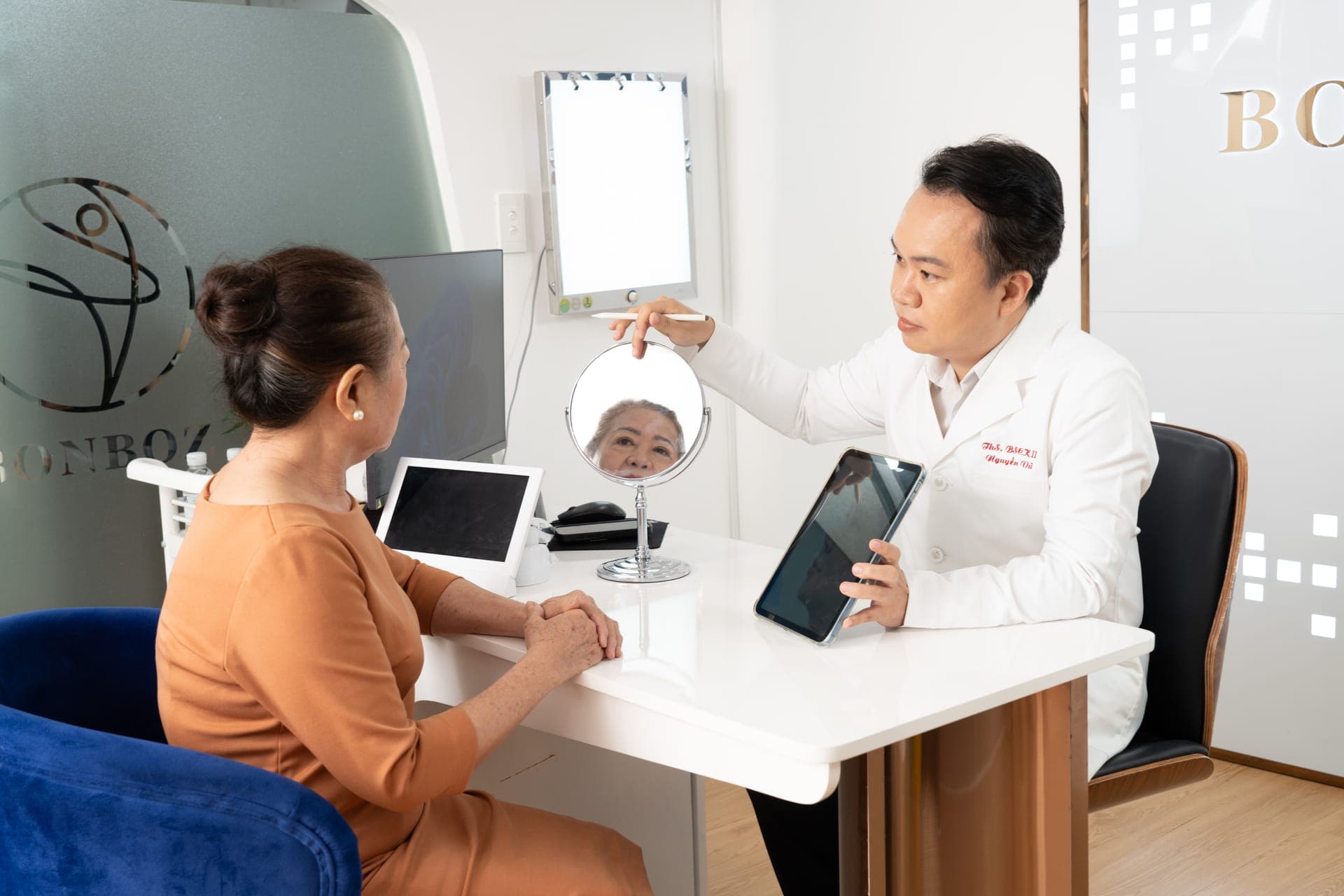
Inside the BonBoz clinic


Book a consultation with a doctor
Choose a date, time slot and doctor — the clinic calls to confirm within 5 minutes during opening hours. Free consultation, no commitment.
Frequently asked questions
How much can medial epicanthoplasty lengthen the eyes?
Are medial epicanthoplasty scars visible?
Does blepharoplasty alone make the eyes longer?
My eyes are already close together; should I undergo epicanthoplasty?
Does epicanthoplasty affect the tear ducts?
How long is the recovery time?
Can medial epicanthoplasty be reversed or 'closed back'?
Can lateral epicanthoplasty be performed at the same time?
Related topics
- Medial Epicanthoplasty (InnerEyes): Epicanthal Fold Correction Techniques, Elongation Limits, and Corner Scar Care
- Mini-Incision Blepharoplasty (Mini Line): Technique, Ideal Candidates, and How It Differs from Full-Incision Blepharoplasty
- Asymmetrical Eyelids: Congenital Causes, Post-Blepharoplasty Issues, and How to Correct Them
- Monolids vs. Hidden Double Eyelids: What’s the Difference, and Who Should Choose Non-Incisional vs. Incisional Double Eyelid Surgery?
- Ptosis: How It Differs from Cosmetic Blepharoplasty and When Treatment Is Needed
More from our doctors
What are medial and lateral epicanthoplasty? How do they differ, and who is an ideal candidate?
Medial epicanthoplasty and lateral canthoplasty target two distinct anatomical areas of the eye. Understanding what each procedure entails, how they differ, and who is an ideal candidate will help you communicate effectively and precisely with your surgeon.
What Is Double Eyelid Surgery with Epicanthoplasty? How It Differs from Traditional Double Eyelid Surgery
Double eyelid surgery with epicanthoplasty is a surgical technique designed to widen the corners of the eyes, creating larger and more open-looking eyes. This differs from standard upper blepharoplasty, which solely addresses the upper eyelid.
Does Upper Blepharoplasty Actually Make Your Eyes Bigger or Is It Just an Illusion? A Detailed Breakdown
Double eyelid surgery does not actually enlarge the eyes, but it makes them appear brighter and more alert by elevating the eyelid crease and improving facial proportions.
Types of Blepharoplasty: A Detailed Guide to Understanding Your Options
There are three main types of blepharoplasty: upper blepharoplasty, lower blepharoplasty, and combined upper and lower blepharoplasty. Each type serves a different purpose and addresses specific eye conditions.