
Redness and visible implant after rhinoplasty
Nasal redness and implant visibility after rhinoplasty occur when the skin over the bridge or tip progressively thins, becomes tight, turns red, and reveals the outline of the underlying implant. This is typically caused by an implant that is too high, too long, or placed in the wrong tissue plane, exerting excessive pressure on the overlying skin. Early consultation is essential: if the skin has not yet perforated, the nose can still be preserved by lowering or replacing the implant and reinforcing the area with an autologous cartilage graft.
Compiled from BonBoz Clinic clinical documentation — currently in medical review
Why Does a Rhinoplasty Implant Cause Redness and Shininess?
Nasal skin is only a few millimeters thick. When an implant is placed too high, extends too far into the nasal tip, or sits in the wrong plane (supra-periosteal instead of sub-periosteal), continuous pressure causes the soft tissue between the implant and the skin to progressively atrophy. As the skin thins, blood vessels dilate to compensate, resulting in redness, a shiny and taut surface, and the visible outline of the implant underneath. A chronic inflammatory reaction around the implant or a subclinical infection can also accelerate tissue thinning.
How Does Postoperative Swelling Differ from Skin Thinning?
During the first 1–3 months, the nasal tip may appear pink and tight due to swelling—this is normal and will gradually subside. Redness and shininess caused by skin thinning appear later (typically after 6 months to several years) and progressively worsen over time. This is often accompanied by a tight sensation, palpable implant edges, and sometimes upward retraction of the nose. The progression over time is the key distinguishing factor.
What Happens If You Wait?
The skin continues to thin until the implant becomes exposed—at which point emergency implant removal is required, leaving the tissue significantly more compromised and making reconstruction much more challenging. Addressing the issue while the skin remains intact yields markedly better outcomes: the height can be reduced, a shorter implant can be placed, the tip can be reinforced with ear cartilage, or the nose can be converted to an autologous structural rhinoplasty.
What Factors Determine the Revision Approach?
The remaining skin thickness, the type and position of the current implant, the presence of infection, the number of prior revisions, and the availability of donor autologous cartilage. For extremely thin skin, the surgeon may use autologous fascia or soft tissue grafts as an interpositional buffer between the implant and the skin.
How Does BonBoz Approach Red and Shiny Noses?
A specialist in plastic and reconstructive surgery conducts an in-person examination, compares progressive photographs, palpates the area to evaluate skin thickness and implant position, and rules out infection. Treatment plans are prioritized based on urgency: intact skin thickness—reduce or replace the implant, reinforced with autologous cartilage; severely thinned skin—remove the implant, reconstruct using autologous cartilage with soft tissue cushioning; exposed implant or infection—remove the implant first, reconstruct after several months. The consulting surgeon directly performs the procedure and will clearly discuss whether a two-stage approach is necessary.
Severity levels
1
Mild — slight redness, skin remains thick
The nasal tip appears slightly flushed in cold weather or during exertion; the implant outline is not visible. Monitor with photos every 1–2 months; consider lowering the implant if symptoms progressively worsen.
2
Moderate — shiny, persistent redness, visible implant contour
The skin is tight and shiny, with visible synthetic implant edges. Early intervention is recommended: replace with a shorter/lower implant and reinforce the nasal tip with an autologous cartilage graft.
3
Severe — extremely thin skin, contracted nose, or impending extrusion
The skin is paper-thin and may be accompanied by progressive nasal shortening (upturned nose). Remove the implant and reconstruct using autologous cartilage with soft tissue cushioning; typically performed in stages.
When should you see a doctor?
- Redness and shininess appearing after 6 months or progressively worsening over time — not typical postoperative swelling.
- Implant edges palpable to the touch, with the skin over the nasal tip appearing stretched and thinned.
- Nose feels painful, warm, has discharge, or shows a whitish spot at the tip — suspected infection or impending extrusion; requires immediate medical evaluation.
- The nose is becoming increasingly upturned or deviated — a sign of concurrent capsular contracture.
How BonBoz treats it
Revision Rhinoplasty
Implant removal or replacement, scar tissue release, and the use of autologous cartilage with soft tissue grafting to protect thinning skin.
Learn about this method →Autologous Structural Rhinoplasty
When synthetic materials must be completely removed: framework reconstruction using septal, ear, or rib cartilage.
Learn about this method →Autologous Cartilage Tip Grafting
For mild to moderate cases: lowering the implant and shielding the nasal tip with ear cartilage to reduce pressure on the skin.
Learn about this method →Want a cost range for your own case?
Estimate the cost →Cost guidance
The cost of revision rhinoplasty to correct nasal redness depends on the extent of skin damage, whether implant removal and rib cartilage grafting are required, and if the procedure needs to be performed in stages. The doctor will provide an exact quote after an in-person consultation; the cost estimator tool provides a reference price range for the rhinoplasty category.
The final price follows the doctor’s recommendation after an in-person exam. A confirmed quote has no hidden extras.
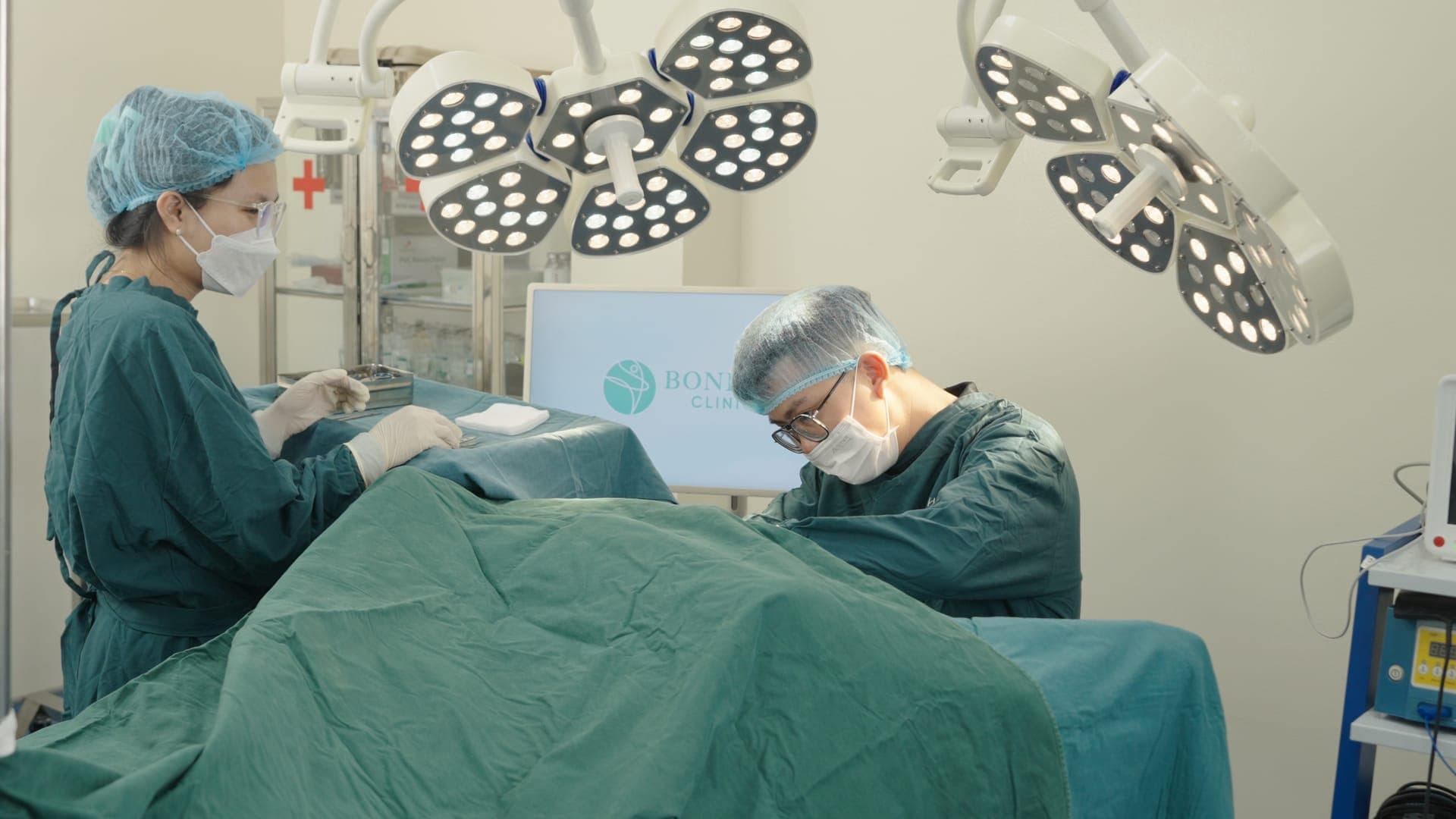
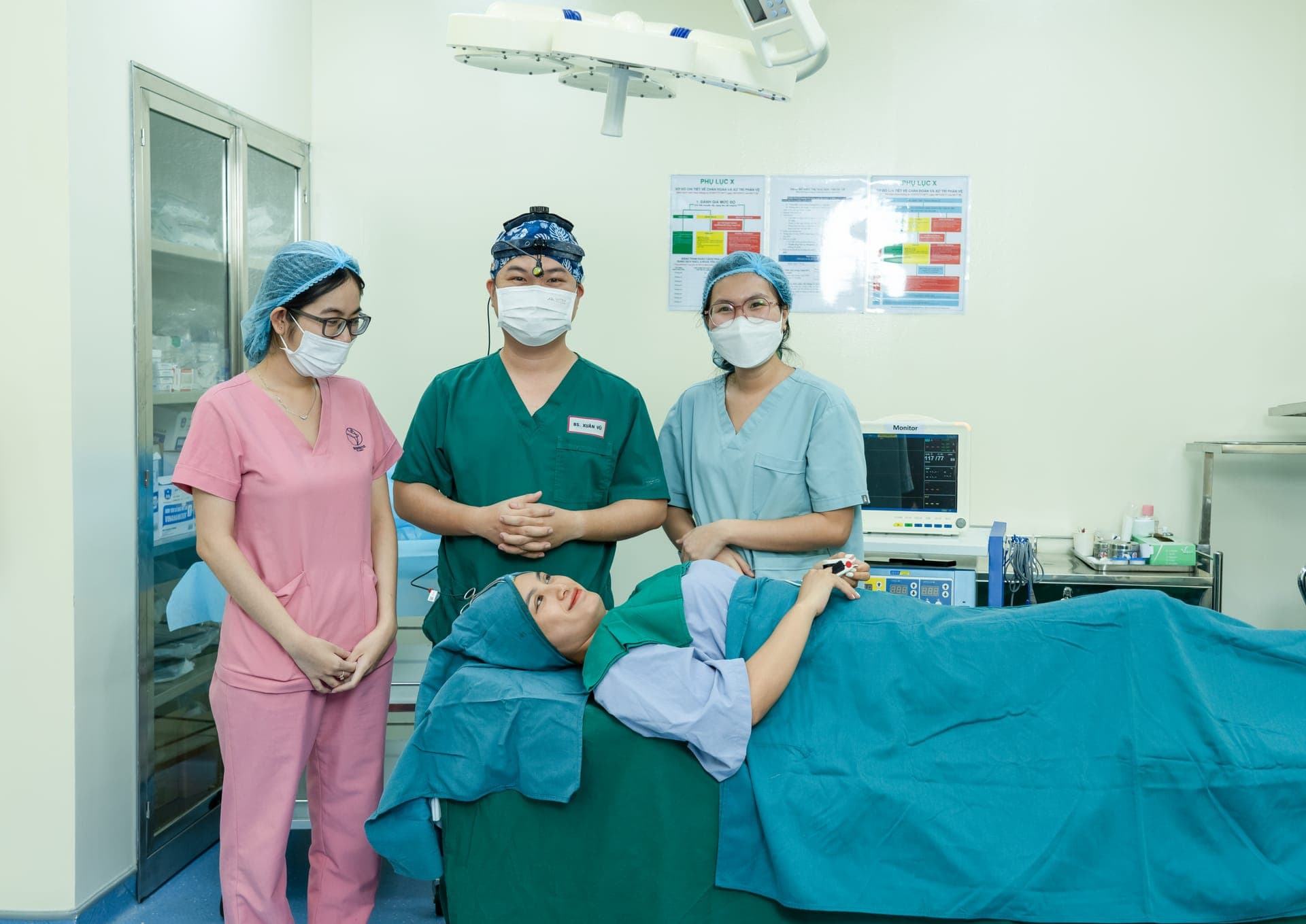
Inside the BonBoz clinic

Book a consultation with a doctor
Choose a date, time slot and doctor — the clinic calls to confirm within 5 minutes during opening hours. Free consultation, no commitment.
Frequently asked questions
Will a shiny, red nasal tip resolve on its own?
Can topical creams or injections treat the redness and shininess?
Is it always necessary to remove the synthetic implant?
How long after implant removal can rhinoplasty be performed again?
Does autologous cartilage cause redness and shininess like synthetic implants?
What are the warning signs that require emergency care?
Can thinned nasal skin recover?
Is there a risk of developing a shiny, red nose with any rhinoplasty procedure?
Related topics
- Cost of Full Structural Rhinoplasty: Reference Price Range
- Semi-Structural Rhinoplasty Cost: Price Range and Cost-Affecting Factors
- Cost of Rhinoplasty with Cartilage-Wrapped Tip: Price Range and Key Factors
- Autologous Costal Cartilage Rhinoplasty: Indications, Pros, Cons, and the Cartilage Harvesting Procedure
- Nasal Wing Reduction (Alar Plasty): Techniques, Who Needs It, Incision Locations, and Risks of Asymmetrical Nostrils
- Revision Rhinoplasty (Secondary Rhinoplasty): When It Is Needed, Why It Is More Challenging, and the Procedure at BonBoz
More from our doctors
Abnormal signs after cosmetic surgery: when to seek immediate medical attention?
While most post-operative symptoms following cosmetic surgery are normal, certain signs require prompt medical attention. Knowing how to differentiate between the two helps prevent unnecessary anxiety while ensuring you do not overlook warning signs that require timely intervention.
Revision Rhinoplasty for Failed Previous Surgery: What You Need to Know Before Making a Decision
Revision rhinoplasty after a failed procedure requires adequate waiting time, choosing a highly qualified surgeon, and clearly understanding the corrective techniques to achieve optimal results.
Autologous vs. Synthetic Cartilage in Rhinoplasty: How to Choose the Best Option
Both autologous cartilage and synthetic implants have their own advantages and disadvantages. Autologous cartilage provides long-lasting results but involves a more complex procedure; synthetic implants are simpler to place but may require replacement over time.
Deviated Nose After Rhinoplasty: Warning Signs Requiring Immediate Medical Attention
After rhinoplasty, if you notice nasal deviation, abnormal swelling, or asymmetry, contact your doctor immediately for an evaluation.