
Facial Laxity — Sagging Skin
Facial skin laxity and sagging occur when collagen depletes, supporting ligaments loosen, and facial fat descends with age, leading to deep nasolabial folds, sagging cheeks, and a double chin. Mild cases can be improved with HIFU or RF; moderate laxity is suitable for thread lifts; severe laxity with significant excess skin requires surgical facelift. A doctor will assess the degree of laxity to select the appropriate treatment level.
Compiled from BonBoz Clinic clinical documentation — currently in medical review
Why Does the Face Sag?
Aging occurs across three structural layers simultaneously: the skin loses collagen and elasticity; facial fat pads atrophy in the upper regions (temples, upper cheeks) and descend into the lower regions (nasolabial folds, double chin); and the retaining ligaments supporting the soft tissue become lax. As a result, the youthful heart-shaped facial contour gradually turns square, and the jawline loses its definition. Sun exposure, smoking, and rapid weight loss accelerate this process.
Three Degrees of Sagging, Three Treatment Approaches
Mild (ages 30–40, early loss of skin firmness, faint folds): Non-invasive collagen-stimulating technologies—HIFU, RF—provide moderate tightening improvements and require maintenance. Moderate (ages 40–55, pronounced folds, mild jowls, emerging double chin): Thread lifts reposition soft tissue to a higher anchor point, lasting 1–2 years, and can be combined with dermal fillers to restore volume. Severe (over 55 or with significant excess skin): Surgical rhytidectomy (facelift, mini facelift) excises redundant skin and resuspends deeper tissues—providing the longest-lasting outcome.
What Happens When the Wrong Treatment Level Is Chosen?
Performing a thread lift on skin with significant excess results in lifting that lasts only a few months, leaving the skin still loose and wasting financial investment. Using HIFU on noticeably sagging tissue yields imperceptible improvements. Conversely, performing surgery on mild, early-stage skin laxity is considered overtreatment. Choosing the correct intervention level is far more critical than simply opting for the 'newest' technology.
Why Is Simultaneous Volume Restoration Necessary?
Facial sagging coincides with fat atrophy in the upper facial regions; simply pulling the skin tight without restoring volume results in an unnatural, hollowed appearance. Physicians often combine treatments with fillers or fat grafting to the temples and upper cheeks when necessary to achieve a harmonious, natural look.
How BonBoz Approaches Your Care
Our physicians conduct in-person consultations to evaluate region-specific tissue laxity, skin thickness, facial fat volume, age, and individual aesthetic goals before recommending the appropriate treatment plan—even if the conclusion is 'no treatment is needed yet' or 'a thread lift is insufficient; surgery is recommended.' Plastic surgeons perform thread lifts and surgical procedures, while non-invasive HIFU/RF energy-based devices and dermal fillers are administered under non-surgical aesthetic medicine.
Severity levels
1
Mild — loss of firmness, fine lines
Typically ages 30–40. HIFU/RF to stimulate collagen, maintained periodically; moderate results.
2
Moderate — visible folds, mild cheek sagging, early double chin
Typically ages 40–55. Thread lift to elevate tissue, can be combined with volume restoration; lasts 1–2 years.
3
Severe — significant excess skin, undefined jawline
Typically over 55 or following major weight loss. Surgical facelift (mini facelift/facelift) — longest-lasting.
When should you see a doctor?
- A poorly defined jawline and noticeable double chin, despite no change in weight.
- You have had a thread lift, but the results lasted only a few months—the degree of laxity may have exceeded what threads can support.
- You were recommended expensive treatments, but no one truly assessed your actual level of skin laxity.
- More pronounced sagging on one side—requiring neurological causes to be ruled out.
How BonBoz treats it
Non-invasive HIFU facelift
High-Intensity Focused Ultrasound stimulates collagen in deep tissue layers — ideal for mild sagging, maintenance required.
Learn about this method →Thread lift
Absorbable barbed threads reposition and lift soft tissue — suitable for moderate sagging, lasts 1–2 years.
Learn about this method →Mini facelift / surgical facelift
Excises excess skin and redrapes underlying tissue — designed for severe sagging, delivers the longest-lasting results.
Learn about this method →Volume restoration (fillers / fat grafting)
Restores volume to the temples and upper cheeks for a natural, non-hollow appearance.
Learn about this method →Want a cost range for your own case?
Estimate the cost →Cost guidance
Costs increase with the invasiveness of the procedure: HIFU is priced per session/area, thread lifts per area, and surgery is the most expensive but offers the longest-lasting results. An estimated price range is available in our cost estimator tool; the exact quote will be provided by the doctor after your consultation.
The final price follows the doctor’s recommendation after an in-person exam. A confirmed quote has no hidden extras.
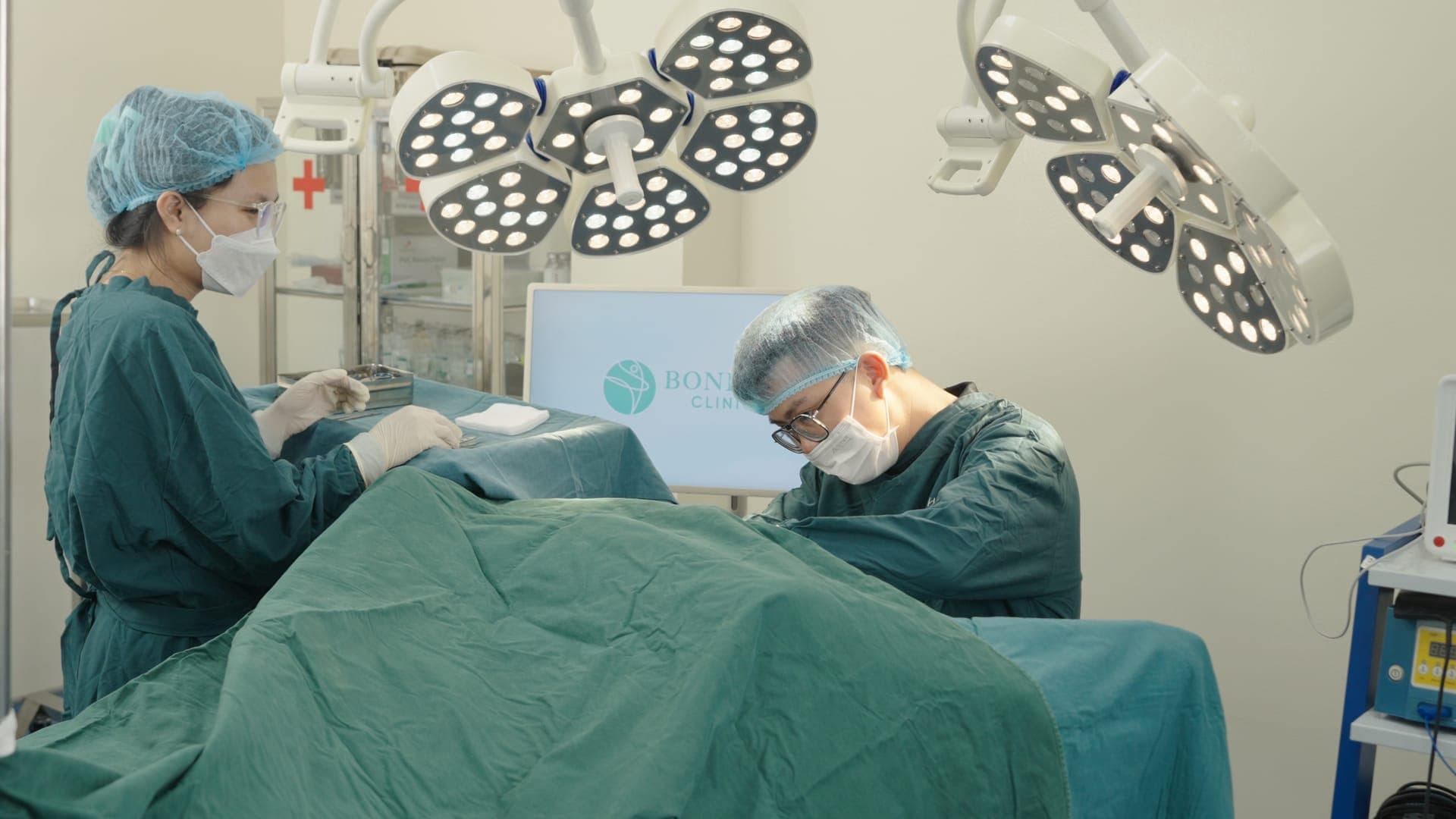
Inside the BonBoz clinic


Book a consultation with a doctor
Choose a date, time slot and doctor — the clinic calls to confirm within 5 minutes during opening hours. Free consultation, no commitment.
Frequently asked questions
How long does a thread lift last?
Will a thread lift make my face look stiff or unnatural?
Is HIFU painful, and how often should it be repeated?
Does a facelift leave visible scars?
What is the ideal age for a facelift?
Does Botox tighten the skin?
Can facial sagging caused by rapid weight loss recover on its own?
Can I get a thread lift after having HIFU?
Is a thread lift dangerous?
Who performs the procedures at BonBoz?
Related topics
- Thread Lift and Mini Facelift Costs: Price Range by Treatment Area
- Collagen Thread Lifting and Mini Facelift: How They Elevate Tissue, Who is a Good Candidate for Thread Lifting, and When is Surgery Required?
- Non-invasive HIFU skin lifting: mechanism, actual efficacy, and suitable candidates
- Age-Related Upper Eyelid Laxity: Should You Get Blepharoplasty, and How to Distinguish It from Ptosis and Brow Ptosis?
- Eye Bags vs. Dark Circles: Different Causes, Different Treatments
More from our doctors
At what stage of sagging is a thread lift no longer enough, requiring a surgical facelift?
Thread lifts are suitable for a certain degree of sagging; when there is significant skin laxity, a thread lift alone may not be sufficient. Understanding when to consider a surgical facelift helps you set realistic expectations and discuss your options with your doctor.
What is a facelift? How does it differ from a thread lift, and how long do the results last?
Facelift surgery and thread lift represent two distinct approaches in terms of the level of invasiveness. Understanding what a facelift is, how it differs from a thread lift, and how long the results last will help you choose the right option for your specific condition.
Which areas of the face benefit most from a thread lift for skin sagging?
A thread lift does not improve every area equally; results vary depending on the treatment area and the degree of skin laxity. Understanding which areas are best suited for a thread lift helps you set realistic expectations and consult more effectively with your doctor.
What Is Non-Invasive HIFU Skin Tightening? How Does It Differ from a Thread Lift and Who Is an Ideal Candidate?
HIFU is a non-invasive lifting option often mentioned alongside thread lifts. Understanding what HIFU is, how it differs from a thread lift, and who is an ideal candidate will help you consult effectively with your doctor to choose the most suitable approach.
Does a thread lift make your face look stiff and unnatural?
Concerns about a thread lift causing a stiff, unnatural appearance can be alleviated once you understand the influencing factors to discuss effectively with your doctor.
How Do Botox and Thread Lifts Differ in Mechanism? When Should They Be Combined?
Botox relaxes muscles to smooth dynamic wrinkles, while a thread lift provides facial lifting and skin rejuvenation. These two methods work differently and can be combined to achieve optimal results.