
Post-Acne Hyperpigmentation (PIH) vs. Atrophic Acne Scars: How to Tell the Difference and Treatment Approaches for Each Type
Post-inflammatory hyperpigmentation (PIH) is a flat pigmentary disorder on the skin, while atrophic acne scars are areas of collagen loss—their differentiation and treatment approaches are entirely different.
Quick Summary: Post-inflammatory hyperpigmentation (PIH) consists of flat surface discolorations — the skin remains smooth, only the color changes, and most fade over time. Atrophic acne scars are structural damage: underlying tissue is lost, creating indentations — they do not fill in on their own. The quickest way to differentiate at home: feel the texture and inspect under side-lighting. If it feels flat to the touch and disappears when the skin is stretched, it is PIH; if there is an indentation and a shadow cast under angled lighting, it is an atrophic scar. These two conditions require completely different treatment approaches.
What is post-inflammatory hyperpigmentation (PIH)?
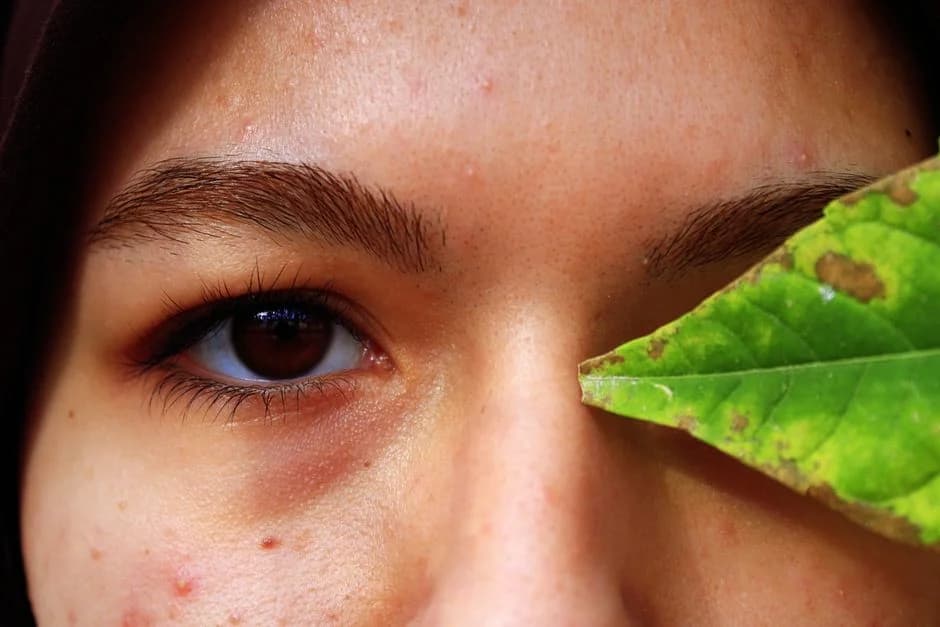
After an inflammatory acne lesion heals, the area may leave behind a dark mark — ranging from pink and brown to dark brown depending on skin tone and the severity of inflammation. The cause is a post-inflammatory hyperpigmentation reaction: melanocytes become overactive at the site of recent injury.
Key characteristic: the skin surface remains flat, with no loss of structure. This is a pigmentary issue, not a structural one — which is why most marks fade gradually over time, at a rate depending on initial inflammation severity, skin tone, and sun exposure levels.
How do atrophic scars differ from PIH?
Atrophic scars form when inflammation destroys subcutaneous tissue and the healing process fails to fully replace what was lost. The result is a true depression — tissue deficiency, not discoloration.
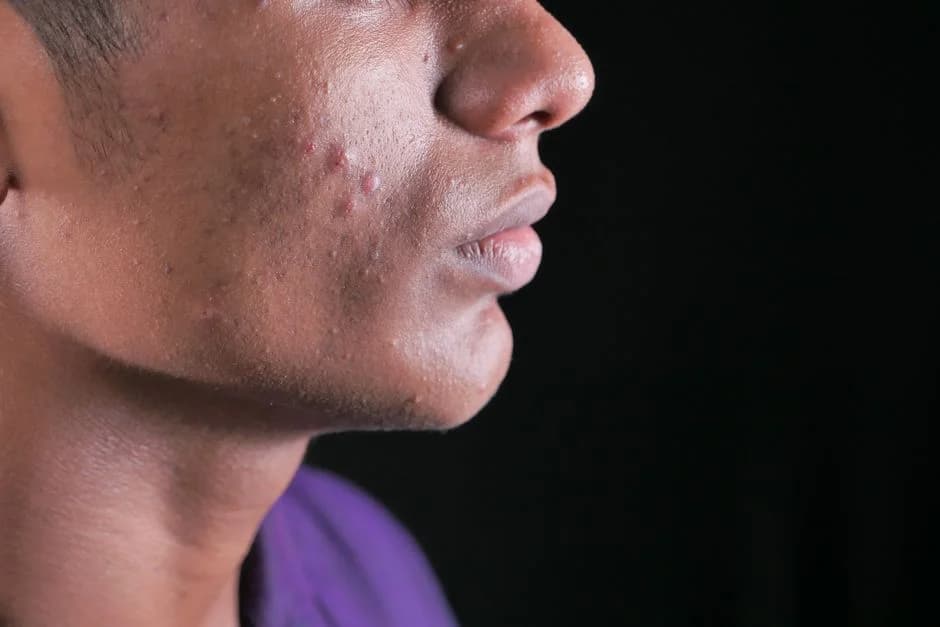
Atrophic scars are classified by their base morphology: ice pick scars (deep and narrow), boxcar scars (well-defined, steep edges), and rolling scars (wavy contours caused by tethering fibrous bands). These three types vary in treatment difficulty, and multiple types frequently coexist on the same face.
The key takeaway: atrophic scars do not fill in on their own over time. Waiting achieves nothing other than delaying treatment.
How to quickly differentiate them at home?
| Assessment Method | PIH (Post-Acne Marks) | Atrophic Scars |
|---|---|---|
| Fingertip palpation | Flat, no sunken feeling | A noticeable indentation can be felt |
| Inspection under angled side-lighting | Casts no shadow | Casts a distinct shadow inside the depression |
| Gently stretching the skin | Mark remains unchanged | Depression becomes shallower or nearly disappears when stretched |
| Over time | Gradually fades | Remains unchanged |
| Nature | Surface discoloration | Tissue loss, structural damage |
Side-lighting is the most accurate method: stand next to a window or use a light source directed from one side while looking in a mirror. Direct, head-on lighting makes everything appear flat and conceals atrophic scars.
Very common: having both simultaneously — an indentation with overlapping hyperpigmentation. In such cases, a two-pronged approach is required, typically addressing pigmentation first as it yields faster visible results.
Treatment approach for PIH
Because it is a pigmentary issue, the primary approach is protecting the skin and supporting the natural fading process:
- Daily sun protection — the most critical step. Sunlight darkens hyperpigmentation and prolongs clearance time. Skipping sunscreen renders virtually all other measures ineffective.
- Do not pop or pick new acne lesions — each manipulation prolongs inflammation and worsens hyperpigmentation.
- Tone-evening active ingredients, used under professional guidance and at appropriate concentrations.
- Completely resolve active acne first — if new breakouts continuously emerge, new hyperpigmentation will continuously follow.
For persistent or widespread hyperpigmentation, a physician may recommend additional in-clinic interventions.
Treatment approach for atrophic scars
Because tissue has been lost, clinical intervention is necessary; home care cannot fill in depressed scars. The choice of intervention depends on the scar base morphology, which the physician classifies prior to selection.
Post-care for advanced scar treatments follows very specific milestones, according to the BonBoz Clinic Guidance Handbook:
- First 4 hours: strictly avoid any water contact on the treated skin area.
- First 24 hours: cleanse gently using only normal saline; do not use facial cleansers.
- The subcision area will experience swelling and subcutaneous bruising — this is an expected and necessary response to release and elevate the scars.
- Allow scabs and needle marks to shed naturally within 4–7 days. Strictly avoid picking or peeling off scabs.
- From day 2: wash the face gently with clean water or a mild cleanser prescribed by the physician.
- Avoid saunas and heavy workouts that induce sweating for the first 3 days.
- Strict sun avoidance is mandatory; once scabs have fully shed, sunscreen application is mandatory.
Contact the physician immediately if: white pus appears, swelling and pain progressively worsen, abnormal yellow discharge leaks, or body temperature exceeds 38.5°C.
Why should active acne be stabilized before treating scars?
Three key reasons:
- 1New acne lesions create new hyperpigmentation and new scars. Treating scars while acne is still active is like cleaning the house while it is still raining inside.
- 2Actively inflamed skin is not a suitable foundation for interventions — it carries a higher risk of infection and yields inferior outcomes.
- 3True scar severity cannot be accurately assessed while the skin surface remains swollen and erythematous from active breakouts.
The correct sequence: stabilize acne → treat hyperpigmentation → treat atrophic scars. Your physician will clearly outline which stage you are currently in.
References
- DermNet — Postinflammatory hyperpigmentation, accessed 03/10/2026
- DermNet — Acne scarring, accessed 03/10/2026
Frequently Asked Questions
Does PIH resolve on its own?
Most marks fade gradually over time because this is a pigmentary issue, not tissue loss. The clearance rate depends on initial inflammation severity, skin tone, and particularly the degree of sun exposure.
Do atrophic scars fill in on their own?
No. Lost tissue does not regenerate spontaneously, so waiting merely delays treatment. The longer they are left untreated, the more stable the fibrous anchoring bands become, making clinical intervention more challenging.
How do I know which type I have?
Feel the texture and inspect under side-lighting as detailed in the comparison table above — this serves as a preliminary self-check. A definitive diagnosis and scar base classification require a professional skin assessment by a physician, as treatment strategies vary by scar type.
If I have both PIH and atrophic scars, which should be treated first?
Hyperpigmentation is typically addressed first because it delivers faster visible improvement without requiring invasive procedures, while simultaneously stabilizing active breakouts. Atrophic scar treatments follow once the true extent of structural damage can be accurately assessed.
This article is for reference only and does not replace an in-person examination or a doctor's diagnosis. Actual results vary by individual condition.