
Where to Get the Best Acne Scar Treatment in HCMC? 5 Essential Criteria to Check Before Choosing
Where to get effective acne scar treatment — 5 self-check criteria: scar classification by dermatologists, tailored treatment methods, valid operating license, traceable and genuine equipment, and realistic expectations.

Quick Summary: Finding a reliable clinic for acne scar treatment in Ho Chi Minh City comes down to 5 verifiable criteria: whether a certified Dermatologist assesses your scar types prior to selecting a treatment, whether the treatment plan is tailored to your specific scar types rather than a "one-size-fits-all" technology, a valid medical specialty operating license, verified equipment provenance, and realistic expectations rather than promises of 100% scar removal.
Why Is Acne Scar Treatment More Challenging Than Treating Active Acne?
Acne scars represent established structural tissue damage, unlike active inflammatory acne — no medical method can achieve 100% complete filling across all scar types. Acne scars also present in various forms (ice pick scars, boxcar scars, rolling scars), and each type responds differently to specific treatment modalities — a comprehensive review by Fabbrocini et al. (2010, NCBI/PMC) highlights that the choice of treatment technique depends on scar classification and the patient's aesthetic expectations. Any facility promising "complete scar removal" without prior clinical classification is a red flag.
Criterion 1: Is There a Dermatologist Assessing Your Scar Types?
- Does the doctor classify your scars (ice pick, boxcar, rolling, or mixed scars) before recommending a treatment modality?
- Is the practitioner an actual Dermatologist, or merely a sales consultant pitching treatment packages?
- What is the physician's Medical Practice Certificate number — which can be cross-checked on the public portal of the issuing Department of Health, rather than relying solely on verbal claims. In Ho Chi Minh City, the Medical and Pharmaceutical Practice Search Portal of HCMC operated by the Department of Health allows you to look up licensed facilities and certified practitioners; the Law on Medical Examination and Treatment No. 15/2023/QH15 (Article 38, Clause 2) stipulates that licensing authorities must publicly disclose the roster of practitioners at each licensed facility.
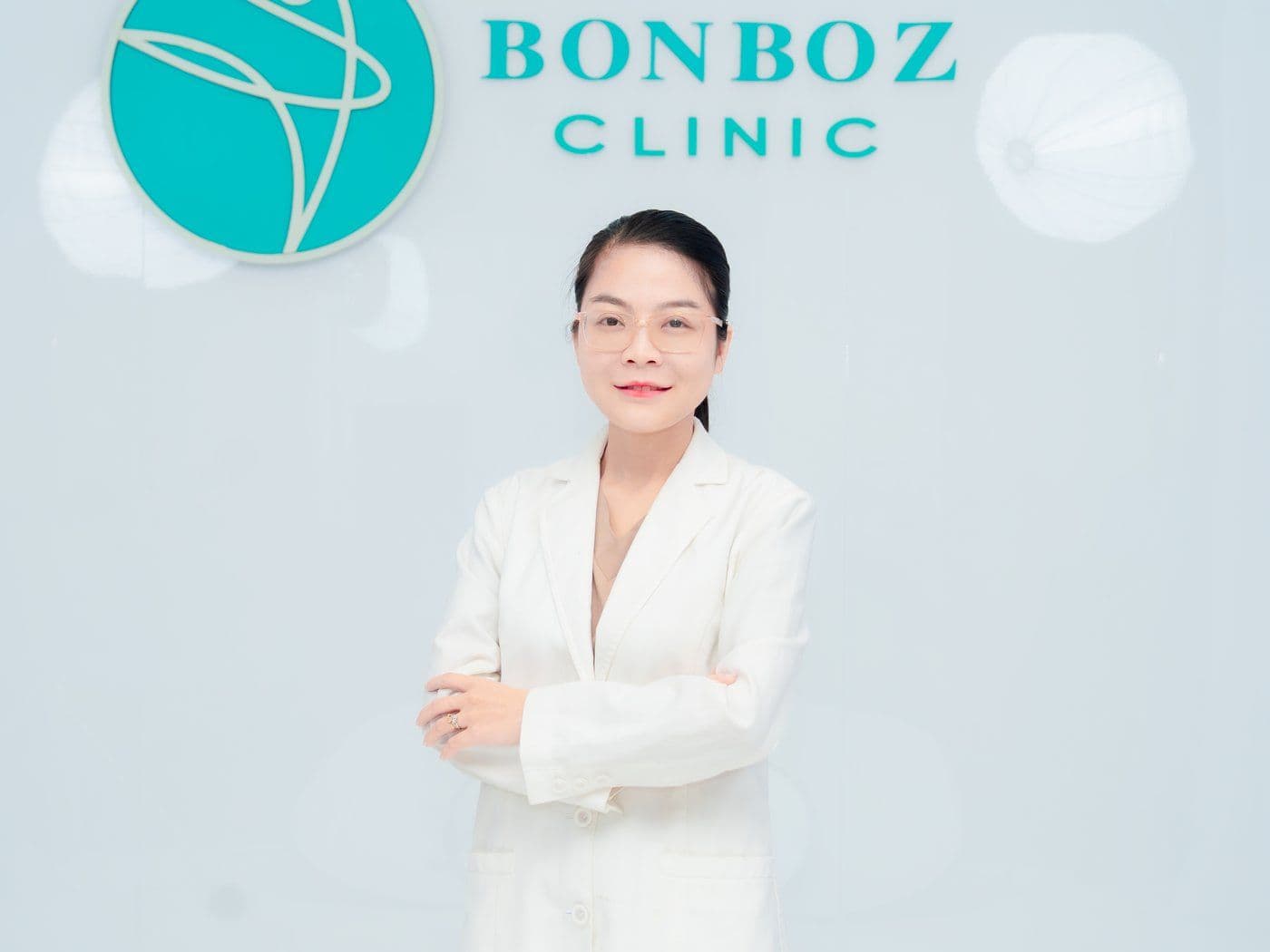
For instance, at BonBoz Clinic, the doctor in charge of acne scar treatment is Dr. MSc. Specialist I Kim Kha — Specialist Level I in Dermatology, Medical Practice Certificate No. 009784/ĐL-CCHN issued by the Dak Lak Department of Health, certified in Laser and Light-based Therapies in Dermatology.
Criterion 2: Is the Treatment Modality Tailored to Your Actual Scar Types?
Each type of scar responds differently to different technologies (lasers, microneedling, dermal filler injections, etc.). Key questions to ask:
- Why did the doctor select this specific modality for your particular scar type, rather than applying a standardized method for all clients?
- Is a multi-modality combination across multiple sessions necessary, or is a single session sufficient?
- What is the realistic expected improvement percentage, rather than a promise of "complete removal"?
If a facility guarantees a precise percentage of improvement prior to an in-person clinical examination, that should be questioned — scar remodeling depends on individual healing responses and cannot be accurately predicted in advance.
Criterion 3: Medical Operating License in Dermatology
Invasive acne scar treatments (lasers, microneedling, injections) strictly require an Operating License for specialized Dermatology issued by the Department of Health — not a standard cosmetic skincare spa license. Under the Law on Medical Examination and Treatment 2023, healthcare facilities may only operate once granted an Operating License (Article 49), which must explicitly delineate the scope of professional practice (Article 50, Clause 2).
- Request the Operating License number and the issuing authority, and verify them against public listings on the clinic’s website or on-site signage.
Criterion 4: Is the Equipment Genuine and Regularly Maintained?
The clinical efficacy and safety of scar revision lasers/technologies depend heavily on authentic equipment, not just clinical technique. Key questions to ask:
- What specific device is being used, and does it have clear, authentic origin documentation?
- Does the facility perform regular technical maintenance and equipment calibration?
Criterion 5: Realistic Expectations, No False Promises of 100% Scar Removal
This is the most critical criterion to distinguish an ethical clinic from a sales-driven establishment:
- Does the doctor clearly explain that deep acne scars rarely disappear 100% completely, but can achieve significant visible improvement? (The American Academy of Dermatology (AAD) also notes that acne scars may fade but rarely disappear entirely on their own.)
- Do they clearly explain how many sessions are needed and the required intervals between them, rather than promising "one-and-done" results?
When Considering BonBoz Clinic
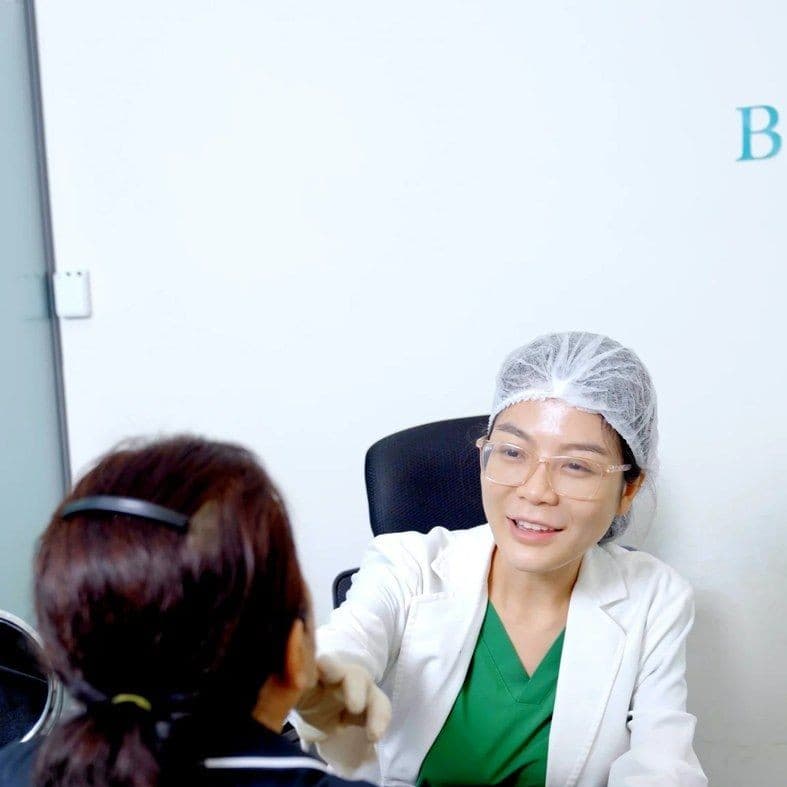
BonBoz Clinic is located at 66–68 Vo Van Tan Street, Xuan Hoa Ward, Ho Chi Minh City, operating under Operating License No. 11113/HCM-GPHĐ (Dermatology specialty) issued by the Ho Chi Minh City Department of Health. Acne scar revision is assessed alongside our Acne Treatment services at BonBoz, led by Dr. MSc. Specialist I Kim Kha — Specialist Level I in Dermatology with over 8 years of clinical practice, certified in Laser and Light-based Therapies in Dermatology. You will be examined directly by the physician, who will classify your scars and advise an appropriate treatment protocol — without false promises of complete scar eradication, as every scar profile and physiological healing capacity responds uniquely. (See also: "How to Choose a Reputable Aesthetic Clinic: 5 Essential Criteria" — core criteria applicable to all aesthetic services.)
References
- Law on Medical Examination and Treatment No. 15/2023/QH15 — Government Portal of the Socialist Republic of Vietnam (Articles 38, 49, 50), accessed September 22, 2026
- Medical and Pharmaceutical Practice Search Portal — Ho Chi Minh City Department of Health, accessed September 22, 2026
- Fabbrocini G. et al. — Acne Scars: Pathogenesis, Classification and Treatment, Dermatology Research and Practice 2010 (NCBI/PMC), accessed September 22, 2026
- AAD (American Academy of Dermatology) — Acne scars: Diagnosis and treatment, accessed September 22, 2026
Frequently Asked Questions
Where is the best place for acne scar treatment in HCMC?
There is no official definitive ranking — the most reliable verification is to evaluate the 5 criteria yourself: whether a certified Dermatologist classifies your scars prior to treatment (verifiable via the Department of Health portal), whether the modality suits your actual scar profile, valid specialty operating licensing, verified equipment provenance, and transparent, realistic clinical expectations.
Can acne scars be 100% completely removed?
No medical method can scientifically or reliably guarantee 100% complete scar eradication — acne scars represent permanent structural tissue alterations and can only be significantly improved depending on scar typology, treatment modalities, and individual skin healing responses. Any clinic guaranteeing an absolute outcome prior to examination is a significant red flag.
How many sessions are required for acne scar treatment?
The required number of sessions depends on the scar type, severity, and the specific modalities used — there is no fixed number that applies universally. A physician must perform an in-person clinical assessment and scar classification to formulate a tailored treatment protocol.
1. Is acne scar treatment safe, and what side effects might occur?
Modern acne scar treatment modalities, when performed by qualified specialist physicians at a licensed medical facility such as BonBoz Clinic, are generally safe. Temporary side effects may include transient erythema, mild edema, or micro-crusting, which typically resolve within several days. An in-person clinical evaluation by a physician is essential to assess your skin profile and recommend the most suitable treatment protocol.
2. How should the skin be cared for after acne scar treatment, and how long is the recovery time?
Proper post-treatment skincare is crucial to achieving optimal outcomes and minimizing clinical risks. You will receive detailed post-care instructions regarding gentle cleansing, barrier hydration, and strict broad-spectrum photoprotection. Recovery time varies depending on the specific modality utilized and individual healing capacity, typically ranging from a few days to a week or longer for deeper, more intensive procedures.
This article is for reference only and does not replace an in-person examination or a doctor's diagnosis. Actual results vary by individual condition.