
Medically reviewed by Dr. Kim Kha, MSc, Specialist I — BonBoz Clinic
Botox vs. Dermal Fillers: When to Use Which? BonBoz Doctors Explain
These two names are often mentioned together, but they actually address two different concerns. This article explains the differences and when each is appropriate.
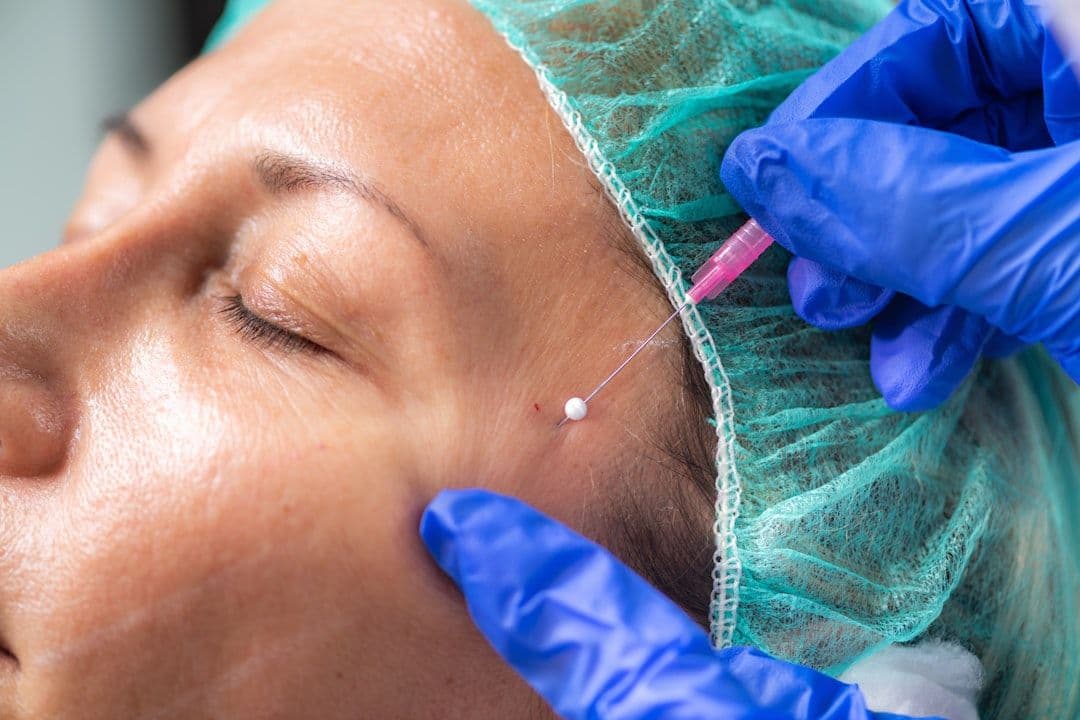
Botox vs. Dermal Filler: Which One Do You Need? BonBoz Doctors Explain
Quick Summary: Botox (Botulinum toxin) and dermal fillers (HA fillers) are two non-surgical aesthetic procedures that address completely different concerns: Botox reduces muscle contraction to smooth dynamic expression lines, while fillers restore volume to hollowed or sagging areas. Choosing the right approach—or combining both—requires an in-person clinical assessment by a doctor to tailor the treatment to your individual anatomy, ensuring both safety and optimal results.
You should consider Botox when your concern involves wrinkles formed by muscle movement (facial expressions), and opt for dermal fillers when the issue is a loss of volume in hollow or sagging areas—though an accurate determination requires an in-person medical examination, as many cases are not that straightforward. Botox and dermal fillers are frequently mentioned together as if they were interchangeable alternatives. In reality, they address two distinct issues, and using the wrong one is not just a waste of money—it can also lead to unwanted outcomes.
This article outlines the fundamental differences so you know the right questions to ask your doctor.
Two Different Treatments, Two Different Mechanisms
Botulinum toxin—commonly referred to as Botox—acts on muscle function. Simply put, it temporarily reduces the contractile activity of the targeted muscle group. Therefore, it is typically indicated for dynamic wrinkles caused by repeated facial expressions: frown lines between the brows, crow's feet when smiling, or forehead lines when raising your eyebrows.
Dermal fillers do something entirely different: they restore volume to hollow, depleted areas that lack fullness. They have no effect on muscle movement.
From this, a simple rule of thumb emerges: if your concern stems from facial movement, the appropriate treatment leans toward botulinum toxin. If your concern stems from volume loss, the treatment leans toward dermal fillers.
But the reality is more complex than that
While this general rule is helpful for understanding, it is not enough to make a self-assessment. This is due to two reasons:
First, many individuals present with more than one concern. A single area can simultaneously have dynamic expression lines and structural volume loss. In some cases, a doctor may recommend only one modality; in others, a combination approach is indicated—but this decision must be made by a physician after an in-person assessment, not chosen from a pre-set menu.
Second, there are instances where neither treatment is the right answer. If your underlying issue is significant skin laxity, injectables cannot resolve it—and an honest doctor will tell you this upfront rather than performing an unnecessary injection.
This is precisely why a clinical consultation cannot be skipped. You arrive with a specific aesthetic goal; the doctor's role is to determine whether that goal aligns with an appropriate medical intervention.
"Non-Surgical" Does Not Mean "No Doctor Needed"
This is the point we want to emphasize most.
Because no scalpels are involved, many people underestimate these procedures and seek treatment at unqualified facilities—spas, salons, or even at home through casual acquaintances.
However, these are still prescription medications and medical-grade materials introduced into your body. The origin and authenticity of the product, precise clinical indication, injection technique, and strict aseptic conditions are all equally critical. Beyond localized bruising and mild swelling, there are rare but severe risks—most notably vascular occlusion associated with dermal fillers. Here are the warning signs of vascular occlusion that require IMMEDIATE medical attention: skin in the injected area turning pale or white, feeling cold to the touch, unusual severe swelling or purplish discoloration, or intense pain that does not subside after 24 hours—especially when performed by a non-physician or in a setting without the medical capabilities to handle emergencies.
Undergoing treatment at a licensed medical clinic is not a mere formality. It is the prerequisite ensuring that qualified professionals and emergency protocols are readily available should any complication arise.
What You Have the Right to Ask Before Injections
You should never hesitate to ask these questions. At any medical facility, it is your fundamental right:
- 1Who is performing my injection, and are they a licensed medical doctor?
- 2What specific product is being used? You have the right to inspect the product packaging, brand name, expiration date, and regulatory documentation prior to treatment.
- 3Why was this particular product chosen for my concern?
- 4Which specific areas will be injected, and what is the rationale?
- 5What are the realistic outcomes I can expect, and what lies beyond the scope of this treatment?
- 6What are the potential risks, and how will they be managed if they occur?
- 7What post-treatment restrictions and aftercare steps do I need to follow?
If a provider refuses to share this information or rushes you into a hasty decision, that is a clear red flag to reconsider.
Who Should Avoid These Treatments?
Certain conditions serve as absolute or relative contraindications. Common situations include:
- Pregnancy or breastfeeding.
- Active skin infections at or near the planned injection site.
- A known history of allergy to any component of the product.
- Underlying medical conditions or current medications requiring clinical caution.
Your doctor will evaluate these factors during your consultation, so please provide a full and accurate medical history, including allergies, underlying health conditions, and current medications. This is not routine paperwork—it directly determines your medical eligibility for treatment.

Regarding the "Frozen Face" Concern
The most common apprehension regarding botulinum toxin is ending up with an unnatural, stiff appearance that impairs natural smiling.
This outcome is typically linked to inappropriate dosing or improper injection placement for that specific individual. This is precisely why the procedure must be evaluated and performed by a doctor, rather than chosen as a standardized package or based on the number of units someone you know received. The exact same dose administered to two different people can produce vastly different outcomes.
How Long Do the Results Last?
It is important to be clear from the start: all non-surgical aesthetic treatments have a temporary duration. They are not one-time, permanent fixes.
Longevity varies depending on the specific product used, the anatomical area treated, and individual metabolic factors. Your doctor will provide an estimated timeframe for your specific treatment and area, alongside a recommended follow-up schedule. If anyone guarantees a precise duration that applies universally to everyone, that is purely marketing.
Treatment Protocol at BonBoz
- 1Consultation and Assessment. The doctor evaluates your primary concerns—whether dynamic wrinkles, volume loss, or facial asymmetry.
- 2Screening for Contraindications. Review of allergy history, medical conditions, current medications, and pregnancy or lactation status.
- 3Treatment Planning. The doctor explains what product is recommended, in which areas, the underlying clinical rationale, and the transparent cost. If injectables cannot resolve your concern, the doctor will state this clearly.
- 4Product Verification. You are shown the authentic product and packaging prior to the procedure.
- 5Procedure. Performed directly by a doctor in the clinic under strict sterile, aseptic conditions.
- 6Post-Procedure Monitoring. You are monitored briefly at the clinic before discharge and given detailed aftercare instructions for the initial hours.
- 7Follow-up Appointment. A follow-up visit is scheduled to assess the final outcome once the product has taken full effect.
Cost
Pricing depends on the specific product selected, the treatment area, and the volume or dosage required for your precise indication—meaning there is no fixed flat rate. Following your consultation, your doctor will provide a transparent, upfront quote for your personalized treatment plan before you make any commitment.
If you are uncertain between the two options, the most direct path to clarity is an in-person consultation and clinical evaluation. The answer may be one of the two, a combination of both, or possibly that no treatment is needed at this time.
BonBoz Aesthetic & Dermatology Clinic — 66–68 Vo Van Tan, Xuan Hoa Ward, HCMC.
Content developed and medically reviewed by the clinical physician team at BonBoz Clinic.
Read more: 5 criteria for choosing a safe Botox and filler clinic in HCMC
Frequently Asked Questions
1. How do I know whether I need Botox or Dermal Fillers?
The fundamental rule is that Botox (Botulinum toxin) is indicated for dynamic wrinkles formed by muscle movements during facial expressions (such as smiling, frowning, or raising the eyebrows). Meanwhile, dermal fillers (HA fillers) are designed to restore volume to hollow or depleted areas. However, clinical realities can be more nuanced (such as concurrent wrinkles and volume loss, or severe skin laxity that injectables cannot correct), which is why an in-person medical evaluation by a doctor is essential for an accurate treatment plan.
2. Will Botox injections leave my face looking frozen or unnatural?
An unnatural or stiff appearance is generally caused by improper dosing or suboptimal injection site selection for an individual's unique anatomy. Because facial muscle structure and metabolism vary from person to person, treatments must be directly evaluated and customized by a physician, rather than administered through fixed packages or by copying someone else's dosage.
3. How long do the effects of Botox and Dermal Fillers last?
These non-surgical aesthetic procedures all have a temporary duration. Longevity depends on the specific product used, the injection site, and individual metabolic rates. Your doctor will provide an estimated timeframe tailored to your individual condition along with an appropriate maintenance schedule during your clinical consultation.
4. Are Botox and Dermal Filler injections safe, and what side effects should I be aware of?
When performed by an experienced medical specialist at a licensed facility such as BonBoz Clinic, Botox and dermal filler injections are generally safe. The most common side effects include mild localized swelling and bruising at the injection site, which typically resolve on their own within a few days. To maximize safety, thorough medical screening and proper clinical injection technique are essential.
5. If I am unhappy with my dermal filler results, can it be corrected?
For Hyaluronic Acid (HA) fillers, a doctor can administer a specialized enzyme (hyaluronidase) to dissolve the filler, allowing for adjustment or complete reversal if necessary. However, this procedure must be carried out by a medical specialist to ensure safety and precision. BonBoz doctors will evaluate your condition and advise you on the most appropriate corrective options.
This article is for reference only and does not replace an in-person examination or a doctor's diagnosis. Actual results vary by individual condition.