
Acne home remedies: lemon, garlic, aloe vera, fresh turmeric, saline solution — which should you avoid?
Dabbing lemon juice, garlic, or aloe vera on pimples, or applying fresh turmeric to them, can easily cause irritation, inflammation, and post-inflammatory hyperpigmentation (dark marks). Saline solution and drinking plenty of water do not treat acne, and using saline alone is not enough to cleanse the skin thoroughly and protect it.

You should avoid dabbing lemon juice, garlic, or aloe vera on pimples, and avoid putting fresh turmeric on a pimple you have just squeezed. Lemon, garlic, and aloe vera contain acids at concentrations that cannot be controlled, so they can easily cause irritation, inflammation, and post-inflammatory hyperpigmentation (PIH). Meanwhile, turmeric applied to an open wound carries a risk of infection and irritation and may make acne worse. Saline solution and drinking plenty of water are also not acne treatments. Washing your face with saline is not prohibited, but on its own it does not cleanse and protect the skin adequately. Drinking enough water is good for the body but does not address the mechanisms that cause acne.
Quick summary:
| Home remedy | Why many people believe in it | The reality | What to do |
|---|---|---|---|
| Dabbing on lemon juice, garlic, or aloe vera | They contain acids and have antibacterial properties, and the pimple seems to shrink | The concentration cannot be controlled → irritation, inflammation, post-inflammatory hyperpigmentation (PIH) | Avoid |
| Applying fresh turmeric after squeezing | Turmeric is anti-inflammatory and contains curcumin | Applied to an open wound, it can cause infection and irritation; curcumin penetrates poorly | Avoid |
| Using only saline solution | "It's just saline, it can't hurt" | Does not cleanse adequately, does not protect the skin barrier, and can leave skin dry and darker | Do not use as your only skincare routine |
| Drinking lots of water | "It detoxes and cools the body" | Good for the body but does not act on the mechanisms that cause acne | Drink enough water, but still get proper treatment |
Applying lemon juice, garlic, or aloe vera to pimples: why do they seem to "shrink" pimples, and why should you still avoid them?
According to Dr. Kha, lemon, garlic, and aloe vera contain some acids; when dabbed on a pimple, they have an antibacterial effect, so you may feel it shrink and partly flatten. This is why the tip has been so widely passed around.
The problem is that the concentration cannot be controlled. Every lemon and every garlic clove is different, and acne-prone skin is already fragile. The consequences can include irritation, inflammation, and infection, and the skin may even get worse and be left with post-inflammatory hyperpigmentation (PIH).
Short video: Dr. Bui Thi Kim Kha (Specialist Level I) answers the question *"Treating acne with lemon, garlic, and aloe vera: true or false?"*.
Applying fresh turmeric to a freshly squeezed pimple: where is the risk?
Turmeric does have anti-inflammatory properties and many active compounds that are good for the skin. But Dr. Kha points out several reasons why applying crushed turmeric to a pimple does not work as expected:
- Applying it to an open wound, such as a spot where a pimple has just been squeezed, carries a risk of infection and irritation and may make acne worse.
- The curcumin molecule is very large, so it penetrates the epidermis poorly when applied directly.
- Besides curcumin, turmeric contains many other compounds, including essential oils, which can easily irritate damaged skin.
- The skin gets stained yellow, and if it itches, scratching can spread the wound further.
Folk experience has its value, but as Dr. Kha says, each era brings new research. Today, acne treatment includes active ingredients such as tretinoin and azelaic acid, prescribed by a doctor to address many aspects of acne while limiting the side effects mentioned above.
Short video: Dr. Kha answers the question *"Treating acne with fresh turmeric: is it advisable?"*.
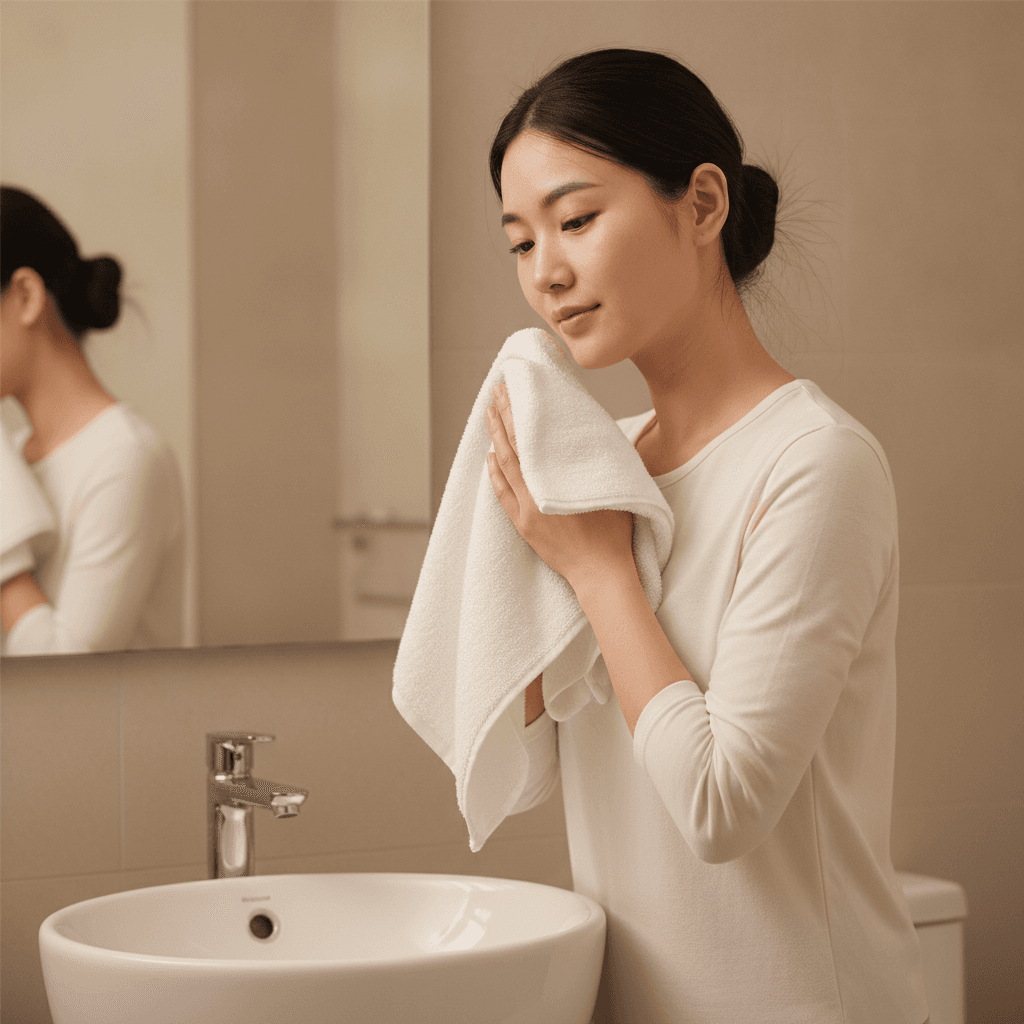
Is washing your face with saline solution alone enough for acne-prone skin?
No one forbids you from using saline solution to wash your face. But Dr. Kha cautions that if your entire skincare routine consists of saline solution alone, there are two problems:
- 1It does not cleanse the skin adequately. Over time, dirt and oil build up and can clog pores, causing acne.
- 2It does not protect the skin. Acne-prone and sensitive skin needs a healthy skin barrier and products that help repair and soothe. Without this step, skin becomes drier. If you also stop using sunscreen, it becomes increasingly darker, develops melasma, and grows weaker.
Saline solution is typically used to disinfect the skin when hygiene is needed, after which the skin is usually rinsed again with plain water. Understand its proper role: a hygiene tool, not an entire acne skincare routine.
Short video: Dr. Kha answers the question *"Is using only saline solution good for acne-prone skin?"*.
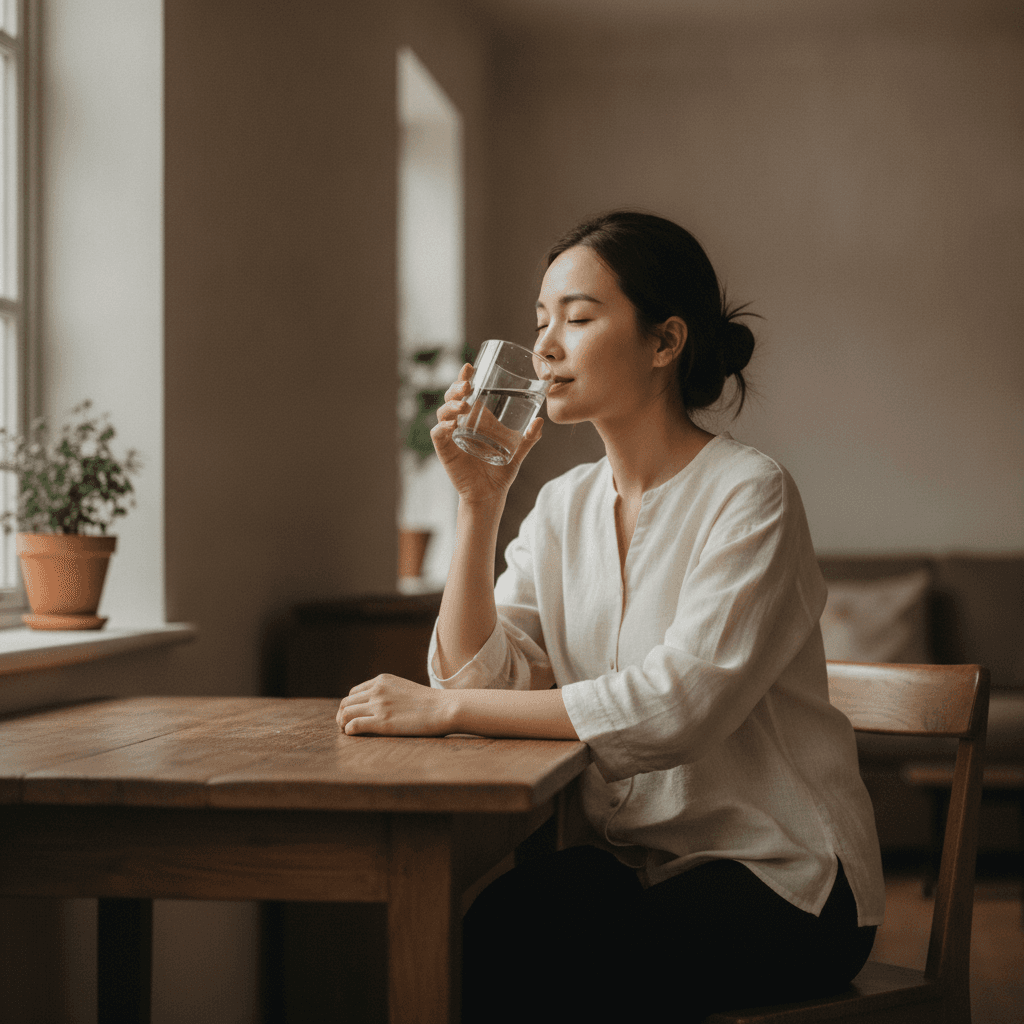
Does drinking lots of water clear acne?
Drinking enough water is good for the body, helping you feel healthier and better hydrated. Dr. Kha also often reminds patients to drink plenty of water at home. Dehydration can throw many things off balance in the body and make you more prone to acne. But this is one part of skincare, not a treatment.
Once you have acne, your skin is dealing with specific mechanisms: clogged pores, excess oil production, and inflammation. Acne improves only with medication that acts on those exact mechanisms; drinking water does not cleanse the skin surface, so once you have acne, drinking water will not clear it.
Short video: Dr. Kha answers the question *"Does drinking lots of water clear acne?"*.
So what should you do instead of folk remedies?
According to Dr. Kha, there are now many scientific acne treatment protocols prescribed by doctors, and many skincare regimens are also very simple. Instead of trying one remedy after another on your own skin, you can:
- See a doctor to find out what type of acne you have. At BonBoz, acne treatment consists of three steps: consultation → intensive treatment → skin recovery care, with a protocol developed by Dr. Kha specifically for each type of acne.
- Do not add cosmetics or "natural ingredients" beyond what your doctor prescribes during treatment. Active ingredients such as tretinoin and azelaic acid should also be used only as prescribed by your doctor, not bought and applied on your own.
- Use sunscreen regularly.
- Inform your doctor right away if inflammatory acne gets worse after 2 weeks of treatment or if your skin is strongly irritated by the medication you are using.
You can learn about BonBoz's approach on the acne treatment page, or send photos and your questions for a doctor's initial assessment before you decide.
Frequently asked questions
Does applying lemon juice to a pimple make it shrink?
Lemon contains acid and has antibacterial properties, so it may make a pimple look partly flattened. But because the concentration cannot be controlled, it easily causes irritation, inflammation, and post-inflammatory hyperpigmentation (PIH). This is a remedy to avoid.
Does applying fresh turmeric after squeezing a pimple help it heal faster?
No, it is not recommended. Applying turmeric to an open wound from a freshly squeezed pimple carries a risk of infection and irritation. Curcumin has large molecules and penetrates poorly, the essential oils in turmeric easily cause irritation, and the skin gets stained yellow.
Is washing your face with saline solution every day good for you?
Using saline solution is not prohibited, but if it is the only thing you use, it does not cleanse adequately and cannot protect the skin barrier. Acne-prone skin still needs suitable cleansing and repair products, as well as sunscreen.
Does drinking lots of water every day clear acne?
Drinking enough water is good for the body but is not an acne treatment. Acne is related to clogged pores, excess oil production, and inflammation, and requires treatment that acts on those exact mechanisms.
This content was prepared by the BonBoz Clinic editorial team based on insights shared by Dr. Bui Thi Kim Kha (Specialist Level I) in the short videos in this article and on the clinic's care guidelines.
This content is for reference only and does not replace an in-person examination and consultation with a doctor.
This article is for reference only and does not replace an in-person examination or a doctor's diagnosis. Actual results vary by individual condition.