
How do icepick, boxcar, and rolling scars differ? Which type is more difficult to treat?
Differentiating 3 Types of Atrophic Acne Scars — Ice Pick, Boxcar, and Rolling — and Why Dermatologists Must Classify Them Before Treatment.
Atrophic scars are classified based on their base morphology: ice pick scars are deep and narrow, boxcar scars have well-defined vertical edges, and rolling scars present an undulating, wave-like appearance caused by underlying fibrous tethering. Overall, ice pick scars are the most challenging to treat due to their depth, while rolling scars are tied to sub-dermal fibrous bands; each type requires a different clinical approach, making accurate pre-treatment classification by a physician essential.
Why does a single face have multiple types of atrophic scars?
Atrophic scars develop when acne inflammation destroys collagen within the dermis. Depending on the depth of the initial tissue damage and how the skin heals, different scar morphologies are left behind. In practice, an individual rarely has just one pure type of scar; instead, multiple types typically coexist. A review by Fabbrocini et al. (2010, NCBI/PMC) also noted that all three types of atrophic scars can appear concurrently in the same patient and can be difficult to distinguish. This is precisely why a thorough pre-treatment assessment is critical.
What do ice pick scars look like?
These appear as small, narrow-mouthed punctures that extend deeply into the skin, resembling puncture marks from a sharp needle, and are commonly found on the cheeks. According to the review on NCBI/PMC, ice pick scars are narrow (less than 2 mm), deep, have sharp margins, and extend vertically down into the deep dermis or subcutaneous tissue. Because the base of the scar extends so deeply, ice pick scars present the greatest challenge for purely superficial resurfacing techniques.
What are the characteristics of boxcar scars?
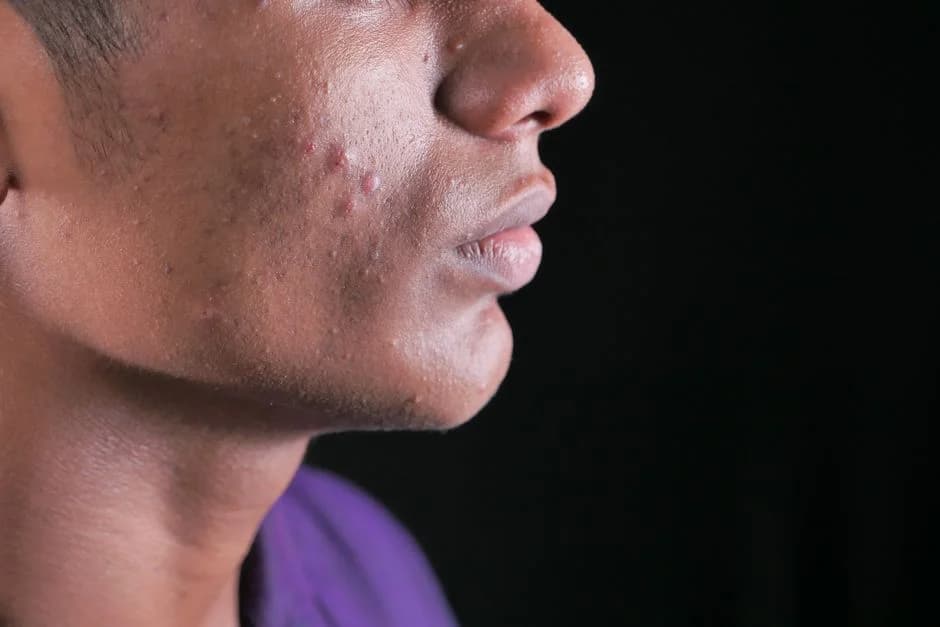
Boxcar scars are depressed areas with relatively vertical edges and a flat base. With a wider diameter than ice pick scars, their borders are distinctly visible. NCBI/PMC literature describes them as round to oval depressions with sharply demarcated, vertical walls. Treatment responsiveness varies depending on whether the scar is shallow or deep.
What are rolling scars?
Rolling scars give the skin an undulating, wave-like texture with sloping borders, caused by underlying fibrous bands tethering the base of the scar to deeper tissue. The NCBI/PMC review refers to this as dermal tethering to the subcutaneous tissue, with scars typically wider than 4–5 mm. Consequently, effective management usually requires releasing these fibrous anchors rather than relying solely on superficial interventions.

Which type of atrophic scar is more difficult to treat?
There is no definitive answer applicable to everyone, but generally, deep ice pick scars require targeted techniques aimed directly at the scar base; rolling scars depend on the extent of fibrous tethering; and shallow boxcar scars are often easier to improve. In addition to scar morphology, factors such as scar age, individual skin condition, and the presence of active acne also influence clinical outcomes.
Why should you have a physician classify your scars before treatment?
Each scar morphology responds to a distinct therapeutic approach; choosing the wrong modality can result in wasted time and frustration. A specialist physician will examine your skin, assess the proportions of each scar type across your face, and personalize a treatment protocol tailored to your actual skin condition.
Frequently Asked Questions
Do atrophic scars heal and fill in on their own over time?
They rarely resolve spontaneously because the underlying structural damage lies deep within the dermal collagen layer. The American Academy of Dermatology (AAD) also notes that while acne scars may fade somewhat, they rarely disappear entirely on their own. Noticeable improvement requires appropriate clinical intervention rather than waiting.
Is atrophic scar treatment painful?
Sensations vary depending on the specific procedure performed and each individual's pain threshold. Your physician will discuss comfort-management options with you prior to the procedure.
How long does it take to see improvement?
The timeline for noticeable improvement depends on the scar type, depth, and individual tissue response. Your physician will outline a clear, customized treatment roadmap during your in-person consultation.
If you are uncertain about your scar profile, schedule a consultation to receive a clinical evaluation and tailored treatment plan from our specialist physicians.
References
- Fabbrocini G. et al. — Acne Scars: Pathogenesis, Classification and Treatment, Dermatology Research and Practice 2010 (NCBI/PMC), accessed September 22, 2026
- AAD (American Academy of Dermatology) — Acne scars: Diagnosis and treatment, accessed September 22, 2026
This article is for reference only and does not replace an in-person examination or a doctor's diagnosis. Actual results vary by individual condition.