
Ice pick scars
Ice pick scars are small pits measuring less than 2 mm in diameter, characterized by narrow openings that extend deep into the dermis. This is the most challenging type of atrophic scar to improve because the scar base lies beyond the reach of superficial lasers or microneedling; it typically requires focal deep TCA application (TCA CROSS) combined with multiple modalities over a multi-session treatment plan.
Compiled from BonBoz Clinic clinical documentation — currently in medical review
How Do Ice Pick Scars Form?
When a deep inflammatory acne lesion (such as a nodule or cyst) destroys dermal collagen and heals, the newly formed tissue fails to fully replenish the lost volume. If the inflammatory focus is small yet extends deep along the hair follicle, the resulting depression is narrow at the surface and reaches deep into the skin—this is an ice pick scar. Squeezing or picking at active acne is a common cause of these scars, which frequently appear on the cheeks and temples.
Why Are Ice Pick Scars More Challenging Than Other Types of Atrophic Scars?
For boxcar or rolling scars, stimulating collagen remodeling in the superficial-to-mid dermis can significantly elevate the scar base. Ice pick scars are fundamentally different: the tissue deficit extends deep, sometimes reaching the deep dermis or near the subcutaneous layer. Uniform surface-level energy from lasers or microneedles cannot reach the full depth of each individual scar tract. Consequently, relying solely on a single superficial modality often yields less improvement than expected.
Multiple Scar Types Often Coexist on the Same Face
It is rare for an individual to present purely with ice pick scars. In practice, they typically coexist alongside boxcar and rolling scars. This is why dermatologists must perform a thorough skin analysis, categorizing and mapping each scar type before designing a treatment protocol—each scar type requires a distinct approach, and the sequence of modalities plays a critical role.
What Factors Determine the Level of Improvement?
Three key factors include: the depth and density of the ice pick scars, the presence of active inflammatory acne, and the individual's inherent regenerative capacity (influenced by age, biological factors, and post-procedure care). Active acne must be stabilized first; treating atrophic scars on actively inflamed skin is not only less effective but also carries a high risk of inducing new scarring.
The BonBoz Approach to Ice Pick Scars
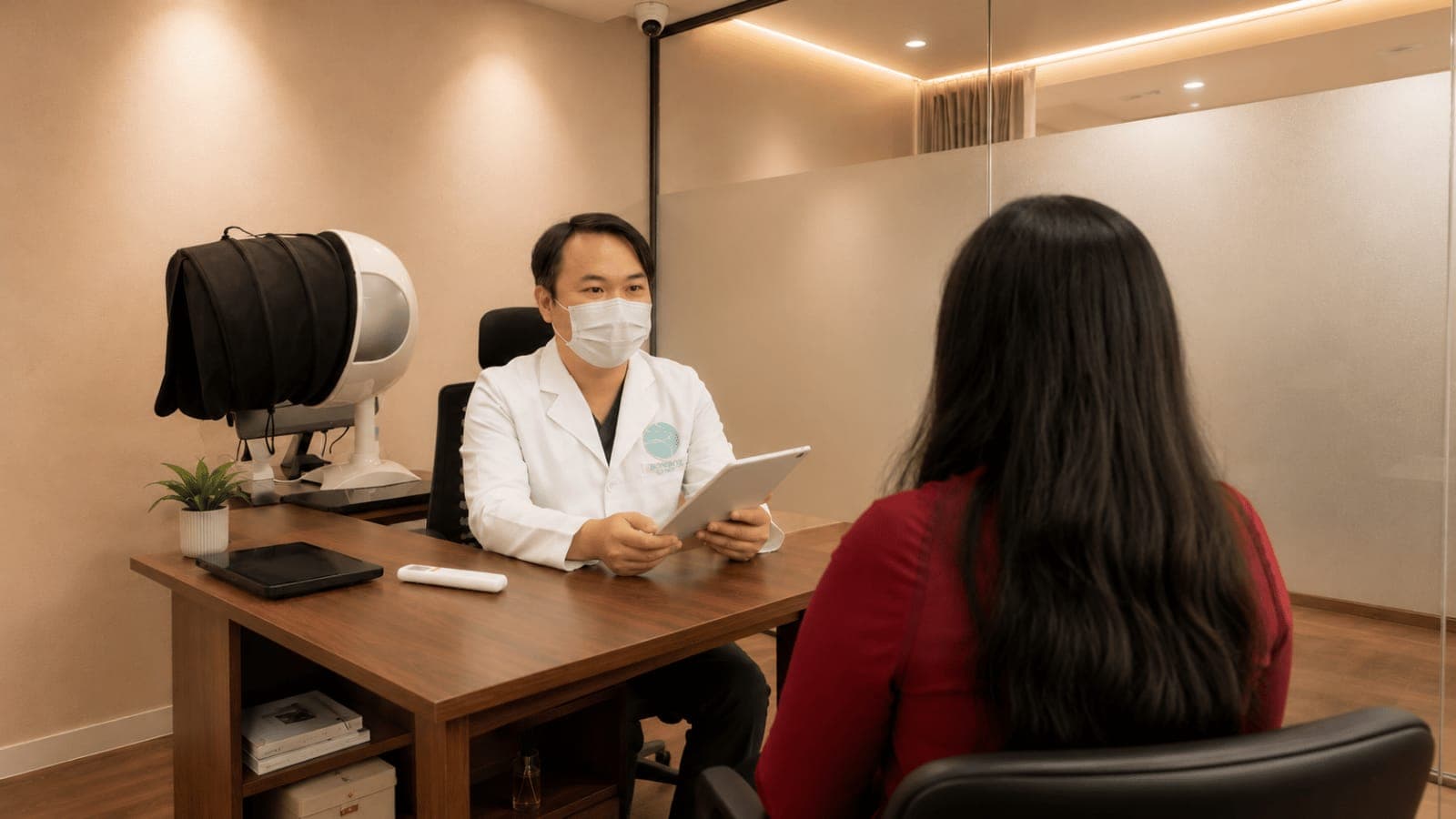
Our dermatologists conduct in-person consultations to evaluate the skin and classify the scars before prescribing a tailored plan. For ice pick scars, a targeted focal approach to each individual lesion (such as controlled, high-concentration TCA CROSS) is often considered, combined with fractional CO2 laser or microneedling RF for overall surface improvement. The required number of sessions and treatment intervals will be clearly outlined by the doctor following your assessment; results build cumulatively over several weeks rather than appearing instantly, and the degree of improvement varies according to each individual's skin response.
Severity levels
1
Mild — a few scattered scars
Fewer than 10 ice pick scars, interspersed with a few other scar types. Typically treated with a combination of targeted focal therapy and a resurfacing modality over a short treatment course.
2
Moderate — clustered on the cheeks
10–30 scars, predominantly concentrated on both cheeks, mixed with boxcar scars. Requires a multi-modality approach across several sessions spaced a few weeks apart.
3
Severe — dense, deep, combined with other scar types
Over 30 scars, featuring multiple deep pits, often accompanied by rolling scars and post-inflammatory hyperpigmentation. Requires an extended treatment plan, with initial priority given to controlling active inflammatory acne, followed by progressive, step-by-step scar improvement.
When should you see a doctor?
- New scars keep appearing despite stopping acne picking—meaning inflammatory acne is still active beneath the skin.
- You have tried topical creams or at-home microneedling for several months with no visible improvement, or experienced irritation and worsening hyperpigmentation.
- The scarred area develops red, painful, or draining bumps—which may indicate inflammation or cysts requiring medical intervention.
- You are considering laser treatment elsewhere but have not yet received a comprehensive skin analysis and scar classification.
How BonBoz treats it
Deep focal TCA CROSS
Delivers high-concentration acid precisely to the base of each scar to stimulate regeneration from the bottom up—a technique typically considered specifically for ice pick scars.
Learn about this method →Fractional CO2 Laser
Creates controlled micro-injuries across the entire area to improve skin texture and address alternating shallow scars.
Learn about this method →Microneedling RF
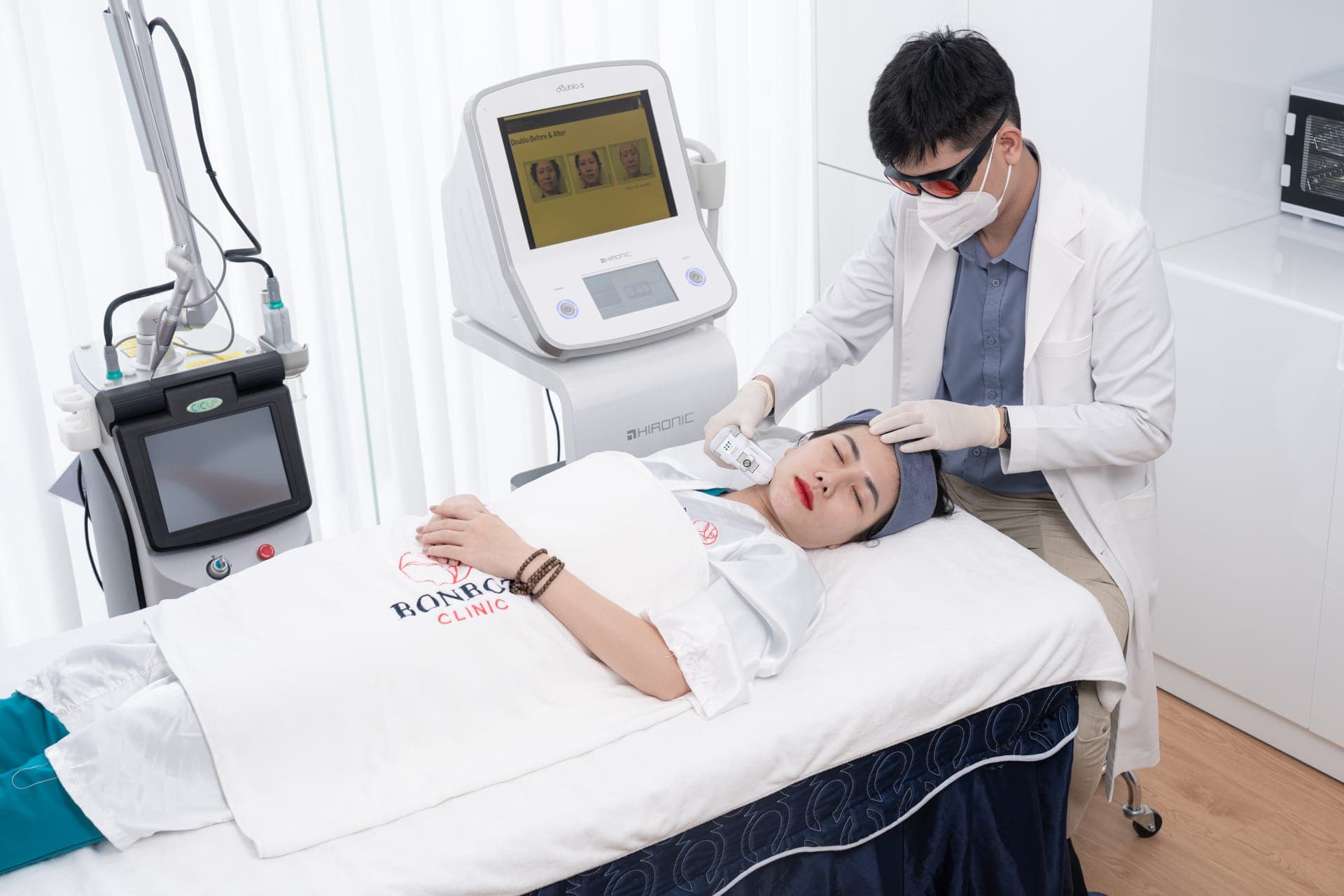
Combines microneedling with RF energy to deliver stimulation deeper than traditional dermarolling—considered for deep scars and thick skin.
Learn about this method →Inflammatory Acne Management Protocol
A mandatory step prior to scar treatment if active inflammatory acne is still present.
Learn about this method →Want a cost range for your own case?
Estimate the cost →Cost guidance
The cost depends on the number of sessions and combined techniques—ice-pick scars typically require a longer treatment course than rolling scars. The doctor will provide an exact quote after a skin examination and scar assessment; you can check the estimated price range using our cost estimation tool.
The final price follows the doctor’s recommendation after an in-person exam. A confirmed quote has no hidden extras.
Inside the BonBoz clinic
Book a consultation with a doctor
Choose a date, time slot and doctor — the clinic calls to confirm within 5 minutes during opening hours. Free consultation, no commitment.
Frequently asked questions
Do ice pick scars fill in on their own over time?
Are at-home scar creams or serums effective for ice pick scars?
How many sessions are needed to see improvement?
Can the TCA CROSS technique cause new scars?
Can I get acne scar treatment if I currently have active inflammatory acne?
How do ice pick scars differ from boxcar scars?
How much downtime is required after the procedure?
Is sun avoidance necessary, and for how long?
Are the results permanent?
Who will examine and perform the procedures at BonBoz?
Related topics
- Microneedling Costs: How Pricing Is Determined and When It Is Worth It
- Laser Atrophic Scar Treatment Costs: Per-Session and Package Pricing
- Medical-grade Acne Treatment Cost: Pricing per Session and Full Treatment Plans
- Medical-grade acne extraction: how it differs from spa extractions, the sterilization process, and which types of acne should not be extracted.
- Chemical Peels for Acne, Hyperpigmentation, and Dull Skin: Acid Types, Peel Depths, Procedure, and Contraindications
- Sensitive, Red, and Stinging Skin: A Damaged Skin Barrier Following Improper Treatment and the Recovery Protocol
More from our doctors
How do icepick, boxcar, and rolling scars differ? Which type is more difficult to treat?
Differentiating 3 Types of Atrophic Acne Scars — Ice Pick, Boxcar, and Rolling — and Why Dermatologists Must Classify Them Before Treatment.
What is TCA Cross for Ice Pick Scars? How Does It Differ from Laser and Microneedling?
How TCA Cross Works on Ice Pick Scars: Why It’s the Ideal Treatment, How It Differs from Laser/Microneedling, and Key Safety Guidelines.
Fractional CO2 Laser for Acne Scars: How It Works and Who Is It For?
How Fractional CO2 Laser Works on Pitted Scars, Number of Sessions, Ideal Candidates, and Post-Treatment Care.
How long does acne scar treatment take, and why are multiple sessions required?
Why Acne Scar Treatment Takes Time and Multiple Sessions, When to Expect Results, and How to Support Your Healing Process.
Can severe, long-standing pitted scars be improved? Realistic expectations
Can severe, long-standing pitted scars be improved? How is combination therapy performed, what are the realistic expectations, and why is patience key?
Are at-home scar creams and serums effective for atrophic acne scars?
How effective are topical at-home acne scar treatments, why is it difficult to fill deep scars, and when should you see a dermatologist?