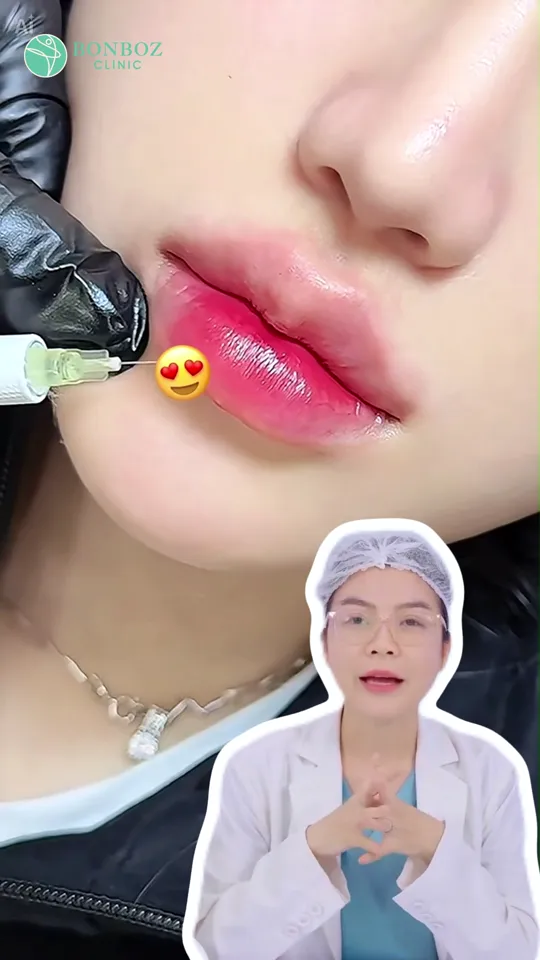
What to avoid after filler dissolving? Swelling, when to refill and cost
After hyaluronidase injection to dissolve dermal filler, this page covers what to avoid, how long swelling lasts, which signs of allergy mean you should see a doctor, how soon you can have filler again, and how pricing is calculated. Hyaluronidase dissolves only hyaluronic acid (HA) filler, not CaHA, PMMA or silicone. This content is based on the manufacturer's label, medical literature and the clinic's guidance.

After a filler-dissolving injection (hyaluronidase), the drug label has no separate list of things to avoid. What you need to do is monitor the injected area. Avoid medicines and activities that increase bruising, as your doctor advises. Come back right away if you develop a rash, swelling of the lips or eyelids, or difficulty breathing. The drug only dissolves HA filler, not CaHA, PMMA or silicone. Your doctor decides when you can have filler injected again, after a follow-up visit. In Ho Chi Minh City, BonBoz Clinic (operating licences 11113/HCM-GPHĐ for dermatology and 10036/HCM-GPHĐ for aesthetics) has Specialist Level I physician Bùi Thị Kim Kha, practising certificate 009784/ĐL-CCHN, who personally examines and injects.
People who ask "what to avoid after filler dissolving" are usually in one of two situations. Either old filler has shifted, become lumpy or shows a bluish tint and has just been dissolved, or they are considering whether to dissolve it. This article follows the order in which a filler-dissolving visit actually unfolds. It covers what the drug is, what to tell your doctor before the injection, what you usually see afterwards, what to avoid, how long to wait before having filler again, and how the cost is worked out. The medical details are based on manufacturer labels, the medical sources listed at the end, and the clinic's guidance.
What is filler dissolving, and which fillers can be dissolved?
"Filler dissolving" means injecting the enzyme hyaluronidase into the exact area where the filler sits. The enzyme cuts hyaluronic acid (HA) chains into small units that the body then clears. Because the mechanism relies on HA, the drug only works on fillers made from HA.
| Type of filler | Dissolved by hyaluronidase? | Notes |
|---|---|---|
| HA filler (hyaluronic acid) | Yes | May need several sessions; the denser the filler and the more cross-linking, the harder it is to dissolve |
| CaHA (calcium hydroxylapatite) | No | Mineral particles in a gel, not HA; BonBoz only uses CaHA when your doctor recommends it |
| PMMA | No | Not HA; the FDA notes that removing non-HA filler may be difficult or impossible |
| Injectable liquid silicone | No | The FDA states that injectable silicone is not approved for any aesthetic procedure |
Two more things worth knowing:
- This is off-label use. The FDA labels of hyaluronidase products such as HYLENEX and VITRASE list their indications as an aid to subcutaneous fluid administration, to increase the dispersion of other injected drugs, and for subcutaneous urography. The review by Kroumpouzos and Treacy (JMIR Dermatology, 2024) states clearly that hyaluronidase is used off-label in aesthetics to manage HA filler complications. This does not mean it is done wrongly. It means the injector must understand the drug and the dose, because the label does not give a dose for dissolving filler.
- Dissolving is not completely selective. The same review notes that hyaluronidase also breaks down, to some degree, natural substances in connective tissue. It also says that people having filler dissolved should be told beforehand that the filler effect will be lost, at least in part.
If you do not remember which filler you had, the article had filler before but don't remember the type explains what to clarify before deciding to dissolve it.
Before the dissolving injection: tell your doctor about allergies and current medicines
Most of what makes a dissolving session safe happens before the needle touches your skin.
Allergy to hyaluronidase. The FDA labels of HYLENEX and VITRASE both list known hypersensitivity to hyaluronidase or any component of the drug as a contraindication. They also say to stop the drug if hypersensitivity occurs. According to the adverse reactions section of the label, allergic reactions (urticaria, angioedema) were reported in fewer than 0.1% of people using hyaluronidase. Anaphylactoid-type reactions are rare, and the label notes them after retrobulbar or intravenous injection.
Allergy to bees or wasps. The review by Kroumpouzos and Treacy advises asking about any history of bee or wasp sting allergy before injecting, because of the significant risk of cross-reactivity. The guideline on safe use of hyaluronidase by Murray et al. (2021) also devotes a section to this link. If you have ever had major swelling or difficulty breathing after a bee sting, say so right from the start.
Skin testing. The review states that for non-emergency cases, skin testing is optional. It is not needed with recombinant human hyaluronidase, and may be considered with sheep- or bovine-derived products. The test involves injecting a very small amount into the skin and observing the reaction. In an emergency such as vascular occlusion, no skin test is done because the delay is more dangerous. Whether to test is your doctor's decision after hearing your history.
Current medicines. The hyaluronidase label states that people taking large doses of salicylates (such as aspirin), cortisone, estrogen or antihistamines may need a larger amount of hyaluronidase to achieve the same effect. This is why your doctor needs to know what you are taking before calculating the dose.
Inflamed skin. The HYLENEX label warns against injecting hyaluronidase into or around an infected or acutely inflamed area, because of the risk of spreading the infection locally. If the area to be dissolved has inflamed pimples or scratches, show them to your doctor.

How long does swelling last after filler dissolving? What is common
The common reactions are local. The HYLENEX label states that the most commonly reported adverse reactions are mild local injection-site reactions such as redness and pain. The review by Kroumpouzos and Treacy also lists itching, burning sensation, swelling, redness and bruising limited to the injection site. The review also cites a report of 3 cases of bruising spreading beyond the injection points in the under-eye area. It observes that hyaluronidase may make bruising spread more widely on thin skin, so the eyelid and under-eye areas need extra care.
How long until the swelling goes down? The hyaluronidase label and the reviews this article draws on do not give a single general number of days for swelling to settle after dissolving. The time depends on the injected area, the amount of drug, the amount of filler to be dissolved and your own body. Two time points in the literature help you understand the process:
- The review states that hyaluronidase acts immediately, has a half-life of about 2 minutes and a duration of action of 24–48 hours.
- The HYLENEX label states that, in a study of injection into adult skin, the connective tissue barrier opened by the drug was only partly restored at 24 hours. It was fully restored at 48 hours.
This means that in the first day or two, the injected area is still changing. Do not rush to judge "is it all dissolved yet" while the area is still swollen. Wait until you return for your check-up.
Is more than one dissolving session needed? Possibly. The review advises that for non-inflammatory lumps, filler should be dissolved over several sessions with small doses, reassessing after each session. In thin-skinned areas such as the eyelids, a further touch-up injection 2–3 days later may be considered. Dense, highly cross-linked filler often needs a higher dose or more sessions.
Signs of allergy and abnormal symptoms that need a doctor right away
Contact the place where you were injected right away, or go to the nearest emergency facility, if you have:
- A widespread itchy rash or hives, or swelling of the lips, eyelids or tongue: these are the forms of allergy recorded in the hyaluronidase label.
- Difficulty breathing, chest tightness, dizziness, feeling faint: signs of a severe reaction that needs emergency care.
- Redness, swelling and itching that appear late, several days after dissolving in the treated area: the review notes that delayed hypersensitivity to hyaluronidase is rare but has been reported.
- The injected area is red, hot, increasingly painful, oozing fluid, or you have a fever: you need to be examined to rule out infection.
You may have gone for dissolving because you suspected a filler complication (skin turning white, cold to the touch, bluish-purple, or severe pain that does not ease). Those signs still need monitoring after dissolving. BonBoz's care guidance places them in the extremely dangerous group, and you must tell your doctor immediately. The article swelling after filler injection or warning signs helps you tell these two groups apart more clearly.
What to avoid after filler dissolving
The straight answer: the hyaluronidase label has no aftercare section and no list of foods or drinks to avoid. What follows comes from the instructions that HA filler manufacturers give to people who have just been injected, plus the clinic's care guidance. Your doctor will give specific instructions for your case. If those differ from this list, follow your doctor.
- 1Do not rub, press or massage the area just dissolved unless your doctor tells you to. Pressing it yourself does not make it dissolve faster and may cause more bruising.
- 2First 24 hours: avoid strenuous exercise, strong sun or very hot places, and alcohol. This is the advice in the JUVÉDERM Ultra XC instructions for use for people who have just had HA filler. The manufacturer states these factors may cause temporary redness, swelling or itching at the injection site.
- 3Ask your doctor before taking painkillers. In the patient material for Restylane Lyft, the manufacturer advises not using aspirin, ibuprofen and other non-steroidal anti-inflammatory drugs for one week after injection. It also advises against St. John's Wort and high-dose vitamin E, because these make the injection site more likely to bruise or bleed. Do not stop medicines prescribed by another doctor on your own; ask the prescriber.
- 4Do not buy "dissolving drugs" online to inject yourself, and do not let anyone without a practising certificate inject more for you.
- 5Food restrictions? The hyaluronidase label and the HA filler instructions cited in this article have no section on foods to avoid. In BonBoz's care guidance, the list of foods to avoid (such as sticky rice, seafood, beef) is written only for BAP, not for filler dissolving.
If you also had botox in another area during the same visit, the botox part follows the clinic's separate instructions. For the first 24 hours, do not bend your head low, do not do yoga or headstands, and do not touch or massage the injected area. For the first 3 days, do not use steam rooms and do not massage the injection site. General guidance on what to avoid after filler injection is in the article what to avoid after filler injection.

How long after dissolving can filler be injected again?
There is no general number of days on the label or in the reviews cited. What the literature does say is that the drug acts for about 24–48 hours. According to the Kroumpouzos review, the body regenerates the natural HA broken down by the drug in about 15–20 hours. The timing of re-injection depends on three questions that only a follow-up visit can answer:
- 1Has the old filler dissolved enough? Some may remain and need another dissolving session.
- 2Has the injected area stopped being swollen and bruised? Injecting into a still-swollen area makes it hard to judge how much needs to be replaced.
- 3Has the reason for dissolving been resolved? If the filler was previously misplaced or lumpy, your doctor needs to know why so that it does not happen again.
If the old filler is not HA, hyaluronidase cannot solve the problem, and the re-injection plan has to be different. The HA filler BonBoz uses for re-injection is biodegradable, so there is still a way back with hyaluronidase if adjustment is needed later. CaHA is only used when your doctor recommends it, and you need to know that CaHA does not have this way back. How long HA filler usually lasts in each area is in the article how long does filler last. If the reason for dissolving is a lump, the article lumpy filler after injection explains the common causes.
How much does filler dissolving cost?
BonBoz has not published a fixed price for filler dissolving; the doctor quotes the cost after examination. The amount of drug and the number of sessions depend on the type of filler, the amount of filler to be dissolved, the injected area and the goal (partial dissolving to adjust, or dissolving almost all of it). The page filler cost by area states clearly that if you were injected elsewhere and need dissolving first, the dissolving cost is calculated separately. BonBoz commits to no extra charges after the doctor has examined you and quoted the price in person.
Filler dissolving at BonBoz Clinic
BonBoz Clinic is at 66–68 Võ Văn Tần, Xuân Hòa Ward (formerly District 3), Ho Chi Minh City. It holds two operating licences issued by the Ho Chi Minh City Department of Health: 11113/HCM-GPHĐ (dermatology) and 10036/HCM-GPHĐ (aesthetics). The doctor who examines, injects filler and performs dissolving is Specialist Level I physician Bùi Thị Kim Kha (practising certificate 009784/ĐL-CCHN). For HA filler, the doctor can use the enzyme hyaluronidase to dissolve it when adjustment is needed.
Before dissolving, the doctor asks about your allergies (including bee sting allergy), existing conditions, current medicines and the old filler type if you remember it. The doctor then decides whether to proceed. The doctor performs the procedure personally. How far the filler has dissolved, and whether another session or re-injection is needed, is assessed when you return for review. The visit will go faster if you have the date of your previous injection, the product name, a photo of the box or the invoice, and before and after photos.
Frequently asked questions
What should I avoid after filler dissolving?
The hyaluronidase label has no separate list of things to avoid. The available advice comes from HA filler manufacturers for people who have just had filler, and your doctor will tell you whether it applies to your dissolving session. For the first 24 hours, avoid strenuous exercise, heat and sun, and alcohol. Ask your doctor before taking aspirin or anti-inflammatory drugs, because they may increase bruising. Do not rub or press the injected area yourself.
How long does swelling last after filler dissolving?
The literature does not give a general number of days. Redness, pain, swelling and mild local bruising are common, and the drug acts for about 24–48 hours. The eyelid and under-eye areas bruise more easily. Judge the result at the follow-up visit, not while the area is still swollen.
Can filler dissolving dissolve CaHA filler?
No. Hyaluronidase only dissolves HA filler. CaHA, PMMA and silicone are not dissolved by this drug. The FDA notes that removing non-HA filler may be difficult or impossible.
Do I need an allergy test before filler dissolving?
Your doctor will ask about your allergy history, especially bee sting allergy. According to medical reviews, skin testing is optional for non-emergency cases and is not needed with recombinant human hyaluronidase. It is not done in an emergency such as vascular occlusion.
How long after dissolving can I have filler again?
There is no general number of days. When you return for review, your doctor checks whether the old filler has dissolved enough and whether the injected area has settled. Only then does the doctor schedule the re-injection.
How much does filler dissolving cost?
BonBoz has not published a fixed price. The doctor quotes the cost after examination, because the amount of drug and the number of sessions depend on the type and amount of filler and the injected area. If you were injected elsewhere, the dissolving cost is calculated separately.
Does filler dissolving damage the skin?
The drug also dissolves some of the skin's natural HA. According to the review by Kroumpouzos and Treacy, however, the body regenerates this HA in about 15–20 hours, and no lasting harm to skin quality is recorded. The main risks are local reactions and rare allergy, which is why a doctor should perform it.
What signs after filler dissolving mean I should see a doctor right away?
Widespread hives, swelling of the lips, eyelids or tongue, difficulty breathing or dizziness. Also an injected area that is red, hot and increasingly painful, or fever. If you went for dissolving because of suspected vascular occlusion, pale skin, coldness to the touch, bluish-purple discolouration or very severe pain must still be treated as an emergency.
References
- DailyMed (U.S. National Library of Medicine): HYLENEX recombinant (hyaluronidase human injection) label
- DailyMed: VITRASE (hyaluronidase injection, ovine) label
- Kroumpouzos G, Treacy P. Hyaluronidase for Dermal Filler Complications: Review of Applications and Dosage Recommendations. JMIR Dermatol, 2024. PMC10836581
- Murray G et al. Guideline for the Safe Use of Hyaluronidase in Aesthetic Medicine, Including Modified High-dose Protocol. J Clin Aesthet Dermatol, 2021. PubMed 34840662
- Allergan (AbbVie): JUVÉDERM Ultra XC — Directions for Use
- Galderma, FDA file P040024: Restylane Lyft with Lidocaine — Patient Brochure
- U.S. FDA: Dermal Fillers (Soft Tissue Fillers)
Product names in this article are used only to cite manufacturers' labels and are not products used by BonBoz. This article is not a substitute for an examination. Whether to dissolve, how much to dissolve and when to inject again can only be answered once a doctor has examined your injected area in person.
Content prepared by the BonBoz Clinic professional team.
This article is for reference only and does not replace an in-person examination or a doctor's diagnosis. Actual results vary by individual condition.