Where to get reputable fat-dissolving injections in Ho Chi Minh City? Results, candidates, sessions, safe choice
Fat-dissolving injections (fat-dissolving mesotherapy) suit small, localised fat pockets and are not a way to lose weight. The article covers who should and should not have the injections, the number of sessions, reactions after injection, and 7 criteria for choosing a facility with an operating licence in Ho Chi Minh City.

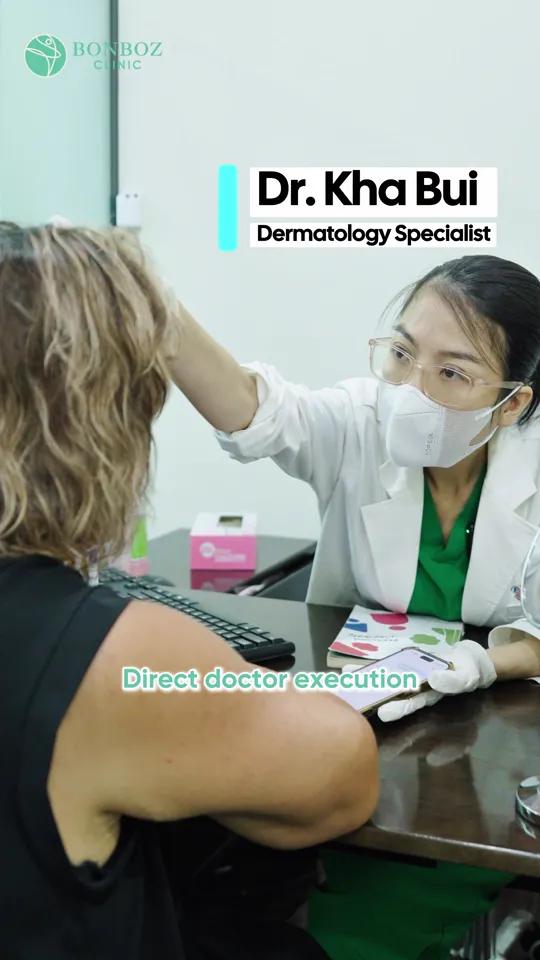
Fat-dissolving injections should be done at a facility with a licence for medical examination and treatment issued by the Department of Health. There, a doctor with a practising certificate should personally examine you, recommend the treatment and give the injections, and the product should have a clear name, lot number and expiry date. In Ho Chi Minh City, BonBoz Clinic (66–68 Võ Văn Tần, Xuân Hòa Ward (formerly District 3)) offers fat-dissolving mesotherapy. It operates under licences 11113/HCM-GPHĐ (Dermatology) and 10036/HCM-GPHĐ (Aesthetic Medicine) issued by the Ho Chi Minh City Department of Health. Dr. Bùi Thị Kim Kha, Specialist Level I physician (practising certificate 009784/ĐL-CCHN) performs the examination and gives the recommendation.
Quick summary: fat-dissolving injections are only suitable for small, localised fat pockets and are not a way to lose weight. They usually need several sessions at least 4 weeks apart, and results are subtle and vary from person to person.
This article covers what to know before you book: what fat-dissolving injections actually are, who is and is not a suitable candidate, which areas are commonly treated, how many sessions are needed, which reactions are normal and which signs mean you should go back to your doctor, how the injections differ from liposuction and device-based fat reduction, and how to check a provider yourself. All medical facts are sourced at the end of the article.
What are fat-dissolving injections (fat-dissolving mesotherapy)?
Fat-dissolving injections are a procedure that delivers a solution capable of breaking down fat cells into the fat layer just beneath the skin, in a small, localised area. In Vietnamese, the same procedure goes by several names: "tiêm tan mỡ", "meso tan mỡ" and "tiêm hủy mỡ". English-language sources call it injection lipolysis or fat dissolving injections. The word "meso" here refers to the technique of injecting at many small points. It does not tell you what substance is being injected. Medically, fat-dissolving injections deliver the drug into the subcutaneous fat layer, unlike nutrient mesotherapy for the skin, which is injected into the superficial layer of the skin. DermNet (New Zealand) notes that the injected substances, doses and frequency of mesotherapy techniques have not been standardised to date.
According to the medical literature, fat-dissolving solutions are usually based on two groups of active ingredients: a bile salt with a detergent effect, which ruptures the membranes of fat cells where it is injected, and a phospholipid extracted from soybeans. After the fat cells are broken down, the body clears the fat and cell debris through a local inflammatory reaction over several weeks. This is why the treated area is often swollen and slightly firm for a while rather than looking slimmer right after the session. The exact mechanism is still being studied.
One important point: among fat-dissolving injectables, the US Food and Drug Administration (FDA) has approved only one drug, since 2015, and only for a single area: submental fat (double chin) in adults. The drug label states that the efficacy and safety of injecting other areas have not been established. In late 2023, the FDA warned the public about unapproved fat-dissolving injection products sold online, after receiving reports of permanent scarring, severe infection, skin deformity, cysts and painful hard lumps deep under the skin.
This article does not name any commercial product. The specific product for each person is chosen by the doctor after examination, and you have the right to ask for the name, origin, lot number and expiry date of the vial before the injection.
Do fat-dissolving injections work?
Yes, but modestly, and only for the right kind of fat. Fat-dissolving injections are suitable for slimming a small fat pocket that you can pinch between two fingers, in someone whose weight is stable. They are not a way to lose weight, do not reduce whole-body measurements, do not treat visceral fat inside the abdomen and do not tighten loose skin.
A 14-year review of 1,269 patients of Indian and South East Asian origin, published in the Journal of Cutaneous and Aesthetic Surgery in 2018, found that the submental area had the highest self-rated satisfaction rate (about 4 in 5 people injected in this area). By comparison, the upper arm was only about 1 in 8, and almost no one was satisfied with results on the knee. The authors stress that results are usually subtle and build up over several sessions, and that patients need to understand this in advance. This was a retrospective study at a single centre, with no control group, and the assessment was made by the team that carried out the treatments. The figures are therefore for reference only and are not a promise for any individual.
For this reason, if a provider guarantees a certain number of centimetres or kilograms lost after a fixed number of sessions, treat that as a warning sign. Response varies with the thickness of the fat layer, skin elasticity, the area injected and how the body clears fat after each session.
Which areas are commonly injected: double chin, face, upper arms, abdomen?
The areas people ask about most are the double chin, face (cheeks, jawline), upper arms, lower abdomen, the fat below the bra line and the thighs. The level of evidence differs by area:
- Double chin (submental fat): the area with the best evidence and the only one with an FDA-approved drug. It also carries its own risks because it lies close to the nerve that supplies the muscles around the corner of the mouth and close to the swallowing pathway (see the reactions section below).
- Face: doses are usually lower than for the body, and the doctor needs a thorough understanding of the anatomy. Not every round face is caused by fat; in many cases it is due to enlarged masseter muscles or bone structure, and fat-dissolving injections cannot fix that.
- Upper arms: results are inconsistent. The abstract of the 2018 review places the upper arm among the areas with a good response, but the study's own data table shows that only 21 of 169 people injected in the upper arm rated themselves as satisfied, and the back of the upper arm achieved only an average result. This should be regarded as an area with a modest response.
- Abdomen, thighs, back: these are large areas that need many injection points and many sessions. The evidence is weaker, and all of them are outside the approved indication.
"Whole-body fat-dissolving injections" is not a medical indication. Only a limited amount can be injected per session (the FDA drug label sets a ceiling on the number of injections and volume per session), so when fat is widespread, the doctor will usually discuss weight loss, exercise or other methods first.
Who is and is not suitable for fat-dissolving injections?
Usually suitable: adults with stable weight who have one or a few small, localised fat pockets that are hard to lose despite reasonable diet and exercise, whose skin still has elasticity, who accept gradual results over several sessions and who can return for follow-up on schedule.
Should not be injected, or should postpone. The FDA drug label lists only one contraindication, infection at the injection site, along with warnings about injury to the nerve along the jawline, difficulty swallowing, bruising or haematoma, and the risk of injecting near vulnerable structures. The remaining items are listed in the 2018 clinical review and are factors the doctor weighs for each person:
- Active infection at the planned injection site (a contraindication on the FDA drug label), or a local skin disease (2018 review).
- Pregnancy or breastfeeding.
- Allergy to eggs or soy (related to the phospholipid component of some solutions).
- Taking anticoagulants or antiplatelet drugs, or having a bleeding disorder: a higher risk of bruising and haematoma (warning on the FDA label and in the 2018 review).
- Immunodeficiency, or certain endocrine disorders such as hypothyroidism or polycystic ovary syndrome (the 2018 review places these in the exclusion group; the doctor assesses according to how well the condition is controlled).
- Existing difficulty swallowing, if the submental area is to be injected (warning on the FDA label).
- Wanting rapid weight loss or expecting a big change: this is a relative contraindication, because the method cannot meet that expectation.
Because this list depends on each person's history, the first consultation should include detailed questions about current medications, allergies, underlying conditions, and any previous injections or surgery in that area. If the place you visit skips this part, that is a sign to stop.
How many sessions are needed, and how far apart?
There is no single schedule for everyone, but medical sources give a reference range:
- FDA drug label for the submental area: up to 6 sessions, at least 1 month apart.
- 2018 review: an average of about 4 sessions, at least 4 weeks apart, with results assessed about 8 weeks after the last session.
The minimum interval between two sessions is a general recommendation of both the FDA label and the 2018 review. The 2018 authors noted that the active ingredient continues to work for 6–8 weeks after each session, so the result of one session takes a few weeks to assess. The actual number of sessions is decided by the doctor after evaluating your response after each one. If you are only in Ho Chi Minh City for a short time, plan ahead: a course usually runs for several months and requires follow-up visits.

What is common after fat-dissolving injections, and when should you see a doctor?
Common reactions, usually settling on their own: swelling, redness, pain or burning at the site, bruising, numbness in the injected area and a feeling of firmness under the skin. In the trials of the FDA-approved drug, oedema, haematoma, pain, numbness, redness and firmness at the injection site were reactions seen in more than 20% of participants. The 2018 review found that swelling usually lasts 24–48 hours, and that small firm lumps under the skin occur in more than half of cases and usually soften over 3–4 weeks. The same review also noted that some people have diarrhoea or fatigue in the first 24 hours, more often when the total dose per session is high.
Less common but worth knowing: hyperpigmentation at the injection site (the 2018 review noted these marks fade over about 3 months), prolonged inflammation, allergy and skin infection. For the submental area, the FDA drug label warns of nerve injury causing a temporary uneven smile and difficulty swallowing; the doctor must avoid injecting close to vulnerable structures.
Go back to your doctor right away if you have any of the following:
- Swelling, warmth or redness that increases after 2–3 days instead of gradually fading; fluid or pus draining from the injection site; fever.
- A hard lump that is very painful, growing or breaking down into an ulcer, or a new lump appearing after a few weeks.
- Skin over the injected area turning bluish-purple, dark or developing sores.
- Difficulty swallowing, difficulty speaking, or the corner of the mouth drooping when you smile after a chin injection.
- A rash over the body, difficulty breathing, or swelling of the lips or face.
The FDA describes a case in which a woman developed infected lumps in both upper arms one week after an unapproved fat-dissolving injection and needed about two months of antibiotics. For this reason, do not treat it yourself at home by piercing, squeezing or applying herbs; contact the place that gave the injection, and if you cannot reach them, go to the nearest medical facility.
What should you do after the injection? There is no standardised list of restrictions in the medical literature; your doctor will give instructions specific to the injected area. General principles: keep the injected area clean, do not massage it hard or inject additional products bought online, tell your doctor if you start taking anticoagulants or any new medication, and return on schedule so the doctor can assess you before the next session. If you were injected at BonBoz and notice an unusual reaction, call the hotline 0869 612 310 or 1900 5309 so the clinic can guide you on the next step.
How do fat-dissolving injections differ from liposuction and device-based fat reduction?
These three approaches solve different problems; none is "better" for everyone.
| Fat-dissolving injections | Liposuction | Device-based fat reduction (non-invasive) | |
|---|---|---|---|
| What it is | Injecting a solution that breaks down fat cells in a small pocket | Surgery that removes fat through a suction tube | Uses device energy to act on the fat layer through the skin, with no injection |
| Suitable for | Small, localised fat pockets (double chin, jawline, upper arms) | Larger pockets, multiple areas, a clear change needed in one go | People who want to avoid needles and surgery and accept multiple sessions |
| Anaesthesia, recovery | No surgery; swelling and firmness for a few days to a few weeks | Local or general anaesthesia; usually a compression garment for a few weeks, avoiding strenuous activity for about a month | Depends on the device; normal activity is usually possible right away |
| Number of sessions | Usually several sessions, at least 4 weeks apart | Usually a single surgery | Usually several sessions according to the device protocol |
The information on liposuction in the table comes from MedlinePlus (the US National Library of Medicine): it is surgery, not a weight-loss method, and carries surgical risks such as infection, bleeding, blood clots and uneven skin. The device-based column is general information and does not replace advice for a specific device: each device has its own mechanism, indications and evidence, and the doctor will advise you when you ask about that exact device. What all three have in common: none replaces keeping your weight stable.
Criteria for choosing a safe fat-dissolving injection provider in Ho Chi Minh City
Whether you live in District 3, District 5, District 10, Phú Nhuận or Bình Thạnh, the checklist is the same:
- 1A licence for medical examination and treatment that is still valid, in the right specialty (dermatology or aesthetics), with the address on the licence matching the place you visit. How to look up a licence number on the Ho Chi Minh City Department of Health portal is explained step by step in the article Mesotherapy in Ho Chi Minh City: a cross-check table of licensed facilities.
- 2The person injecting is a doctor with a practising certificate, and you know their name before the injection. The FDA notes that incorrect injection technique by unlicensed people increases the risk of scarring and infection.
- 3A consultation before the injection: taking your history and current medications, assessing whether the fat is truly localised fat, and stating clearly which cases should not be injected.
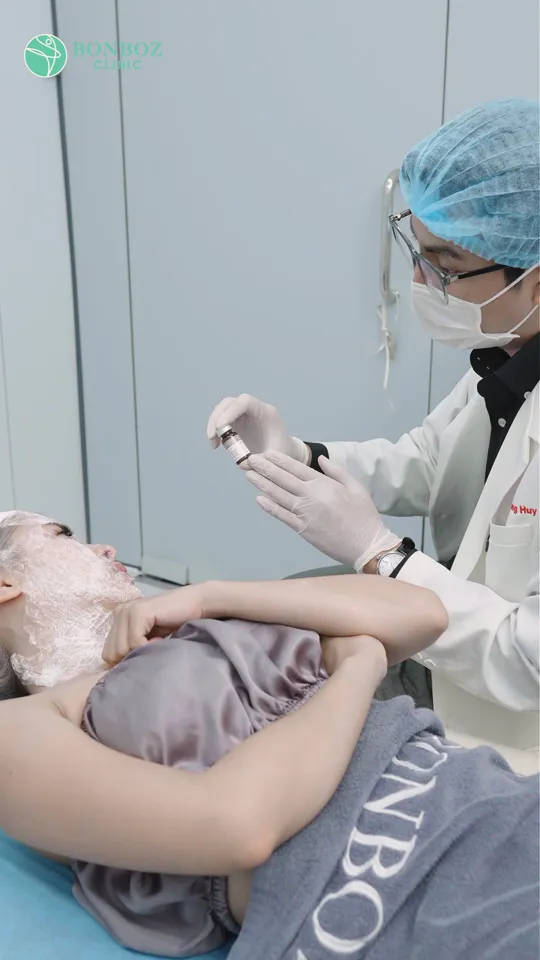
- 4Transparent products: you can see the name, origin, lot number and expiry date; the vial is opened in front of you; there are no unnamed self-mixed blends.
- 5A clear quote after the examination, itemised by area and expected number of sessions, rather than a general price given before anyone has looked at your fat.
- 6No promises of measurements: a place that promises a certain number of centimetres in a certain number of sessions is promising something that medical sources do not support.
- 7A contact channel and follow-up schedule after the injection, so you know who to call if you have an unusual reaction.
The FDA's advice is also brief: have injections done only by someone with medical training, and do not buy fat-dissolving products online to inject yourself.
Fat-dissolving injections at BonBoz Clinic
BonBoz Clinic offers fat-dissolving mesotherapy, part of its non-surgical aesthetic medicine services. The doctor examines the fat area, takes your history and recommends treatment if it is suitable; if your area is not suitable for fat-dissolving injections, the doctor will tell you clearly. The price of fat-dissolving mesotherapy is not published on the website: the doctor advises and quotes separately for each case after the examination, based on the injection area and the expected number of sessions; you can ask for a quote that itemises each cost. The name of the product and active ingredient used for you will be told to you by the doctor at the examination, depending on the case. You can ask for the name and view the product label before the injection.
Fat-dissolving mesotherapy is different from nutrient mesotherapy for the skin: the latter delivers nutrients into the superficial layer of the skin to improve skin quality and is not meant to slim fat. If you are interested in mesotherapy for the skin, see the page on micro-point mesotherapy with nutrients.
Address: 66–68 Võ Văn Tần, Xuân Hòa Ward (formerly District 3), Ho Chi Minh City. Licences: 11113/HCM-GPHĐ (Dermatology) and 10036/HCM-GPHĐ (Aesthetic Medicine), Ho Chi Minh City Department of Health. Examining and recommending doctor: Dr. Bùi Thị Kim Kha, Specialist Level I physician, practising certificate 009784/ĐL-CCHN. Appointment hotline: 0869 612 310 or 1900 5309.

Frequently Asked Questions
How much do fat-dissolving injections cost?
The cost depends on the injection area, its size, the product and the number of sessions needed, so a price quoted before an examination usually does not reflect your actual cost. At BonBoz Clinic, prices are not published on the website; the doctor gives a separate quote for each case after the examination. When comparing providers, ask what the price includes: number of sessions, follow-up visits, product name.
Do fat-dissolving injections work on the upper arms?
They can, if the upper arm has a pinchable fat pocket, the skin still has elasticity and your weight is stable. Expectations should be modest: in the 2018 review of patients of Indian and South East Asian origin, only about 1 in 8 people injected in the upper arm rated themselves as satisfied, far lower than for the submental area (about 4 in 5). If the looseness is mainly slack skin rather than fat, fat-dissolving injections will not improve it much.
Are fat-dissolving injections for the face and double chin safe?
The double chin is the only area with an FDA-approved fat-dissolving drug, but it still carries its own risks, such as nerve injury causing a temporary uneven smile and difficulty swallowing. The face needs lower doses and a doctor who knows the anatomy well. The conditions for safety are a thorough examination, the right person injecting, the right technique and monitoring after the injection.
Can fat-dissolving injections be done on the whole body?
No. Only a limited amount can be injected per session in a small area. Fat-dissolving injections are not a weight-loss method; when fat is spread across many areas, the doctor will advise other, more suitable approaches.
How long does recovery take after fat-dissolving injections, and when will I see results?
Swelling and redness usually settle within a few days; firm lumps under the skin can last a few weeks. Results develop gradually as the body clears the fat, are usually assessed after a few weeks and become clearer after several sessions. Most people return to normal activity right after the injection, but if you are worried about swelling, avoid scheduling an important event in the first few days.
What restrictions apply after fat-dissolving injections?
There is no fixed list of restrictions for every area; your doctor will give you specific instructions. The general principles are to keep the injected area clean, not massage it hard, not inject additional products yourself, tell your doctor when you start a new medication (especially anticoagulants) and attend follow-up on time. See your doctor right away if swelling and pain increase, fluid drains, you have a fever or you have difficulty swallowing.
Should short-stay visitors to Ho Chi Minh City, including foreigners, have fat-dissolving injections?
Think carefully. A course usually needs several sessions, each at least 4 weeks apart, and you need somewhere to contact if you have a reaction after the injection. If you cannot return for follow-up, tell the doctor clearly at the first consultation so you can be advised on whether to start at all.
Fat-dissolving injections or liposuction: which should I choose?
Fat-dissolving injections suit small, localised fat pockets and people who want to avoid surgery and accept several sessions. Liposuction is surgery, suited to larger amounts of fat and to a clear change in one go. The doctor will advise after actually examining your fat area.
References
- FDA (US Food and Drug Administration) — consumer warning page on unapproved fat-dissolving injection products, updated 20 December 2023: Using Fat-Dissolving Injections That Are Not FDA Approved Can Be Harmful.
- FDA — 2015 prescribing information for the approved submental fat injection drug: indication, dose, number of sessions, contraindications, warnings and common reactions: PDF on Drugs@FDA.
- Thomas MK, D'Silva JA, Borole AJ. Injection Lipolysis: A Systematic Review of Literature and Our Experience […] over a Period of 14 Years in 1269 Patients of Indian and South East Asian Origin. Journal of Cutaneous and Aesthetic Surgery, 2018;11(4):222–228: full text on PubMed Central.
- MedlinePlus (US National Library of Medicine) — Liposuction: medlineplus.gov.
- DermNet (New Zealand) — Mesotherapy: injected substances, doses and frequency not standardised; possible side effects: dermnetnz.org.
*Last updated: 11 November 2026. This article is for information only and does not replace an in-person consultation with a doctor.*
Content prepared by the BonBoz Clinic professional team.
This article is for reference only and does not replace an in-person examination or a doctor's diagnosis. Actual results vary by individual condition.