
Where to Get Reliable Treatment for Post-Acne Hyperpigmentation in Ho Chi Minh City: Doctors, Treatment Methods, Recovery and Costs
Post-inflammatory hyperpigmentation (PIH) after acne versus pitted acne scars: how they differ, when to see a doctor, topical medication, chemical peel or laser toning, how long marks take to fade, costs at BonBoz District 3, and who should postpone treatment.
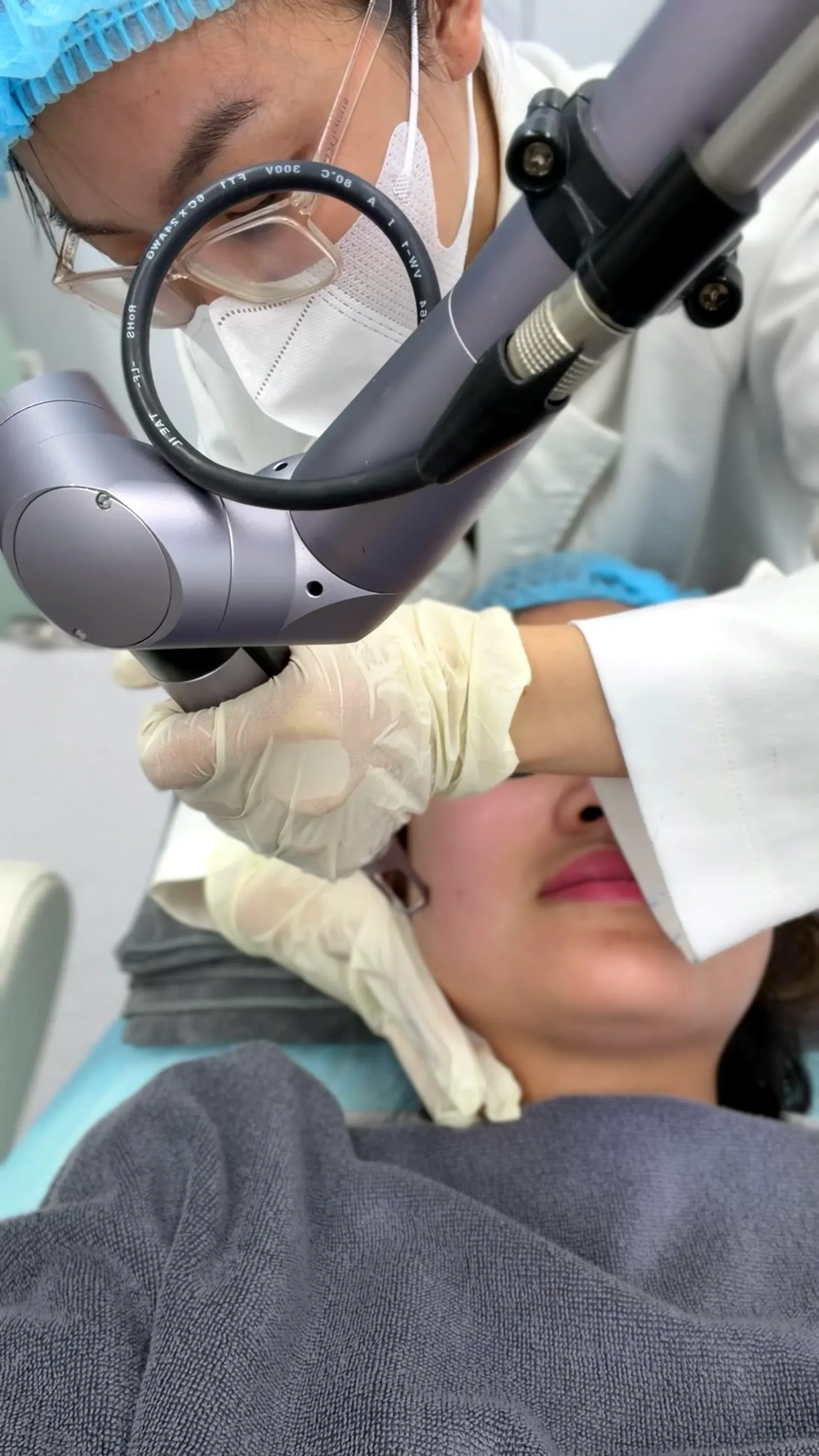
If you want to treat post-acne marks in Ho Chi Minh City, look for a facility with a dermatology licence and a doctor who uses skin analysis to classify the marks before choosing a treatment. BonBoz Clinic at 66–68 Võ Văn Tần, Xuân Hòa Ward (formerly District 3) operates under licence 11113/HCM-GPHĐ issued by the Ho Chi Minh City Department of Health. Specialist Level I physician Bùi Thị Kim Kha, Specialist Level I in Dermatology, examines patients and plans treatment. Chemical peels in the acne treatment programme have a publicly listed reference price of 1–3 million VND per session. Laser toning for post-acne marks has no separate price range and is quoted after the examination.
What are post-acne marks, and how do they differ from pitted acne scars?
Post-acne marks (post-inflammatory hyperpigmentation, abbreviated PIH) are brown, grey or pink marks that lie flat on the skin after an inflamed pimple heals. Inflamed skin stimulates pigment cells to produce more melanin. When it settles in the epidermis it appears as brown marks, and when it drops into the dermis it appears as grey marks, which fade more slowly. Red-pink marks (PIE) are caused by dilated capillaries, not pigment.
Pitted acne scars are different: the skin is indented, looks uneven when viewed from the side, and does not fill in by itself. Many people have both at the same time, and mistaking one for the other can lead to choosing the wrong method. The article how to tell PIH marks from pitted acne scars has more examples to help you check for yourself.
| Type of mark | Characteristics | Time to fade (with sun protection, no picking or squeezing) | Common approach |
|---|---|---|---|
| Superficial brown marks | Pigment in the epidermis, clear borders | Usually 1–3 months | Prescription topicals, sun protection; light chemical peel if needed |
| Deep grey marks | Pigment in the dermis, grey-blue colour | 6–12 months or longer | Consider laser toning in a course of sessions |
| Red-pink marks (PIE) | Dilated capillaries, not pigment | Fade at their own pace | Lightening agents do not work; usually only time and gentle care are needed |
| Marks alongside active inflamed acne | New marks keep forming | Depends on acne control | Control the acne first |
According to DermNet, post-inflammatory hyperpigmentation is more common in people with darker skin. In this group the marks are often darker and last longer. The AAD states that deep pigment (usually grey-blue) can take years to fade.
Choosing a reputable place to treat post-acne marks: criteria and how to check them yourself
See a doctor if the marks do not lighten after 3 months despite sun protection, if they darken after using a new product, or if you are not sure whether they are marks or pitted acne scars. You can check the following points yourself:
| Criterion | How to check | BonBoz information |
|---|---|---|
| Dermatology licence | Look up the licence number at tracuu.medinet.org.vn | 11113/HCM-GPHĐ (dermatology), 10036/HCM-GPHĐ (aesthetics), issued by the Ho Chi Minh City Department of Health |
| Doctor who examines and performs skin analysis | Ask for the name and practising certificate of the person examining you | Specialist Level I physician Bùi Thị Kim Kha, practising certificate 009784/ĐL-CCHN, holds a certificate in laser and light therapy in dermatology |
| Classifying the marks before treatment | Whether brown marks, grey marks, red marks and pitted acne scars are told apart | A dermatologist performs skin analysis to classify the marks and checks whether acne is still active |
| Who sets the laser parameters | Ask who sets the energy and performs the laser | Laser toning parameters are set and the procedure performed directly by a dermatology specialist doctor |
| Monitoring response | Whether comparison photos are taken between sessions | Laser toning is monitored with standardised photos; treatment is stopped or changed if the skin does not respond |
| Clear costs in advance | Ask for the expected number of sessions and total cost | A quote is given after the examination, before you decide |
The AAD notes that some marks need prescription medication, and that dermatologists know how to combine methods safely.
Ways to treat post-acne marks at BonBoz
After skin analysis and checking whether acne is still active, the doctor chooses one or a combination of the following approaches, always with mandatory sun protection:
- 1Control inflamed acne — the foundation step to prevent new marks. The AAD also stresses treating the skin condition that causes the marks (such as acne) first. See the acne treatment programme.
- 2Prescription topicals — active ingredients that even out skin tone and reduce inflammation, prescribed by the doctor. About 6–8 weeks are needed to see clear results.
- 3Light course of [chemical peel](/phuong-phap/peel-da-hoa-hoc-tri-mun) — controlled removal of the epidermal layer to clear superficial pigment faster.
- 4[Laser toning](/phuong-phap/laser-toning-pastelle) — a low-energy Q-switched Nd:YAG laser breaks up pigment, intended for persistent grey marks.
Changes from peels and laser toning are usually seen after 2–3 sessions, depending on pigment depth and individual skin response. The reference course is 6–10 sessions spaced 2–4 weeks apart for toning and 4–6 sessions for peels. The actual number of sessions is decided by the doctor after skin analysis and adjusted after each session. DermNet notes that peels and lasers can help with superficial pigment. They can also worsen the marks if the epidermis is damaged, and are less effective for pigment lying deep in the dermis. For this reason, the doctor chooses laser only after skin analysis and reassesses after each session. See also the differences between peels and lasers.
Cost of treating post-acne marks
| Item | Reference price range |
|---|---|
| Acne care / peel (chemical peel in the acne treatment programme, post-acne marks) | 1–3 million VND per session |
| Laser toning for post-acne marks | The clinic has not published a separate price range; cost is quoted after the examination |
Reference prices were published in November 2026. An exact quote is given after the examination, before you decide. For details of acne items, see the acne treatment cost page.
In most cases of superficial marks, only prescription topicals and sun protection are needed, so the cost is low. Peels and laser toning are charged per session, and the doctor states the expected number of sessions after skin analysis. Factors that change the total cost:
- The type of mark after skin analysis (superficial brown, deep grey, red marks) and the size of the treated area.
- The number of sessions in the course and the interval between sessions.
- Whether prescription topicals are combined; medication is charged separately according to the prescription.
How a session at BonBoz works
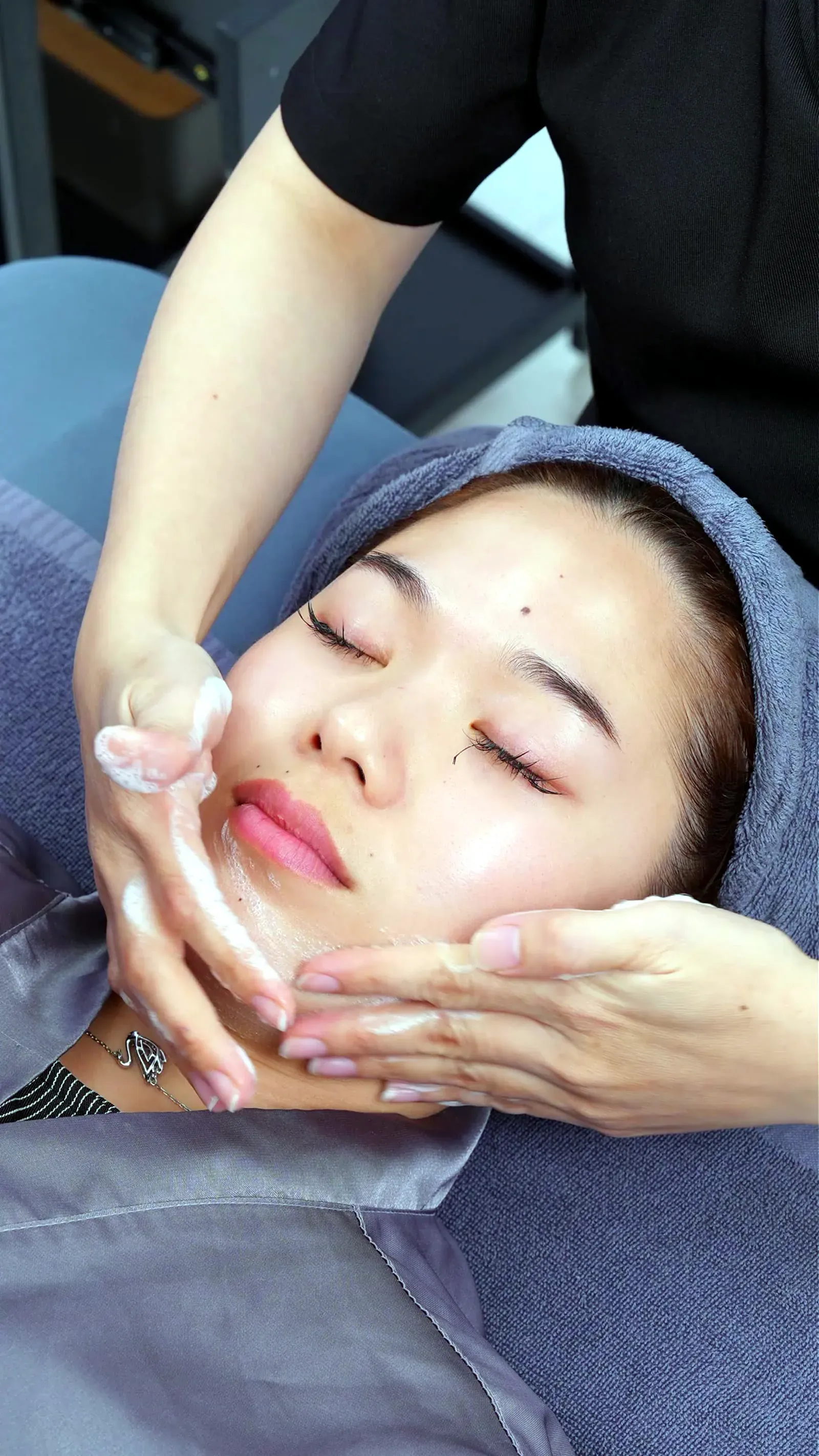
Peel session (20–40 minutes): cleansing and degreasing, then protecting the corners of the eyes, nose and mouth. Acid is applied in layers at the chosen concentration while the skin's reaction and timing are monitored. The acid is then neutralised or rinsed off, and a soothing mask and sunscreen are applied. A doctor or a trained nurse performs it under supervision.
Laser toning session (15–20 minutes): face washing and eye-protection goggles. The doctor sweeps the low-energy laser evenly across the area, with a warm, mildly prickling sensation, usually without anaesthesia. Afterwards the skin is cooled and soothing product and sunscreen are applied.
Before laser toning: no sun exposure and no tanning for 2 weeks; stop topical retinoids 3–5 days beforehand; tell the doctor if you are taking photosensitising medication, have a history of herpes or are pregnant.
How long is recovery, and what restrictions apply?
- After a superficial peel: the skin is red for a few hours and peels finely for 2–3 days. A medium peel causes flaking for 5–7 days. Do not touch or pick at peeling skin. Superficial peels are repeated after 2–4 weeks.
- After laser toning: the skin is slightly pink for a few hours and you can go about normal activities. Use SPF 50 sun protection; the next session is 2–4 weeks later. No exfoliating and no peels for 1 week.
- Sun protection is mandatory. DermNet recommends daily broad-spectrum SPF 50+ sunscreen on the marked areas. The AAD recommends reapplying every 2 hours when outdoors and right after swimming or sweating.
- Do not pick, squeeze or rub hard. See how to squeeze pimples properly to avoid scarring.
- Stop any product that causes stinging or burning. The AAD notes that steroids or mercury not listed on the label have been found in imported mark-lightening products.
- No food directly causes marks.
Risks: peels can cause redness, stinging, post-inflammatory hyperpigmentation and herpes reactivation. Laser toning can cause temporary darkening, mild hives for a few hours, and patchy loss of pigment if sessions are too close together or the energy is too high. Marks that have faded do not return by themselves, but new acne will create new marks.
Who should not have it, and when should it be postponed?
- Pregnant: some peel acids are not suitable and laser toning is postponed. Breastfeeding: tell the doctor before using topicals, peels or laser so they can be considered.
- Skin that is freshly sunburned or recently tanned.
- Taking photosensitising medication without enough time since stopping; taking, or stopped less than 6 months ago, oral retinoid acne medication (for medium peels).
- Inflamed skin, eczema, active herpes, open wounds or infection.
- Pigmented spots suspected to be malignant that have not been examined to rule this out.
- Being unable to use sun protection and avoid the sun after treatment.
Living in another district: should you come to BonBoz in District 3 for post-acne marks?
If you live in Gò Vấp, Bình Thạnh, Tân Bình, District 5 or District 1, distance is a secondary matter. What matters is the dermatology licence, a doctor who uses skin analysis to classify the marks, and a plan for acne that is still breaking out. Peels or toning are spaced 2–4 weeks apart, so choose a place where you can return for regular follow-ups. A place near your home that meets all the criteria is still a reasonable choice. If you are not sure whether you have marks or pitted acne scars, the initial examination and skin analysis with the doctor at BonBoz is free.
Book a post-acne mark consultation at BonBoz
- Address: BonBoz Clinic, 66–68 Võ Văn Tần, Xuân Hòa Ward (formerly District 3), Ho Chi Minh City.
- Opening hours: Monday – Sunday, 08:00–20:00.
- Phone: 0869 612 310.
- Licences: 11113/HCM-GPHĐ (dermatology) and 10036/HCM-GPHĐ (aesthetics), issued by the Ho Chi Minh City Department of Health, searchable at tracuu.medinet.org.vn.
- Doctor: Specialist Level I physician Bùi Thị Kim Kha, Specialist Level I in Dermatology, practising certificate 009784/ĐL-CCHN (issued by the Đắk Lắk Province Department of Health), more than 8 years of practice, holds a certificate in laser and light therapy in dermatology.
- The initial examination and skin analysis are free. Full medical information on post-acne marks is on the post-acne marks (PIH) page; for other skin problems, see dermatology treatment.
References
- DermNet — Postinflammatory hyperpigmentation. <https://dermnetnz.org/topics/postinflammatory-hyperpigmentation>
- American Academy of Dermatology — How to fade dark spots in darker skin tones. <https://www.aad.org/public/everyday-care/skin-care-secrets/routine/fade-dark-spots>
- American Academy of Dermatology — How to apply sunscreen. <https://www.aad.org/public/everyday-care/sun-protection/shade-clothing-sunscreen/how-to-apply-sunscreen>
Sources accessed on: 11/11/2026.
Frequently Asked Questions
Which doctor should I see for post-acne marks in Ho Chi Minh City?
See a dermatology specialist doctor at a licensed facility, because the first step is to tell apart brown marks, red-pink marks and pitted acne scars. At BonBoz Clinic (licence 11113/HCM-GPHĐ), Specialist Level I physician Bùi Thị Kim Kha examines you, performs skin analysis and recommends a treatment direction.
I live in Gò Vấp or Bình Thạnh. Where can I treat post-acne marks at a licensed place?
Ask for the operating licence number of the place you plan to visit, then look it up at tracuu.medinet.org.vn. The scope must include dermatology. BonBoz in District 3 holds licence 11113/HCM-GPHĐ issued by the Ho Chi Minh City Department of Health. A place near your home that meets all the criteria is also a reasonable choice.
Should I choose based on a "top clinics" list for post-acne marks?
These lists usually do not explain how the ranking is done, so they are hard to verify. A more reliable way is to compare places by the same criteria: licence, a doctor who uses skin analysis to classify marks before treatment, who sets the laser parameters, and a quote before the procedure. Avoid places that sell laser packages without skin analysis. Superficial brown marks usually need only topicals and sun protection, while red-pink marks (PIE) need a different approach.
How long is recovery after treating post-acne marks?
After a superficial peel, the skin is red for a few hours and peels finely for 2–3 days. After laser toning, the skin is slightly pink for a few hours and you can go about normal activities. For marks to fade, topicals need 6–8 weeks; changes from peels and toning are usually seen after 2–3 sessions.
How much does treating post-acne marks cost?
Chemical peels in the acne treatment programme have a reference price of 1–3 million VND per session. Laser toning for post-acne marks has no separate price range and is quoted after the examination. Reference prices were published in November 2026; an exact quote is given after the examination, before you decide.
Do post-acne marks go away by themselves?
Superficial marks usually fade by themselves within a few months if you use good sun protection and do not pick or squeeze. Deep marks and layered marks fade very slowly and usually need treatment. If they have not lightened after 3 months, see a doctor.
This content was written by the BonBoz Clinic medical team.
This article is for reference only and does not replace an in-person examination or a doctor's diagnosis. Actual results vary by individual condition.