
Where Can You Get Reliable Laser Toning in Ho Chi Minh City? Number of Sessions, Recovery and Cost
Laser toning should be done at a facility with a dermatology licence, where a doctor first analyses your skin and classifies the melasma. This article covers the reference number of sessions, recovery, who should postpone treatment, and how BonBoz gives price quotes.
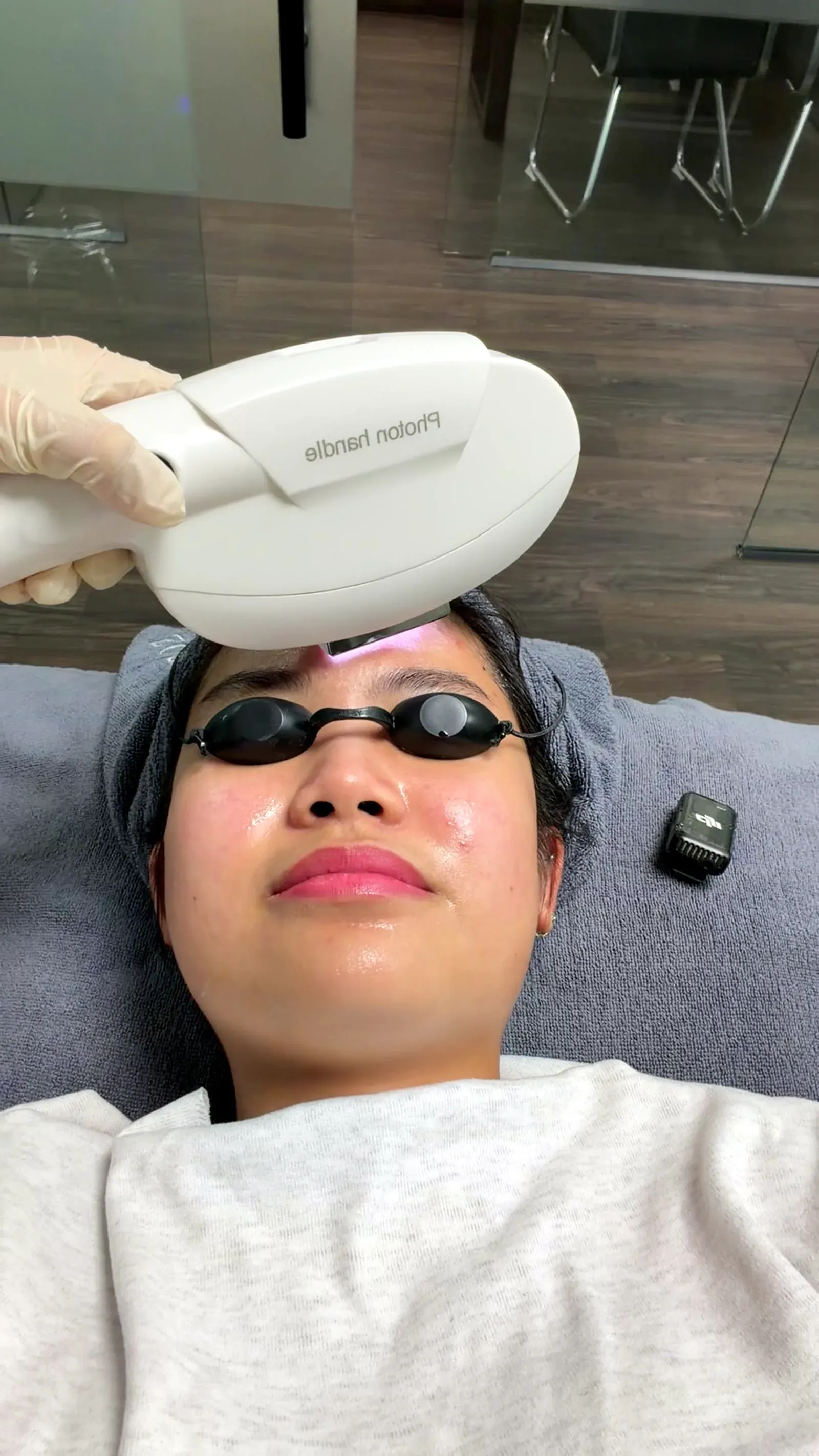
If you want laser toning in Ho Chi Minh City, choose a clinic with a licence for medical examination and treatment in dermatology and a doctor who performs skin analysis and classifies pigmentation before treatment. BonBoz Clinic, at 66–68 Võ Văn Tần, Xuân Hòa Ward (formerly District 3), operates under licence 11113/HCM-GPHĐ issued by the Ho Chi Minh City Department of Health. Dr. Bùi Thị Kim Kha, Specialist Level I in Dermatology, holds a certificate in lasers and light-based therapy in dermatology and examines patients in person. BonBoz has not published a separate price range for laser toning: the doctor quotes the cost after skin analysis, before you decide.
What is laser toning and which conditions is it used for?
Laser toning is a low-energy, large-spot, repeated-session scanning mode of the 1064 nm Q-switched Nd:YAG laser. Extremely short laser pulses are selectively absorbed by melanin, the pigment granules break into small fragments, and the body clears them gradually over several weeks. The goal is a gradually more even skin tone without crusting, unlike the high-energy "spot treatment" mode used for individual freckles.
According to the page on the laser toning (Q-switched Nd:YAG) method at BonBoz, indications include: patch-type and mixed melasma (always combined with topical treatment and sun protection), persistent deep post-acne post-inflammatory hyperpigmentation (PIH), sun-induced brown spots, evening out skin tone, support for enlarged pores and oily skin, and mild redness reduction. Not every pigmentation disorder responds: congenital birthmarks and some severe post-inflammatory hyperpigmentation (PIH) need separate assessment.
Using the spot treatment mode on melasma by mistake, or setting the wrong parameters, can make melasma flare strongly. DermNet notes that Q-switched Nd:YAG laser on melasma carries a risk of recurrence and can make the condition harder to treat, so it must be performed by a qualified person. If you are not sure whether you have patch-type melasma, deep melasma or brown spots, the examination decides whether toning is appropriate.
Choosing where to have laser toning: how can you check for yourself?
"Which place is good" is hard to answer from reviews, because everyone's melasma is different. The table below lists criteria you can check yourself before booking, applicable to any facility.
| Criterion | How to check | BonBoz information |
|---|---|---|
| Licence for medical examination and treatment in dermatology | Look up the licence number at tracuu.medinet.org.vn | 11113/HCM-GPHĐ (dermatology), 10036/HCM-GPHĐ (aesthetics), issued by the Ho Chi Minh City Department of Health |
| Doctor with a practising certificate | Ask for the name and practising certificate number, then look them up on the same portal | Dr. Bùi Thị Kim Kha, Specialist Level I, practising certificate 009784/ĐL-CCHN |
| Skin analysis and classification before treatment | Ask whether they use a Wood's lamp and distinguish superficial from deep melasma and freckles | Wood's lamp examination, separating superficial and deep melasma, freckles and brown spots |
| Who operates the device | Ask whether toning is performed by a doctor or a technician | Toning is performed by the doctor in person |
| Response monitoring | Ask whether standardised photos are taken at each session | Monitoring with standardised photos; stop or change approach if the skin does not respond |
| Price quote in advance | Ask whether the price is quoted after the examination, before treatment | Price quoted after the examination; a price list is displayed at the clinic |
The AAD advises that procedures such as laser for melasma should only be performed by a dermatologist, because choosing the right procedure requires a deep understanding of the skin.
How many laser toning sessions, and how far apart?
For melasma, the reference range is 6–10 sessions, 2–4 weeks apart, combined with topical treatment and sun protection, followed by less frequent maintenance. Deep melasma responds more slowly. For enlarged pores, the page on enlarged pores states that a course usually consists of a few sessions 2–4 weeks apart, with cumulative effects. Superficial post-acne post-inflammatory hyperpigmentation (PIH) usually needs only topical treatment and sun protection — see post-acne post-inflammatory hyperpigmentation (PIH) and how long it takes to fade.
This is a general reference range, not a guarantee of results. The actual number of sessions is assessed by the doctor after skin analysis and adjusted after each session. Some types of melasma respond poorly to toning; in that case the doctor reassesses and changes approach instead of adding more sessions.
How long results last depends on your constitution and how well you protect yourself from the sun. Melasma is a chronic condition: it needs maintenance and darkens easily again if sun protection is stopped. DermNet also notes that even when treatment succeeds, pigmentation can reappear with summer sun exposure.
Laser toning cost at BonBoz
The clinic has not published a separate price range for laser toning; the cost is quoted after the examination. The price varies with:
- the size of the treatment area (whole face, or also the neck and backs of the hands);
- the type of melasma or spots after skin analysis;
- the number of sessions in the course set by the doctor;
- whether prescription topical products or other methods are combined.
BonBoz has a price list displayed at the clinic; once the doctor has examined you and quoted the price in person, the clinic does not add extra charges. How each part of the cost of a melasma regimen is calculated is covered in the article how much does melasma treatment cost.
Steps of a laser toning session at BonBoz
- 1Preparation before the session: for 2 weeks beforehand, no sun exposure and no tanning; stop prescription topical products if the doctor tells you to (usually 3–5 days before); tell the doctor about photosensitising medication, a history of herpes, or pregnancy; arrive with your makeup thoroughly removed.
- 2Examination and skin analysis: the doctor uses a Wood's lamp to tell superficial from deep melasma and to separate freckles and brown spots, then sets the parameters for each area.
- 3Treatment: you wash your face and wear eye protection; the doctor scans the laser head evenly over the area at low energy for 15–20 minutes. You feel warmth and mild pricking, and numbing cream is usually not needed.
- 4Finishing: cooling, a soothing product and sunscreen are applied; standardised photos are taken for comparison at the next session.
How long is recovery, and what restrictions apply?
After toning, the skin is slightly pink for a few hours, and you can go about daily life and work as usual; mild hives may appear for a few hours. If spot treatment was done in that session, the spots darken and form crusts for 5–10 days — do not pick at the crusts.
- Use SPF 50 sunscreen every day; according to the AAD, when outdoors, reapply every 2 hours and right after swimming or heavy sweating.
- No exfoliation and no chemical peel for 1 week.
- Use prescription topical products to maintain and improve results, especially for melasma.
- The next session is 2–4 weeks later, on the schedule the doctor sets.
Risks to be aware of: loss of pigment in individual spots (white spots) when sessions are too close together or the energy is too high — hard to recover; melasma flaring or spreading when the wrong mode is used; temporary post-inflammatory hyperpigmentation (PIH), especially in darker skin without sun protection.

Who should not have it or should postpone?
- Skin that is freshly sunburned, recently tanned, inflamed or has open lesions.
- Active herpes infection or active skin inflammation in the area to be treated.
- Taking photosensitising medication (some antibiotics, prescription oral acne medication) without having stopped for long enough — do not stop medication on your own; ask the doctor who prescribed it.
- Pregnancy: wait until after delivery. Breastfeeding: tell the doctor clearly at the examination so they can consider it; melasma appearing together with hormonal changes that have not been assessed also needs examination first.
- Pigmented spots suspected to be malignant that have not been examined to rule this out.
- Being unable to practise strict sun protection, or expecting melasma to disappear after a few sessions.
- Skin with inflamed acne: acne should be controlled first; mild acne can be treated at the same time, according to the doctor's assessment.
If you live in District 1, District 7 or another district, should you come to BonBoz in District 3?
Distance is not the main criterion when choosing where to have laser treatment. Laser toning needs several sessions 2–4 weeks apart, so what is worth considering is whether you can travel regularly over a few months, and only then the licence, the doctor and the skin analysis before treatment. BonBoz is on Võ Văn Tần Street, Xuân Hòa Ward (formerly District 3), and is open every day from 08:00 to 20:00, so you can schedule sessions after work.
Book a skin analysis before laser toning
- Address: BonBoz Clinic, 66–68 Võ Văn Tần, Xuân Hòa Ward (formerly District 3), Ho Chi Minh City.
- Opening hours: Monday – Sunday, 08:00–20:00.
- Phone: 0869 612 310.
- Licences: 11113/HCM-GPHĐ (dermatology) and 10036/HCM-GPHĐ (aesthetics), issued by the Ho Chi Minh City Department of Health; look them up at tracuu.medinet.org.vn.
- Doctor: Dr. Bùi Thị Kim Kha, Specialist Level I in Dermatology, practising certificate 009784/ĐL-CCHN (issued by the Đắk Lắk Province Department of Health), more than 8 years of practice.
- Initial examination and skin analysis: free.
See other skin conditions the clinic treats on the page dermatology treatment at BonBoz.
References
- American Academy of Dermatology — Melasma: Diagnosis and treatment. <https://www.aad.org/public/diseases/a-z/melasma-treatment>
- DermNet — Melasma. <https://dermnetnz.org/topics/melasma>
- American Academy of Dermatology — How to apply sunscreen. <https://www.aad.org/public/everyday-care/sun-protection/shade-clothing-sunscreen/how-to-apply-sunscreen>
Date the sources were accessed: 11/11/2026.
Frequently Asked Questions
Which place is good for laser toning in District 3, Ho Chi Minh City?
A trustworthy place for laser toning has a licence for medical examination and treatment in dermatology, a doctor with a practising certificate, skin analysis to classify melasma before treatment, and monitoring with standardised photos. BonBoz Clinic at 66–68 Võ Văn Tần (formerly District 3) holds licence 11113/HCM-GPHĐ; Dr. Bùi Thị Kim Kha, Specialist Level I, examines patients in person and toning is performed by the doctor. Reviews only reflect the skin of the person writing them, so check these criteria instead.
Is laser toning better at a clinic or a hospital?
The size of the facility does not determine the safety of laser toning. What to check at either place is the licence, whether the person performing it is a dermatologist, whether skin analysis is done to choose the right mode, and whether the response is monitored after each session. Using the wrong mode on melasma can make it darker, wherever it is done.
How much does laser toning cost?
BonBoz has not published a separate price range for laser toning; the doctor quotes the cost after the examination, before you decide. The price depends on the size of the treatment area, the type of melasma after skin analysis, the number of sessions, and whether topical products or other methods are combined. The initial examination and skin analysis are free.
How many laser toning sessions are needed?
For melasma, the reference range is 6–10 sessions 2–4 weeks apart, combined with topical treatment and sun protection, followed by less frequent maintenance. Deep melasma is slower, and if some types of melasma respond poorly, the doctor changes approach instead of adding more sessions. The actual number of sessions is reassessed after each one.
Is laser toning safe, and does it thin the skin?
When the doctor sets the right parameters and the right interval between sessions, laser toning is not intended to thin the skin. If sessions are too close together or the energy is too high, there is still a risk of white spots that are hard to recover, melasma flaring, or post-inflammatory hyperpigmentation (PIH). That is why skin analysis beforehand and monitoring at each session are needed.
How long is the recovery from laser toning, and do I need time off work?
After toning, the skin is usually slightly pink for a few hours and you can go about daily life and work as usual. For 1 week after a session, do not exfoliate or have a chemical peel, and use SPF 50 sunscreen every day. If spot treatment was done in that session, the spots form crusts for 5–10 days and must not be picked.
Does laser toning hurt?
Toning usually feels only warm with mild pricking, and numbing cream is not needed; spot treatment stings more, like a rubber band snapping, and numbing cream can be applied. The doctor advises on how to reduce discomfort when needed.
Content written by the BonBoz Clinic professional team.
This article is for reference only and does not replace an in-person examination or a doctor's diagnosis. Actual results vary by individual condition.