
Choosing a reputable place to treat melasma: 6 criteria to check for yourself, and how BonBoz doctors work
Melasma should be treated at a licensed dermatology specialty clinic, where the doctor classifies the melasma before choosing a method. This article gives 6 self-check criteria and the warning signs to watch for.
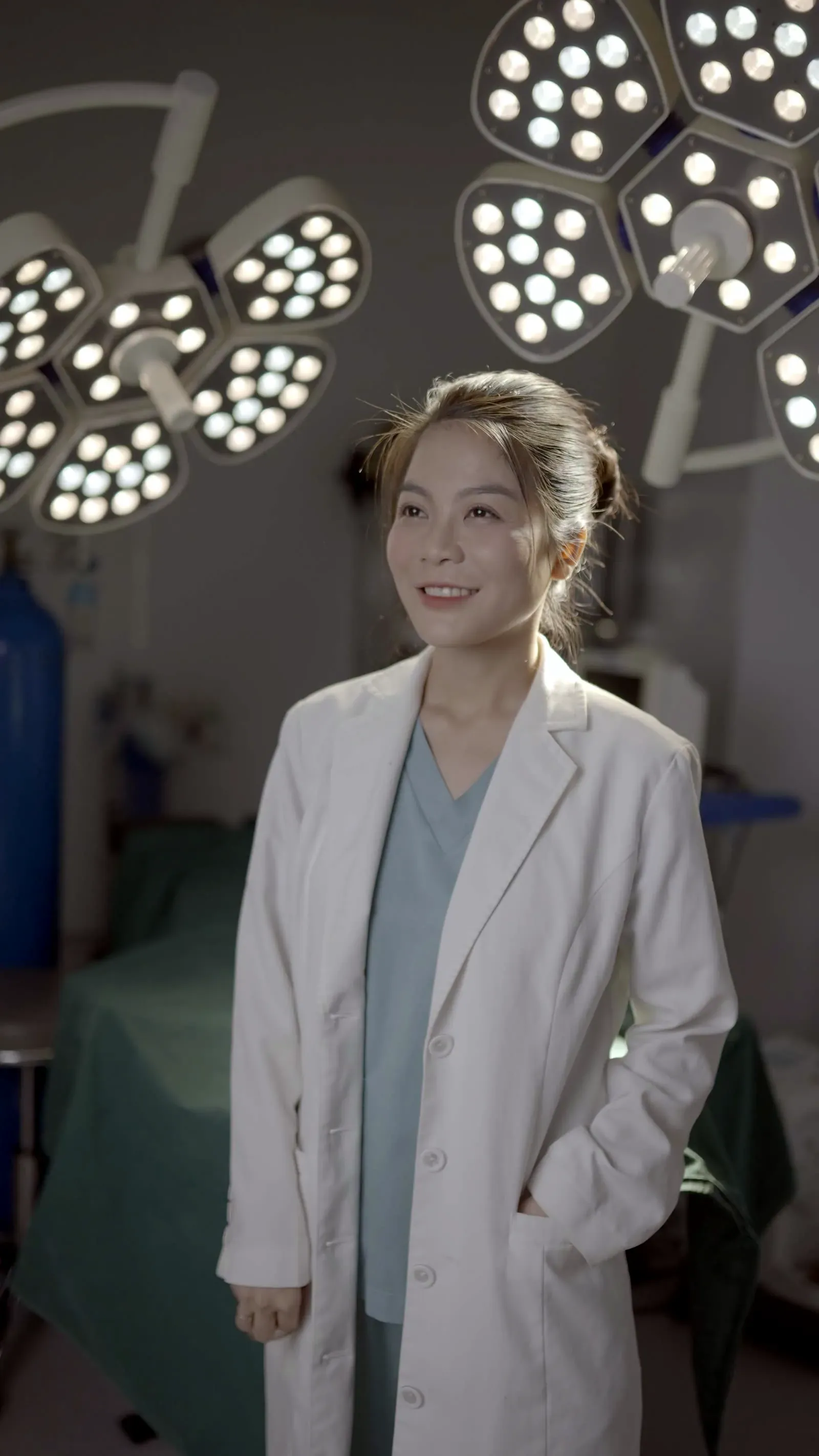
It is best to treat melasma at a dermatology specialty clinic with an operating licence issued by the Department of Health. There, a doctor with a practising certificate examines you in person and classifies the melasma as superficial, deep or mixed before choosing a method. The reason is practical: although all of them are called "melasma", each type responds differently, and choosing the wrong method, especially high-energy laser, can make melasma darker and more widespread.
In Ho Chi Minh City, BonBoz Clinic at 66–68 Võ Văn Tần, Xuân Hòa Ward (formerly District 3) operates under licence 11113/HCM-GPHĐ (Dermatology), issued by the Ho Chi Minh City Department of Health. The doctor who examines melasma in person is Dr. Bùi Thị Kim Kha, Specialist Level I in Dermatology, practising certificate 009784/ĐL-CCHN. Wherever you go, the six criteria below help you check a melasma clinic yourself before you start a treatment course that lasts many months. The six criteria are: a Dermatology licence, a doctor with a practising certificate who examines you in person, skin analysis to classify the melasma, a three-pillar regimen, follow-up with standardised photos, and transparent advice on both results and costs.
Why "where to treat melasma" matters more than "what to treat melasma with"
A method is only right when it matches the right type of melasma. According to DermNet, melasma is divided into epidermal melasma (well-defined borders, dark brown, usually responds well), dermal melasma (blurred borders, light brown to blue-grey, usually responds poorly) and mixed melasma, the most common type, which often improves only partially. You can read more about how to tell them apart in the article how to distinguish spotted, patchy and deep-rooted melasma.
So the right question is not "which machine is best", but "who will classify the melasma and take responsibility for the regimen". That is the job of a dermatologist at a facility licensed for that specialty.
6 criteria to check a melasma clinic yourself
The table below gathers the points to check, how to check them, and how BonBoz Clinic does it, so you have a yardstick when you go for a consultation anywhere.
| Criterion | How to check | How BonBoz does it |
|---|---|---|
| 1. Has an operating licence for Dermatology | Ask for the licence number, look it up at tracuu.medinet.org.vn, and see whether the approved scope of professional practice includes Dermatology | Licences 11113/HCM-GPHĐ (Dermatology) and 10036/HCM-GPHĐ (Aesthetics), issued by the Ho Chi Minh City Department of Health |
| 2. A doctor with a practising certificate examines you in person | Ask the name of the doctor who examines you and their practising certificate number; a consultant cannot replace a doctor | Dr. Bùi Thị Kim Kha, Specialist Level I in Dermatology, practising certificate 009784/ĐL-CCHN, examines you in person and prescribes the regimen |
| 3. Skin analysis and melasma classification before any recommendation | Ask: "Is my melasma superficial, deep or mixed?" A clinic that can answer will recommend the right treatment | The doctor performs skin analysis, asks about hormonal history and the products you have used, and only then chooses a method |
| 4. A three-pillar regimen: sun protection, topical medication, and procedures when appropriate | Listen for whether the regimen includes specific sun protection guidance and prescribed topical medication, or whether they only sell laser packages | Strict sun protection + prescribed topical medication; chemical peel or laser toning is added only when appropriate |
| 5. Follow-up with standardised photos | Ask whether photos are taken at the same angle and under the same lighting at every follow-up visit | The doctor assesses progress through standardised photos at every follow-up visit |
| 6. Transparent advice: no promise of "no more melasma", costs given in advance | Watch for promises to cure melasma after a few sessions; ask for the expected total number of sessions and the cost before signing | States clearly that melasma needs long-term control; costs are given after the examination, before you decide |
Criteria 1 and 2: licence and doctor
An operating licence tells you what professional activities a facility is allowed to carry out; a place that only has a cosmetics business licence or a skin care licence is not authorised to examine and prescribe for melasma. You can view the operating licence of BonBoz Clinic and then cross-check it on the look-up portal.
At the same time, know clearly who examines you. The AAD states that only a properly trained dermatologist should perform chemical peels or laser for melasma, because they can choose the procedure that suits each person and carry it out safely. The full profile of the doctor in charge of melasma at BonBoz is on the page Dr. Bùi Thị Kim Kha: more than 8 years of practice and a certificate in Laser and light in dermatology.
Criterion 3: skin analysis first, recommendation after
The AAD describes dermatologists as usually diagnosing melasma by closely examining the facial skin, and possibly using a Wood's lamp or a dermatoscope to see how deep the pigment lies. DermNet also lists the Wood's lamp and dermatoscope as commonly used diagnostic tools. A consultation that only looks with the naked eye and immediately offers a treatment package skips the most important step.
Criterion 4: a regimen with all three pillars
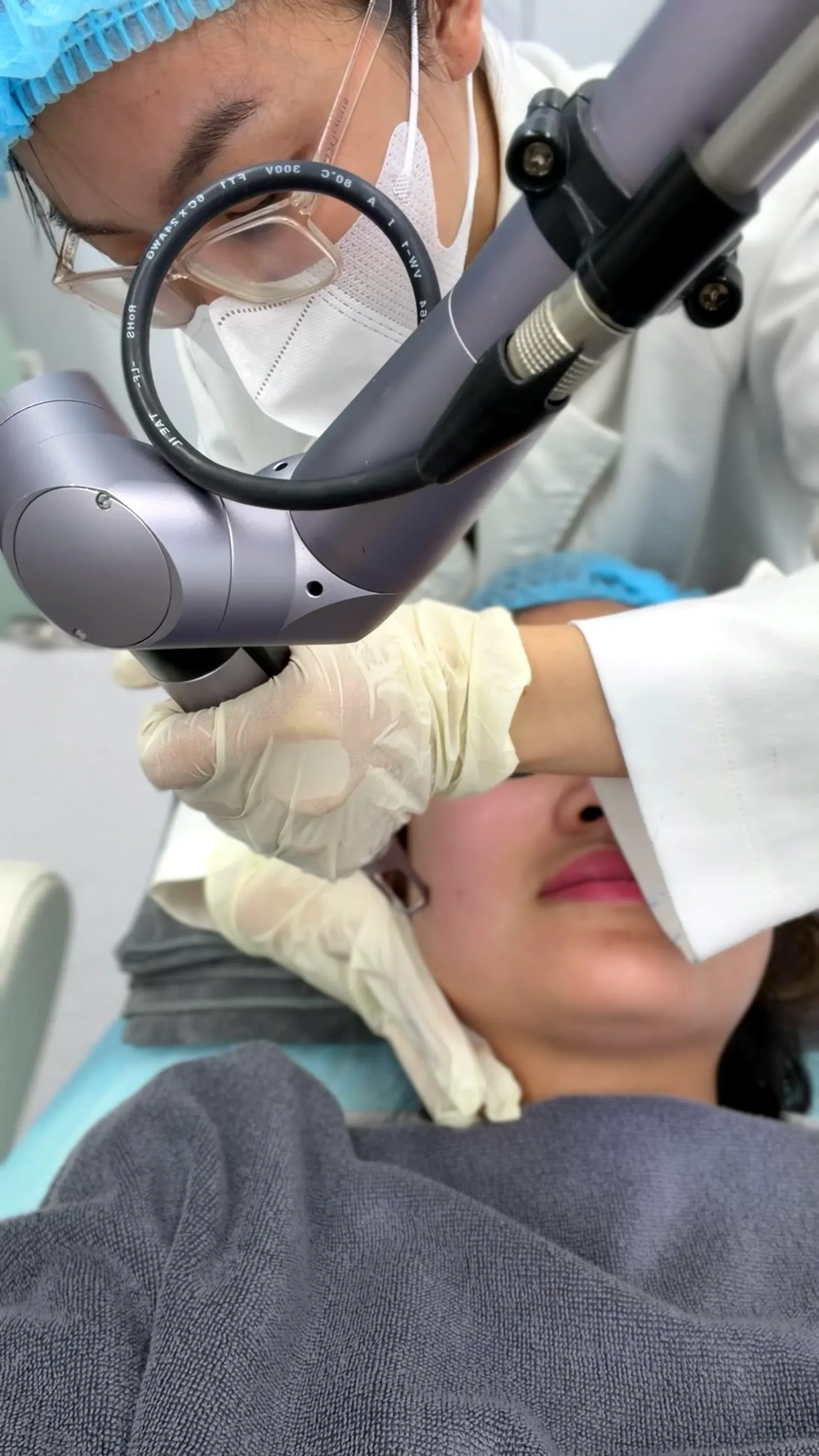
Sun protection is the foundation of every melasma regimen. The AAD advises people with melasma to use sunscreen containing zinc oxide, titanium dioxide and iron oxide, because sun protection helps melasma fade gradually and limits its return. On top of that come prescribed topical medications; chemical peel and laser are only added, and cannot replace the first two pillars. For patchy and mixed melasma, when skin analysis shows it is suitable, BonBoz doctors may add laser toning Pastelle, a low-energy Q-switched type given over many sessions, with settings set by the doctor; deep-rooted melasma usually responds more slowly.
Criteria 5 and 6: follow-up and transparency
Melasma fades slowly, and looking in the mirror every day makes it hard to notice changes. Photos at the same angle and under the same lighting at each follow-up visit let both you and the doctor know whether the regimen needs adjusting. The AAD also advises asking the doctor about costs before starting; how costs are built up is covered in the article how much does melasma treatment cost.
Warning signs when choosing a melasma clinic
If you notice any of the following signs, stop and ask more questions:
- "Special treatment" creams with unclear ingredients that whiten quickly within a few days. Mixed creams containing corticosteroids thin the skin and dilate blood vessels, and melasma comes back stronger when you stop. See the article why mixed creams and fast-whitening cosmetics are dangerous.
- Promises of "no more melasma after one course" or "treating it at the root". Melasma is a condition that needs long-term control; pigment cells still tend to become overactive with sun exposure and hormonal changes. The article can melasma be cured completely explains realistic expectations.
- No doctor examines you, only consultants and technicians. If no one classifies the melasma, no one is responsible when the method does not suit you.
- High-energy laser at the very first session, before skin analysis. DermNet notes that chemical peel and laser can make melasma worse or leave post-inflammatory hyperpigmentation, so they need to be used by someone with the right expertise. The article is laser for melasma harmful to the skin explains clearly when melasma becomes darker after laser.
- Pressure to pay for a long package during the first consultation, before telling you the expected number of sessions or the re-evaluation milestones.
How a melasma examination works at BonBoz Clinic
A melasma examination at BonBoz usually includes:
- 1Taking your history. When the melasma started, whether it is related to pregnancy, birth control pills or the thyroid, and what products or procedures you have used.
- 2Skin analysis and melasma classification. Determining whether it is superficial, deep or mixed melasma, or melasma on skin already damaged by mixed creams. In the last case, the skin needs to be restored first and melasma treated afterwards.
- 3Explaining the regimen. Sun protection, prescribed topical medication, whether chemical peel or laser toning is needed, the expected number of sessions and the follow-up milestones.
- 4Giving the cost. The cost is given after the examination, before you decide. The initial examination and skin analysis are free.
- 5Taking standardised photos as a baseline. The photos from the first visit are the basis for comparison at later follow-up visits.
Detailed information on classification and methods is on the page melasma treatment at BonBoz.
How long until melasma fades: milestones to know before choosing a clinic
A serious melasma clinic will tell you realistic milestones and will not promise fast results:
| Method | When change is usually seen |
|---|---|
| Prescribed lightening topical medication | About 8–12 weeks |
| Low-energy laser toning | Usually seen after 3–4 sessions |
| Combined course for mixed melasma | 6 months or more |
These are reference milestones, not a commitment: the AAD states that when the regimen is followed correctly, it usually takes 3–12 months to see results, and longer if the melasma has been present for a long time. Deep-rooted melasma is usually slower than the milestones above. After melasma fades, you still need sun protection and maintenance as instructed, because if you stop completely, melasma usually returns after the sunny season.
When to see a doctor early instead of treating it yourself
See a dermatologist instead of buying products yourself if:
- The dark patches spread or darken quickly over a few months.
- Melasma comes back strongly after you stop a whitening product, and you suspect a mixed cream containing corticosteroids.
- You have had laser elsewhere and the melasma is darker and more widespread.
- You are pregnant, breastfeeding or taking hormonal medication.
Notes for pregnancy or breastfeeding
The AAD notes that hormonal changes during pregnancy can trigger melasma, and melasma may fade on its own once the trigger passes. During this period, strict sun protection and safe active ingredients as recommended by your doctor are the main approach; many melasma medications and lasers are usually left until after childbirth. Tell your doctor if you are pregnant or breastfeeding, and do not use melasma medication bought elsewhere on your own.
Book a melasma examination at BonBoz Clinic
- Address: 66–68 Võ Văn Tần, Xuân Hòa Ward (formerly District 3), Ho Chi Minh City.
- Opening hours: Monday – Sunday, 08:00–20:00. Phone 0869 612 310.
- Licences: 11113/HCM-GPHĐ (Dermatology) and 10036/HCM-GPHĐ (Aesthetics), issued by the Ho Chi Minh City Department of Health.
- Examining doctor: Dr. Bùi Thị Kim Kha, Specialist Level I in Dermatology, practising certificate 009784/ĐL-CCHN.
- The initial examination and skin analysis are free; treatment costs are given after the examination, before you decide.
References
- American Academy of Dermatology (AAD). Melasma: Diagnosis and treatment. https://www.aad.org/public/diseases/a-z/melasma-treatment (accessed 11 November 2026)
- American Academy of Dermatology (AAD). Melasma: Who gets and causes. https://www.aad.org/public/diseases/a-z/melasma-causes (accessed 11 November 2026)
- DermNet. Melasma. https://dermnetnz.org/topics/melasma (accessed 11 November 2026)
Content prepared by the BonBoz Clinic medical team.
Frequently Asked Questions
Can melasma be treated at a spa?
A spa is not authorised to examine, classify and prescribe treatment for melasma. Melasma needs a dermatologist to determine the type before choosing a topical medication or procedure. Chemical peel and laser on unclassified melasma can make it darker.
How do I check whether a melasma clinic has a licence?
Ask for the operating licence number and look it up at tracuu.medinet.org.vn, paying attention to whether the approved scope of professional practice includes Dermatology. Also ask for the name and practising certificate number of the doctor who examines you in person. BonBoz Clinic operates under licence 11113/HCM-GPHĐ (Dermatology), issued by the Ho Chi Minh City Department of Health.
What should I ask the doctor at my first melasma visit?
Ask three questions: is my melasma superficial, deep or mixed; what does the regimen include and when will it be re-evaluated; and what is the expected total cost. A doctor who has performed skin analysis will answer all three clearly.
Is there a fee for a melasma examination at BonBoz?
The initial examination and skin analysis at BonBoz Clinic are free. If treatment is needed, the doctor gives the cost after the examination, before you decide.
Is a clinic that promises to cure melasma after a few sessions trustworthy?
Be cautious. Melasma is a condition that needs long-term control: it can be clearly lightened and kept stable with sun protection and maintenance, but pigment cells still tend to become overactive with sun exposure or hormonal changes.
Can I get a melasma examination while pregnant?
Yes, and you should tell the doctor right away so the regimen is chosen appropriately. During this period, the main approach is strict sun protection and safe active ingredients as recommended by your doctor; many melasma medications and lasers are usually left until after childbirth.
This article is for reference only and does not replace an in-person examination or a doctor's diagnosis. Actual results vary by individual condition.