
Do at-home melasma creams work? When do you need prescription medication?
At-home creams can help with superficial patch-type melasma when used together with sun protection, but they do little for deep-rooted melasma. Here is how to tell when it is time to stop treating it yourself and see a dermatologist.
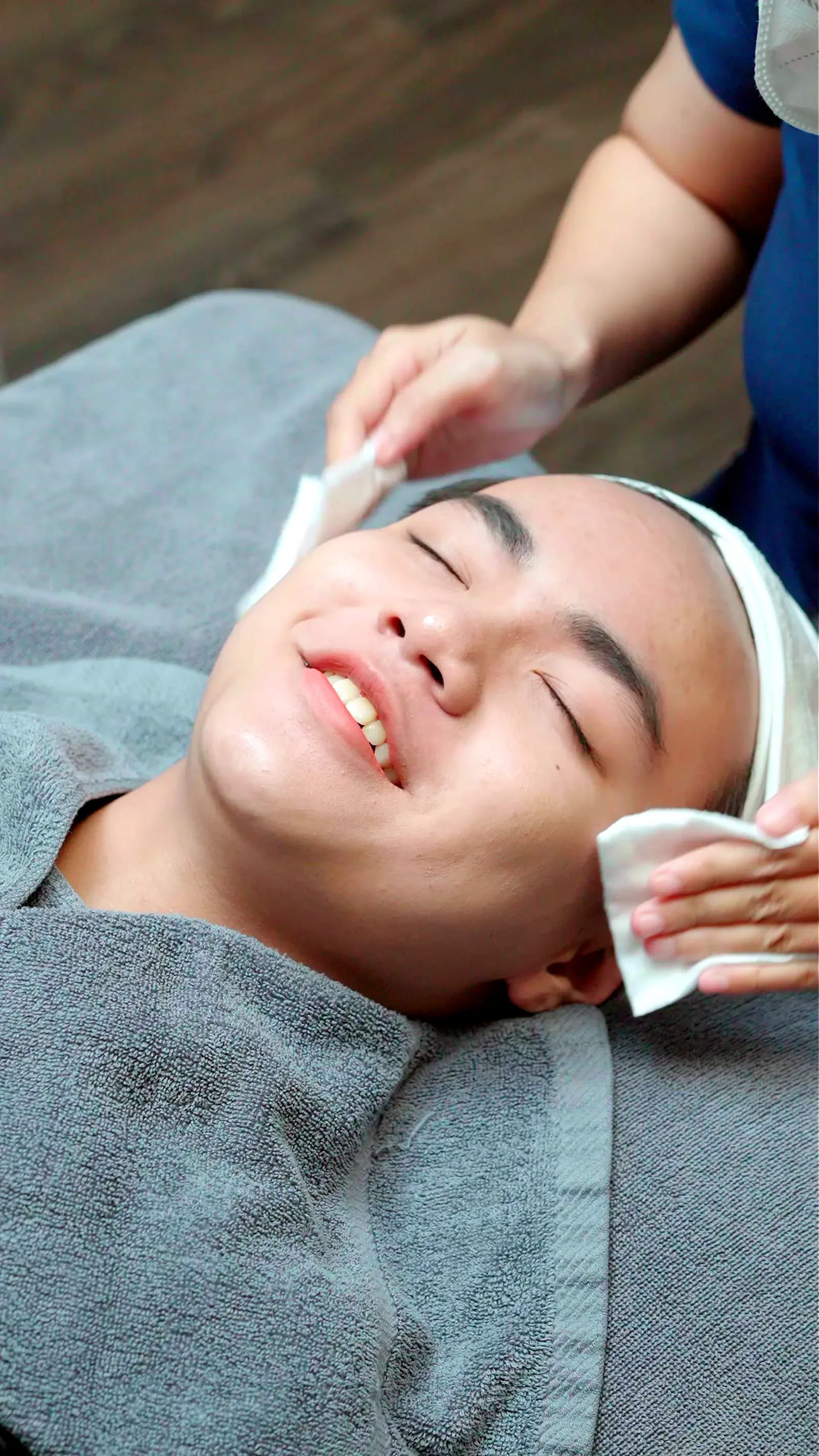
Melasma creams used at home can work, but only within limits. They help fade superficial patch-type melasma when combined with strict sun protection, while deep (dermal) melasma responds poorly to topical treatment. Over-the-counter cosmetic creams mostly give a mild surface brightening. Active ingredients strong enough to clearly affect melasma are usually prescription medicines, and your doctor needs to choose the concentration and method of application and monitor your progress. The most dangerous products are compounded creams containing corticosteroids: the skin whitens quickly at first, then becomes thin, and the melasma returns darker.
At BonBoz Clinic (operating licence 11113/HCM-GPHĐ, Dermatology specialty), a prescription brightening topical regimen is the foundation of most melasma treatment plans. This article is based on how Dr. Bùi Thị Kim Kha, a Specialist Level I physician in Dermatology, assesses patients who have applied creams on their own before coming in. It is cross-checked against materials from the American Academy of Dermatology (AAD) and DermNet.
What can home creams do for melasma?
Melasma is a condition in which pigment cells become overactive under the influence of sunlight, visible light, heat, hormones and individual predisposition. Brightening ingredients work in two main ways: they inhibit melanin production and gently exfoliate the pigment-containing stratum corneum. Both act most strongly in the epidermis.
This explains why the same cream can visibly fade melasma in one person and barely change it in another:
- Superficial patch-type melasma (brown, well-defined edges, appeared 1–2 years ago): the pigment sits near the surface, and sun protection plus a prescription topical over 3–4 months usually brings clear improvement.
- Deep (dermal) melasma (blue-grey, blurry edges, long-standing): the pigment sits in the dermis, so topicals work poorly. It usually needs additional low-energy laser toning over multiple sessions.
- Mixed melasma, the most common type among Vietnamese people: topicals can address the superficial part, while the deeper part needs other methods combined, with a treatment course of 6 months or more.
DermNet states that a classic brightening ingredient only lightens pigment in the epidermis and does not act on pigment in the dermis. In other words, a cream cannot "pull" deep melasma to the surface, no matter how long you apply it. You can only know which group you belong to after a skin analysis, because it is very easy to get wrong by eye. Read more about how to tell melasma, freckles and brown spots apart.
How do cosmetic brighteners, prescription medicines and compounded creams differ?
On the market, all three are lumped together as "melasma creams". The table below helps you tell them apart.
| Over-the-counter cosmetic brighteners | Prescription brightening topicals | Compounded creams, creams of unknown origin | |
|---|---|---|---|
| Who chooses | The user buys it themselves | A dermatologist prescribes after an examination | The seller mixes it themselves |
| Common active ingredients | Vitamin C, niacinamide, kojic acid, arbutin, at low concentrations | Ingredients that inhibit melanin production and mildly exfoliate, combined according to the type of melasma | Often not stated, may contain corticosteroids |
| Effect on superficial patch-type melasma | Mild brightening, supportive | Clearer improvement when combined with sun protection | Quick whitening at first |
| Effect on deep (dermal) melasma | Almost none | Poor response, needs combined laser | Does not resolve it, easily damages the skin |
| Monitoring | None | Follow-up visits to adjust treatment | None |
| Main risks | Irritation if many products are layered | Irritation, must be used as directed | Thin skin, dilated blood vessels, strong rebound of melasma after stopping |
The AAD states that dermatologists usually prescribe at-home topicals as the main part of melasma treatment, either a single active ingredient or a three-ingredient combination, and for sensitive skin may choose gentler ingredients such as azelaic acid, kojic acid or vitamin C. In the US, the AAD notes that the most common brightening ingredient for melasma is now available only by prescription.
When should you switch from self-bought creams to prescription medicine?
You should stop trying new products on your own and see a dermatologist if any of the following applies:
- You have applied one product consistently for about 3 months, together with sun protection, and the melasma has not faded.
- The dark patches are spreading or darkening quickly over a few months.
- The melasma rebounds strongly after you stop a whitening product, along with red, thin skin and tiny visible blood vessels: signs that suggest a compounded cream containing corticosteroids.
- You are pregnant, breastfeeding or taking hormonal medication and need to choose a safe option.
- You have had laser elsewhere and the melasma became darker and more widespread.
At a BonBoz visit, the doctor performs a skin analysis to classify the melasma, asks about your hormonal history and every product you have used, and then prescribes a brightening topical regimen suited to your type of melasma. In some persistent cases, an oral medicine may be considered as well, but this kind of medicine requires the doctor to assess contraindications and monitor you; never buy it on someone's recommendation. Chemical peel or Pastelle laser toning is added only when it suits the type of melasma and your skin condition.
Why does melasma not fade even after months of applying cream?
Most cases of "the cream doesn't work" can be explained by one of the five reasons below, and in most of them the active ingredient itself is not at fault.
- 1Sun protection is not enough. You apply sunscreen but not enough of it, do not reapply, do not wear a hat, and do not avoid heat. The AAD stresses that sunlight darkens melasma further and creates new patches, so every brightening cream loses ground each time the skin is exposed to the sun. See how to apply sunscreen correctly and how often to reapply.
- 2The melasma sits deep. As noted above, creams mainly act on the epidermis; deep (dermal) melasma needs a different approach.
- 3Using too many products at once. Layering exfoliating, acid and brightening products irritates the skin. The AAD notes that a product that burns or stings is irritating the skin and may make dark marks darker.
- 4Switching products constantly. Topicals need 8–12 weeks before you can judge them; if you switch after a few weeks, there has not been time to see the effect.
- 5The skin has been damaged by a compounded cream. Thin skin and dilated blood vessels must be restored first, and melasma treated afterwards.
How do you use melasma creams at home correctly?
Whether it is a cosmetic or a prescription medicine, a few general principles help the cream work and limit irritation:
- Test on a small area first. DermNet advises applying to an area of about 1 cm; if there is no redness or burning after 24 hours, apply more widely, and start with a thin layer once a day.
- Apply only to the melasma area, avoiding the areas close to the eyes and mouth, unless your doctor instructs otherwise.
- Follow the right order. The AAD recommends this order: melasma medicine, then sunscreen, then concealing makeup if needed. The full order is in the article skincare steps for skin under treatment, and the companion article skincare steps for melasma-prone skin, morning and evening goes through it in detail for each session.
- Choose gentle, fragrance-free products for the remaining steps.
- Stop if the skin becomes red, flaky, itchy or weepy, then tell your doctor.
- Do not use topical corticosteroids on your face on your own to "whiten" it. Corticosteroids belong in a melasma regimen only when your doctor prescribes them, for a limited period and with monitoring.
Once the melasma has faded, maintenance is still necessary: lifelong sun protection and a maintenance topical used at low frequency as directed; if you stop, melasma usually returns after the sunny season.
Can you use melasma creams while pregnant or breastfeeding?
This is the stage that calls for the most caution. Many melasma medicines and lasers are postponed until after delivery; during pregnancy, doctors usually prioritise strict sun protection and a few safe active ingredients as recommended. DermNet notes that the safety of a common brightening ingredient applied to the skin has not been established in pregnancy and breastfeeding. So if you are pregnant or breastfeeding, do not buy melasma creams on your own, even ones advertised as "natural". Melasma that appears during pregnancy may also fade naturally after delivery; details are in the article melasma during pregnancy and after childbirth.
The full treatment course, from topicals to laser, is presented on the page melasma treatment at BonBoz.

Book a melasma consultation at BonBoz Clinic
- Address: 66–68 Võ Văn Tần, Xuân Hòa Ward (formerly District 3), Ho Chi Minh City.
- Opening hours: Monday – Sunday, 08:00–20:00. Phone: 0869 612 310.
- Licences: 11113/HCM-GPHĐ (Dermatology) and 10036/HCM-GPHĐ (Aesthetics), issued by the Ho Chi Minh City Department of Health; look them up at tracuu.medinet.org.vn.
- Doctor: Dr. Bùi Thị Kim Kha, Specialist Level I physician in Dermatology, practising certificate 009784/ĐL-CCHN, more than 8 years of practice.
- The initial consultation and skin analysis are free. The clinic has not published a reference price for melasma; the cost of medication and procedure sessions is given by the doctor after the examination, before you decide.
References
- American Academy of Dermatology — Melasma: Diagnosis and treatment: <https://www.aad.org/public/diseases/a-z/melasma-treatment> (accessed 11/11/2026)
- American Academy of Dermatology — Melasma: Self-care: <https://www.aad.org/public/diseases/a-z/melasma-self-care> (accessed 11/11/2026)
- DermNet — Hydroquinone: <https://dermnetnz.org/topics/hydroquinone> (accessed 11/11/2026)
- DermNet — Melasma: <https://dermnetnz.org/topics/melasma> (accessed 11/11/2026)
Frequently Asked Questions
How long does it take for a melasma cream to work?
Brightening topicals usually need 8–12 weeks before their effect can be judged. Deep (dermal) melasma fades more slowly, and may change little if you use topicals alone. If you have applied it consistently with sun protection for about 3 months without improvement, you should see a doctor for reassessment.
Do melasma creams sold at pharmacies need a prescription?
It depends on the active ingredient. Low-concentration cosmetic brighteners are sold over the counter, while the stronger active ingredients for melasma are sold by prescription only in many countries, because the concentration and duration of use must be chosen and side effects monitored. Wherever you buy, a dermatologist should first determine your type of melasma.
How can you recognise a compounded cream?
Compounded creams usually do not list their ingredients clearly, whiten the skin very quickly within a few weeks, and when you stop, the melasma returns darker, with red, thin skin and visible blood vessels. If you have these signs, stop the product and see a doctor so your skin can be restored before melasma treatment.
Should you use several brightening creams at once to get faster results?
No. Layering several exfoliating and brightening ingredients easily causes irritation, and irritated skin can make dark marks darker. A regimen with few steps, the right active ingredient and sun protection is usually more effective than many products used at the same time.
Does sunscreen count as a melasma cream?
Sunscreen does not brighten the skin directly, but it is the essential foundation of every melasma regimen. Choose a broad-spectrum SPF 50, tinted with iron oxide to also protect against visible light, apply enough, and reapply every 2 hours outdoors. Without this step, a melasma cream struggles to work.
Can you stop the cream once the melasma has faded?
You should not stop everything suddenly. Usually the doctor switches to a maintenance topical at low frequency, while sun protection continues for life. If you stop both completely, melasma usually returns after the sunny season.
Content written by the BonBoz Clinic medical team.
This article is for reference only and does not replace an in-person examination or a doctor's diagnosis. Actual results vary by individual condition.