
Can melasma be cured for good? Realistic expectations when treating melasma
Melasma is not a condition you treat once and are done with, but it can be clearly lightened and kept stable for many years. This article explains why, what to expect for each type of melasma, and how to maintain your results.

Short answer: melasma usually can't be cured in the sense of "treat it once and be done," but it can be clearly lightened and kept stable over the long term with proper sun protection and maintenance. The reason is that the pigment cells in melasma areas tend to become overactive again whenever they are exposed to sun, heat or hormonal changes. For this reason, dermatologists see melasma treatment as managing a chronic condition, much like managing oily acne-prone skin or atopic dermatitis, rather than wiping away a stain.
At BonBoz Clinic (licence 11113/HCM-GPHĐ, issued by the Ho Chi Minh City Department of Health), Dr. Bùi Thị Kim Kha, Specialist Level I physician, always makes this clear at the first consultation: melasma improves step by step, it needs maintenance, and any promise of "no more melasma after a few sessions" has no basis. The article below explains why, and what expectations are reasonable for each type of melasma.
Why is melasma so hard to "clear completely"?
Melasma develops when pigment cells in the epidermis and dermis are stimulated to produce more melanin than normal. Treatment can reduce the pigment already present, but it cannot change the "easily stimulated" nature of these cells. Three groups of factors remain after treatment:
- Sun, visible light and heat — the strongest triggers, encountered every day.
- Hormones — pregnancy, birth control pills, thyroid disorders.
- Constitution and genetics — these determine who is prone to melasma. DermNet notes that about 60% of people with melasma have a family member who also has it.
DermNet describes melasma as a frustrating condition for both patients and doctors: it responds slowly, especially when it has been present for many years, and even in people who get good results, pigment can reappear with summer sun exposure. DermNet itself stresses the need to explain the chronic nature, the risk of recurrence and the need for lifelong sun protection so that patients set realistic goals.
Can melasma fade on its own? Yes. According to the American Academy of Dermatology (AAD), melasma can fade by itself when the trigger is removed — most commonly after giving birth or after stopping a medication that causes melasma. The same applies to thyroid disease: the AAD states that treating thyroid disease sometimes helps melasma fade.
On the other hand, the AAD also states plainly that melasma can last for many years, even a lifetime. So a more useful question than "can it be cured completely?" is: does my melasma have any trigger that can be removed, and how should the rest be managed?
Realistic expectations by type of melasma
The degree of improvement depends mainly on how deep the pigment is. The table below summarises reasonable expectations for each type:
| Type of melasma | Characteristics | Common options | Reasonable expectation |
|---|---|---|---|
| Superficial patch melasma | Brown, well-defined edges, only 1–2 years old | Sun protection + prescription topical medication | Usually clear improvement after 3–4 months |
| Deep-rooted melasma | Blue-grey, blurry edges, long-standing | Low-energy laser toning over many sessions | Slow improvement, patience needed |
| Mixed melasma | Both layers, the most common | Topical medication + laser toning + sun protection | A course of 6 months or more, usually partial improvement |
| Melasma on skin damaged by compounded creams | Thin skin, dilated blood vessels | Restore the skin first, treat melasma afterwards | Longer time, laser used with great caution |
If you are not sure which type you have, read how to tell spot melasma, patch melasma and deep-rooted melasma apart.
Timelines worth knowing
Knowing the milestones in advance helps you avoid giving up too early, and also avoid waiting in vain:
- Prescription topical medication: about 8–12 weeks before melasma lightens.
- Laser toning: changes are usually seen after 3–4 sessions; deep-rooted melasma is slower.
- Overall treatment plan: persist for 3–6 months, and usually 6 months or more for mixed melasma.
- After melasma has lightened: switch to maintenance, do not stop completely.
Your doctor assesses progress with standardised photos at each follow-up visit. It is very hard to see changes in the mirror every day, so many people think "it isn't working" while comparison photos show the melasma gradually fading. Details of each milestone are in the article how long does melasma treatment take.
What does "success" look like? Setting the right goal helps you judge results correctly. A melasma treatment course is considered successful when:
- Melasma is clearly lighter compared with the original photos, and skin tone is more even.
- The patches do not spread further and no new patches appear.
- The skin is healthy, not thin or red, and tolerates daily sun protection and maintenance medication.
- After the sunny season, melasma may darken slightly, but you know how to bring it back down through maintenance.
According to the AAD, the goal of treatment is to reduce the amount of pigment the body produces and even out skin tone, bringing it closer to natural skin colour. No single method suits everyone; an effective approach is usually to combine sun protection with topical medication, sometimes adding a procedure. The AAD also acknowledges that even when the treatment plan is followed, melasma can remain "stubborn" in some people.
Why do many people find that melasma "comes back" worse?
The three most common reasons melasma treatment fails or melasma rebounds:
- 1Not enough sun protection: sunscreen is applied but not in sufficient amount, not reapplied, with no hat and no avoidance of heat.
- 2Using compounded creams containing corticosteroids: melasma fades quickly at first, but the skin becomes thinner and melasma rebounds more strongly when you stop. See how to recognise them in the article why compounded creams and fast skin-whitening cosmetics are dangerous.
- 3High-energy laser at a place with no doctor: this can make melasma spread and darken. For this reason, laser melasma treatment uses low-energy toning over many sessions, with settings determined by a doctor.
DermNet also warns that procedures such as chemical peel and laser carry a risk of making melasma worse or causing post-inflammatory hyperpigmentation (PIH), so they must be used with caution by qualified professionals.
Keeping results after melasma has lightened
Maintenance is what decides whether melasma stays stable for the long term:
- Lifelong sun protection: broad-spectrum SPF 50 sunscreen, preferably a tinted type containing iron oxide to block additional visible light. Apply enough and reapply every 2 hours outdoors, together with a hat and mask. The daily routine is in the article skincare steps for melasma-prone skin, morning and night.
- Low-frequency maintenance topical medication as directed by your doctor.
- Follow-up visits as scheduled, especially before and after the sunny season.
- Tell your doctor about hormonal changes: starting birth control pills, pregnancy, thyroid treatment.
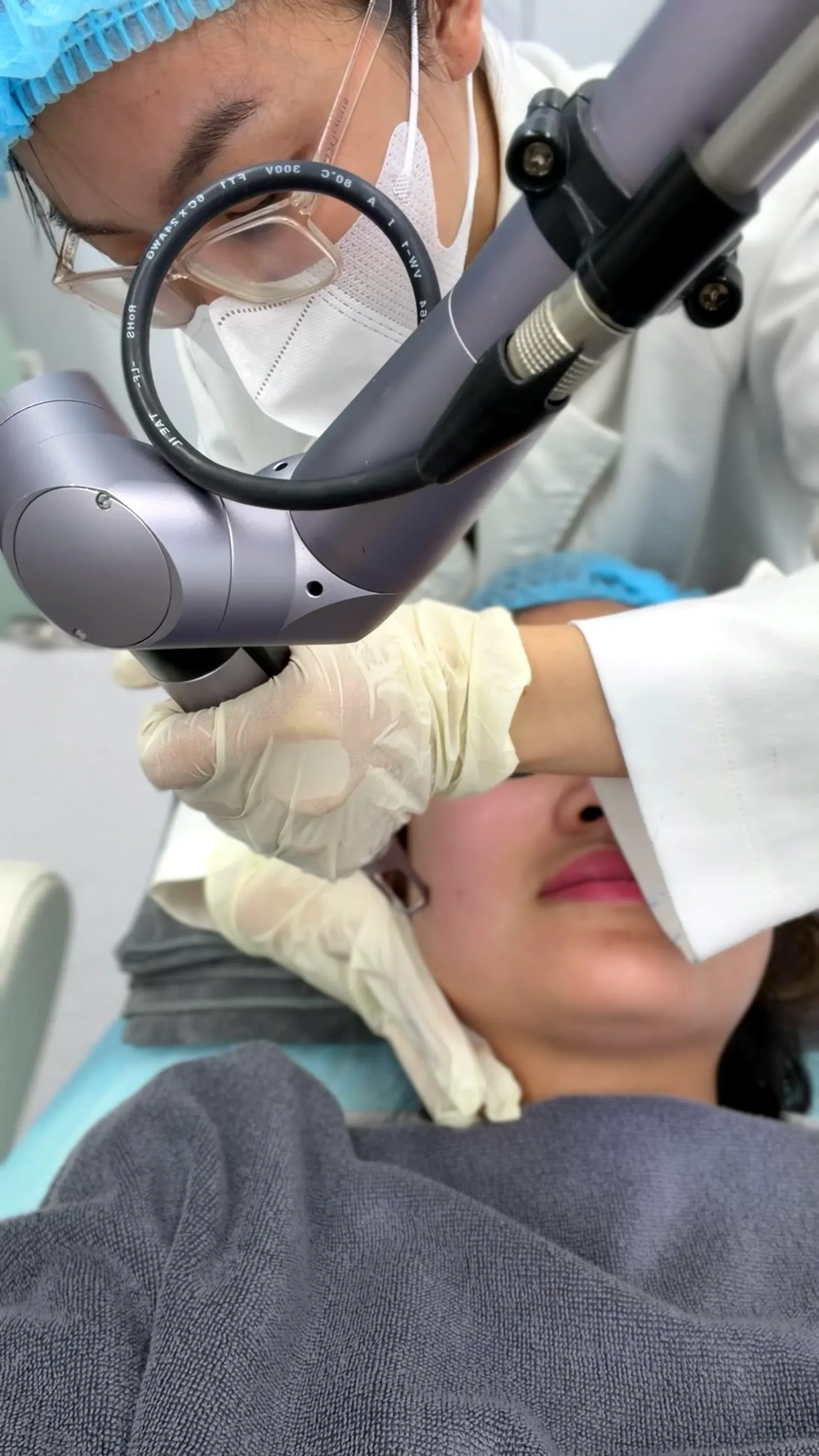
If you stop completely, melasma usually returns after the sunny season. For people who need further treatment, Pastelle laser toning — low-energy Q-switched, with settings determined by the doctor — can be repeated according to your doctor's recommendation.
When to see a doctor, and notes for pregnancy
You should see a dermatologist instead of self-treating when:
- Dark patches spread or darken quickly over a few months.
- Melasma rebounds strongly after you stop a whitening product — suspect a compounded cream containing corticosteroids.
- You are pregnant, breastfeeding or taking hormonal medication — a safe option needs to be chosen.
- You have had laser elsewhere and the melasma is darker and more widespread.
During pregnancy or breastfeeding, many melasma medications and laser treatments are postponed until after birth. This stage mainly involves strict sun protection and a few safe active ingredients as recommended by your doctor. Melasma during pregnancy may fade naturally after birth. Oral medication for melasma is used only in some cases of persistent melasma. A doctor needs to assess contraindications and monitor you, so do not buy it on your own. Learn about the full treatment plan on the page melasma treatment at BonBoz.
Book a melasma consultation at BonBoz Clinic
- Address: 66–68 Võ Văn Tần, Xuân Hòa Ward (formerly District 3), Ho Chi Minh City.
- Opening hours: Monday – Sunday, 08:00–20:00. Phone: 0869 612 310.
- Licences 11113/HCM-GPHĐ (dermatology) and 10036/HCM-GPHĐ (aesthetics), issued by the Ho Chi Minh City Department of Health; look them up at tracuu.medinet.org.vn.
- Doctor: Dr. Bùi Thị Kim Kha, Specialist Level I in Dermatology, practising certificate 009784/ĐL-CCHN, more than 8 years of practice, with a certificate in Lasers and light in dermatology.
- The initial consultation and skin analysis are free; costs are quoted after the examination, before you decide.
References
- DermNet — Melasma. <https://dermnetnz.org/topics/melasma> (accessed 11/11/2026)
- American Academy of Dermatology — Melasma: Diagnosis and treatment. <https://www.aad.org/public/diseases/a-z/melasma-treatment> (accessed 11/11/2026)
- American Academy of Dermatology — Melasma: Causes. <https://www.aad.org/public/diseases/a-z/melasma-causes> (accessed 11/11/2026)
Frequently Asked Questions
Can melasma be completely cured?
Melasma is a condition that needs long-term management. It can be clearly lightened and kept stable with sun protection and maintenance, but the pigment cells still tend to become overactive when exposed to sun or hormonal changes. For this reason, doctors set a goal of control and do not promise to clear it completely.
Does melasma after childbirth go away on its own?
Melasma that appears during pregnancy can fade naturally after birth, because the trigger, pregnancy hormones, has passed. However, many people still have persistent melasma and need treatment once breastfeeding is over. Strict sun protection helps melasma fade faster while you wait.
Do I need maintenance after melasma has been treated?
Yes. Lifelong sun protection and low-frequency maintenance topical medication as directed are essential. If you stop completely, melasma usually returns after the sunny season.
Does laser clear melasma faster than topical medication?
Not necessarily. Low-energy laser toning suits deep-rooted and mixed melasma, and changes are usually seen after 3–4 sessions; topical medication takes 8–12 weeks and suits superficial patch melasma. High-energy laser, or laser on melasma that has not been classified, can make melasma worse.
Why does melasma fade and then darken again in summer?
Because sun and heat are the strongest triggers, and the pigment cells in melasma areas still tend to become overactive. DermNet notes that even in people who get good results, pigment can reappear with summer sun exposure. Stronger protection and a follow-up visit before the sunny season help limit this.
Is melasma caused by "liver heat"?
There is no evidence that melasma is caused by "liver heat." Hormones do have a real influence (pregnancy, birth control pills, thyroid disease), but most melasma is related to sun and constitution. So liver-cooling remedies cannot replace sun protection and a dermatology treatment plan.
Content written by the BonBoz Clinic professional team.
This article is for reference only and does not replace an in-person examination or a doctor's diagnosis. Actual results vary by individual condition.