
Spotted, Patchy and Deep (Dermal) Melasma: How Do They Differ, and Why Does It Matter?
"Freckle-like melasma" is a colloquial term. Medically, melasma is classified by depth into epidermal, dermal and mixed types. Knowing the correct type helps in choosing the right treatment and avoiding darkening the melasma.
In medicine, melasma is classified by the depth of pigment: epidermal melasma (superficial), dermal melasma (in the dermis) and mixed melasma (both layers). "Nám đốm" (spotty melasma) is a colloquial term. It is often small epidermal melasma, but it can also be freckles or brown sun spots, which are quite different conditions. Correct classification matters because each type responds differently: superficial melasma responds well to topical medication and chemical peel, deeper melasma needs multiple sessions of low-energy laser toning, and choosing the wrong laser settings can make melasma darker.
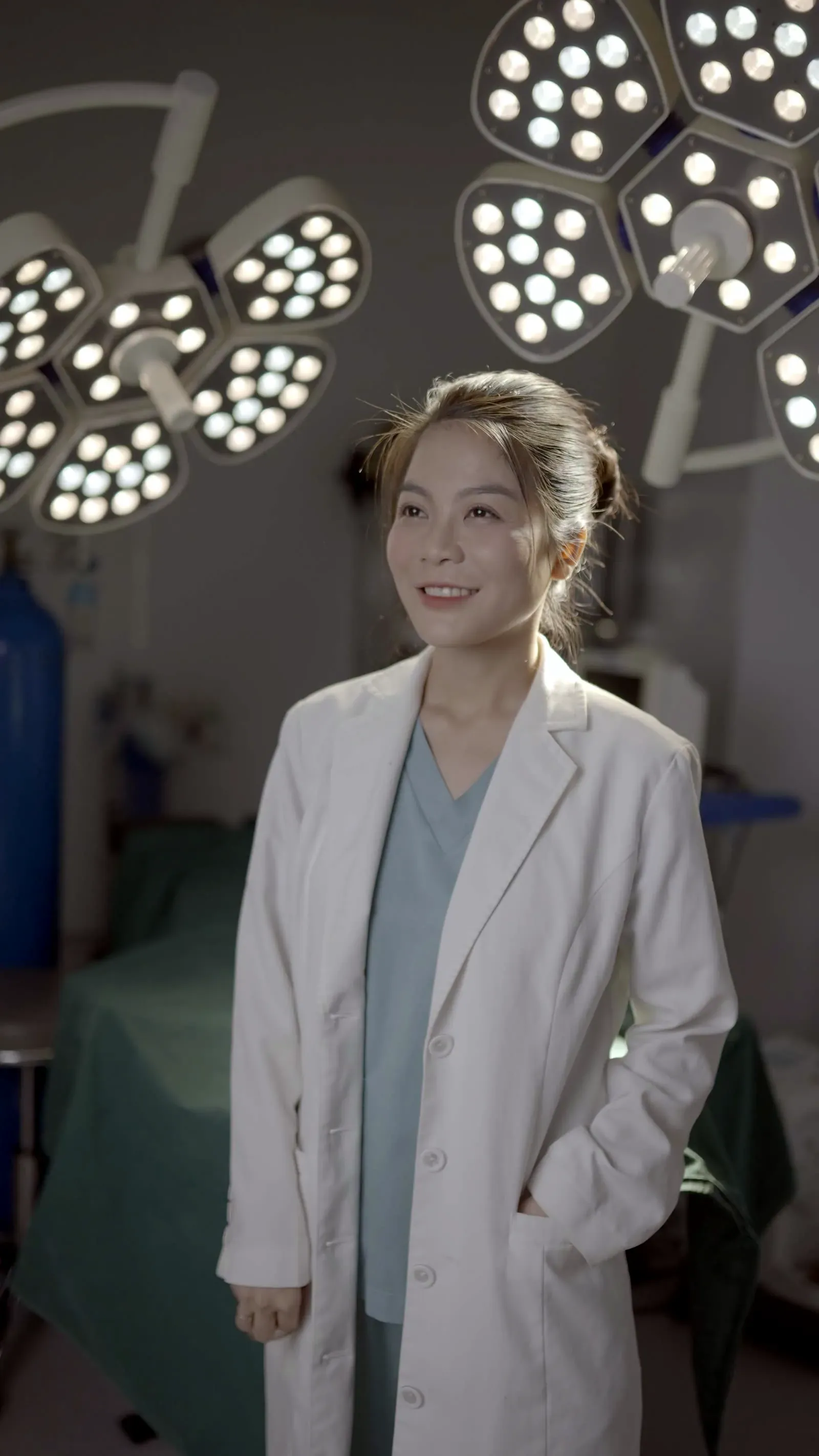
At BonBoz Clinic (licence 11113/HCM-GPHĐ, issued by the Ho Chi Minh City Department of Health), skin analysis for classification is a mandatory step before any treatment plan. Dr. Bùi Thị Kim Kha, a Specialist Level I physician in dermatology, explains below how to recognise each type and why the naked eye is easily mistaken.
What is "nám đốm" really?
When a patient says "I have spotty melasma", the doctor usually finds one of three possibilities:
- 1Early-stage epidermal melasma: small brown patches that have not yet merged, usually on both cheekbones.
- 2Freckles: small brown dots of 1–3 mm scattered over the cheeks and nose, present since childhood and darker in each sunny season.
- 3Sun-induced brown spots: round or oval patches of 5–15 mm with clear borders, appearing after age 35–40 on sun-exposed areas, and not changing with the seasons.
These three conditions can appear on the same face at the same time, and that is when non-specialists are most likely to confuse them. Melasma in general consists of darker patches with irregular borders, usually symmetrical on the cheekbones, forehead and upper lip, and related to sun, hormones and individual predisposition. Freckles and brown spots are pigment confined to the epidermis and usually respond quickly to laser; melasma calls for caution. The article melasma, freckles and brown spots: understanding the causes and telling them apart goes deeper into these three conditions.
Three types of melasma by pigment depth
1. Epidermal melasma. The pigment is concentrated in the epidermis, the most superficial layer of the skin.
- Colour: brown, dark brown.
- Borders: relatively clear.
- Under Wood's lamp: the melasma patch becomes more visible, as described by DermNet.
- Duration: usually appeared only 1–2 years ago.
- Response: good. Sun protection combined with prescription topical medication over 3–4 months usually gives clear improvement; chemical peel can help lift superficial pigment over a course of treatment.
This is the "easiest" type to treat, but also the one patients tend to be complacent about: they buy whitening creams themselves, stop when the patches fade, and the melasma returns in the next sunny season.
2. Dermal melasma. The pigment lies deeper, in the dermis.
- Colour: blue-grey, light brown with a grey tint.
- Borders: blurred, hard to define.
- Under Wood's lamp: not more visible.
- Duration: usually many years.
- Response: slow. Topical medication works poorly because the active ingredients struggle to reach the pigment layer; it usually needs multiple low-energy laser toning sessions, and expectations should be set at slow improvement.
DermNet places dermal melasma in the group that "often responds poorly". That is not a reason to give up, but a reason not to believe promises of "melasma gone after a few sessions", which have no basis.
3. Mixed melasma, the most common type. Mixed melasma has pigment in both layers, so on the same patch you may see dark brown areas mixed with blue-grey areas. According to BonBoz's melasma page, this is the most common form among Vietnamese people; DermNet also describes mixed melasma as the most common type, and treatment usually brings only partial improvement.
The treatment plan for mixed melasma usually combines topical medication (for the superficial part), low-energy Q-switched laser toning with Pastelle (multiple sessions, settings set by the doctor) for the deep part, and strict sun protection. The course usually lasts 6 months or more.
There is also one form that is not part of the depth-based classification but is quite common: melasma on skin damaged by mixed (compounded) creams. The skin is thin, with dilated vessels and redness; the skin must be restored first, melasma treated afterwards, and laser must be used with great caution.
Comparison table of melasma types
| Feature | Epidermal melasma | Dermal melasma | Mixed melasma |
|---|---|---|---|
| Common colour | Brown, dark brown | Blue-grey, light brown | Brown mixed with blue-grey |
| Borders | Clear | Blurred | Both clear and blurred |
| Under Wood's lamp | More visible | Not more visible | Mixed appearance |
| Response to topical medication | Good | Poor | Partial |
| Main approach | Sun protection + topical medication, chemical peel possible | Multiple sessions of low-energy laser toning | Topical medication + laser toning + sun protection |
| Reference timeline | Topical medication 3–4 months | Slow, multiple sessions | 6 months or more |
The table helps you picture the differences and is not for self-diagnosis. The colour of melasma also depends on the underlying skin and the light when you look; the same patch can look brown under yellow light and grey in daylight.
How does the doctor classify melasma?
The naked eye only shows colour and borders, while what determines the treatment plan is depth. The AAD says a dermatologist can use a Wood's lamp or a dermatoscope to see how deep the pigment goes; this information is "extremely helpful" when treating melasma. When a lesion looks like melasma but has unusual features, the doctor may need a biopsy to rule out other diseases.
A melasma consultation usually includes:
- Skin analysis under light and magnification to determine depth and distribution.
- Hormonal history: pregnancy, contraceptive pills, thyroid disease.
- Products used so far, especially whitening creams of unclear origin.
- Standardised photos as a baseline for comparison at follow-up visits.
DermNet also lists conditions easily mistaken for melasma: post-inflammatory hyperpigmentation (PIH), sun-induced brown spots, freckles, drug-induced hyperpigmentation, and some dermal pigment birthmarks such as nevus of Ota and Hori's nevus. These conditions need very different treatment, so "guessing from photos online" is the easiest way to go wrong.
Why is wrong classification dangerous?
Wrong classification does not just slow treatment; it can make the condition worse:
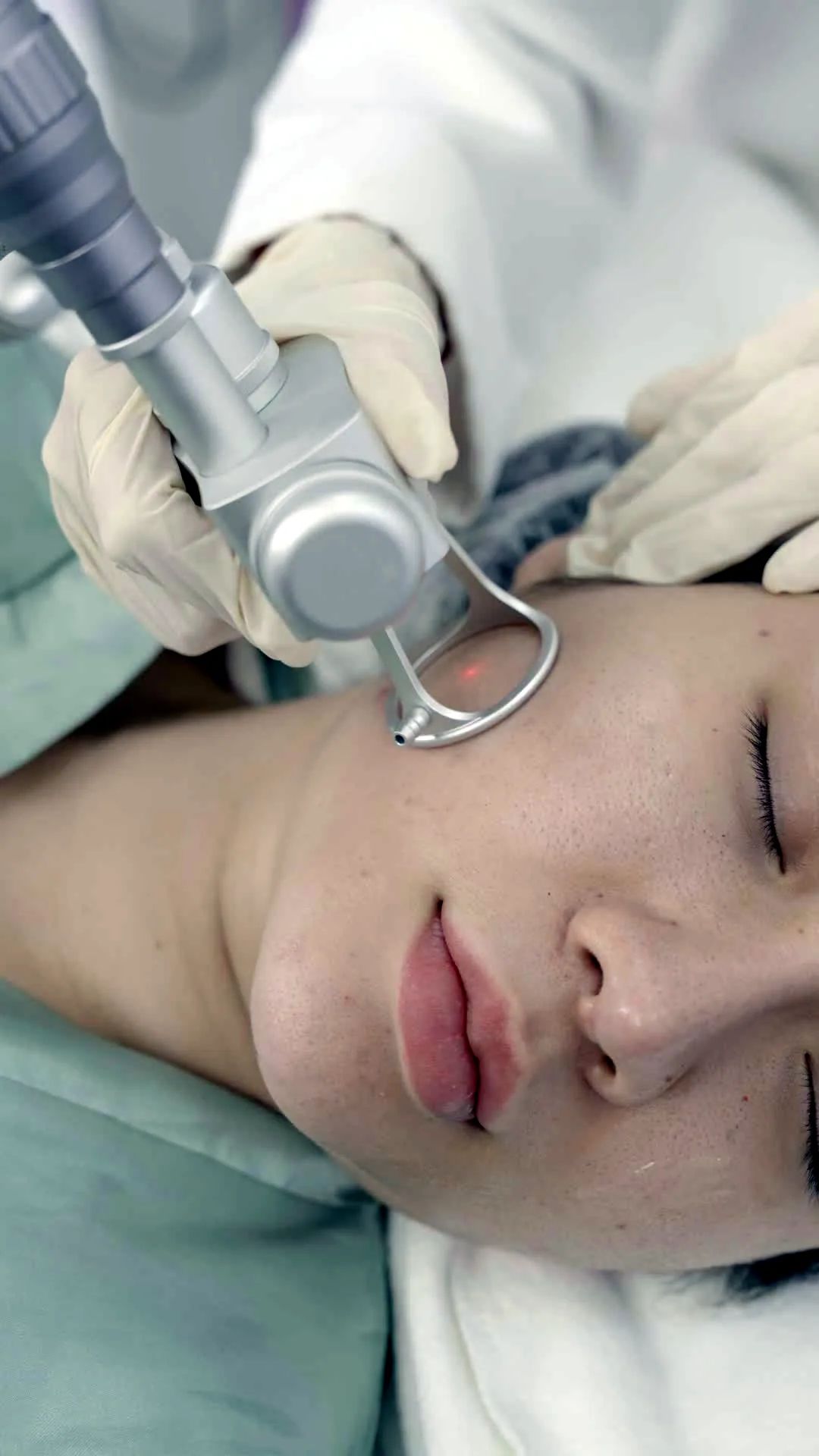
- Using "brown spot" settings on melasma: freckles and brown spots need enough energy to break up localised pigment; melasma needs low energy and multiple sessions. Mixing up the two settings can make melasma flare strongly and spread, a common mistake at places where no doctor examines you first.
- Persisting with topical medication for dermal melasma: after months with no change, patients become discouraged and switch to mixed creams.
- Chemical peel for deep melasma: peel helps superficial epidermal melasma, but is not effective for dermal melasma and can cause dark marks if done wrongly.
- Missing a lesion that needs to be ruled out: spots that change colour, have ragged borders or grow quickly need careful examination before any aesthetic procedure.
For this reason, in BonBoz's treatment plan, laser is considered only after classification, and always comes with sun protection and suitable topical medication. Details of the methods are on the page melasma treatment at BonBoz.
When should you see a doctor instead of self-treating?
- Dark patches spread or darken quickly over a few months.
- Melasma flares strongly after you stop a whitening product, which raises suspicion of a mixed cream containing corticosteroid.
- You are pregnant, breastfeeding or taking hormonal medication; a safe option must be chosen, and many melasma medications and lasers are postponed until after childbirth.
- You had laser elsewhere and the melasma became darker and more widespread.
- You are not sure whether you have melasma, freckles or brown spots, because laser settings differ for each type.
While waiting for your appointment, the thing to do right away is to protect your skin from the sun properly and stop products that cause stinging. A suggested routine is in the article skincare steps for melasma-prone skin, morning and evening. If you want to know how long each type of melasma takes to fade, see the article how long does melasma treatment take.
Book a melasma consultation at BonBoz Clinic
- Address: 66–68 Võ Văn Tần, Xuân Hòa Ward (formerly District 3), Ho Chi Minh City.
- Opening hours: Monday – Sunday, 08:00–20:00. Phone: 0869 612 310.
- Licences 11113/HCM-GPHĐ (dermatology) and 10036/HCM-GPHĐ (aesthetics), issued by the Ho Chi Minh City Department of Health; look them up at tracuu.medinet.org.vn.
- Doctor: Dr. Bùi Thị Kim Kha, Specialist Level I physician in dermatology, practising certificate 009784/ĐL-CCHN, more than 8 years of practice, holds a certificate in lasers and light in dermatology.
- Initial consultation and skin analysis are free; treatment costs are quoted after the consultation, before you decide.
References
- DermNet — Melasma. <https://dermnetnz.org/topics/melasma> (accessed 11/11/2026)
- American Academy of Dermatology — Melasma: Diagnosis and treatment. <https://www.aad.org/public/diseases/a-z/melasma-treatment> (accessed 11/11/2026)
- American Academy of Dermatology — Melasma: Causes. <https://www.aad.org/public/diseases/a-z/melasma-causes> (accessed 11/11/2026)
Frequently Asked Questions
How can I tell whether I have superficial or deep melasma?
The first clues are colour and borders: superficial melasma is usually brown with clear borders; deep melasma is usually blue-grey with blurred borders. But to be sure, a doctor needs to examine your skin with a Wood's lamp or dermatoscope, because light and underlying skin change how melasma looks. Many people have mixed melasma, with both layers involved.
Is "nám đốm" the same as freckles?
Not exactly. "Nám đốm" is a colloquial term that can mean small epidermal melasma, freckles or sun-induced brown spots. Freckles are small dots present since childhood and darker by season; melasma is a larger, symmetrical patch related to hormones. The two conditions need different laser settings.
Can dermal melasma be treated?
It can improve, but more slowly than other types. Dermal melasma responds poorly to topical medication, so it usually needs multiple sessions of low-energy laser toning, together with strict sun protection. A reasonable expectation is gradual fading over many months, with ongoing maintenance.
Does epidermal melasma go away on its own?
Melasma linked to a clear trigger, such as pregnancy or a certain medication, may fade once the trigger is gone. Most epidermal melasma caused by sun and individual predisposition needs sun protection and prescription topical medication; it usually improves clearly after 3–4 months if you follow the plan.
How long does mixed melasma take to treat?
Mixed melasma usually needs a combination of topical medication, laser toning and sun protection, with a course of 6 months or more. The exact time depends on the proportion of superficial and deep pigment, the underlying skin and how well you protect yourself from the sun every day. The doctor assesses progress through standardised photos at each follow-up visit.
Can I classify melasma myself from photos online?
You should not. Melasma is easily mistaken for post-inflammatory hyperpigmentation (PIH), brown spots, freckles, drug-induced hyperpigmentation, or nevus of Ota and Hori's nevus. Each condition is handled differently, and choosing wrongly can make the pigment darker.
Content prepared by the BonBoz Clinic professional team.
This article is for reference only and does not replace an in-person examination or a doctor's diagnosis. Actual results vary by individual condition.