
Melasma during pregnancy and after childbirth: how to manage it safely?
Pregnancy melasma often fades after childbirth. During pregnancy and breastfeeding, sun protection is the main step; many melasma medications and laser treatments are best postponed until later. Here is guidance for each stage.

Melasma during pregnancy is common. Pregnancy hormones make pigment cells more active, and in many cases the melasma fades on its own after delivery. During pregnancy and breastfeeding, the safest and most useful step is strict sun protection. Many melasma medications and lasers are best left until after delivery, and only a few safe active ingredients should be used when your doctor recommends them. If melasma persists after delivery, that is the time to build a proper treatment plan.
This article is written the way the BonBoz Clinic team (operating licence 11113/HCM-GPHĐ in dermatology, issued by the Ho Chi Minh City Department of Health) advises women who are pregnant or postpartum. Specialist Level I physician Bùi Thị Kim Kha, who specialises in dermatology, usually starts a consultation by asking whether you are pregnant, breastfeeding, or have stopped breastfeeding. The answer shapes almost every choice that follows.
Why are pregnant women prone to melasma?
Melasma forms when pigment cells are stimulated to produce more melanin than usual. Three groups of factors drive it: sunlight (including UV rays, visible light and heat), hormones, and genetic predisposition. During pregnancy, estrogen and progesterone levels rise sharply. According to the American Academy of Dermatology (AAD), this hormone increase is thought to trigger melasma in some people. For this reason melasma was once called the "mask of pregnancy".
DermNet, a dermatology resource written by New Zealand doctors, describes pregnancy-related melasma as typically appearing in the second half of pregnancy. It shows up as symmetrical patches of pigment on the forehead, temples or centre of the face, and is more common in people with darker skin. Vietnamese people belong to a group whose skin is prone to melasma, so many pregnant women notice their cheeks, forehead and upper lip darkening in the second half of pregnancy.
One point should be understood clearly: melasma is not a sign of a "hot liver" or "weak hormones". Hormones do have a real influence, but there is no evidence that melasma is caused by the liver. The AAD also states that melasma is not harmful to the body. It is a cosmetic concern, not a condition that needs urgent treatment during pregnancy.
Does pregnancy melasma fade on its own after delivery?
It can. The AAD notes that when melasma is caused by a trigger such as pregnancy, it may fade gradually after the baby is born. However, the AAD also points out that melasma can last for years in some people. How fast it fades depends on how well you protect your skin from the sun, whether the melasma is superficial or deep, and whether there are new triggers, for example hormonal contraceptives after delivery.
The table below summarises what to do at each stage:
| Stage | What to do | What to leave until later or ask your doctor first |
|---|---|---|
| During pregnancy | Daily broad-spectrum sun protection, a wide-brimmed hat, a mask; gentle, fragrance-free cleanser and moisturiser; cover with makeup if you wish | Prescription melasma medications, oral melasma medications, laser, chemical peel, whitening creams with unclear ingredients |
| Postpartum, breastfeeding | Keep up sun protection; see a doctor if melasma does not fade or gets darker; your doctor considers active ingredients suitable for the breastfeeding period | Buying melasma creams or medications on your own; procedures before a doctor has assessed you |
| After stopping breastfeeding | Examination and skin analysis to classify the melasma; a prescription topical plan, with a chemical peel or laser toning considered when appropriate | High-energy laser, or treatment at a place where no doctor examines you first |
| Preparing to use hormonal contraceptives | Tell your dermatologist that you have melasma | Changing your medication on your own without talking to your obstetrician |
During pregnancy: what is safe to do about melasma?
The most important step is sun protection, because light is the strongest melasma trigger that you can control.
- Broad-spectrum sunscreen, SPF 50, preferably a tinted one containing iron oxide to also block visible light. The AAD recommends tinted sunscreen containing iron oxide because visible light makes melasma darker, especially in people with darker skin. The AAD also lists zinc oxide, titanium dioxide and iron oxide as ingredients dermatologists commonly recommend for people with melasma.
- Apply enough and reapply every 2 hours outdoors, and after sweating. Detailed instructions are in the article applying sunscreen correctly and how often to reapply.
- Physical protection: a wide-brimmed hat, a mask, avoiding the midday sun, and avoiding sitting near a hot stove for long periods if possible.
- Minimal skincare: a gentle cleanser and a fragrance-free moisturiser. The AAD notes that products that cause burning or stinging are irritating the skin and may make dark patches darker.
- Cover with makeup if melasma makes you self-conscious in social situations. The order is moisturiser, sunscreen, then concealer.
If you would like to add a brightening product, ask your doctor first. Some active ingredients may be prescribed during pregnancy, but choosing which one requires a specific assessment by your doctor. Do not rely on advertising claims such as "safe for pregnant mothers".
What to avoid during pregnancy and breastfeeding
- Mixed creams and whitening creams of unknown origin. These creams may contain corticosteroids, which thin the skin, dilate blood vessels and cause melasma to rebound strongly when you stop. How to recognise them is covered in the article mixed creams and quick skin-whitening cosmetics.
- Buying prescription melasma medications on your own. DermNet notes that the safety of a common topical lightening ingredient has not been established in pregnancy and breastfeeding. Oral melasma medications also need a doctor to assess contraindications, so do not buy them yourself.
- Laser and chemical peel during pregnancy. Many melasma medications and lasers are left until after delivery. One practical reason: pregnancy melasma may fade on its own after delivery, and the topical medications that support recovery after a procedure have limited options at this time.
- Frequent steam baths and hot face masks. Heat is also a melasma trigger.
Postpartum: when should melasma treatment begin?
There is no single timeline for everyone. Your doctor usually relies on three things: whether you are still breastfeeding, whether the melasma is fading, and what type of melasma it is.
During breastfeeding, treatment options are still limited, so sun protection remains the foundation. If melasma has not faded after a few months, or gets darker, you should see a doctor to be advised on active ingredients suitable for this stage. Once you have stopped breastfeeding, your doctor can expand the plan: prescription brightening topicals, chemical peel for superficial patch-type melasma, or low-energy Pastelle laser toning for deep and mixed melasma.
Expectations about timing should also be clear: topical medications need 8–12 weeks before they can be assessed; with laser toning, melasma usually looks lighter after 3–4 sessions; mixed melasma needs a course of 6 months or more. One point that is often overlooked: many mothers start hormonal contraceptives after delivery, and according to the AAD these can also trigger melasma. Tell your dermatologist which contraceptive method you are using. If you would like to understand your type of melasma better, read the article how to tell freckle-type, patch-type and deep melasma apart.
When should you see a dermatologist?
Most pregnancy melasma needs only sun protection and time. But you should see a doctor early if:
- The dark patches spread or darken quickly over a few months.
- Melasma rebounds strongly after you stop a whitening product, and you suspect a mixed cream containing corticosteroids.
- You are pregnant, breastfeeding or taking hormonal medication and want to use any additional melasma product.
- You have had laser elsewhere and the melasma became darker and more widespread.
- A pigmented spot changes colour, has an irregular border, grows quickly, itches or bleeds. DermNet notes that moles can change during pregnancy, but warning signs still need to be checked.
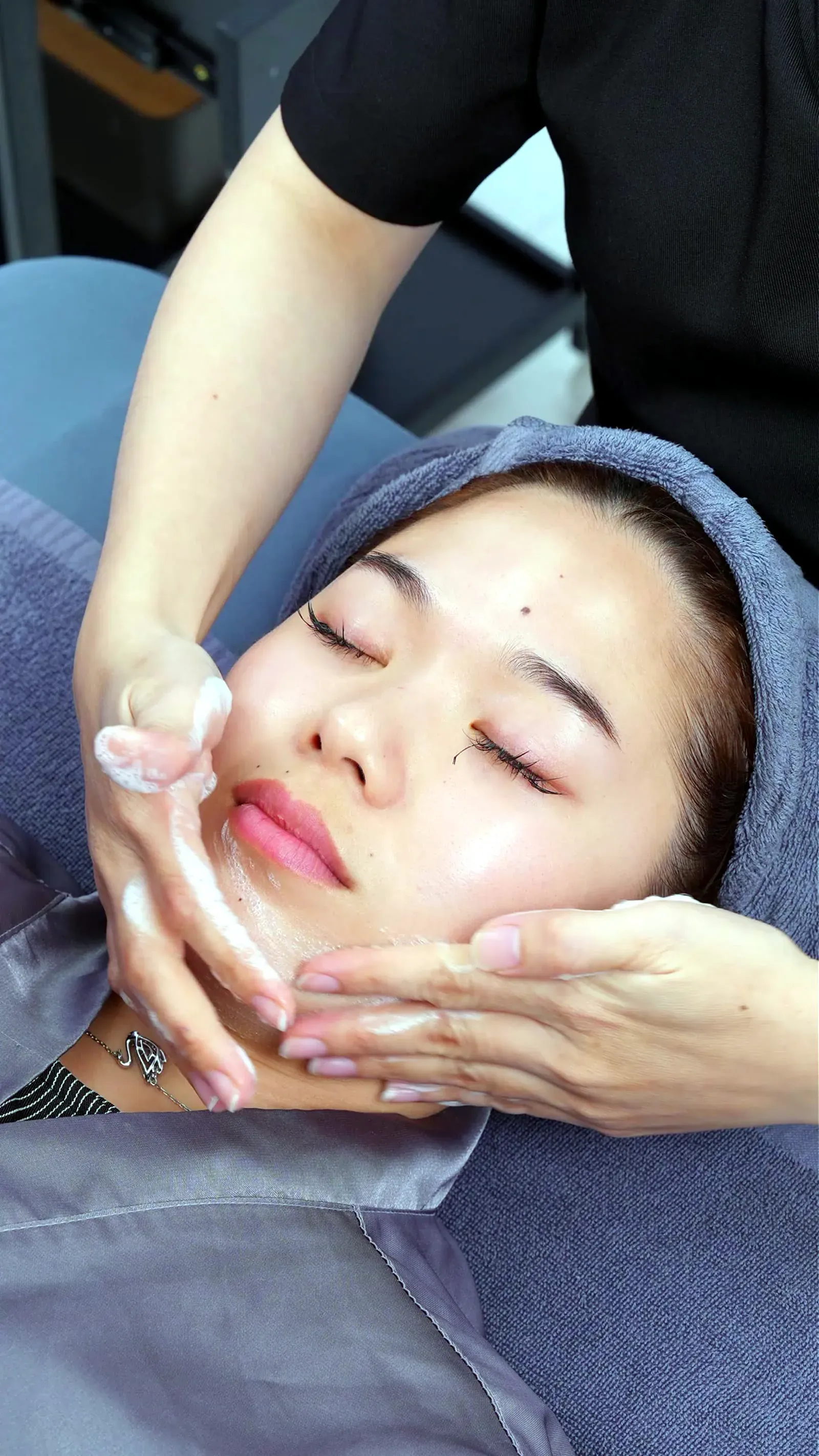
At BonBoz, the first visit includes skin analysis to classify the melasma, questions about your stage of pregnancy or breastfeeding and the products you have used, and then your doctor explains what to do now and what to leave until later. The full plan is presented on the page melasma treatment at BonBoz.
Book a melasma consultation at BonBoz Clinic
- Address: 66–68 Võ Văn Tần, Xuân Hòa Ward (formerly District 3), Ho Chi Minh City.
- Opening hours: Monday – Sunday, 08:00–20:00. Phone: 0869 612 310.
- Licences: 11113/HCM-GPHĐ (Dermatology) and 10036/HCM-GPHĐ (Aesthetics), issued by the Ho Chi Minh City Department of Health; look them up at tracuu.medinet.org.vn.
- Doctor: Specialist Level I physician Bùi Thị Kim Kha, specialising in dermatology, practising certificate 009784/ĐL-CCHN, holds a certificate in lasers and light in dermatology.
- The initial consultation and skin analysis are free; the cost of melasma treatment is given by your doctor after the consultation, before you decide.
References
- DermNet — Skin changes in pregnancy: <https://dermnetnz.org/topics/skin-changes-in-pregnancy> (accessed 11/11/2026)
- American Academy of Dermatology — Melasma: Causes: <https://www.aad.org/public/diseases/a-z/melasma-causes> (accessed 11/11/2026)
- American Academy of Dermatology — Melasma: Self-care: <https://www.aad.org/public/diseases/a-z/melasma-self-care> (accessed 11/11/2026)
- DermNet — Hydroquinone: <https://dermnetnz.org/topics/hydroquinone> (accessed 11/11/2026)
- DermNet — Melasma: <https://dermnetnz.org/topics/melasma> (accessed 11/11/2026)
- American Academy of Dermatology — Melasma: Diagnosis and treatment: <https://www.aad.org/public/diseases/a-z/melasma-treatment> (accessed 11/11/2026)
Frequently Asked Questions
Does melasma during pregnancy affect the baby?
No. Melasma is a pigment change in the mother's skin and, according to the AAD, it is not harmful to the body; it does not affect the foetus. What you do need to watch is the melasma products you use during pregnancy, because many melasma medications are best left until after delivery.
Can pregnant women use sunscreen?
Yes, and you should use it every day. Choose a broad-spectrum SPF 50, preferably a tinted one containing iron oxide to also block visible light; zinc oxide and titanium dioxide are commonly recommended for skin with melasma. Combine it with a wide-brimmed hat and a mask when you go out.
How long after delivery does pregnancy melasma fade?
There is no fixed timeline. Pregnancy-related melasma may fade gradually after delivery, but in some people it lasts for years, especially when sun protection is not thorough. If melasma has not faded or has darkened after a few months, you should see a doctor.
Can I apply melasma medication while breastfeeding?
Some active ingredients may be considered by your doctor during breastfeeding, but many melasma medications and lasers are still best left until later. Do not buy melasma creams or medications on anyone's advice. Let a dermatologist assess your type of melasma and your stage.
Is postpartum melasma different from ordinary melasma?
In appearance, postpartum melasma is also patch-type, deep or mixed melasma, just like ordinary melasma. The difference is that the pregnancy hormone factor has passed, so part of the melasma may fade on its own. The rest is treated according to the type of melasma, like other cases.
Will melasma come back in my next pregnancy?
It may. In people who have had melasma, pigment cells still tend to become more active with sun exposure and hormonal changes, so the skin may darken again in the next pregnancy. Consistent sun protection from early on helps limit how severe the melasma becomes.
This content was written by the BonBoz Clinic professional team.
This article is for reference only and does not replace an in-person examination or a doctor's diagnosis. Actual results vary by individual condition.