
Which types of melasma suit a chemical peel? Pros, cons and key points to note
Chemical peels can help with superficial patchy melasma when combined with topical medication and sun protection, but they are not suitable for deep-rooted melasma and can cause hyperpigmentation if done incorrectly. This article helps you understand who a chemical peel is right for.

Chemical peels suit superficial patchy melasma, the brown type with well-defined borders where the pigment sits in the epidermis, when used together with prescription topical medication and strict sun protection. For deep (dermal) melasma, chemical peels bring almost no benefit and can even cause hyperpigmentation if done incorrectly. In other words, a chemical peel is a supporting tool in a melasma treatment plan, not a standalone method for every type of melasma.
At BonBoz Clinic (operating licence 11113/HCM-GPHĐ for dermatology, issued by the Ho Chi Minh City Department of Health), Specialist Level I physician Dr. Bùi Thị Kim Kha considers a chemical peel only after skin analysis to identify the type of melasma and assess the skin's condition. The same chemical peel can help one person and worsen hyperpigmentation in another.
How does a chemical peel work on melasma?
A chemical peel applies one or more chemicals to the skin to shed the surface layers of cells, so that new skin comes in with a more even colour. DermNet divides chemical peels into three levels by depth of injury: superficial, medium and deep. Superficial chemical peels commonly use glycolic acid (an AHA), salicylic acid (a BHA) and Jessner's solution. They are well tolerated and help remove pigment at the skin surface.
For melasma, the useful mechanism is to "push" the superficial pigment out faster, while helping lightening topical medication work better. DermNet notes that superficial pigment in the epidermis can be treated with a chemical peel using an AHA such as glycolic acid or a BHA such as salicylic acid. Pigment that already sits deep in the dermis cannot be reached by a superficial chemical peel.
The AAD lists chemical peels among the procedures that can be added when melasma persists despite following a treatment plan, alongside sun protection and topical medication. In other words, chemical peels come after these two foundations, not before them.
Which type of melasma suits a chemical peel?
This is the core question, and the answer depends on which layer the pigment sits in. The table below summarises it:
| Type of melasma | Characteristics | Is a chemical peel suitable? |
|---|---|---|
| Superficial patchy melasma (epidermal) | Brown, well-defined borders, appeared 1–2 years ago | Most suitable; chemical peel combined with topical medication and sun protection |
| Deep melasma (dermal) | Blue-grey, blurred borders, long-standing | Less effective; usually needs several sessions of low-energy laser toning |
| Mixed melasma | Both layers involved, the most common type in Vietnamese people | A chemical peel can help with the superficial part; treatment plan of 6 months or more |
| Melasma on skin damaged by compounded creams | Thin skin, dilated blood vessels | Not yet suitable; the skin must be restored first |
You cannot accurately tell which layer your melasma is in with the naked eye. The doctor uses a lamp to assess it: patchy melasma usually shows up more clearly under a Wood's lamp, while deep melasma does not. The article how to tell freckle-like, patchy and deep melasma apart explains the classification in more detail.
Pros and cons of chemical peels for melasma
| Pros | Cons |
|---|---|
| Helps lighten superficial patchy melasma when used with topical medication | Almost no effect on deep melasma |
| Superficial chemical peels are well tolerated; mild redness usually fades within about 48 hours | The first chemical peel may not show clear results; several sessions are needed in a course |
| Superficial chemical peels can be repeated a few weeks apart | Darker skin has a higher risk of pigmentation disorders and must be treated with caution |
| Helps make skin tone more even and smoother | Done incorrectly, it can cause hyperpigmentation and darken melasma |
DermNet notes that the results of the first superficial chemical peel can be disappointing, but after repeated sessions they usually improve clearly. This matches the general view of melasma treatment: improvement comes step by step, with no result "after a single session".
One point for Vietnamese patients to know: DermNet notes that chemical peels are more commonly used in lighter skin. With medium to dark skin tones, the risk of pigmentation disorders and scarring is higher, so chemical peels must be done with caution, and gentler peels are preferred because of the risk of post-inflammatory hyperpigmentation (PIH). DermNet also stresses that for melasma, both chemical peels and lasers can be used but with caution, because they may worsen melasma or cause post-inflammatory hyperpigmentation.
Chemical peel procedure for melasma: preparation, during the session and after the peel
According to DermNet, a chemical peel course has four stages: preparation before the peel, the peel itself, recovery and maintenance.
- Preparation: the doctor assesses your skin tone, chemical peel history and tendency toward pigmentation after skin injury. There is usually a period of preparatory topical medication for a few weeks before the peel, along with broad-spectrum sun protection during the day. For people with melasma, DermNet recommends using a pigment-inhibiting agent beforehand.
- During the session: the oil on the skin is cleaned off, then the peel solution is applied for a few minutes. Stinging and burning sensations depend on the chemical and its concentration, and ease once the peel is neutralised.
- After a superficial chemical peel: mild redness, sometimes mild swelling, usually fades within about 48 hours; the skin flakes like after sunburn; most people go about their normal activities.
Aftercare following a chemical peel, according to DermNet and your doctor's instructions:
- Keep the skin cool and do not pick at peeling skin. Picking slows healing and can leave scars.
- Moisturise lightly after a superficial chemical peel; creams that are too heavy can clog pores and cause breakouts.
- Use strict sun protection, especially in the first 6 months.
- Continue maintenance topical medication in the evening if prescribed.
To plan your morning and evening skincare steps during this time, see the articles skincare steps for melasma-prone skin and how to apply sunscreen correctly.
Risks and cases where you should not have a chemical peel
DermNet lists the complications that can occur: breakouts, infection (bacterial, fungal, herpes virus), scarring from infection or picking at scabs, and patchy pigmentation disorders, which are more common in darker skin or in people who already had pigment problems before the peel. According to DermNet, complications are uncommon when the practitioner is well trained and experienced.
Postpone or avoid a chemical peel when:
- Deep melasma is the main problem, because a chemical peel does not reach pigment in the dermis.
- The skin is thin with dilated blood vessels from compounded creams containing corticosteroids, and needs to be restored first. See the article why quick-whitening compounded creams are dangerous.
- The skin is sunburned, inflamed, has open wounds, or has a cold sore flare-up.
- You are pregnant or breastfeeding: many melasma medications and procedures are left until after childbirth; during this time, strict sun protection and safe active ingredients as recommended by your doctor are the main approach.
You should also see a doctor rather than treat it yourself when a dark patch spreads or darkens quickly over a few months, when melasma returns strongly after you stop a whitening product, or when you have had a chemical peel or laser elsewhere and the melasma became darker.
In particular, do not do a chemical peel yourself at home with high-concentration acid solutions bought online. The AAD recommends that procedures such as chemical peels for melasma be performed by a dermatologist, because in-depth knowledge of the skin is needed to choose the right procedure and carry it out safely.
Chemical peel, topical medication or laser toning: how to choose?
The three methods are not mutually exclusive and are often combined:
- Prescription lightening topical medication: the foundation for most types of melasma; it usually takes 8–12 weeks to see the melasma lighten. For superficial patchy melasma, sun protection plus topical medication over 3–4 months usually brings clear improvement.
- Chemical peel: helps push out superficial pigment in patchy melasma, used in a course combined with topical medication. Details on how well topical medication works are in the article do at-home melasma creams work.
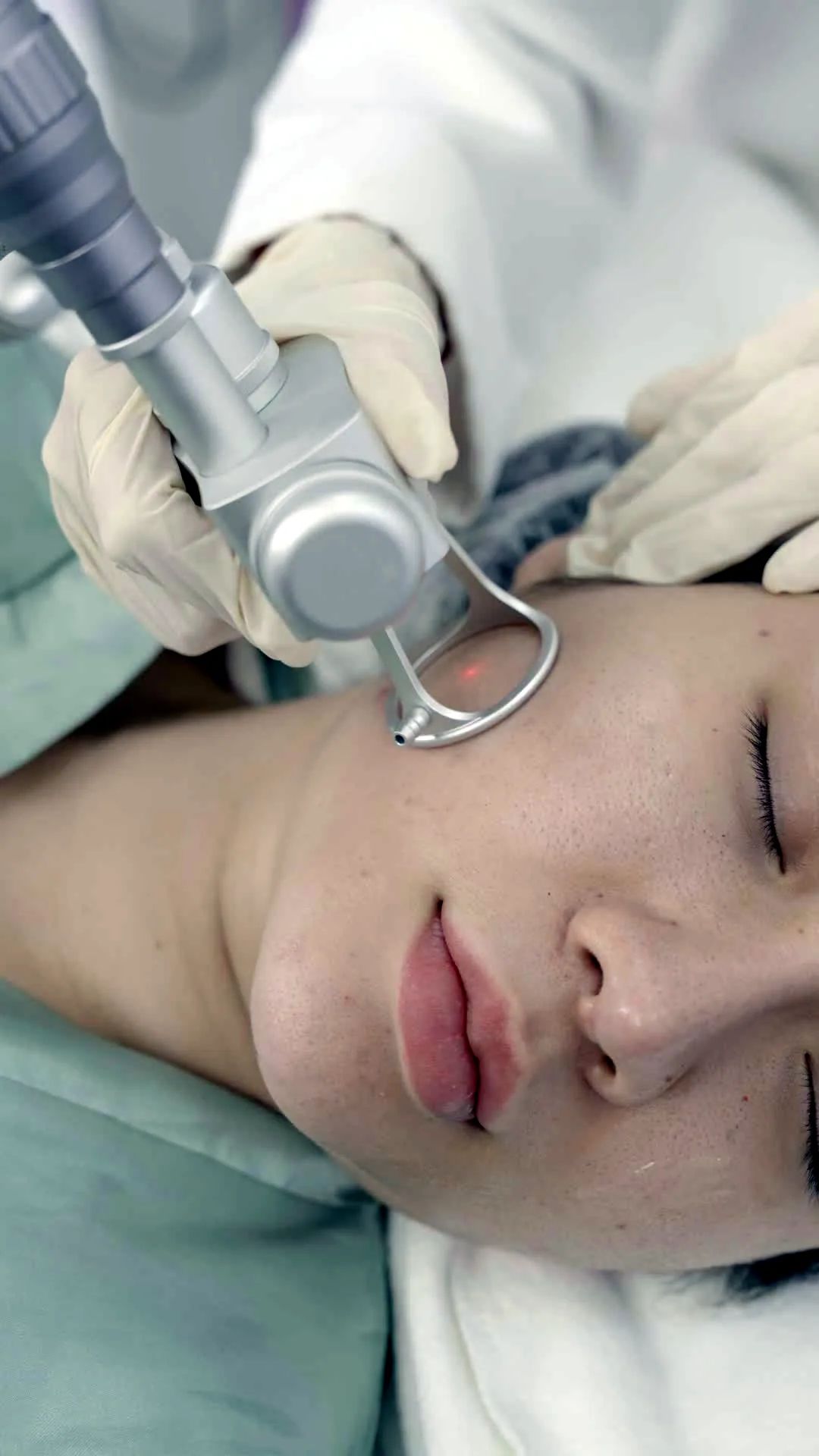
- Laser toning: for deep and mixed melasma; at BonBoz this is the low-energy Q-switched Pastelle laser, over several sessions, with changes usually seen after 3–4 sessions. See the page Pastelle laser toning.
The doctor chooses and combines them based on your type of melasma, skin tone, treatment history and needs. An overview of the classification and the methods is on the page melasma treatment at BonBoz.
Book a melasma consultation at BonBoz Clinic
- Address: 66–68 Võ Văn Tần, Xuân Hòa Ward (formerly District 3), Ho Chi Minh City.
- Opening hours: Monday – Sunday, 08:00–20:00. Phone: 0869 612 310.
- Operating licences: 11113/HCM-GPHĐ (Dermatology) and 10036/HCM-GPHĐ (Aesthetics), issued by the Ho Chi Minh City Department of Health; look them up at tracuu.medinet.org.vn.
- Doctor: Dr. Bùi Thị Kim Kha, Specialist Level I physician in Dermatology, practising certificate 009784/ĐL-CCHN, more than 8 years of practice.
The initial consultation and skin analysis are free. The cost of a chemical peel and the melasma treatment plan is given by the doctor after the consultation, before you decide.
References
- DermNet. Chemical peels. <https://dermnetnz.org/topics/chemical-peels> (accessed 11/11/2026)
- DermNet. Melasma. <https://dermnetnz.org/topics/melasma> (accessed 11/11/2026)
- American Academy of Dermatology. Melasma: Diagnosis and treatment. <https://www.aad.org/public/diseases/a-z/melasma-treatment> (accessed 11/11/2026)
Frequently Asked Questions
Can a chemical peel treat melasma?
A chemical peel helps superficial patchy melasma when combined with topical medication and sun protection. For deep melasma, a chemical peel is not effective and can cause hyperpigmentation if done incorrectly, so a doctor needs to classify it first with skin analysis.
How often can I have a chemical peel for melasma?
Superficial chemical peels can be repeated a few weeks apart, following the course set by your doctor. The number of sessions and the interval depend on the type of melasma, your skin tone and how your skin reacts after each chemical peel.
How long does redness last after a chemical peel?
With a superficial chemical peel, mild redness and mild swelling usually fade within about 48 hours, and the skin flakes like after sunburn. Most people can still go about their normal activities, but you need to protect your skin carefully from the sun and not pick at peeling skin.
Can people with darker skin have a chemical peel for melasma?
Yes, but with more caution. Medium to dark skin tones have a higher risk of hyperpigmentation and pigmentation disorders, so the doctor usually chooses a gentler chemical peel, includes a skin preparation stage and monitors closely.
Should I do a chemical peel at home to treat melasma?
You should not do a chemical peel yourself with high-concentration acid. Doing it incorrectly can cause burns, hyperpigmentation and scarring, and darken melasma. A chemical peel for melasma should be recommended and performed by a dermatologist after skin analysis.
Can I have a chemical peel for melasma while pregnant?
You need to tell your doctor if you are pregnant or breastfeeding. Many melasma medications and procedures are usually left until after childbirth; during this time, strict sun protection and safe active ingredients as recommended by your doctor are the main approach.
Content prepared by the BonBoz Clinic medical team.
This article is for reference only and does not replace an in-person examination or a doctor's diagnosis. Actual results vary by individual condition.