
Can freckles be removed? How many laser sessions are needed, and how can you maintain the results?
Laser lightens freckles clearly after 1–3 sessions, but freckles still darken when exposed to the sun. Types of spots, number of sessions, recovery and how to keep results are explained.
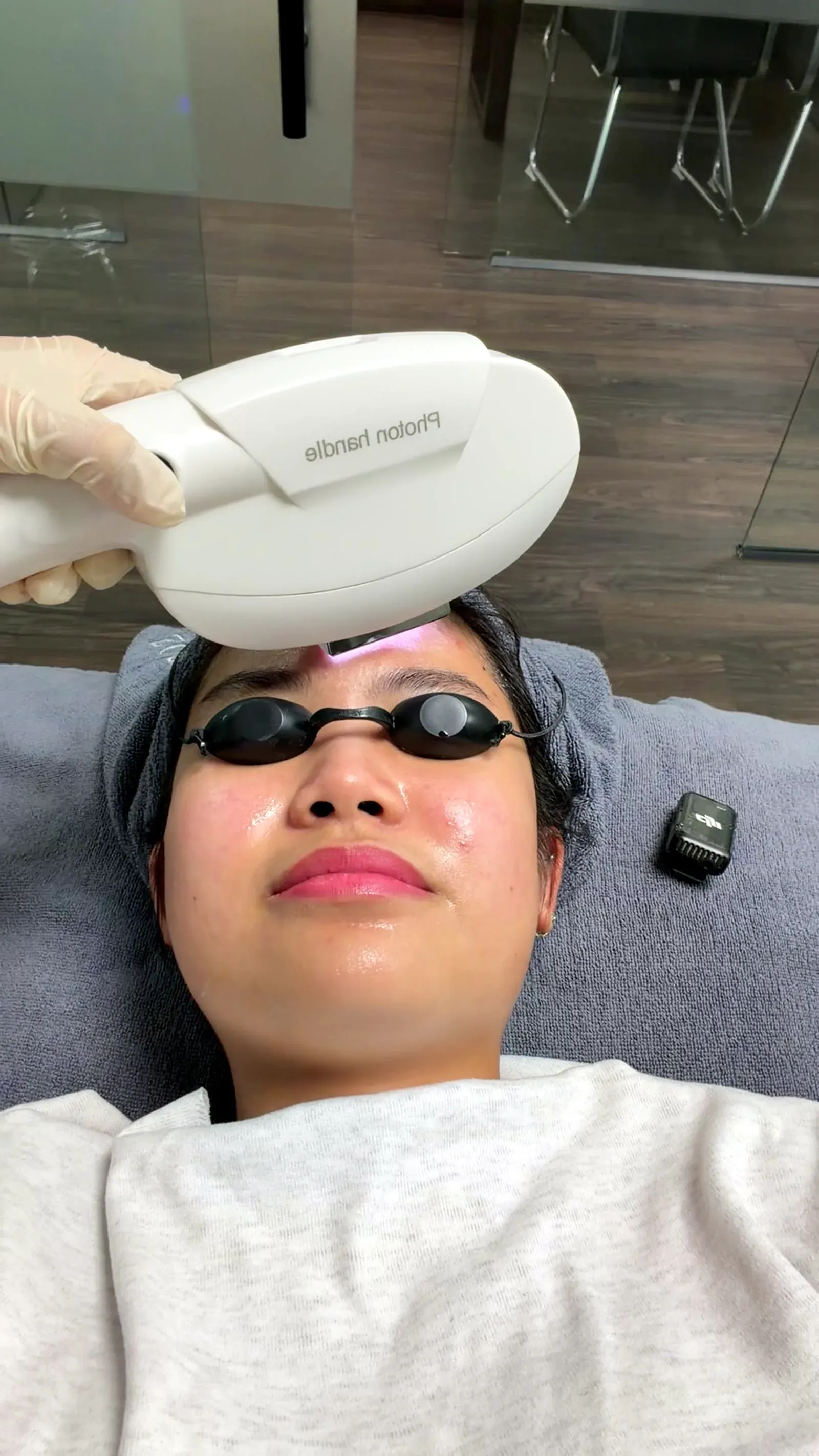
Freckles can be noticeably lightened with pigment laser, usually after 1–3 sessions spaced 4–6 weeks apart. However, this should not be understood as "removal" in the sense of disappearing forever. Freckles are genetic, so skin with a freckling tendency will still darken when exposed to sun. Consistent sun protection helps maintain results for longer, and some people need a touch-up session after 1–2 years. More important than the number of sessions is correctly identifying whether you have freckles, brown spots or melasma, because each type needs different laser settings.
At BonBoz Clinic (licence 11113/HCM-GPHĐ for Dermatology, issued by the Ho Chi Minh City Department of Health), Dr. Bùi Thị Kim Kha is a Specialist Level I physician who holds a certificate in lasers and light-based therapy in dermatology. She performs skin analysis before every pigment laser session. This is how she tells these types of spots apart.
What are freckles, and why do some people have them while others don't?
Freckles are small, flat brown dots scattered across sun-exposed areas such as the bridge of the nose and the cheeks. They usually appear in childhood, darken in sunny months and fade when there is less sun. DermNet describes freckles as not present at birth and as a genetic trait linked to variants of the MC1R gene. The pigment cells in freckled areas produce more pigment than normal, but the number of pigment cells does not increase.
This last point explains why freckles often come back: laser breaks down the pigment that is already there, but the pigment cells remain just as "sun-sensitive" as before. When exposed to UV rays, they produce pigment again and the brown dots reappear. DermNet also notes that the number of freckles increases after sun exposure.
How many types of freckles are there? Telling them apart from brown spots and melasma
When clients ask "how many types of freckles are there", in practice they are usually seeing several different kinds of pigment spots on the same face. The three most common groups:
| Feature | Freckles | Sun-induced brown spots | Melasma |
|---|---|---|---|
| Shape | Small dots, many, scattered | Round or oval patches with a clear edge | Large patches with irregular edges, symmetrical |
| When they appear | From childhood | Usually after age 35–40 | Usually in adulthood, linked to hormones |
| Seasonal change | Darker in sun, lighter with less sun | Almost no change with the seasons | Darker after sun and heat |
| Response to laser | Good, 1–3 sessions | Good, usually 1–2 sessions | Needs low energy, multiple sessions, cautious approach |
In practice, many people have both freckles and melasma, or brown spots mixed with melasma. In that case, the doctor has to divide the face into zones and use different settings for each. Using the settings meant for freckles or brown spots on a melasma area can make the melasma flare strongly and spread, which is why skin analysis is a step that cannot be skipped. The article melasma, freckles, brown spots: understanding the causes and telling them apart has more images showing each type.
How many sessions of freckle laser are needed, and what does a session involve?
Freckles are pigment localised in the epidermis and respond well to Q-switched laser at an energy level sufficient to break down the pigment. At BonBoz, pigment laser uses the Q-switched Pastelle system, with settings chosen for each type of spot after skin analysis; see also the page Pastelle laser toning.
Typical session guidelines:
- Mild, scattered freckles: 1–3 sessions, each 4–6 weeks apart.
- Sun-induced brown spots, a few spots: usually 1–2 sessions.
- Many spots mixed with melasma: longer, with priority on not triggering the melasma.
As for sensation, many people describe it as a rubber band lightly snapping against the skin. It is tolerable, and a topical anaesthetic can be applied beforehand. After laser, the dots darken, form a thin crust and flake off after about 5–10 days. The 4–6 week gap between sessions lets the skin recover and lets the doctor assess the remaining pigment before deciding whether to continue.
What aftercare is needed after laser to avoid dark marks?
The 1–2 weeks after laser have a large influence on the result. One risk to be aware of is temporary post-inflammatory hyperpigmentation (PIH, or dark marks), which is more common in darker skin and when sun protection is not used. The doctor prescribes a gentle topical to help and sets suitable settings to limit this.
| Do | Don't |
|---|---|
| Let the crusts fall off on their own | Pick or scratch the crusts |
| Use broad-spectrum sun protection and cover up well | Go out in harsh sun without protection |
| Use the gentle topical as instructed | Use exfoliating or strong skin-lightening products in the first 1–2 weeks |
| Wash your face gently and moisturise | Use steam in the first few days |
You can also read how to apply sunscreen correctly and how often to reapply and the order of skincare steps for skin under treatment to plan your skincare during this period.
Maintaining results long term: why freckles return and what to do
Because freckles are a genetic trait, DermNet notes that freckles cannot be prevented from forming, but careful sun protection can reduce how much they darken in sunny months. DermNet also notes that pigment laser can lighten freckles temporarily, so a plan to maintain results matters as much as the number of laser sessions.
The maintenance plan includes:
- Daily sun protection: broad-spectrum, SPF 50, applied in sufficient amount and reapplied when outdoors for long periods; combine with a wide-brimmed hat and a face mask.
- Limit midday sun, especially on beach trips and hikes.
- Lightening creams are only supportive: freckle creams only lighten the surface slightly and cannot remove localised pigment the way laser does, but they can be used to maintain results after laser as instructed.
- Touch-up sessions when needed: some people need a touch-up laser session after 1–2 years if freckles darken again.
Stay away from compounded creams that promise "instant freckle clearing": they may contain corticosteroids that thin the skin, dilate blood vessels and make later treatment difficult. See the article why compounded rapid-whitening creams are dangerous.
When should you not have freckle laser?
Some situations call for a careful examination or postponing the appointment:
- Unusual spots: a spot that changes colour or shape or grows quickly within a few months; a spot that itches, bleeds or forms a crust that does not heal. The AAD advises seeing a dermatologist when a spot has ABCDE signs: asymmetry, irregular border, multiple colours, diameter usually larger than 6 mm, or changing. These spots need to be examined first to rule out problems, and should not be given aesthetic treatment right away.
- Not sure whether it is freckles or melasma: laser settings differ, so skin analysis is needed first.
- Skin that is sunburned, currently on high-dose retinoids, or has active melasma: postponing is advisable.
- Spots that darken quickly again after laser elsewhere: the doctor needs to reassess the cause.
- Children: freckles in children are normal and sun protection is enough; laser can be considered in adulthood if desired. DermNet also notes that freckles often become less visible as children grow up.
Pregnancy and breastfeeding: many laser procedures and lightening topicals are usually left until after childbirth. Tell your doctor if you are pregnant, breastfeeding or taking hormonal medication so that a safe option can be chosen; in the meantime, sun protection is something you can do right away.
For an overview of freckles and brown spots, see the page freckles and brown spots at BonBoz; if you also have melasma, see the page melasma treatment at BonBoz.
Book a skin consultation at BonBoz Clinic
- Address: 66–68 Võ Văn Tần, Xuân Hòa Ward (formerly District 3), Ho Chi Minh City.
- Opening hours: Monday – Sunday, 08:00–20:00. Phone: 0869 612 310.
- Licences: 11113/HCM-GPHĐ (Dermatology) and 10036/HCM-GPHĐ (Aesthetics), issued by the Ho Chi Minh City Department of Health; look up at tracuu.medinet.org.vn.
- Doctor: Dr. Bùi Thị Kim Kha, Specialist Level I physician, specialising in dermatology, practising certificate 009784/ĐL-CCHN, more than 8 years of practice.
The initial consultation and skin analysis are free. The cost of freckle laser is given by the doctor after the consultation, once the expected number of sessions is known, before you decide.
References
- DermNet. Ephelis (freckles). <https://dermnetnz.org/topics/ephelis> (accessed 11/11/2026)
- DermNet. Solar lentigo. <https://dermnetnz.org/topics/solar-lentigo> (accessed 11/11/2026)
- American Academy of Dermatology. What to look for: ABCDEs of melanoma. <https://www.aad.org/public/diseases/skin-cancer/abcdes-melanoma> (accessed 11/11/2026)
Frequently Asked Questions
Will freckles come back after laser?
Laser noticeably lightens freckles, but a freckling tendency will still darken in the sun. Consistent sun protection helps maintain results for longer; some people need a touch-up session after 1–2 years.
How many sessions of freckle laser are needed?
Freckles usually need 1–3 sessions, each 4–6 weeks apart. If freckles are mixed with melasma, the treatment course will be longer because melasma areas need low energy and more sessions.
Does freckle laser hurt?
It feels like a rubber band lightly snapping against the skin. Most people find it tolerable, and a topical anaesthetic can be applied beforehand. Afterwards, the dots darken, form a crust and flake off after about 5–10 days.
Can dark marks appear after freckle laser?
Temporary post-inflammatory hyperpigmentation can occur, especially in darker skin and when sun protection is not used. The doctor prescribes a supportive topical and sets suitable settings to limit it; you need to protect your skin carefully from the sun and not pick at the crusts.
Can freckle creams replace laser?
No. Creams only lighten the surface slightly and cannot remove localised pigment the way laser does. Creams are better suited to supporting and maintaining results after laser, used as instructed by your doctor.
Can freckles and melasma be treated with laser in the same session?
It is possible, but the doctor uses different settings for each area: freckles respond quickly to laser, while melasma needs low energy and more sessions. That is why skin analysis to divide the face into zones is needed beforehand.
Should children with freckles have laser?
Not necessary. Freckles in children are normal and often become less visible as they grow up; sun protection is enough. Laser can be considered in adulthood if you still want improvement.
Content prepared by the BonBoz Clinic professional team.
This article is for reference only and does not replace an in-person examination or a doctor's diagnosis. Actual results vary by individual condition.