What does mesotherapy do? How often should you have it, how long do results last, and what aftercare is needed?
What mesotherapy does and where its limits lie, whether HA mesotherapy fills hollow cheeks, how often to have injections, how long results last after one session, what to avoid after injection, whether to stop or continue retinol, exfoliants and melasma creams, and what to know about mesotherapy around the eyes.
Mesotherapy helps skin become more hydrated, brighter and smoother over several sessions, but it does not fill hollow cheeks or provide a lifting effect. In the early phase, sessions are usually 1, 2 or 4 weeks apart. Once the skin stabilises, they are spaced out to 1–3 months, and a single stand-alone session does not last long. After the procedure: no makeup for 24 hours; avoid sun, steam rooms and swimming pools for the first 3 days. At BonBoz Clinic (66–68 Võ Văn Tần, Xuân Hòa Ward, Ho Chi Minh City; licences 11113/HCM-GPHĐ, 10036/HCM-GPHĐ), Specialist Level I physician Bùi Thị Kim Kha, practising certificate 009784/ĐL-CCHN, performs the examination and injections.
This article does not cover choosing where to have mesotherapy. That is already addressed on the page where to get reliable mesotherapy in Ho Chi Minh City and in the article licence comparison of mesotherapy providers in Ho Chi Minh City. Here are the questions that come up after you have decided to have the injections: how well mesotherapy really works, how often to have it, how long the results of one session last, what to avoid afterwards, whether to stop or keep using the creams you currently use, and whether the eye area can be injected.
What does mesotherapy do?
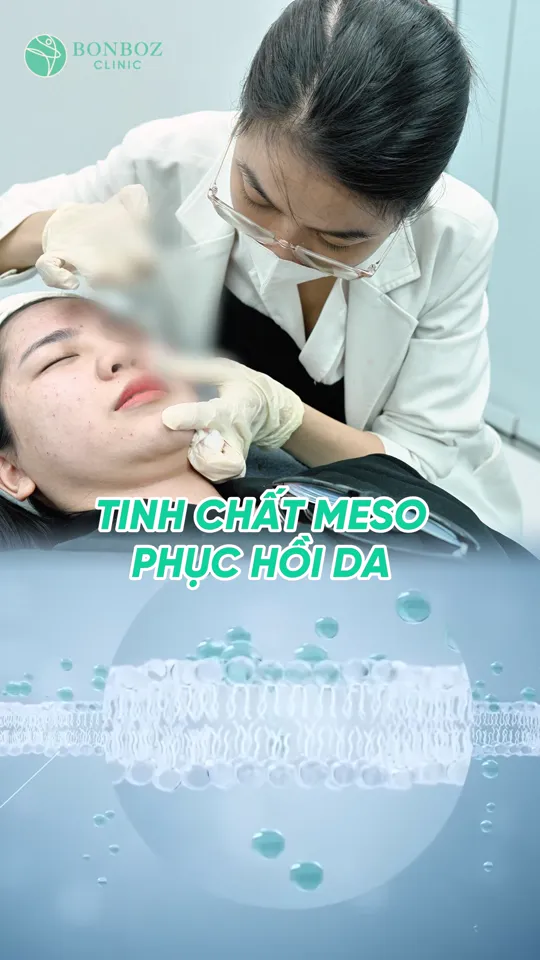
Mesotherapy is a technique that delivers a small amount of a nutrient mixture into the superficial dermis using micro-needles, by hand or with a multi-needle device. The depth depends on the technique and the area of skin, and is decided by the doctor. Common ingredients are non-crosslinked HA for hydration, vitamins, minerals, amino acids and peptides. Passing through the stratum corneum with a needle lets the nutrients reach the dermis, where topical creams penetrate very poorly. The superficial micro-injuries also stimulate the skin to repair itself.
BonBoz's mesotherapy page lists four things mesotherapy can do:
- Hydration: skin is less dry and plumper.
- Brightening: skin looks less dull and more even in tone, at a mild level.
- Smoothing superficial texture: the skin surface is smoother, including superficial texture left by acne.
- Maintenance: preserving the results of other treatments once the skin has stabilised.
What the research says. Results depend heavily on the product injected, so each study has to be read for its own product:
- A randomised, double-blind, split-face study published in 2023 in the Journal of Clinical and Aesthetic Dermatology: 30 people received a non-crosslinked HA gel on one side of the face and saline on the other, over three sessions. Ten days after the last session, the HA side had about 35% higher hydration, about 27% higher firmness and shallower crow's feet compared with the control side. Note: some of the authors are employees of the manufacturer.
- A multicentre randomised study published in 2026 in Plastic and Reconstructive Surgery Global Open: 439 people completed it. The treated group received three injections one month apart with a solution containing sodium hyaluronate and amino acids. The treated group showed clear improvement in hydration and elasticity, lasting up to three months after the course. In the overall aesthetic assessment, the treated group was clearly better than the untreated group. Side effects were recorded in 1.67% of people, all mild to moderate. This study was also funded by the manufacturer.
- By contrast, a 2006 study in Dermatologic Surgery injected a vitamin and HA mixture into 10 people over four sessions, then took photographs and skin biopsies. No significant clinical or histological difference was seen.
Each figure above is tied to the specific product and injection method of its study, so it cannot be applied directly to every mesotherapy session. Taken together, the practical conclusion is that mesotherapy is not a "drug" with a fixed effect. Some products have good data on hydration and elasticity, while some mixtures show no clear benefit. So the most important question to ask before injections is which product you will be injected with, as analysed in the article 7 questions to ask about the product before mesotherapy.
What can mesotherapy not do?
Knowing the limits in advance keeps you from paying for something mesotherapy cannot do:
- Restoring volume, filling hollow cheeks or deep grooves: this needs HA filler.
- Lifting sagging skin or muscle: this needs other methods such as thread lift or HIFU, according to your doctor's assessment.
- Erasing deep pitted acne scars: this needs laser, RF microneedling, TCA spot treatment or subcision as the main method.
- Treating skin diseases such as inflammatory acne and melasma: these need a diagnosis and medication. Mesotherapy only gives mild support for colour and texture.
- Reducing fat: the skin-nourishing mesotherapy in this article is entirely different from fat-dissolving injections. If you are searching for "mesotherapy for fat loss", see the article where to get reliable fat-dissolving injections in Ho Chi Minh City.
In short, mesotherapy suits a "foundation" role: making skin healthier, more hydrated and brighter, and maintaining results. It is not a tool for reshaping.
Does HA mesotherapy fill hollow cheeks?
No. This is the most common mix-up, because both HA mesotherapy and filler carry the letters "HA".
The HA in mesotherapy is non-crosslinked HA, a liquid injected as many tiny points in the superficial dermis. The skin gradually absorbs it over a few weeks. It does not remain as a mass, so it cannot create volume. Filler is cross-linked HA, a dense gel injected into deeper layers to support the tissue and fill hollows, lasting many months.
So hollow cheeks caused by loss of fat or bone volume need filler or another volumising method, as assessed by your doctor. Mesotherapy can be added afterwards to improve the skin surface, but it cannot replace the filling step. The article how skin boosters and fillers differ compares these two groups in more detail.
How often should you have mesotherapy?
There is no single schedule for everyone. According to Specialist Level I physician Bùi Thị Kim Kha, the mesotherapy interval is individualised to the condition of the skin, your goals and how you respond:
| Phase | Typical interval | Purpose |
|---|---|---|
| Early phase, skin needs active recovery | Every 1, 2 or 4 weeks | Build up results over several sessions |
| Maintenance, once skin has stabilised | Spaced out to 1–3 months or longer | Keep the hydration and brightness already achieved |
The two studies above with good results both used three sessions, and one spaced them one month apart. This suggests a single session is usually not enough. The effect comes from the whole course.
One sign to reconsider: a provider sells a fixed package of sessions before examining you, or books closely spaced injections without reassessing the skin between sessions. A reasonable schedule is one adjusted to how your skin responds.

How long do the results of one mesotherapy session last?
The honest answer: there is no general figure, and a single stand-alone session does not last long.
- The skin absorbs the nutrients in mesotherapy within a few weeks, so the plump, glowing effect right after a session fades gradually.
- According to BonBoz's method page, skin is usually more hydrated and brighter after the 1st–2nd session. Texture improves gradually over the following sessions.
- After a full course of sessions, the 2026 multicentre study mentioned above recorded hydration and elasticity still maintained up to three months. The study did not follow patients for longer.
So the way to keep results is not to inject more often. Instead, complete the initial course as recommended, then maintain with spaced sessions (1–3 months or longer) plus good home care, especially sun protection and regular moisturising. How soon you need to return is decided by the doctor based on your skin.
What should you avoid after mesotherapy?
According to the guidance on the mesotherapy method page and the clinic's aftercare instructions:
- First 24 hours: no makeup, and no vigorous washing or rubbing of the face.
- First 3 days: avoid sun, steam rooms and swimming pools.
- Redness and injection marks: usually fade within 1–3 days; small bruises may occur.
- Sun protection daily afterwards, because freshly injected skin is more sensitive.
- Diet for the first 3 days: according to BonBoz's aftercare guidance, avoid sticky rice, bananas, sweet potatoes, seafood, beef, chicken, bamboo shoots and fermented fish sauce.
When to call the provider back: swelling, heat and redness that increase after a few days, discharge, spreading pustules, clusters of small blisters (possibly herpes reactivation), or itching and a spreading rash. These reactions are uncommon but need to be seen by a doctor soon.
As for downtime: mesotherapy does not usually require a long break. If you have an important event, book your injection a few days beforehand so the injection marks have time to fade.

Should you stop or keep using retinol, exfoliants and melasma creams?
This is a common question during scar treatment or mesotherapy. The general principle is that skin at the injection sites needs time to heal. Products that cause peeling or irritation can make skin redder and more stinging during these days.
Before the injection:
- Retinoids (retinol, tretinoin, adapalene…): BonBoz's mesotherapy method page advises stopping 3 days before the session.
- Exfoliants (AHA, BHA, bead scrubs): tell the doctor the type and concentration you use. The doctor will advise whether you need to stop them at the same time as retinoids.
- Melasma creams: if prescribed by a doctor, do not stop on your own. Bring the drug name so the doctor can decide whether any adjustment is needed around the injection day.
- Avoid alcohol for 24 hours before the injection.
After the injection:
- In the first few days, prioritise gentle cleansing, moisturising and sun protection.
- Resume retinoids and exfoliants once the redness has gone, the injection marks have healed and on the date the doctor schedules. If your skin stings when you resume, reduce the frequency and tell the doctor.
- Resume melasma creams according to your melasma treatment plan. Mesotherapy does not replace that plan. The article why melasma comes back and how to maintain after treatment explains why maintenance matters.
The simplest way: photograph all the products you use and show them to the doctor at the consultation. If you are new to these active ingredients, the article how to use retinol, AHA, BHA and vitamin C safely has basic guidance.
Can mesotherapy be done around the eyes?
The skin around the eyes is thin and has many small blood vessels, so injecting here needs more caution than on the cheeks or forehead. Bruising and swelling are more visible and may take longer to clear than in other areas. Injection is done only when the doctor judges it appropriate, using a product approved for injection in this area.
It also helps to know what mesotherapy can do around the eyes: it supports dry skin, fine lines and a less smooth skin surface. Mesotherapy does not treat under-eye bags from fat prolapse, deep tear troughs or dark circles caused by a hollow structure. Those conditions need other methods, as compared in the article 4 ways to treat under-eye bags and tear troughs. The doctor examines you to tell the causes apart before choosing a method.
Who should not have mesotherapy, or should postpone?
Should not have it, or must postpone:
- Pregnant or breastfeeding.
- Infection in the injection area, severe inflammatory acne or an eczema flare. Acne-prone skin can still be injected once the inflammatory acne is under control.
- Previous allergy to an ingredient in the mixture.
- Expecting mesotherapy to fill, provide a lifting effect or erase deep scars.
Needs the doctor's assessment before deciding:
- A bleeding disorder or use of anticoagulant medication.
- A history of facial herpes.
- Wanting injections around the eyes: the doctor checks skin thickness, bags, dark circles and any history of easy bruising before deciding whether to inject this area.
Unlabelled or self-mixed preparations increase the risk. The product injected into you must be approved for injection into the skin and be opened right in front of you.
Mesotherapy at BonBoz Clinic
At BonBoz, the doctor first performs a skin analysis and looks at what your skin needs most — hydration, brightening, smoothing or oil control. Only then does the doctor choose between mesotherapy, hydrating skin booster or BAP technique. A mesotherapy session includes:
- Before the injection: examination, taking your history of allergies, medical conditions and current medication; thorough makeup removal; topical numbing.
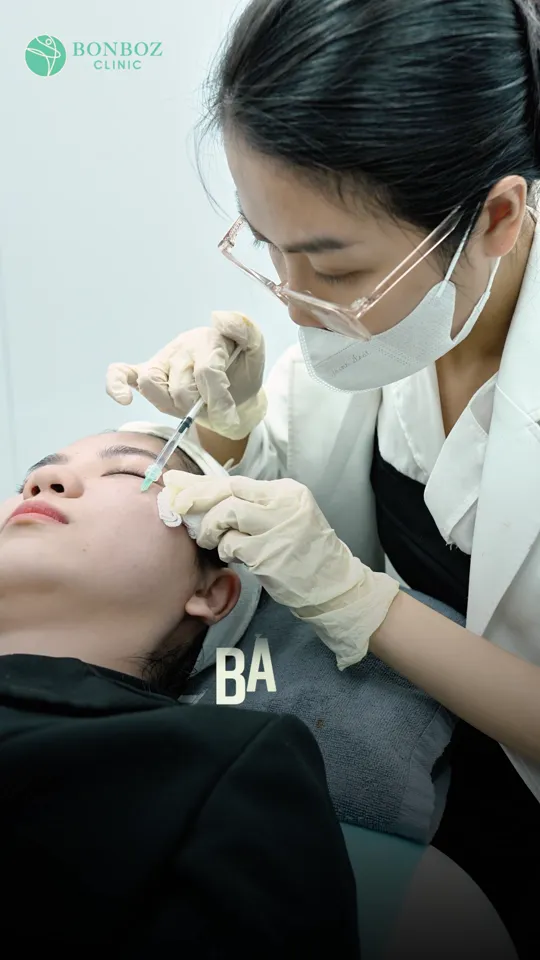
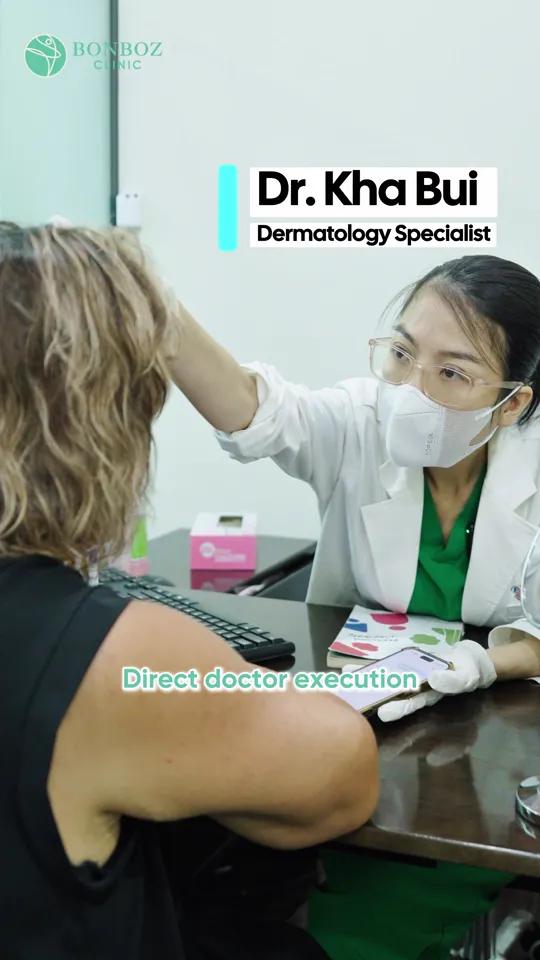
- During the injection: Specialist Level I physician Bùi Thị Kim Kha personally injects using a sterile micro-needle technique, with products of clear origin and documentation. A soothing mask is applied afterwards.
- After the injection: a follow-up visit to assess your response and decide the interval for the next session, together with aftercare instructions.
Mesotherapy is priced per session and varies with the product, the number of sessions and the size of the area injected. This article does not list prices. The page mesotherapy and skin booster costs explains how pricing works. BonBoz has a price list posted at the clinic. The doctor advises on the price for each case after the examination, with no extra charges after the price has been quoted.
BonBoz Clinic: 66–68 Võ Văn Tần, Xuân Hòa Ward (formerly District 3), Ho Chi Minh City · licences 11113/HCM-GPHĐ (dermatology) and 10036/HCM-GPHĐ (aesthetics), Ho Chi Minh City Department of Health · examining and injecting doctor: Specialist Level I physician Bùi Thị Kim Kha, practising certificate 009784/ĐL-CCHN.
Frequently asked questions
What does mesotherapy do?
Mesotherapy helps skin become moderately more hydrated, brighter and smoother after several sessions. It supports superficial skin texture and maintains the results of other treatments. How well it works depends on the product injected. Mesotherapy does not restore volume or provide a lifting effect.
How often should you have mesotherapy?
In the early phase, usually every 1, 2 or 4 weeks. Once the skin stabilises, sessions are spaced out to 1–3 months or longer. The doctor adjusts this according to how your skin responds.
How long does the glow from one mesotherapy session last?
A single stand-alone session does not last long because the nutrients are absorbed within a few weeks. After a full course of sessions, one study recorded hydration and elasticity still maintained up to three months. After that, maintenance is needed.
Does HA mesotherapy fill hollow cheeks?
No. The HA in mesotherapy is non-crosslinked and liquid, and is absorbed gradually, so it does not create volume. Filling hollow cheeks is the job of cross-linked HA filler.
What should you avoid after mesotherapy?
No makeup for 24 hours and no rubbing the face. Avoid sun, steam rooms and swimming pools for 3 days, and use sun protection regularly. Redness and injection marks usually fade within 1–3 days.
Can you have mesotherapy while using retinol?
Yes. But according to BonBoz's mesotherapy method page, you need to stop retinoids 3 days before the session and resume only when the skin has healed, on the date the doctor schedules. Do not stop prescribed melasma creams on your own; ask the doctor.
How long is recovery after mesotherapy?
Mesotherapy does not usually require a long break. According to BonBoz's mesotherapy method page, redness, injection marks and small bruises usually fade within 1–3 days. The area around the eyes may bruise and swell a little longer.
How much does one mesotherapy session cost?
Mesotherapy is priced per session, and the price varies with the product (for example an HA mixture or exosomes), the number of sessions and the area. The page mesotherapy and skin booster costs explains how pricing works. The doctor advises a specific price after the examination.
References
- Duteil L, Queille-Roussel C, Issa H, et al. The Effects of a Non-crossed-linked Hyaluronic Acid Gel on the Aging Signs of the Face versus Normal Saline: A Randomized, Double-blind, Placebo-controlled, Split-faced Study. Journal of Clinical and Aesthetic Dermatology, 2023;16(2):29–36: PubMed.
- Yang R, Zhang Y, Zhao H, et al. Efficacy and Safety of a Novel Sodium Hyaluronate Composite Solution via Mesotherapy for Facial Rejuvenation: A Multicenter Randomized Controlled Study. Plastic and Reconstructive Surgery Global Open, 2026;14(6):e7853: PubMed.
- Amin SP, Phelps RG, Goldberg DJ. Mesotherapy for facial skin rejuvenation: a clinical, histologic, and electron microscopic evaluation. Dermatologic Surgery, 2006;32(12):1467–1472: PubMed.
*Article updated on 11/11/2026. This content helps you understand and prepare; your specific injection schedule and aftercare are prescribed by your doctor after the examination.*
This article is for reference only and does not replace an in-person examination or a doctor's diagnosis. Actual results vary by individual condition.