
Skincare steps for acne-prone skin, morning and night: the right order and which active ingredients to choose
Acne-prone skin only needs 4 steps in the morning and 3–4 steps in the evening, but each routine should include just one main acne-fighting active. This guide explains the order of the steps, how to choose an active, and when to see a doctor.
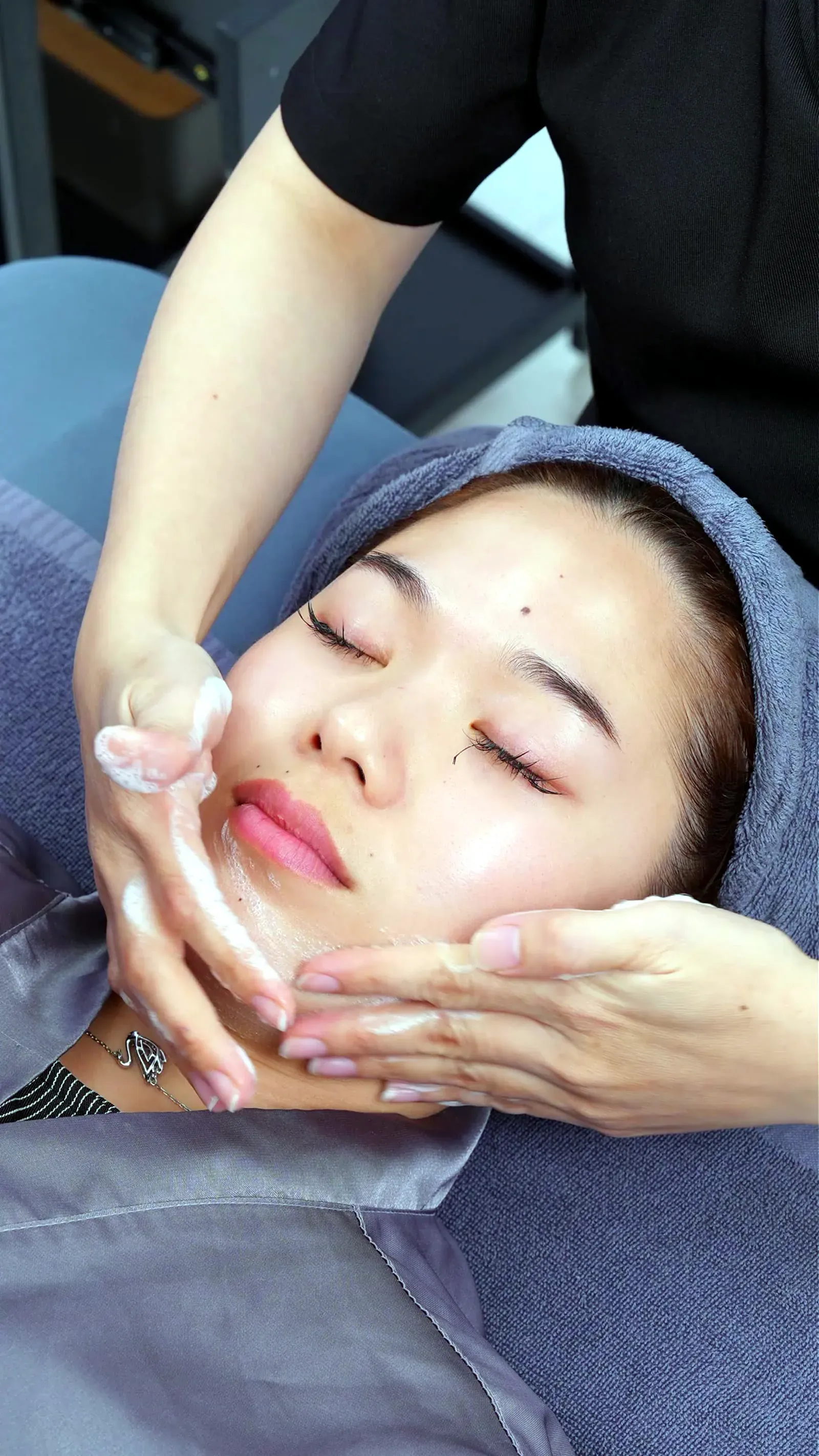
The morning and evening skincare steps for acne-prone skin should be simple. In the morning: a gentle cleanser, a mild acne-fighting active (if needed), a non-comedogenic moisturiser, and a broad-spectrum sunscreen. In the evening: makeup removal, cleansing, your main acne active, and a moisturiser. The most important rule is to use only one main acne active per session, and to use it consistently for at least 6–8 weeks before judging results. Adding many products at once usually just irritates the skin.
At BonBoz Clinic (operating licence 11113/HCM-GPHĐ, Dermatology specialty, issued by the Ho Chi Minh City Department of Health), Dr. Bùi Thị Kim Kha, Specialist Level I physician in Dermatology, examines patients and builds a treatment plan for each type of acne. Below is a base routine you can do at home, and the signs that it is no longer enough.
Why does acne-prone skin need a different routine from normal skin?
Acne forms when the sebaceous glands produce excess oil, dead skin cells block the hair follicles, bacteria multiply, and the skin reacts with inflammation. A routine for acne-prone skin therefore needs to keep follicles clear, reduce inflammation, and avoid creating new blockages.
Acne-prone skin often falls into a cycle: you see a pimple, so you wash more and scrub harder, then the skin becomes dry and stinging and the acne comes back. The American Academy of Dermatology (AAD) advises people with acne to choose gentle, alcohol-free products and to avoid things that easily cause irritation, such as astringents, toners and exfoliating products, because they dry the skin and make acne look worse. The AAD also notes that switching acne products too often can cause irritation and trigger breakouts.
For acne-prone skin, fewer steps with the right actives work better than many overlapping steps. If your skin is not acne-prone and you only need a basic routine, see morning and evening skincare steps for healthy skin. "One main active per session" means not layering two strong actives in the same session; benzoyl peroxide in the morning and a retinoid in the evening are separate sessions, so they do not count as layering.
Table of skincare steps for acne-prone skin, morning and evening
| Step | Morning | Evening |
|---|---|---|
| 1 | Wash with a gentle cleanser, using cool or lukewarm water | Remove makeup or sunscreen if you wear any, then cleanse |
| 2 | Mild active if needed (for example low-concentration benzoyl peroxide, niacinamide) | Main acne active (topical retinoid, BHA or azelaic acid — choose one) |
| 3 | Light, non-comedogenic moisturiser | Moisturiser, which can be thicker than the morning one |
| 4 | Broad-spectrum sunscreen SPF 30 or higher, non-comedogenic | Not needed |
| Occasionally | Spot treatment for inflamed pimples, applied only to the pimple itself | Spot treatment for inflamed pimples, applied only to the pimple itself |
Step 2 in the morning can be skipped if your skin is sensitive; if your doctor has prescribed a regimen, the order on the prescription takes priority over this table.
Morning: cleanse, protect, avoid irritation
Cleansing. The AAD advises washing gently no more than twice a day and after sweating, using a gentle, bead-free cleanser applied with your fingertips rather than a cloth or sponge. Over-washing or scrubbing hard easily dries and irritates the skin and makes acne look worse — see how many times a day should oily, acne-prone skin be washed.
Mild active (optional). For mild inflammatory acne, low-concentration benzoyl peroxide in gel or wash form is a familiar daytime choice. Practical tip: let the product dry completely before applying moisturiser and sunscreen, and stop if redness and stinging persist. If your skin flushes easily, you can choose a product containing niacinamide, which is usually gentler.
Moisturising. Oily, acne-prone skin still needs moisturiser, especially when you are using actives that dry the skin. Choose a light gel or lotion labelled "non-comedogenic" (does not clog pores) and free of alcohol.
Sun protection. The AAD recommends a broad-spectrum, water-resistant sunscreen with SPF 30 or higher, labelled "non-comedogenic", reapplied every 2 hours when outdoors, and right after swimming or heavy sweating. Some acne medications make skin more sun-sensitive, and sun keeps post-acne marks dark for longer. See also how to apply sunscreen correctly and how many times to reapply during the day.
Evening: time for your main acne active
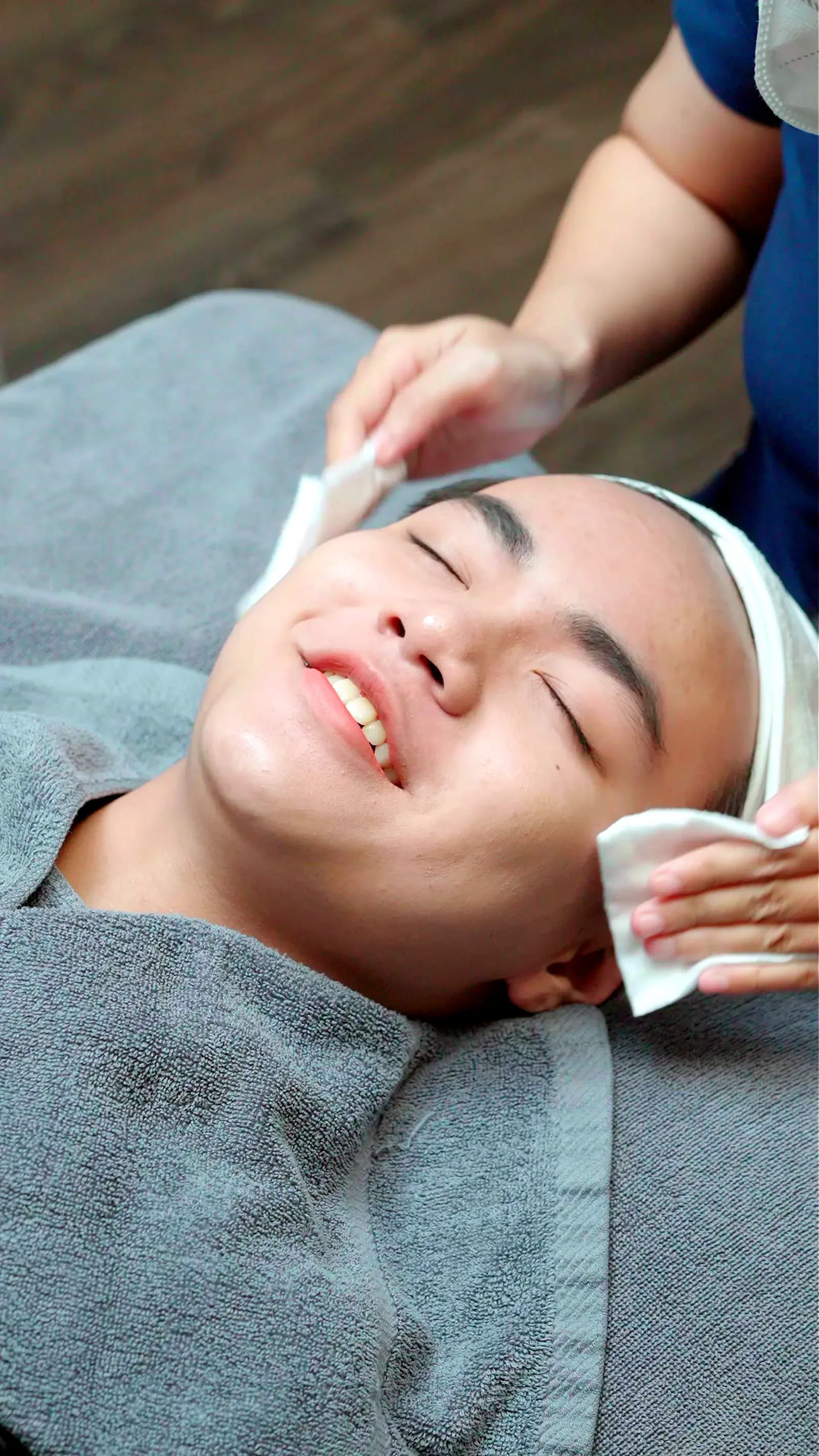
Makeup removal and cleansing. Sunscreen, foundation and the oil built up over the day need to be removed before applying medication. Use a gentle makeup remover, then wash again with the same cleanser you use in the morning.
Main active. This is the step that does the real work. Apply a thin layer to dry skin, covering the whole affected area rather than only dabbing on individual pimples, to prevent new blockages (retinoid, BHA and azelaic acid are applied over the whole area; spot treatments are only for individual inflamed pimples). Topical retinoids are usually used in the evening: DermNet notes that applying a retinoid at night means it is less visible on the face, while during the day you should use sunscreen and moisturiser to offset sun sensitivity and dryness.
Moisturising. Apply a few minutes after the active. If your skin is peeling from a retinoid, your doctor may tell you to apply moisturiser first and then the medication to reduce stinging.
One point that is often overlooked: do not use a retinoid and a high-concentration BHA in the same evening if your skin is not used to them. If you need both, alternate by day, or ask your doctor how to combine them.
Choosing an active by acne type
The table above is the framework; which active goes into it depends on what kind of acne you have.
- Closed comedones, blackheads, bumpy skin: the main problem is blocked follicles. A topical retinoid, BHA (salicylic acid) or azelaic acid helps push out the plugs gradually, usually taking 6–12 weeks. See the page on closed comedones under the skin for details.
- Red inflamed pimples, small pustules: benzoyl peroxide reduces bacteria and inflammation; it can be used together with a topical retinoid as directed. Never squeeze them yourself — the article swollen red inflamed acne: why you should not squeeze it explains the risk of marks and scarring.
- Acne on the chin and around the jawline, flaring with the menstrual cycle: usually related to hormones. Skincare only reduces the surface part; the root cause is still inside the body. See also hormonal acne.
- Nodular acne, painful cystic acne, acne that leaves scars: this is no longer a matter for home skincare. You need a doctor's examination, because oral medication and follow-up tests may be required.
Note for pregnancy or breastfeeding: do not use topical retinoids on your own during pregnancy — DermNet notes that some topical retinoids are contraindicated in pregnancy. If you are pregnant, planning a pregnancy or breastfeeding, tell your doctor before using any acne active.
How to start a new active without upsetting your skin
Many people give up midway because they start too fast. A safe way to get your skin used to it:
- 1Add only one product at a time. Wait until you have been using it comfortably for 2–3 weeks before adding another, so that if your skin reacts, you know the culprit.
- 2Start every other day. With a topical retinoid, use it 2–3 evenings a week for the first few weeks, then increase gradually if your skin tolerates it.
- 3Use a pea-sized amount for the whole face. Applying more does not make the medication stronger, only makes your skin sting more.
- 4Tell mild dryness and peeling apart from irritation. In the first 2–4 weeks of using a retinoid, slightly dry and peeling skin is common. If your skin burns, becomes red and swollen over a wide area, or is very itchy, stop and ask your doctor.
Finally, be patient. The AAD notes that it can take a few weeks to a few months to see a difference; based on the experience of BonBoz doctors, a reasonable point to assess a topical medication is after 6–8 weeks of consistent use.
Habits that ruin an acne-prone skincare routine
- Using bead exfoliants or a cleansing device every day. Friction spreads inflammation and weakens the skin barrier.
- Using alcohol-based toners or rose water to "tighten oil". The skin surface is dry but still produces oil, and it is more easily irritated when you apply actives.
- Layering three or four actives in one session. This is a familiar recipe for red, stinging skin.
- Touching, picking or squeezing pimples. The AAD notes that squeezing or popping pimples makes them take longer to heal and raises the risk of scars and post-inflammatory hyperpigmentation (PIH).
- Sleeping in makeup. The NHS advises removing makeup at the end of the day.
- Applying lemon, garlic or toothpaste. These easily cause burning and leave dark marks.
If you are being treated at a clinic (extraction, chemical peel, laser), your skincare routine needs to be even gentler in the days after the procedure; the article standard skincare steps for skin under treatment gives separate guidance for this period.
When should you see a doctor instead of relying on skincare?
A home routine suits mild acne: a few blackheads, closed comedones or small inflamed pimples. You should see a dermatologist when:
- You have deep inflamed acne, nodular acne or cystic acne, with painful lumps you can feel under the skin.
- Acne starts to leave depressed scars, raised scars or lasting dark marks.
- You have followed a consistent routine for 6–8 weeks and the acne has not improved or has worsened.
- Acne spreads to your back or chest, or flares strongly with your menstrual cycle.
- Your skin is strongly irritated by the products you are using, or you are not sure whether you have acne, folliculitis or an allergy to cosmetics.
- You are pregnant, breastfeeding or taking other medication.
The NHS also advises seeing a doctor when you have many pimples, deep pimples, or acne that is painful or causes scarring, because you then need prescription medication stronger than over-the-counter products. Seeing a doctor early helps limit new scars.
At BonBoz, the first visit includes skin analysis, acne classification and a review of the products you are using, and only then is a treatment plan made. You can read ahead about acne treatment at BonBoz and acne treatment costs.

Book an acne consultation at BonBoz Clinic
- Address: 66–68 Võ Văn Tần, Xuân Hòa Ward (formerly District 3), Ho Chi Minh City.
- Opening hours: Monday – Sunday, 08:00–20:00. Phone: 0869 612 310.
- Operating licences 11113/HCM-GPHĐ (Dermatology) and 10036/HCM-GPHĐ (Aesthetics), issued by the Ho Chi Minh City Department of Health; look them up at tracuu.medinet.org.vn.
- Doctor in charge: Dr. Bùi Thị Kim Kha, Specialist Level I physician, Dermatology, practising certificate 009784/ĐL-CCHN, more than 8 years of practice.
- Initial examination and skin analysis are free. Acne care and chemical peel cost about 1–3 million VND per session, and acne mesotherapy 3–8 million VND per session; the doctor will quote the specific cost after the examination, before you decide.
References
- American Academy of Dermatology — 6 at-home acne tips from dermatologists. https://www.aad.org/public/diseases/acne/skin-care/tips
- American Academy of Dermatology — How to apply sunscreen. https://www.aad.org/public/everyday-care/sun-protection/shade-clothing-sunscreen/how-to-apply-sunscreen
- NHS — Acne. https://www.nhs.uk/conditions/acne/
- DermNet — Topical retinoids. https://dermnetnz.org/topics/topical-retinoids
Sources accessed on 11/11/2026.
Content prepared by the BonBoz Clinic professional team.
Frequently asked questions
Does acne-prone skin need a toner?
Not necessarily. The AAD advises people with acne to avoid toners and astringents because they easily dry and irritate the skin. If you like, choose a hydrating, alcohol-free, fragrance-free one.
Can benzoyl peroxide and a retinoid be used together?
They can, usually in separate sessions: benzoyl peroxide in the morning and a topical retinoid in the evening, to reduce irritation. When your doctor prescribes a product that combines the two actives, use it at the times and in the amounts written on the prescription.
How long until an acne skincare routine starts to work?
You usually need at least 6–8 weeks of consistent use before you can judge results, and closed comedones can take up to 12 weeks. If acne has not improved after 6–8 weeks, see a doctor rather than changing products constantly.
Does oily, acne-prone skin need moisturiser?
Yes. Acne actives often dry the skin; without moisturiser, the skin stings easily and it is hard to use the medication for long enough. Choose a light gel cream or lotion that is non-comedogenic.
How should I do skincare for acne during pregnancy?
Keep the routine simple: gentle cleansing, moisturiser, sunscreen. Do not use topical retinoids on your own, because some are contraindicated in pregnancy. Ask your doctor before using other actives too, including while breastfeeding.
How much does acne treatment at BonBoz cost?
The initial examination and skin analysis are free. At BonBoz, acne care and chemical peel cost about 1–3 million VND per session and acne mesotherapy 3–8 million VND per session, depending on the type of acne and treatment plan. The doctor will quote the specific cost after the examination, before you decide on treatment.
This article is for reference only and does not replace an in-person examination or a doctor's diagnosis. Actual results vary by individual condition.