
Brown spots and age spots in middle age: how to treat them?
Brown spots and age spots are traces of sun exposure accumulated over many years. Explaining how to identify them, when an examination is needed to rule out risks, how many laser sessions are required, and how to limit new spots.
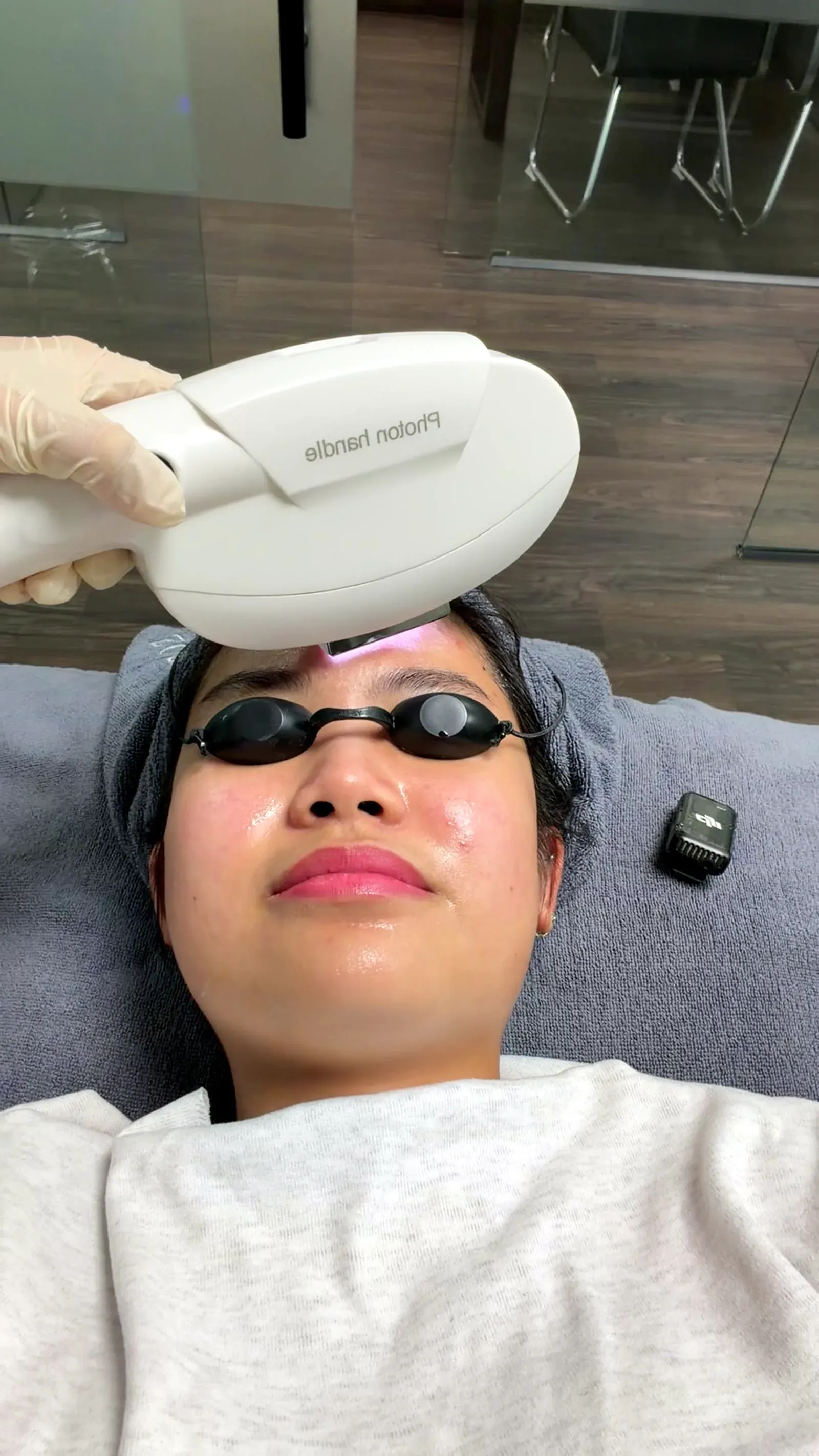
Brown spots in middle age, commonly referred to colloquially as age spots, are mostly solar brown spots (referred to in medical literature as solar lentigines): round or oval patches with well-defined borders that usually appear after age 35–40 on the cheekbones, temples, and the backs of the hands. These are benign lesions that generally respond well to pigment lasers after 1–2 sessions; however, before proceeding, an examination by a dermatologist is essential to ensure they are truly benign brown spots rather than lesions requiring medical monitoring. Following treatment, rigorous sun protection is the key to preventing new spots.
At BonBoz Clinic (operating licence 11113/HCM-GPHĐ in Dermatology, issued by the Ho Chi Minh City Department of Health), Specialist Level I physician Bùi Thị Kim Kha examines and performs a skin analysis for each spot prior to prescribing laser therapy, particularly for middle-aged individuals with multiple spots or spots coexisting with melasma.
What causes age spots and brown spots to develop?
The primary cause is cumulative ultraviolet radiation exposure accumulated over many years. DermNet describes solar lentigines as flat, benign lesions found predominantly on sun-exposed skin, developing from prolonged exposure to UV radiation from the sun or artificial sources such as tanning beds. Alternative names in English include "age spots", "liver spots", and "sun spots".
The name "liver spots" frequently causes misunderstanding: these brown spots have no connection to liver disease or a "sluggish liver". They simply reflect the cumulative sun exposure that specific area of skin has received. According to DermNet, these lesions are common in middle-aged and older adults, reflecting cumulative sun damage; in Asian individuals, they frequently develop on the face.
Several factors can cause these spots to emerge earlier or in greater numbers: working outdoors, failing to protect the skin with physical barriers, a history of frequent sunburns, and the use of certain photosensitising medications.
Identifying brown spots: how do they differ from melasma?
These three types of pigmented spots often coexist on the faces of middle-aged individuals, yet their management approaches differ significantly.
| Common concerns among middle-aged adults | Brown spots (age spots) | Melasma |
|---|---|---|
| Common locations | Cheekbones, temples, backs of the hands, shoulders — areas with prolonged sun exposure | Cheekbones, forehead, upper lip, typically symmetrical on both sides |
| Raised or flat to the touch | Usually flat; if raised, rough, or thickened, an examination is needed as it may be a different lesion | Flat |
| Changes over time | Increase in number and prominence with age; minimal seasonal fluctuation | Darkens with sun exposure, heat, and hormonal shifts |
| Recommended first step | Skin analysis to identify the exact type and rule out atypical spots | Classifying the type of melasma before choosing a method |
| Common management | Pigment laser, typically 1–2 sessions | Topical medications, chemical peel, or low-fluence laser toning over multiple sessions |
Misidentifying these conditions carries tangible consequences: applying the laser settings intended for brown spots onto melasma can trigger a severe rebound flare-up and cause the pigment to spread. If you present with both brown spots and melasma, your doctor will divide the areas and apply distinct parameters to each. The article melasma, freckles, and brown spots: understanding the causes and differences provides a more detailed description; for freckles, refer to the article can freckles be removed, and how many laser sessions are required.
Which spots must be examined and ruled out before aesthetic procedures?
This is the most critical consideration for middle-aged individuals. DermNet highlights that one complication of solar lentigines is a missed diagnosis of skin cancer due to morphological similarities. Furthermore, because solar lentigines reflect UV exposure, they are associated with an elevated risk of skin cancer. Therefore, one should never immediately "zap away" every brown spot with a laser without a prior assessment.
You should consult a dermatologist before undergoing any aesthetic procedure if a spot:
- Changes colour, shape, or enlarges rapidly over several months.
- Itches, bleeds, or crusts over without healing.
- Exhibits the ABCDE signs defined by the AAD: Asymmetry (one half unlike the other), Border irregularity, scalloped, or poorly defined, Colour variation within the same spot, Diameter typically greater than 6 mm, and Evolving in size, shape, or colour.
- Looks distinctly different from all other spots on your body.
Some "age spots" are elevated and rough rather than flat; DermNet notes that solar lentigines can evolve into seborrhoeic keratoses, and flat seborrhoeic keratoses are also part of the differential diagnosis. The management of these lesions differs from that of flat brown spots, which is why a physician needs to inspect them in person and conduct a skin analysis.
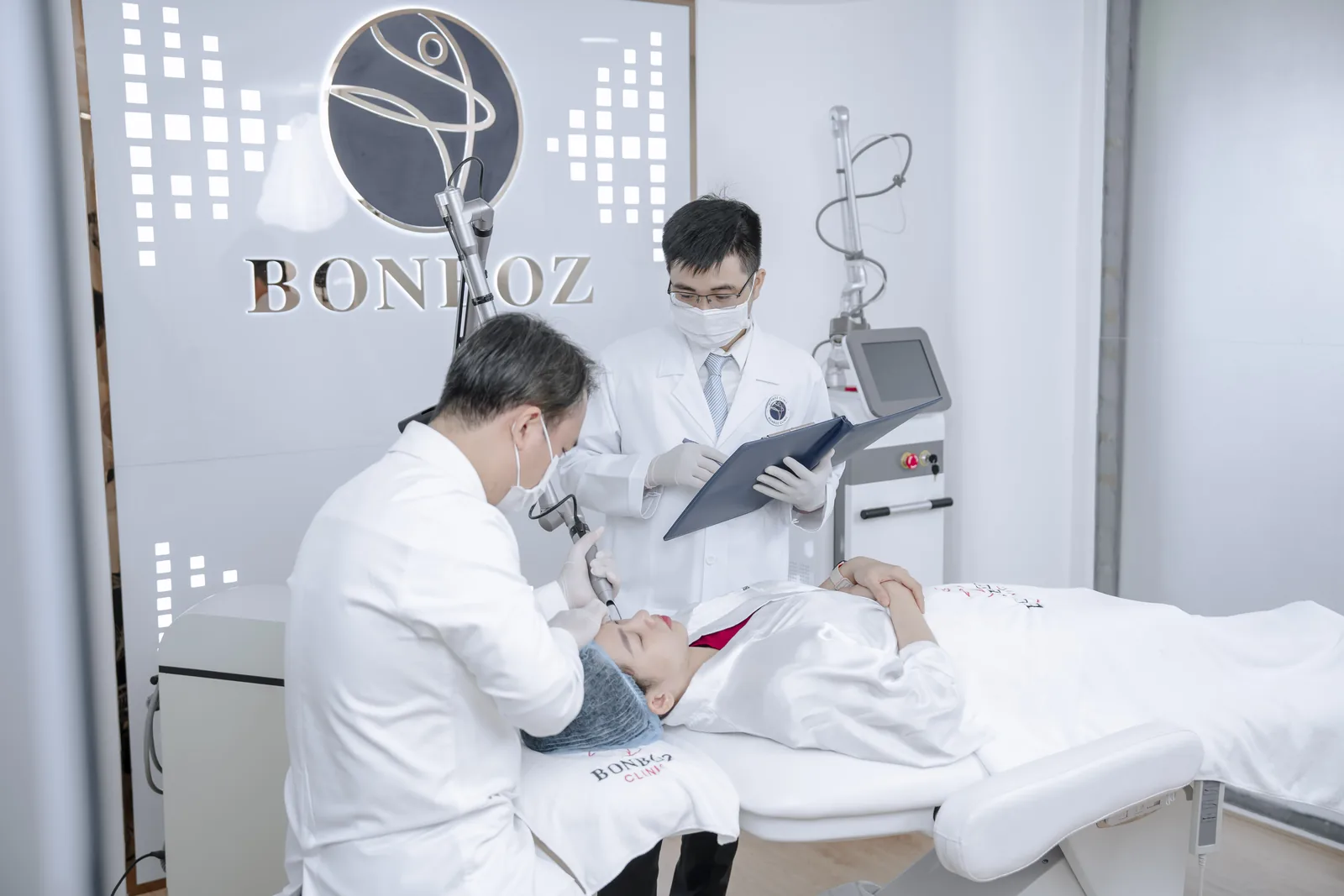
Pigment laser for brown spots: how many sessions and what is the recovery like?
The pigment of age spots is concentrated in the uppermost skin layer, allowing Q-switched lasers to target and fragment these pigment deposits accurately. At BonBoz, this is performed using the Pastelle system; the doctor customises the settings for each individual spot after a skin analysis — learn more on the Pastelle laser toning page.
| Timeline | What to expect |
|---|---|
| During the laser session | Sensation akin to a light rubber band snap on the skin, easily tolerated; topical anaesthesia can be applied beforehand |
| Immediately post-laser | The spots darken; mild erythema may appear around the treated areas |
| Around days 5–10 | A thin crust forms and naturally sheds; do not pick at the scabs |
| First 1–2 weeks | Avoid harsh exfoliating products, maintain strict sun protection, and avoid steam rooms or saunas for the first few days |
| Number of sessions | A few isolated spots typically require 1–2 sessions; extensive spots interspersed with melasma require a longer protocol |
The treated area may temporarily darken (post-inflammatory hyperpigmentation), which occurs more frequently in darker skin phototypes or with unshielded sun exposure; post-laser soothing topical preparations and conservative parameters help minimise this risk. DermNet also cautions that destructive modalities can leave behind hypopigmented or hyperpigmented marks, which may be temporary or permanent — which is precisely why parameters must be calibrated by a doctor.
Brown spots on the backs of the hands can be managed using the same principles as the face; hand skin heals more slowly, requiring careful aftercare and dedicated sun protection.
What can topical creams and home care realistically achieve?
Brightening creams only mildly lighten the skin surface; they cannot eliminate localised pigment collections the way lasers do. Creams prove most valuable in two capacities: as supportive post-laser care to prevent dark marks, and as ongoing maintenance to stop previous spots from darkening quickly. DermNet notes that diligent sun protection helps reduce the risk of new spot formation and may partially fade existing ones.
Things to avoid when managing spots at home:
- Unregulated mixed creams ("kem trộn") or rapid "age-spot bleaching" products of unknown composition — these may contain corticosteroids that cause skin thinning and telangiectasia. See the article on why rapid-whitening mixed creams are hazardous.
- Self-cauterising or applying corrosive chemicals to the spots — this carries a high risk of scarring and pigmentation, and may obscure clinical signs of lesions that need monitoring.
- Scrubbing aggressively in an attempt to "peel" the spot off.
If you are pregnant, breastfeeding, or taking hormonal medications, inform your doctor: many laser procedures and intensive topical brighteners are generally deferred until after delivery, whereas proper sun protection can be implemented right away.
Preventing new spots after age 40
Without intervention, brown spots generally persist indefinitely; DermNet describes that spots may enlarge, darken, remain stable, or occasionally regress spontaneously. Following treatment, DermNet emphasises that strict sun protection is imperative to keep spots from recurring. Daily habits to maintain include:
- Broad-spectrum sunscreen, SPF 50, applied in an adequate amount to the face, neck, and backs of the hands; reapply every 2 hours when outdoors. Detailed guidelines can be found in the article on how to apply sunscreen correctly.
- Physical protection: wide-brimmed hats, protective face coverings, and gloves when riding motorbikes.
- Routine skin self-examinations: watch for new or changing spots, particularly if you have numerous brown spots.
- Avoid tanning beds entirely.
If, in addition to brown spots, you also have patches of melasma on your cheekbones or forehead, please visit our page on melasma treatment at BonBoz; an overview of freckles and brown spots is available on the freckles and brown spots page.
Book an appointment for melasma consultation at BonBoz Clinic
- Address: 66–68 Võ Văn Tần, Xuân Hòa Ward (formerly District 3), Ho Chi Minh City.
- Operating hours: Monday – Sunday, 08:00–20:00. Phone: 0869 612 310.
- Licences: 11113/HCM-GPHĐ (Dermatology) and 10036/HCM-GPHĐ (Aesthetics), issued by the Ho Chi Minh City Department of Health; verify at tracuu.medinet.org.vn.
- Physician: Specialist Level I physician Bùi Thị Kim Kha, Specialist Level I in Dermatology, practising certificate 009784/ĐL-CCHN, over 8 years of clinical experience, holding certification in Lasers and Light Applications in Dermatology.
Initial consultations and skin analyses are complimentary. The cost for brown spot management is provided by the physician following your clinical examination, before you decide to proceed.
References
- DermNet. Solar lentigo. <https://dermnetnz.org/topics/solar-lentigo>, accessed 11/11/2026
- American Academy of Dermatology. What to look for: ABCDEs of melanoma. <https://www.aad.org/public/diseases/skin-cancer/abcdes-melanoma>, accessed 11/11/2026
Frequently Asked Questions
Are age spots caused by liver weakness?
No. The term "liver spots" is merely a colloquial misnomer; brown spots in middle age stem predominantly from cumulative ultraviolet radiation built up over many years. Sun protection is the only scientifically grounded preventive measure.
How many laser sessions are needed for brown spots?
A few isolated brown spots typically require 1–2 sessions. If you have numerous spots coexisting with melasma, the overall treatment plan will take longer, as melasma-prone areas require lower energy settings administered over multiple sessions.
Which brown spots are concerning?
Spots that are asymmetrical, exhibit irregular borders, display multiple colours, have a diameter exceeding 6 mm, or change rapidly must be evaluated by a dermatologist first. Spots that itch, bleed, or crust over without healing also require medical examination and must not undergo aesthetic treatment immediately.
Does laser treatment for brown spots hurt, and how long does it take to heal?
The sensation resembles a light rubber band snapping against the skin, which is well-tolerated and can be mitigated with a topical anaesthetic. Afterwards, the spot darkens, forms a light crust, and sheds in approximately 5–10 days; during this window, avoid picking at the scabs and adhere strictly to sun protection.
Can brown spots on the backs of the hands be treated?
Yes, following the same clinical principles as on the face. Skin on the hands regenerates and heals more slowly, requiring more meticulous post-procedure care and diligent sun protection, particularly when riding motorbikes outdoors.
Will brown spots return once treated with a laser?
Treated spots generally lighten considerably; however, if you continue to encounter sun exposure without protective measures, new spots can form and previous spots may redarken. Diligent, rigorous sun protection following treatment is key to sustaining your results.
Content compiled by the professional clinical team at BonBoz Clinic.
This article is for reference only and does not replace an in-person examination or a doctor's diagnosis. Actual results vary by individual condition.