
Skincare steps for melasma-prone skin: what to do in the morning and at night
Skin with melasma needs a short, gentle, consistent routine: sunscreen is the anchor in the morning, and the evening is for prescribed medication and skin recovery. This article goes through the routine step by step, along with what to avoid.
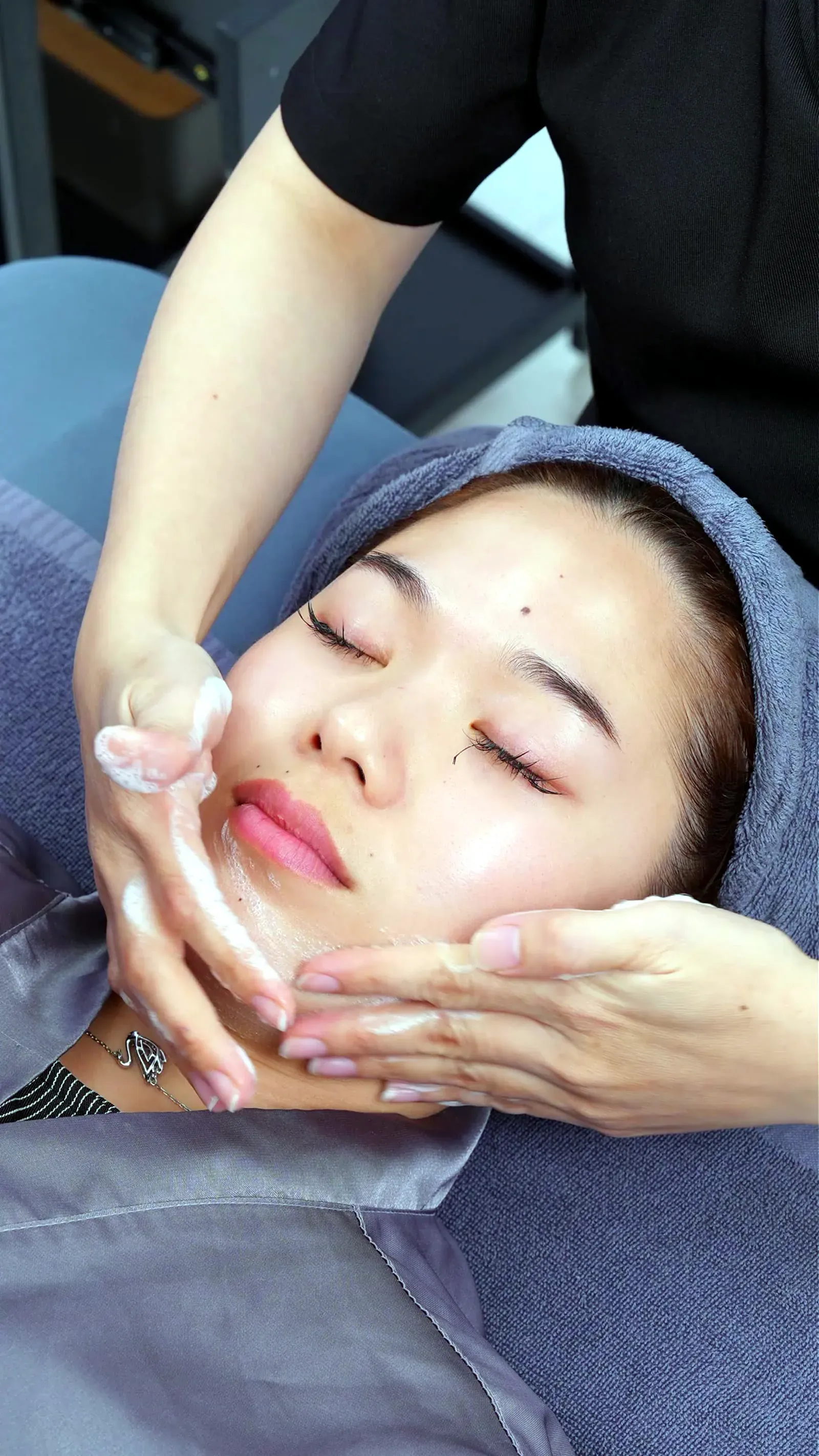
For skin with melasma, the skincare routine should be short and gentle. In the morning: gentle cleansing, a topical medication (only if your doctor recommends daytime use), moisturiser, and a tinted broad-spectrum sunscreen. In the evening: makeup removal, cleansing, a prescribed topical lightening medication, and a restorative moisturiser. Sun protection decides most of the result, while products that cause stinging can make melasma darker. A skincare routine is only supportive; it cannot replace the classification of your melasma and your doctor's treatment plan.
At BonBoz Clinic (licence 11113/HCM-GPHĐ, issued by the Ho Chi Minh City Department of Health), Dr. Bùi Thị Kim Kha, a Specialist Level I physician in Dermatology, is in charge of melasma examination and treatment planning. For skin with melasma, consistency matters more than the number of steps. Below are the morning and evening steps, and the habits to drop.
Why does skin with melasma need its own routine?
Melasma forms when pigment cells are stimulated to produce more melanin than normal. UV rays, visible light and heat are the strongest triggers; hormones and your constitution decide who is more prone. Because pigment cells still "remember" the tendency to be overactive, melasma easily darkens again every sunny season. In other words, every morning you go outside without a protective layer, you "feed" your skin more pigment.
The second point: irritation also darkens pigment. The American Academy of Dermatology (AAD) advises people with melasma to choose gentle, fragrance-free products, because a product that makes the skin burn or sting is irritating it and can make dark patches darker.
The general principles drawn from these two points:
- Daytime: protect — block sun, block visible light, block heat.
- Night-time: treat and restore — prescribed topical medication does its work, and the skin barrier gets to rest.
- All day: no irritation — few products, gentle, consistent.
Morning routine for skin with melasma
Step 1 — Gentle cleansing. Use a mild cleanser and cool water, with no rubbing. Skin that feels tight and stinging after washing is a sign that the skin barrier is being worn down.
Step 2 — Daytime topical medication (only if your doctor recommends it). Some treatment plans include an active ingredient used in the morning, but most are used in the evening. Follow the timing your doctor wrote on the prescription; don't switch an evening medication to the morning on your own to get results "faster", because some active ingredients make the skin more sensitive to sun.
Step 3 — Moisturiser. A light, fragrance-free moisturiser helps your skin tolerate the medication and reduces stinging.
Step 4 — Tinted broad-spectrum sunscreen. This step must not be skipped, even on rainy days or when you are indoors near a window. For skin with melasma, choose a broad-spectrum SPF 50 sunscreen, preferably a tinted one containing iron oxide to block more visible light. The AAD states that visible light has been shown to worsen melasma, especially in people with darker skin, and recommends tinted sunscreen containing iron oxide.
Step 5 — Coverage makeup (if you wish). The order the AAD recommends for people being treated for melasma is: melasma medication → sunscreen → coverage makeup. Putting foundation on before sunscreen makes the sunscreen layer thin and patchy.
How much sunscreen is enough?
Many people don't get good results treating melasma even though they "apply sunscreen every day". The usual reasons are applying too thinly, applying right before going out, and not reapplying.
- Amount: the AAD advises using at least about 1 teaspoon for the face — roughly the amount of cream spread along the length of your index and middle fingers. Your neck and ears need more.
- Timing: apply about 15 minutes before going outside so the sunscreen has time to settle evenly.
- Reapplying: the AAD advises reapplying every 2 hours when outdoors, and right after sweating or swimming.
- Physical protection: a wide-brimmed hat, face mask, sunglasses, and staying in the shade. Sunscreen does not block heat — with melasma, standing for long periods at the stove, steam baths, or sitting near a heat source are also triggers.
Detailed application instructions, including how to reapply over makeup, are in the article how to apply sunscreen correctly and how many times a day to reapply.
Evening routine for skin with melasma
Step 1 — Makeup removal. Remove tinted sunscreen and makeup with a gentle product, press a cotton pad on the skin for a few seconds, then wipe in one direction without rubbing back and forth.
Step 2 — Second cleanse. Use the same gentle cleanser as in the morning.
Step 3 — Prescribed topical lightening medication. This is the main "treatment" step. A topical regimen for melasma usually combines an ingredient that inhibits melanin production with a mild exfoliating ingredient, chosen according to the type of melasma, with follow-up visits to adjust it. Use exactly the amount your doctor told you, and apply it to the area you were told to treat; applying more does not lighten melasma faster and only makes the skin more prone to redness and stinging.
Step 4 — Restorative moisturiser. Apply after the medication (or in the order your doctor instructs if your skin is sensitive). The moisturiser helps your skin tolerate the medication over many weeks — and melasma treatment is always counted in months.
If you are also using serums or targeted toners, bring all of them to your appointment so your doctor can remove anything that overlaps or causes irritation. The order of product layers for skin under treatment in general is explained in detail in the article the standard order of skincare steps for skin under treatment.
Morning and evening summary:
| Step | Morning | Evening |
|---|---|---|
| Cleansing | Gentle cleanser | Makeup remover + gentle cleanser |
| Treatment | Only if your doctor recommends daytime use | Prescribed topical lightening medication |
| Moisturising | Light, fragrance-free moisturiser | Restorative moisturiser |
| Protection | Broad-spectrum SPF 50 tinted sunscreen (iron oxide) | Not needed |
| Accompanying habits | Hat, face mask, reapply every 2 hours outdoors | Get enough sleep, don't rub your face |
The table above is a general framework. The timing, frequency and duration of medication must follow your own prescription, because superficial patch melasma, deep melasma and mixed melasma respond differently. If you are not sure which type you have, see the article how to tell apart spotted melasma, patch melasma and deep melasma.
Habits to drop when you have melasma
| Habit | Why drop it |
|---|---|
| Using mixed creams or "instant whitening" creams with unclear ingredients | Many contain corticosteroids: the skin becomes thin, blood vessels dilate, and melasma comes back stronger when you stop using them |
| Using grain scrubs and rubbing hard | Irritation makes pigment darker |
| Layering many strong active ingredients at once | Easily causes redness and stinging, forcing you to stop the medication midway |
| Applying sunscreen only once in the morning | Its effectiveness declines through the day, especially when you sweat |
| Frequent facial steaming and hot face masks | Heat is a trigger for melasma |
| Buying oral melasma medication on your own | Oral medication is used only in some cases and needs a doctor to assess contraindications and monitor you |
Skin damaged by mixed creams must be restored first before melasma can be treated, and laser must be used very cautiously in that case. How to recognise them is covered in the article why mixed creams and instant skin-whitening cosmetics are dangerous. And if you are torn between cosmetics you buy yourself and prescription medication, the article do at-home melasma creams work analyses that question specifically.
When is skincare not enough, and how long until you see results?
See a doctor instead of continuing to manage on your own when:
- You have used sun protection and gentle products consistently, yet the melasma patches still spread or darken over several months.
- Melasma darkens right after you stop a whitening cream — a mixed cream containing corticosteroids is suspected.
- You are pregnant, breastfeeding or taking hormonal medication — a doctor needs to choose safe products.
- Melasma became darker and spread after laser treatment elsewhere.
Note for pregnancy and breastfeeding: many topical melasma medications and laser treatments are left until after delivery. During this period, strict sun protection and certain safe active ingredients as recommended are the main approach; don't keep using melasma medication you bought earlier on your own. Pregnancy melasma may fade naturally after delivery.
For deep melasma or mixed melasma, topical medication usually responds less well; your doctor may consider Pastelle laser toning — low-energy Q-switched, multiple sessions, with parameters set by the doctor — or a chemical peel for superficial patch melasma.
How long until you see results? Don't judge after one or two weeks. Topical medication usually takes 8–12 weeks before melasma fades; if you have laser toning, changes are usually seen after 3–4 sessions; deep melasma is slower still. Your doctor assesses progress with standardised photos at each follow-up visit, because looking in the mirror every day makes small changes very hard to notice.
Once the melasma has faded, the routine does not stop but moves into maintenance mode: lifelong sun protection and low-frequency topical medication as instructed. If you stop completely, melasma usually returns after the sunny season. Learn more about classification and methods on the page melasma treatment at BonBoz.

Book a melasma consultation at BonBoz Clinic
- Address: 66–68 Võ Văn Tần, Xuân Hòa Ward (formerly District 3), Ho Chi Minh City.
- Opening hours: Monday – Sunday, 08:00–20:00. Phone: 0869 612 310.
- Operating licences 11113/HCM-GPHĐ (Dermatology) and 10036/HCM-GPHĐ (Aesthetics), issued by the Ho Chi Minh City Department of Health; look up at tracuu.medinet.org.vn.
- Doctor in charge: Specialist Level I physician Dr. Bùi Thị Kim Kha, Specialist Level I in Dermatology, practising certificate 009784/ĐL-CCHN, more than 8 years of practice, certified in Laser and light-based treatments in dermatology.
- The initial consultation and skin analysis are free. The cost of melasma treatment is given by your doctor after the examination, before you decide.
References
- American Academy of Dermatology — Melasma: Self-care. <https://www.aad.org/public/diseases/a-z/melasma-self-care> (accessed 11/11/2026)
- American Academy of Dermatology — How to apply sunscreen. <https://www.aad.org/public/everyday-care/sun-protection/shade-clothing-sunscreen/how-to-apply-sunscreen> (accessed 11/11/2026)
- American Academy of Dermatology — Melasma: Diagnosis and treatment. <https://www.aad.org/public/diseases/a-z/melasma-treatment> (accessed 11/11/2026)
- DermNet — Melasma. <https://dermnetnz.org/topics/melasma> (accessed 11/11/2026)
Frequently Asked Questions
Does skin with melasma need exfoliating?
You should not use grain scrubs or rub the skin, because irritation makes pigment darker. If your treatment plan needs mild exfoliation, your doctor will include a suitable active ingredient in the topical medication at a controlled concentration and frequency. Adding an exfoliating product on your own easily makes the skin red and stinging, and you will have to stop the medication.
Do I need sunscreen if I stay indoors all day?
Yes, if you sit near a window or have to go outside at times. Visible light also contributes to darkening melasma, so a tinted sunscreen containing iron oxide is more useful than a regular one. If you are in a completely closed room, you can apply once in the morning; when you go outside, reapply.
Should melasma medication be applied before or after moisturiser?
Normally the medication goes on first, on clean skin, and the moisturiser after. For sensitive skin, your doctor may tell you to apply moisturiser first to reduce stinging. Follow the order written in the instructions on your prescription.
Which sunscreen suits skin with melasma?
A broad-spectrum, SPF 50, fragrance-free sunscreen that is tinted with iron oxide to block more visible light. Just as important is applying enough — about one teaspoon for the face — and reapplying every 2 hours outdoors, together with a hat and face mask.
I'm pregnant and have melasma. How should I do my skincare?
Prioritise strict sun protection, physical cover and gentle products; use lightening active ingredients only when your doctor confirms they are safe. Many melasma medications and laser treatments are left until after delivery, and pregnancy melasma may fade naturally after delivery. Don't keep using melasma medication you bought before pregnancy on your own.
Content prepared by the BonBoz Clinic professional team.
This article is for reference only and does not replace an in-person examination or a doctor's diagnosis. Actual results vary by individual condition.